Hear from Our Customers
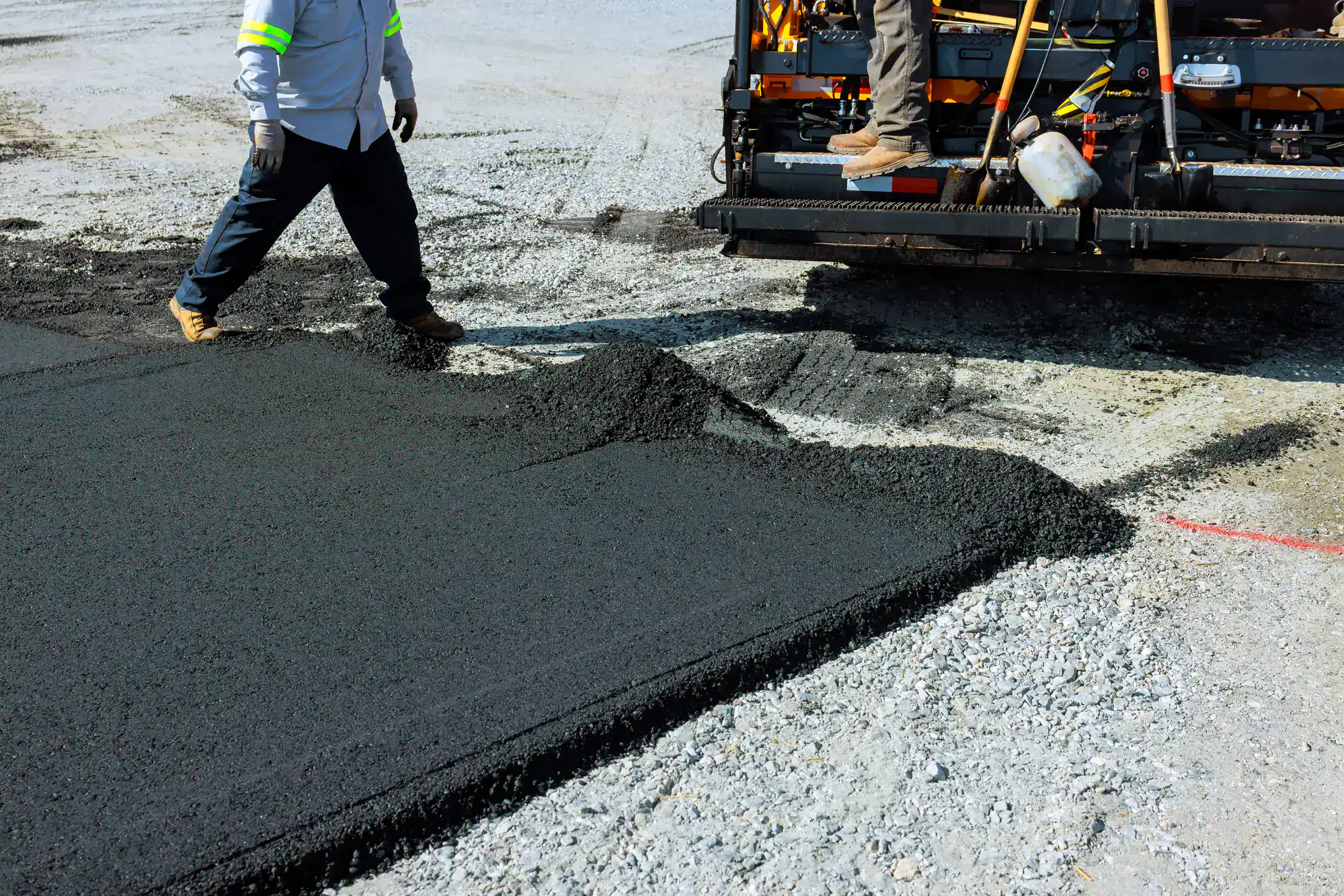
When your parking lot is along Bay Avenue or Chesapeake Avenue, it’s not just infrastructure it’s the first thing every customer, visitor, or tenant sees before they walk through your door. A cracked, faded surface in a waterfront tourist corridor doesn’t just look bad. It signals neglect in a place where first impressions drive foot traffic.
North Beach’s coastal environment accelerates asphalt deterioration faster than most people expect. Salt air breaks down the binder that holds asphalt together. Flooding events and this town has lived through enough of them saturate subgrades and undermine base layers long after the water recedes. The result is premature cracking, heaving, and potholes that show up faster than they would in an inland parking lot of the same age.
The right commercial paving job addresses all of that upfront: proper drainage design, adequate base depth, correct asphalt thickness for commercial traffic loads, and a maintenance plan that accounts for the coastal exposure North Beach gets every single season. That’s the difference between pavement that lasts 20-plus years and a lot you’re repairing every three.
We’ve been operating in Maryland since 2011, hold MHIC License #159766, and carry a BBB A+ rating credentials that are verifiable, not just claimed. That matters in a market where unlicensed crews regularly solicit paving work in small towns like North Beach, especially as the season opens up each spring.
Based out of Annapolis, we’re roughly 30 miles from North Beach and have direct familiarity with the northern Calvert County corridor the Twin Beaches area, the county road network, and the kind of coastal conditions that affect how pavement performs here differently than it does in Crofton or Odenton. That familiarity isn’t incidental. It shapes how we scope, schedule, and build projects.
Our full-service scope covers commercial asphalt paving, parking lot installation, sealcoating, crack filling, asphalt repair, line striping, and ADA-compliant upgrades all under one licensed contractor. No hand-offs, no subcontracted phases, no gaps in accountability.
It starts with a free site assessment not a sales call. We actually come out, look at your lot, evaluate drainage patterns, check subgrade condition, note any existing damage, and assess what the site actually needs before anything gets quoted. In a coastal town like North Beach where flooding history and salt exposure directly affect how a project should be built, that on-site evaluation isn’t a formality. It changes the recommendation.
From there, you get a clear scope of work and a straight quote. If the project requires a building permit which it will in North Beach under the town’s BOCA Code requirements that’s factored into the timeline from the start. Commercial paving in North Beach operates under a three-layer framework: town ordinances, Calvert County requirements, and Maryland State standards. We handle that permitting process; you shouldn’t have to chase it down yourself.
Scheduling in North Beach also means being smart about timing. The spring-through-fall tourism window is the economic engine for waterfront businesses along the boardwalk corridor. We plan work around that early spring installation and maintenance before the season opens is almost always the right call, so your lot is clean, striped, and ready when visitors start arriving, not mid-repair during your busiest weeks.

Ready to get started?
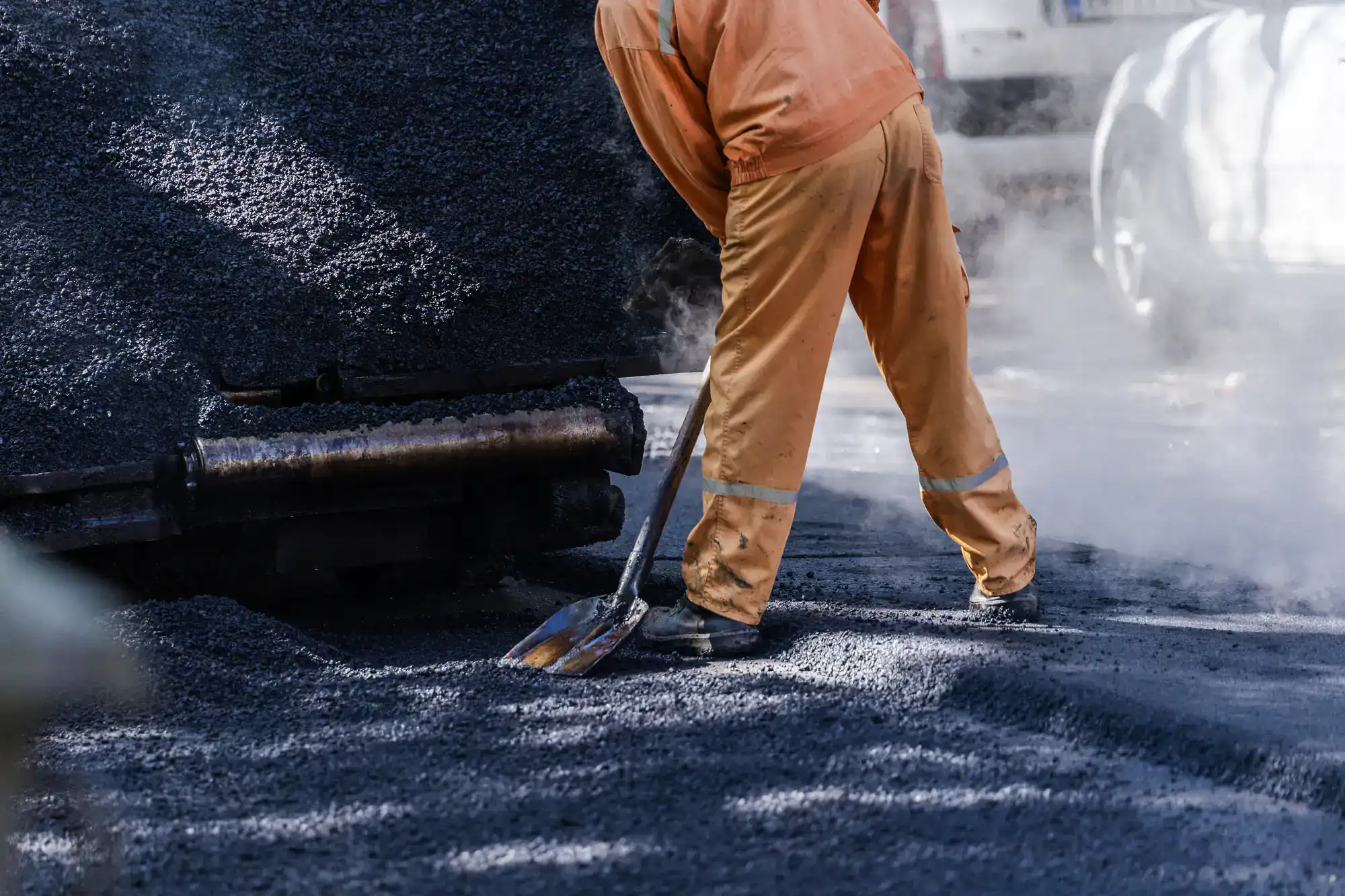
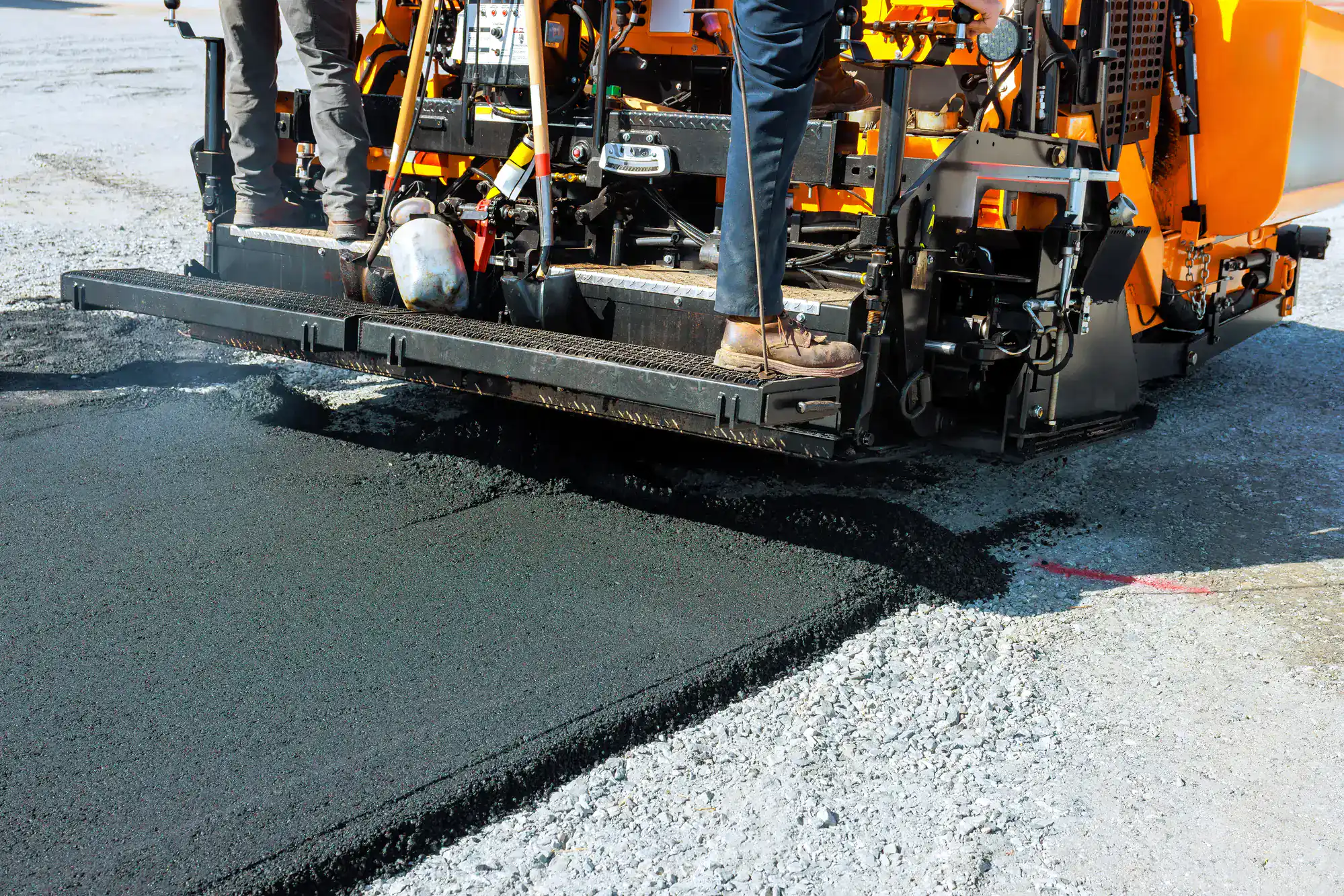
Commercial asphalt paving in North Beach covers the full scope from ground prep and base compaction through final surface installation. For coastal properties, drainage design gets real attention. Water that pools on a surface or infiltrates through cracks doesn’t just cause surface damage here; it reaches the subgrade, and in a flood-prone environment like North Beach, a compromised base fails faster than it would anywhere else.
Beyond new installation, we offer sealcoating to protect against the salt air oxidation that’s actively working on every unprotected asphalt surface near the bay. Crack filling stops the freeze-thaw damage that Maryland winters bring every year water gets into a small crack, freezes, expands, and opens it wider. Left alone, that’s how a $10,000 repair becomes a $40,000 reconstruction. ADA-compliant line striping and parking lot layout round out the full scope, which matters for any commercial property in a tourist corridor where the visiting public including people with disabilities needs compliant, clearly marked access.
For business owners near the boardwalk, property managers in the Rose Haven and Holland Point corridor, or civic facilities like the Boys & Girls Club, the goal is the same: one contractor handles everything, one standard of quality runs through all of it, and there’s one accountable point of contact when you have a question or a concern.
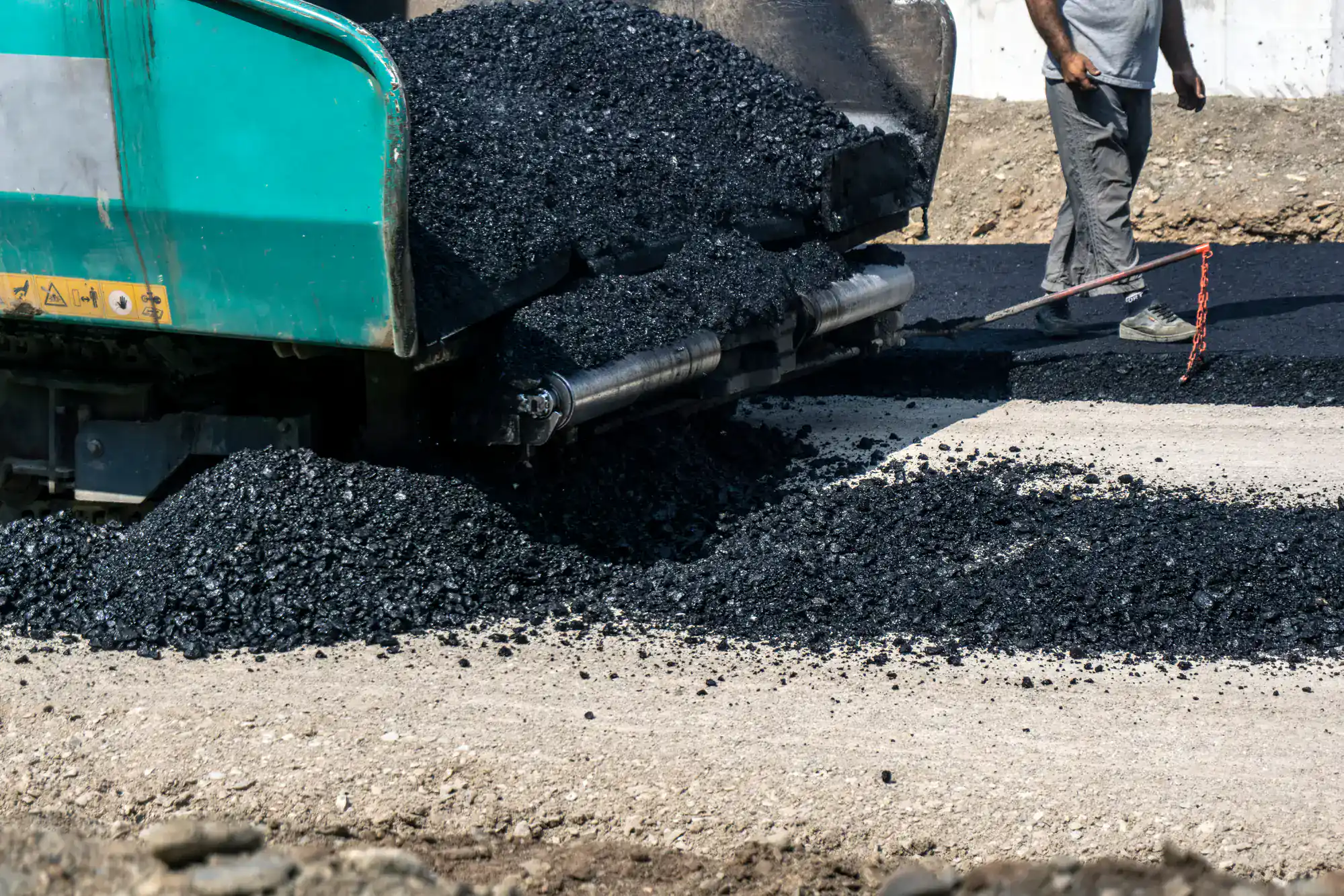
Flooding does more damage to asphalt than most property owners realize, and in North Beach it’s not a hypothetical risk it’s a documented pattern. The town established a Flood Committee in 2019 specifically because coastal and stormwater flooding events have increased in frequency. When water saturates a parking lot, the surface damage is often the least of it. The real problem is what happens beneath the surface: floodwater infiltrates the subgrade, softens the compacted base layer, and creates voids that lead to heaving, cracking, and premature pothole formation.
The practical implication is that commercial asphalt in North Beach needs to be designed with drainage as a primary consideration not an afterthought. Proper slope, adequate drainage channels, and a base depth suited to a flood-adjacent environment are what separate a lot that holds up after a major storm from one that needs significant repair every few years. If your current lot has a history of standing water or visible cracking that seems to worsen after heavy rain, that’s a subgrade problem, not just a surface one, and it needs to be addressed at the base level before any overlay or resurfacing will hold.
The standard recommendation for inland commercial parking lots is sealcoating every three to five years. In North Beach, where the coastal environment accelerates deterioration, the shorter end of that range is the right target and in some cases, every three years is the appropriate schedule. The reason is salt air. The binder in asphalt the material that holds the aggregate together and gives the surface its flexibility oxidizes over time when exposed to UV and oxygen. Salt air accelerates that oxidation process, which means the asphalt becomes brittle and crack-prone faster than it would in an inland location.
Sealcoating creates a protective barrier that slows that oxidation, repels water infiltration, and keeps the surface looking clean and well-maintained which matters on a commercial property in a tourism corridor. The cost of a sealcoating application is a fraction of what resurfacing or full replacement runs. If your lot is already showing surface cracking or fading, a sealcoat alone won’t fix structural issues, but it will extend the life of a lot that’s otherwise in serviceable condition. A site assessment will tell you which situation you’re actually in before any money gets spent.
Yes. Building permits are required for paving work performed in North Beach under the town’s BOCA Code requirements, and no work is supposed to begin until a permit has been obtained. Beyond the town-level requirement, commercial paving in North Beach also needs to conform to Calvert County regulations and Maryland State standards so the permitting process operates on three levels, not one.
This is one of the reasons hiring a licensed contractor matters for a commercial project here. An unlicensed crew may not be familiar with the local permitting framework, may skip the permit entirely, or may not carry the insurance required to pull one. If unpermitted work is discovered during a property sale, a code inspection, or a complaint the property owner bears the liability, not the contractor. We hold MHIC License #159766, which is a Maryland state-issued credential that requires documented experience and passing a state exam. That license is verifiable directly through the Maryland Department of Labor, and it’s the baseline credential you should be asking any commercial paving contractor to produce before signing anything.
For commercial parking lots, the standard minimum is typically four inches of compacted asphalt over a properly prepared aggregate base. The exact specification depends on the expected traffic load a lot that handles delivery trucks or heavy seasonal traffic needs more depth than one used exclusively by passenger cars. In North Beach, where some commercial lots along the waterfront corridor see concentrated seasonal loading from spring through fall, getting the thickness and base specification right from the start is what determines how long the pavement actually lasts.
The base layer beneath the asphalt is just as important as the surface itself. A well-compacted aggregate base typically six to eight inches for commercial applications is what gives the pavement its load-bearing capacity and prevents the settling and cracking that shows up when base prep is rushed or underdone. In a coastal environment where subgrade conditions can be affected by moisture and periodic flooding, base preparation deserves extra attention. A contractor who quotes a commercial job without discussing base depth and drainage is skipping the part of the conversation that determines whether the installation holds up or fails early.
A properly installed commercial asphalt parking lot can last 20 to 30 years with regular maintenance. In a coastal environment like North Beach, reaching that upper range requires more active upkeep than an inland lot would. The combination of salt air oxidation, freeze-thaw cycles during Maryland winters, periodic flooding events, and UV exposure all work against the asphalt surface simultaneously and any one of those factors left unmanaged shortens the lifespan meaningfully.
The maintenance schedule that extends pavement life in a coastal location typically includes crack filling as soon as cracks appear not when they’ve widened sealcoating on a three-year cycle, and prompt repair of any areas where standing water is present after rain. Deferred maintenance compounds quickly near the water. A small crack that gets filled in year two is a $500 repair. That same crack ignored through two more winters and two more flood seasons becomes a section replacement that costs several times more. The math on proactive maintenance is straightforward, and it’s even more pronounced in a town that already knows from experience what deferred infrastructure upkeep actually costs.
ADA compliance for commercial parking lots covers several specific requirements: the correct number of accessible spaces based on total lot size, proper space dimensions (at least eight feet wide with an adjacent access aisle), compliant cross-slopes on accessible routes (no more than two percent in any direction), appropriate signage at the correct mounting height, and clearly marked accessible paths connecting parking spaces to building entrances. For commercial properties in North Beach’s waterfront corridor where the visiting public includes tourists, older residents, and people with mobility needs these aren’t just legal checkboxes. They’re functional requirements for a business that depends on welcoming a broad range of visitors.
The liability exposure for non-compliant parking lots is real and personal for small business owners. A visitor who cannot safely navigate your lot or access your building has grounds for a complaint under the Americans with Disabilities Act, and the cost of defending or settling that kind of claim far exceeds the cost of getting the lot right in the first place. ADA-compliant line striping and accessible route design are included in our full-scope commercial paving work it’s part of the job, not an add-on that gets quoted separately after the fact.
Other Services we provide in North Beach