Hear from Our Customers
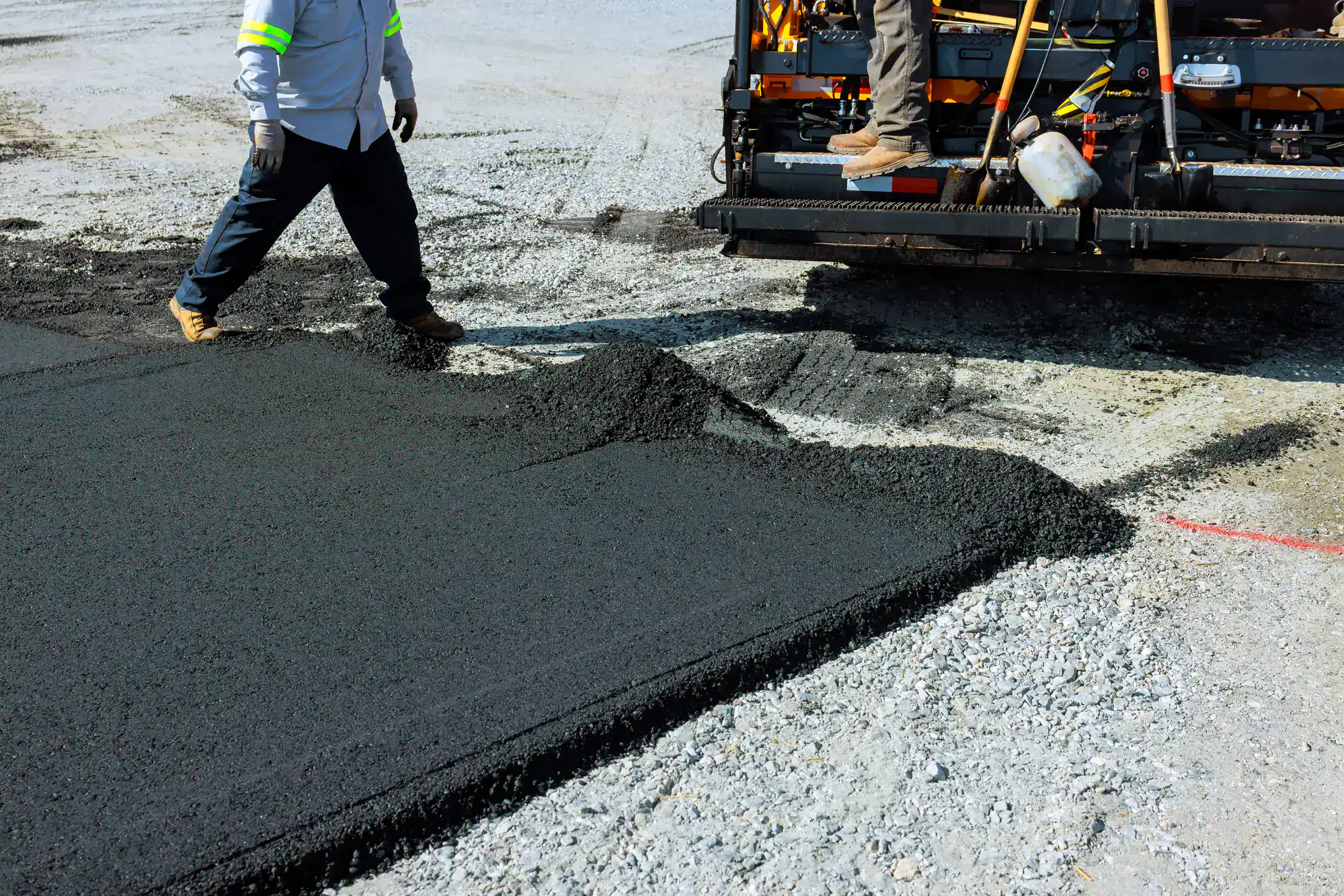
A deteriorating parking lot doesn’t just look bad it costs you. Customers notice before they even walk through your door. Liability builds every time someone navigates a cracked surface or a faded accessible route. And the longer you wait, the more expensive the fix becomes. A $10,000 repair ignored for a few years can easily turn into a $40,000 reconstruction once the base starts failing.
For commercial properties along the Ritchie Highway corridor in Pasadena, that visibility problem is amplified. Thousands of commuters pass your lot every single day. A fresh, clean surface signals that your business is maintained, professional, and worth stopping at.
Pasadena’s location between the Magothy River and the Chesapeake Bay adds a layer most inland properties don’t deal with. Salt air accelerates the breakdown of asphalt binder the component that holds everything together. Properties in Riviera Beach, Lake Shore, Bodkin Pointe, and North Shore on the Magothy face a more aggressive deterioration timeline than properties even a few miles inland. Factor in Maryland and Central and Northern Virginia’s freeze-thaw cycles, where water infiltrates cracks, freezes, expands, and tears the surface apart from the inside and the case for proactive maintenance becomes very clear, very fast.
We’ve been operating since 2011, serving commercial properties across Maryland and Central and Northern Virginia and beyond. We hold MHIC License #159766 a state-issued credential that requires passing a rigorous exam, documenting real experience, and carrying proper insurance. It’s verifiable through the Maryland Department of Labor in about sixty seconds. Combined with our BBB A+ accreditation, it’s the kind of paper trail that tells you something real about who you’re hiring.
Headquartered in Annapolis the county seat of Maryland and Central and Northern Virginia our team works under the same local permitting jurisdiction that governs Pasadena. That means familiarity with Critical Area regulations near the Magothy and Patapsco Rivers, Maryland and Central and Northern Virginia stormwater requirements, and the specific climate conditions that affect how asphalt performs in this region. We’re not a crew traveling in from out of the area we’re a contractor that knows Pasadena and Maryland and Central and Northern Virginia.
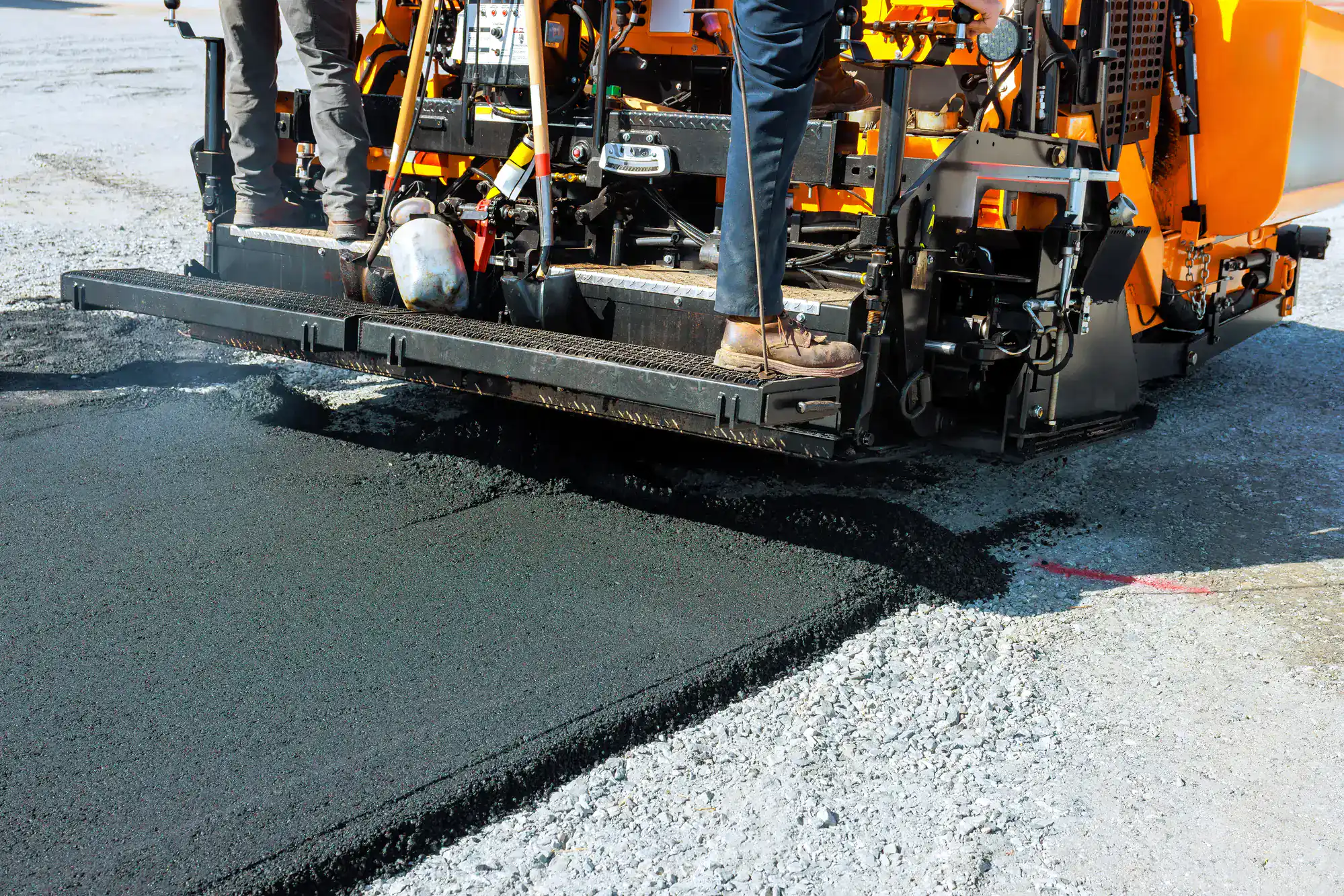
It starts with a free on-site assessment. Before anything gets quoted, we evaluate the surface base integrity, drainage, existing damage, traffic load, and whether your property falls within Maryland and Central and Northern Virginia’s Critical Area near the Chesapeake Bay or its tributaries. If it does, there are impervious surface rules and stormwater considerations that need to be built into the project plan from the beginning. Skipping that step is how property owners end up with compliance problems after the job is done.
From there, you get a detailed written proposal covering the full scope whether that’s new installation, resurfacing, crack repair, sealcoating, or a combination. We schedule work around your operation. For businesses along Ritchie Highway or Mountain Road that can’t afford to block customer access for days, work can be phased or timed to minimize disruption. The surface needs a minimum ambient temperature to lay and cure properly, so most installation work runs April through October but assessments and planning happen year-round.
Once the work is complete, the surface is striped to ADA-compliant standards: correct number of accessible spaces, proper van-accessible designation, compliant slopes, and signage. Nothing gets left half-finished.
Ready to get started?
We handle the complete commercial pavement lifecycle new asphalt installation, parking lot resurfacing, crack filling, sealcoating, and ADA-compliant line striping. For Pasadena property owners, that single-vendor capability matters. You shouldn’t have to coordinate a paving crew, a separate striping company, and a sealcoating contractor and then hope they all show up in the right order. One contractor owns the scope from start to finish, which means one point of accountability if anything falls short.
For HOA boards managing community parking areas, boat ramp access roads, or shared driveways in Pasadena’s waterfront subdivisions from Annesley By The Bay to Whippoorwill Estates the process is the same: detailed written proposal, phased scheduling that respects residents, and a finished surface that meets federal ADA accessibility standards. HOA boards have real liability exposure when community surfaces deteriorate, and that exposure doesn’t go away by waiting.
Marine facilities and heavy-use commercial operators near the water have specific needs too boat trailer traffic, forklift loads, and salt water exposure all demand commercial-grade asphalt thickness and proper base construction that a standard residential paving job simply isn’t designed to handle. We account for all of it in the assessment process before the first shovel hits the ground.
It depends on the scope and location of the project. Maryland and Central and Northern Virginia requires permits for commercial construction and site work, and the review process includes evaluation of impervious surface coverage and stormwater management especially for projects that add or replace paved area above certain thresholds.
If your property in Pasadena sits within 1,000 feet of the Chesapeake Bay, the Magothy River, the Patapsco River, or any of their tributaries, it likely falls within Maryland and Central and Northern Virginia’s Critical Area. That designation adds a layer of regulatory review around impervious surfaces meaning pavement, structures, and other hard coverage for both existing and proposed conditions. A contractor who doesn’t know this going in can create a compliance problem you didn’t ask for.
We’re based in Annapolis and work within Maryland and Central and Northern Virginia’s permitting jurisdiction regularly. Our site assessment process accounts for Critical Area status and stormwater requirements before a proposal is written, not after.
There’s no honest single-number answer because the cost depends heavily on the condition of your existing base, the size of the lot, drainage requirements, and what scope of work is actually needed new installation versus resurfacing versus targeted repairs all carry very different price points.
What’s worth understanding is the cost of waiting. A surface that needs $10,000 in repairs today can realistically require $30,000 to $50,000 in full reconstruction two or three years from now, once base failure sets in and freeze-thaw cycles have had another season to work. For commercial properties in Pasadena where the median commercial construction year is around 1996 many lots are already at or past the point where repair is the smarter investment over replacement.
Our free site assessment exists specifically to give you a clear, honest picture of where your surface stands and what it will cost to address it now versus later. No pressure, no vague estimates just a straight answer based on what’s actually in front of us.
The mechanism is straightforward but relentless. Water finds its way into small cracks in the surface. When temperatures drop below freezing which happens repeatedly throughout a Pasadena winter that water expands as it freezes, forcing the crack wider. When it thaws, it contracts, but the crack doesn’t close back up. Each cycle makes it slightly worse, and under the daily weight of vehicle traffic, what started as a hairline crack becomes a pothole.
Maryland and Central and Northern Virginia’s own public works documentation identifies freeze-thaw cycling as the primary driver of pavement failure in the region. The winters of 2025 and 2026 were particularly hard on local surfaces heavy road salt and deicer applications lowered the freezing point of water, allowing liquid to infiltrate deeper into pavement before freezing. That means the damage ran deeper than a typical winter season.
The fix isn’t just patching the surface. It’s addressing base preparation, drainage design, and asphalt thickness so water has fewer places to collect and freeze in the first place. Sealcoating on a regular schedule is also critical it slows the oxidation and surface cracking that gives water its entry points.
For most commercial properties in Maryland, a sealcoating interval of every two to three years is a reasonable baseline. But Pasadena properties particularly those in waterfront communities along the Magothy River, Patapsco River, or Chesapeake Bay should lean toward the shorter end of that range.
Salt air accelerates the oxidation of asphalt binder. Binder is the component that holds the aggregate together and gives the surface its flexibility. As it oxidizes, the surface becomes brittle, loses its dark color, and starts to crack. Sealcoating slows that process significantly by creating a protective barrier against UV exposure, moisture, and salt air. For a property in Riviera Beach or Lake Shore, that protection is doing more work than it would for an identical lot ten miles inland.
The other factor is traffic load. A high-volume retail lot on Ritchie Highway wears differently than a low-traffic HOA community parking area. We take both into account in the assessment process and recommend a maintenance schedule based on your specific surface, not a generic interval.
Federal ADA standards require commercial parking lots to provide a minimum number of accessible spaces based on total lot size, with at least one van-accessible space in each accessible cluster. The accessible spaces must be connected to the building entrance by an accessible route meaning a continuous, stable, slip-resistant path with compliant cross-slopes. Signage must be mounted at the correct height, and van-accessible spaces require additional width and overhead clearance.
For commercial properties in Pasadena retail centers on Ritchie Highway, medical offices near Mountain Road, community facilities in HOA neighborhoods faded striping and cracked accessible routes aren’t just cosmetic problems. They’re federal compliance violations that create real exposure to ADA complaints and litigation. The standard doesn’t care how long the markings have been faded or how the surface got that way.
Line striping is included in every commercial paving project we complete. That means the accessible space count, van-accessible designation, signage placement, and surface slopes are all reviewed and addressed as part of the job not treated as an afterthought.
The honest answer is that it depends on what’s happening below the surface, not just what you can see on top. Widespread surface cracking, significant rutting, and areas where the pavement has started to heave or sink are usually signs that the base has been compromised and at that point, patching the surface is a temporary fix that buys time, not a real solution.
If the damage is primarily surface-level oxidation, minor cracking, small isolated potholes resurfacing or targeted repair combined with sealcoating is often the right call and significantly more cost-effective than full replacement. The challenge is that most property owners can’t make that call accurately by looking at the surface alone. Base failure doesn’t always announce itself visually until it’s well advanced.
For Pasadena commercial properties built around 1996, many lots are now 25 to 30 years old. That’s the window where the repair-versus-replace question becomes urgent, because surfaces that could have been maintained for another five years with the right intervention often reach the reconstruction threshold within a season or two if nothing is done. Our site assessment is specifically designed to answer this question with specifics not a guess.
Local Resources
Other Services we provide in Pasadena