
Hear from Our Customers
In most parts of Maryland, a neglected parking lot is an eyesore. In St. Leonard, it’s a liability. The moisture coming off the Chesapeake Bay and the Patuxent River doesn’t just sit on the surface it works its way into every crack, undermines the base, and turns a manageable repair into a full reconstruction. When you’re managing a commercial property along MD 2/4, a waterfront community in Long Beach or Calvert Beach, or a facility like Flag Harbor marina, the cost of doing nothing compounds fast.
A properly installed commercial asphalt surface with the right base depth, the right drainage design, and the right thickness for the load it’s carrying holds up against the freeze-thaw cycling that runs from November through March in Southern Maryland. It handles the seasonal traffic spikes that hit waterfront communities every spring when residents return and visitors arrive. And it stays compliant with ADA requirements that don’t pause just because your lot is in a rural part of Calvert County.
The difference between a lot that lasts 20 years and one that needs reconstruction in 8 usually comes down to what happened in the first week of the job site prep, drainage, and base compaction. Get those right, and everything else follows. Skip them, and no amount of sealcoating fixes what’s underneath.
We’ve been doing this since 2011 over 14 years of commercial asphalt work across Maryland and Virginia, with principals who collectively bring more than four decades of hands-on experience to every project. We hold MHIC License #159766, which is a verifiable, state-issued credential you can look up. We’re also BBB Accredited with an A+ rating. In a market where plenty of contractors show up without either, that distinction matters.
We’re based in Annapolis about 30 to 35 miles north of St. Leonard on the same MD 2/4 corridor you drive every day. That proximity isn’t incidental. It means we’re familiar with Calvert County’s permitting process, the Critical Area regulations that apply to properties near the Bay and the Patuxent, and the specific environmental conditions that make commercial paving in Southern Maryland different from paving in a landlocked suburb.
From Jefferson Patterson Park to the businesses along MD 2/4 to the HOA-managed communities in Long Beach, the properties in St. Leonard deserve a contractor who understands the territory not one who treats every lot the same regardless of where it sits.
It starts with a free site assessment. Before any material gets specified or any proposal gets written, we evaluate the site drainage patterns, subgrade condition, current surface damage, traffic load, and ADA compliance status. For properties in St. Leonard near the Chesapeake Bay or the Patuxent River, that drainage evaluation isn’t a formality. It’s the most important part of the whole process. Water that doesn’t have a clear path off your lot will find its own path usually through your asphalt.
If your project involves modifying more than 5,000 square feet of impervious surface, Calvert County requires stormwater management review. If your property falls within the Critical Area the 1,000-foot buffer from tidal waters there’s an additional layer of county review before work begins. We account for all of that upfront, so the permitting process doesn’t become a surprise mid-project.
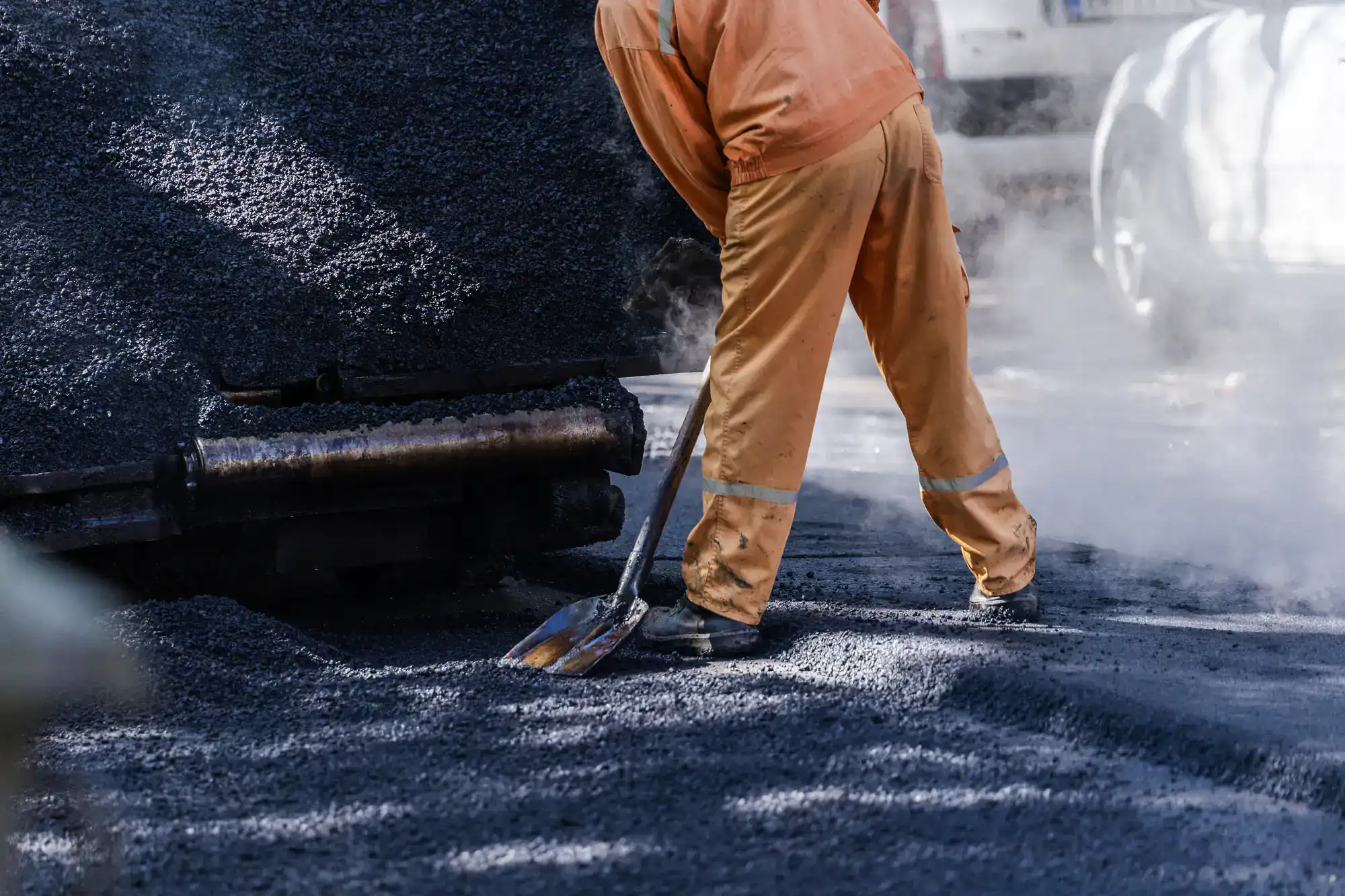
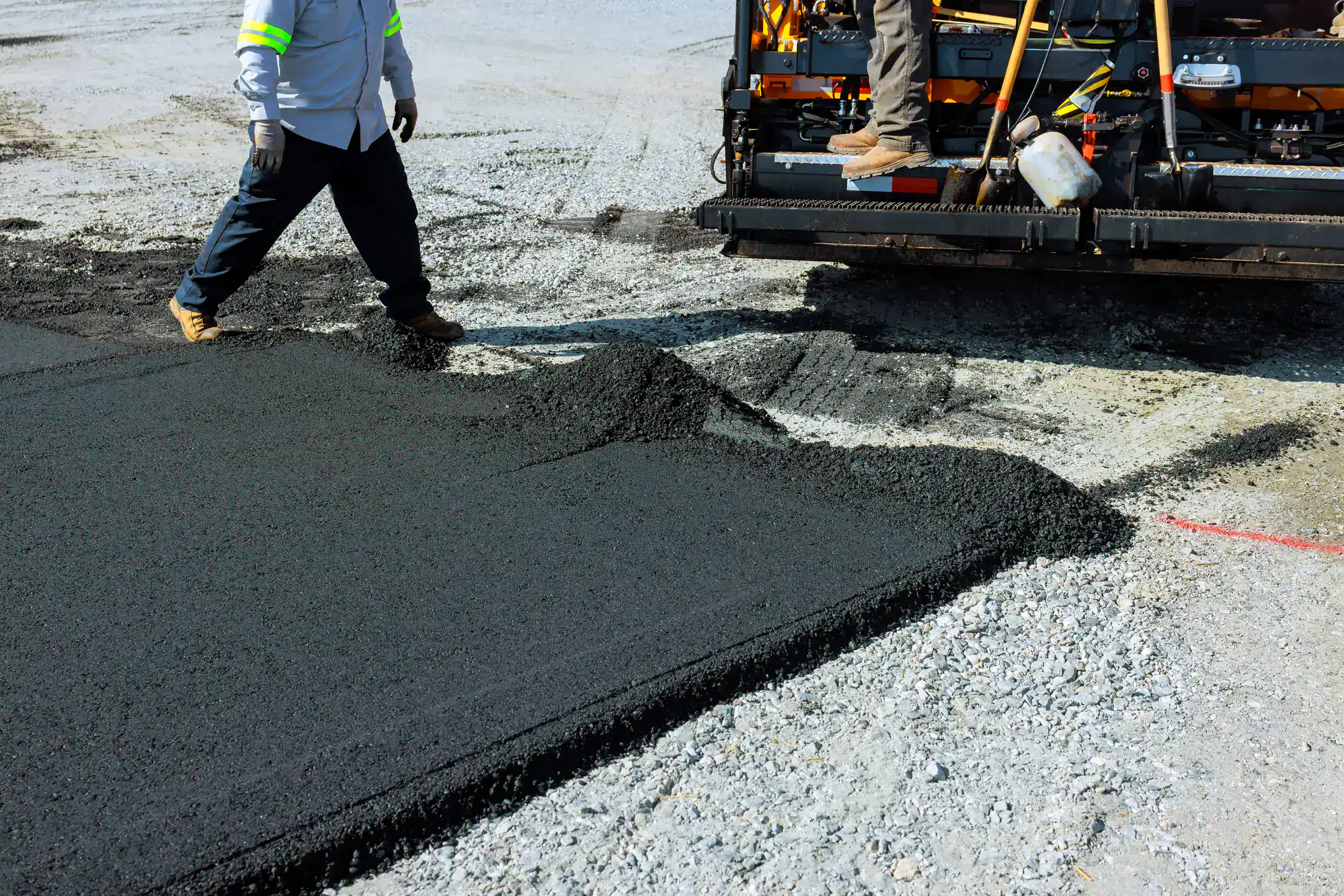
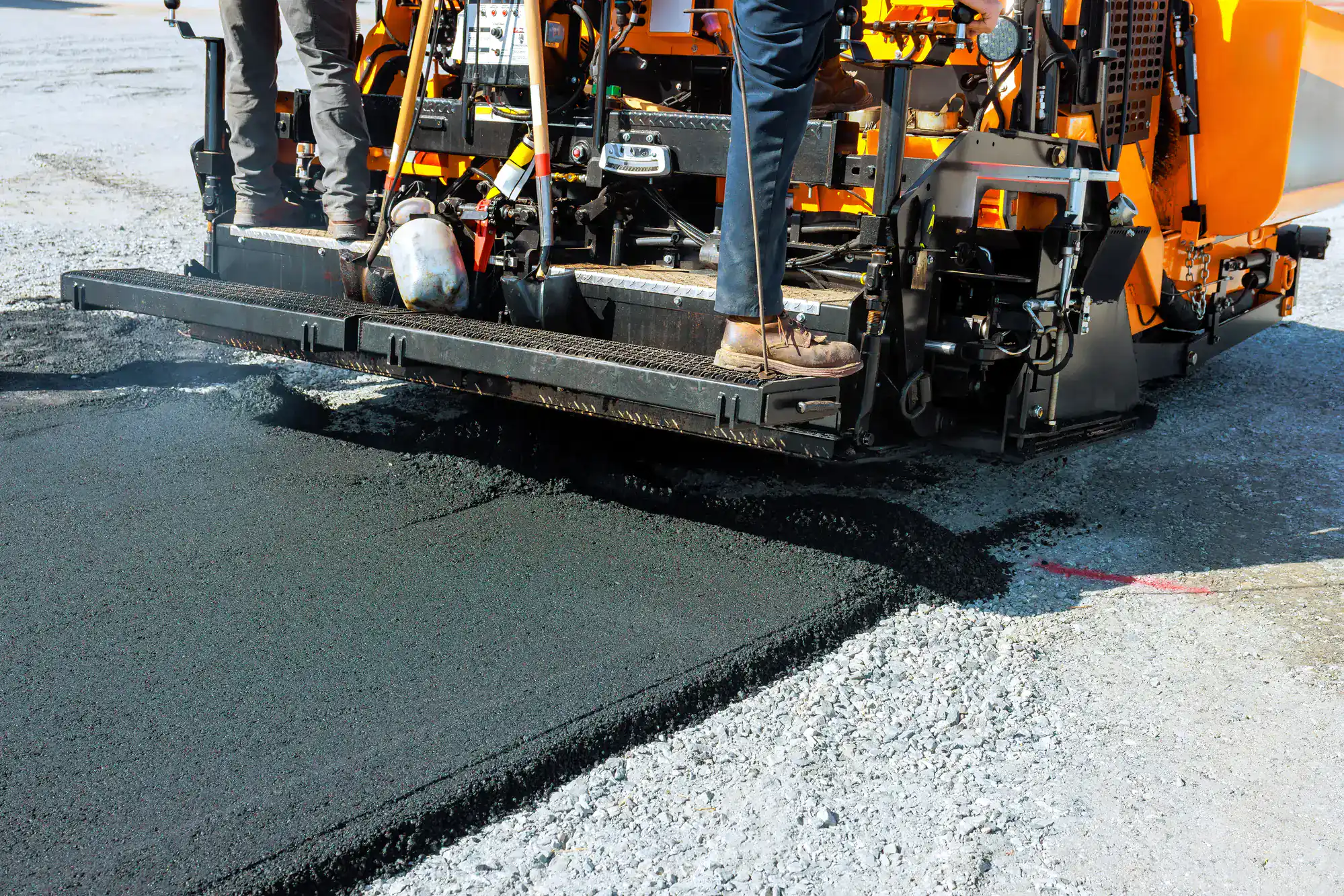
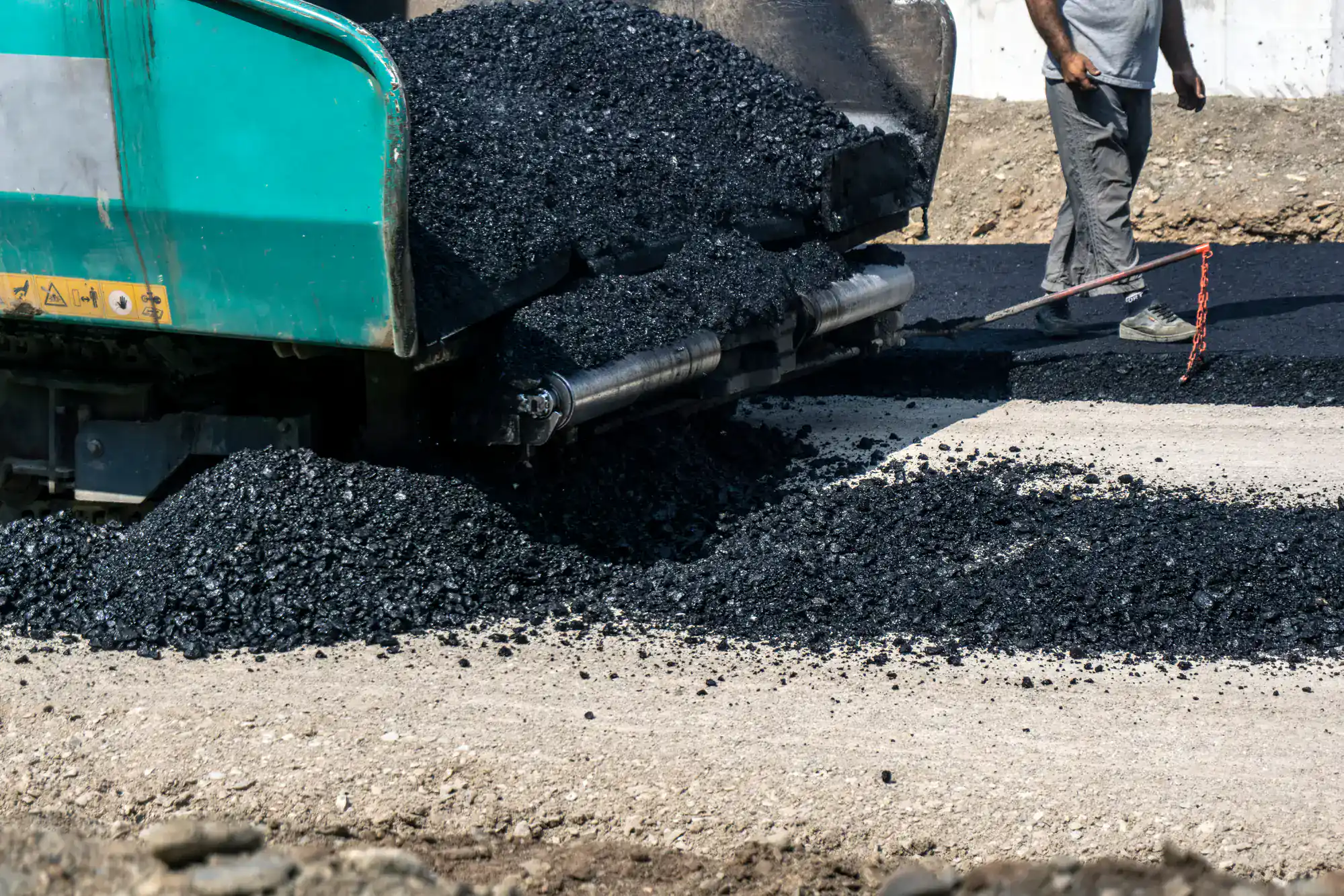
Once the site assessment is complete and permits are in order, the work follows a clear sequence: subgrade preparation and compaction, base course installation to commercial-grade depth, surface course application, and final compaction to spec. Sealcoating, crack filling, and ADA-compliant line striping can be scheduled as part of the same project or as follow-up maintenance. For waterfront community facilities and seasonal businesses in St. Leonard, we build the schedule around your peak season not ours.

Ready to get started?
We handle the complete range of commercial asphalt paving services new installation, parking lot resurfacing, asphalt repair, sealcoating, crack filling, and ADA-compliant parking lot striping. For commercial property owners and HOA boards in St. Leonard and the surrounding Calvert County communities, that means one contractor handles the entire project from site assessment through finished striping. No coordinating three different vendors, no gaps in accountability, no finger-pointing when something isn’t right.
For properties along MD 2/4 the gas stations, the antique marketplace, the small businesses that every driver passing through St. Leonard sees every day the surface condition of your lot is visible to the entire community’s traffic flow. Calvert County’s commercial asphalt standards require base course core testing at minimum one 4-inch core per 200 tons of material placed, with surface course cores required per 100 tons. These aren’t optional quality checks they’re county-level requirements, and a contractor who doesn’t know that is a contractor who can create compliance problems on your project.
For Long Beach and Calvert Beach community associations managing shared roads and parking areas, the full-service scope means one maintenance relationship, one point of contact, and a clear plan for keeping your community’s pavement in compliance and in good condition year over year. That’s what a real commercial paving company near you in St. Leonard actually looks like.
It depends on the scope of the work. Routine maintenance sealcoating, crack filling, minor patching generally doesn’t trigger a permit requirement. But if you’re doing new commercial pavement installation or resurfacing that modifies more than 5,000 square feet of impervious surface, Calvert County requires stormwater management review through the Department of Planning and Zoning. That review exists to protect the Chesapeake Bay and Patuxent River watersheds, and it applies to properties throughout St. Leonard, Long Beach, and Calvert Beach.
If your property falls within the Critical Area the 1,000-foot buffer from tidal waters there’s an additional layer of review before any impervious surface work can begin. Many properties in St. Leonard’s waterfront communities sit within this buffer without their owners realizing it. A contractor unfamiliar with Calvert County’s regulatory environment can cause significant delays by discovering these requirements after the project is already underway. We review permit requirements as part of the initial site assessment, so there are no surprises once the work starts.
For a standard commercial parking lot handling passenger vehicles, the industry minimum is 4 inches of compacted asphalt over a properly prepared aggregate base. That’s meaningfully different from residential paving, which typically runs 2 to 3 inches. If your lot handles heavier vehicles delivery trucks, waste collection, heavy equipment the specification goes up from there, and the base preparation requirements become even more critical.
In St. Leonard specifically, the coastal environment adds another layer of importance to getting the thickness and base prep right. Moisture infiltration through an under-spec surface in a high-humidity, waterfront environment accelerates structural failure significantly faster than it would in an inland community. Calvert County also enforces core testing standards base course requires a minimum 4-inch diameter core per 200 tons of material placed, and surface course cores are required per 100 tons. These are quality assurance requirements, not suggestions, and they’re one of the reasons why hiring a licensed, experienced commercial asphalt paving contractor in Calvert County matters more than it might seem at first.
A properly installed commercial asphalt surface should last 20 to 30 years with routine maintenance. The operative word is properly. In Southern Maryland’s climate where you’re dealing with coastal humidity from the Chesapeake Bay, salt air exposure, and winter freeze-thaw cycles running from November through March asphalt that was installed without adequate base preparation or drainage design will fail well short of that range.
The freeze-thaw cycle is the most visible culprit. Water infiltrates surface cracks, freezes, expands, and forces those cracks wider with each cycle. By spring, what started as a hairline crack in October is a pothole that’s compromising your base layer. Sealcoating every 3 to 5 years is the most cost-effective way to slow that cycle it seals the surface against water infiltration and slows the oxidation of the asphalt binder that salt air accelerates. A lot that gets sealcoated on schedule will consistently outlast one that doesn’t, often by a decade or more. The maintenance math is straightforward: a few thousand dollars in sealcoating every few years versus a $30,000 to $50,000 reconstruction when the base fails.
Federal ADA standards apply to all commercial properties, and Calvert County enforces them through the building permit and certificate of occupancy process. The requirements cover the number of accessible spaces relative to your total lot size, van-accessible space designations, accessible route specifications from parking to building entrances, proper signage, and surface conditions that meet accessibility standards. A lot that was ADA-compliant when it was originally installed can fall out of compliance as the surface deteriorates uneven pavement, faded striping, and surface cracking can all create accessibility issues that expose a property owner to liability.
For HOA-managed communities in Long Beach and Calvert Beach, and for institutional facilities like Jefferson Patterson Park & Museum and Kings Landing Park, ADA compliance isn’t just a regulatory checkbox it’s a real liability question. If a visitor is injured because of an inaccessible or deteriorated parking surface, the property owner or managing association is accountable. We handle ADA-compliant line striping as part of the full commercial paving scope, so your lot meets current standards when the job is done not just when it was first built.
The active paving season in Maryland runs from approximately April through November, when temperatures are consistently above the minimums required for proper asphalt laying and compaction. For St. Leonard specifically, the most strategic window is early spring March through April before the waterfront communities of Long Beach and Calvert Beach hit their peak season in May and June.
Waterfront and recreational facilities in St. Leonard see concentrated traffic from spring through fall. Flag Harbor marina, Jefferson Patterson Park, Kings Landing Park, and the community amenities serving Long Beach and Calvert Beach all experience their heaviest use during those months. Paving work that disrupts access during peak season costs real revenue and creates real friction with residents and visitors. Scheduling your commercial asphalt paving or resurfacing project in early spring means the surface is installed, cured, and ready before your busy season begins. If you’re managing a property that sees seasonal traffic spikes, the time to schedule an assessment is late winter not after the crowds have already arrived.
Resurfacing also called an overlay involves milling off the top layer of existing asphalt and applying fresh material over a structurally sound base. It’s the right call when the surface is deteriorated but the foundation underneath is still in good condition. It extends the life of the lot significantly at a fraction of the cost of full replacement, and it’s the most common recommendation for commercial lots that have been maintained reasonably well but have reached the end of their surface life.
Full replacement is necessary when the base layer has been compromised typically from years of water infiltration through unaddressed cracks, inadequate original installation, or heavy load damage that has worked its way through to the subgrade. In St. Leonard’s coastal environment, base failure tends to happen faster on lots that were never properly drained or that went years without sealcoating. By the time you’re seeing alligator cracking across large sections of your lot, the damage is usually structural, and an overlay won’t hold. The site assessment determines which option applies to your property and a contractor who recommends full replacement without evaluating the base condition first is a contractor worth getting a second opinion on.
Other Services we provide in St. Leonard