

Hear from Our Customers

A cracked, faded, or poorly drained parking lot on Route 175 doesn’t just look bad it costs you. Customers notice. Tenants notice. And in Odenton, where the median household income tops $126,000 and the workforce skews toward defense contractors and federal professionals, first impressions carry real weight. A lot that’s deteriorating sends a signal you don’t want to send.
Then there’s the liability side. Odenton’s winters run repeated freeze-thaw cycles through every surface crack that goes unfilled. Water gets in, freezes, expands, and fractures the pavement from below. By March, what looked like a minor issue in October can be a pothole problem and a pothole problem in a commercial parking lot is a slip-and-fall waiting to happen. ADA non-compliance adds another layer of exposure, with first-violation fines reaching $75,000.
The good news is that a properly installed and maintained lot removes all of that. The right subbase, the right asphalt thickness, the right drainage design these aren’t upgrades, they’re the baseline for a commercial surface that survives Maryland winters and serves your property for 15 to 25 years without constant patching.
We’ve been operating in Anne Arundel County since 2011 through the full arc of Odenton’s BRAC-era commercial build-out, through more than a decade of Mid-Atlantic winters, and through the continued growth that’s made this one of the fastest-expanding communities in Maryland. That’s not a marketing line. That’s 14 years of showing up, doing the work, and building a reputation worth protecting in Odenton and the surrounding area.
We hold MHIC License #159766 the Maryland Home Improvement Commission credential required by law for any paving contractor operating in this state and we carry BBB A+ accreditation earned in 2024. For commercial property managers in Odenton’s office corridors and retail centers, those aren’t nice-to-haves. They’re the baseline for a vendor you can actually put in front of a building owner or a board.
Headquartered in Annapolis, we’re roughly 15 miles from Odenton via Route 175 the same road that runs through the heart of this market. Same county, same codes, same climate. That proximity matters when something needs attention.
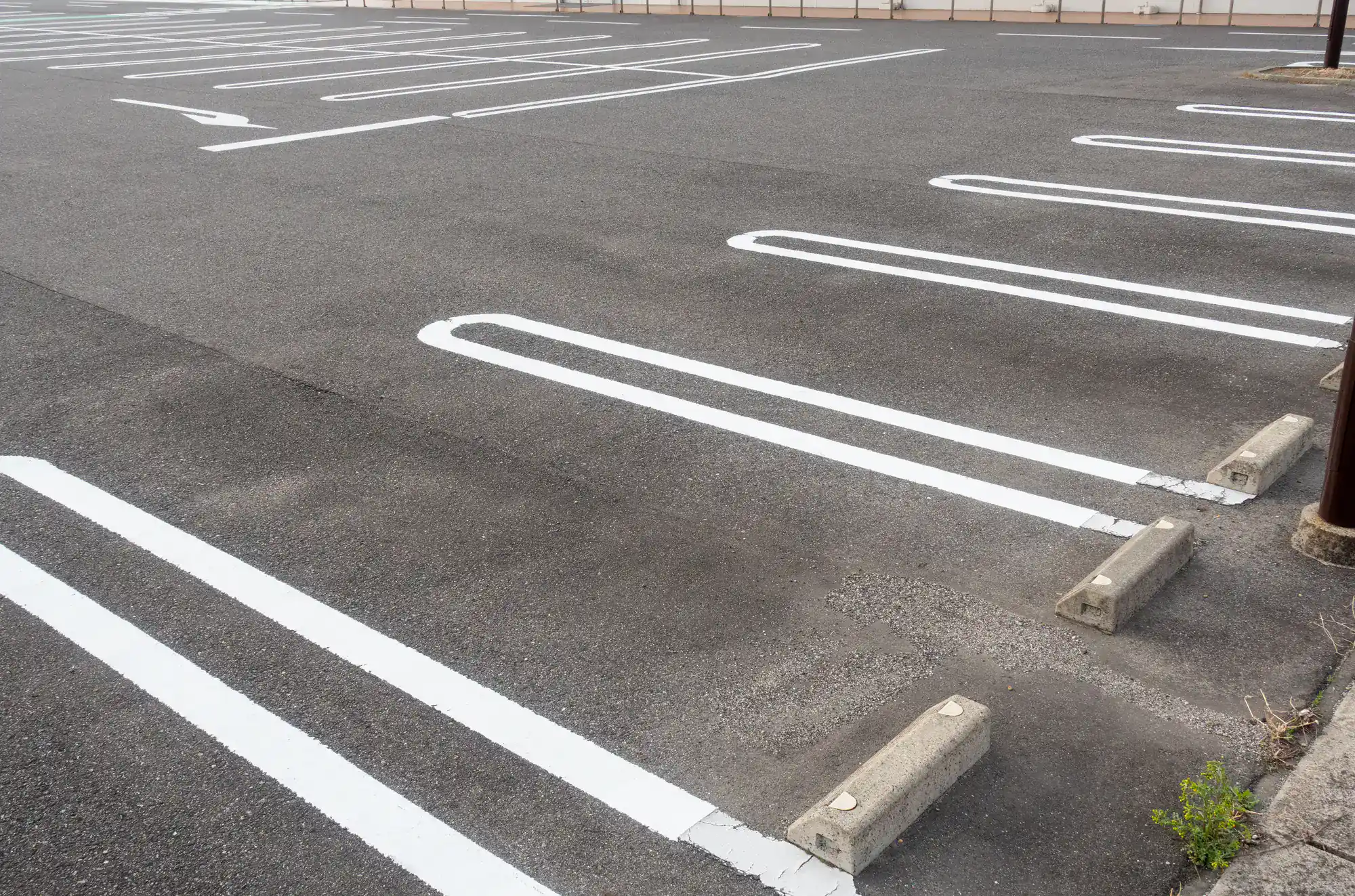
It starts with a site assessment. Before any quote goes out, the lot gets evaluated existing pavement condition, drainage patterns, subbase integrity, and ADA layout requirements. In Odenton, that drainage review matters more than most people expect. The clay-heavy soils common throughout Anne Arundel County don’t drain the way sandy or loam-based soils do, and a lot that holds water is a lot that fails faster. That gets addressed in the design phase, not after the fact.
From there, you get a written proposal with a defined scope, materials spec, and timeline. No verbal estimates, no vague line items. If Anne Arundel County permitting is required for your project which applies to new construction and significant reconfigurations that process gets factored into the schedule upfront so there are no delays once work starts.
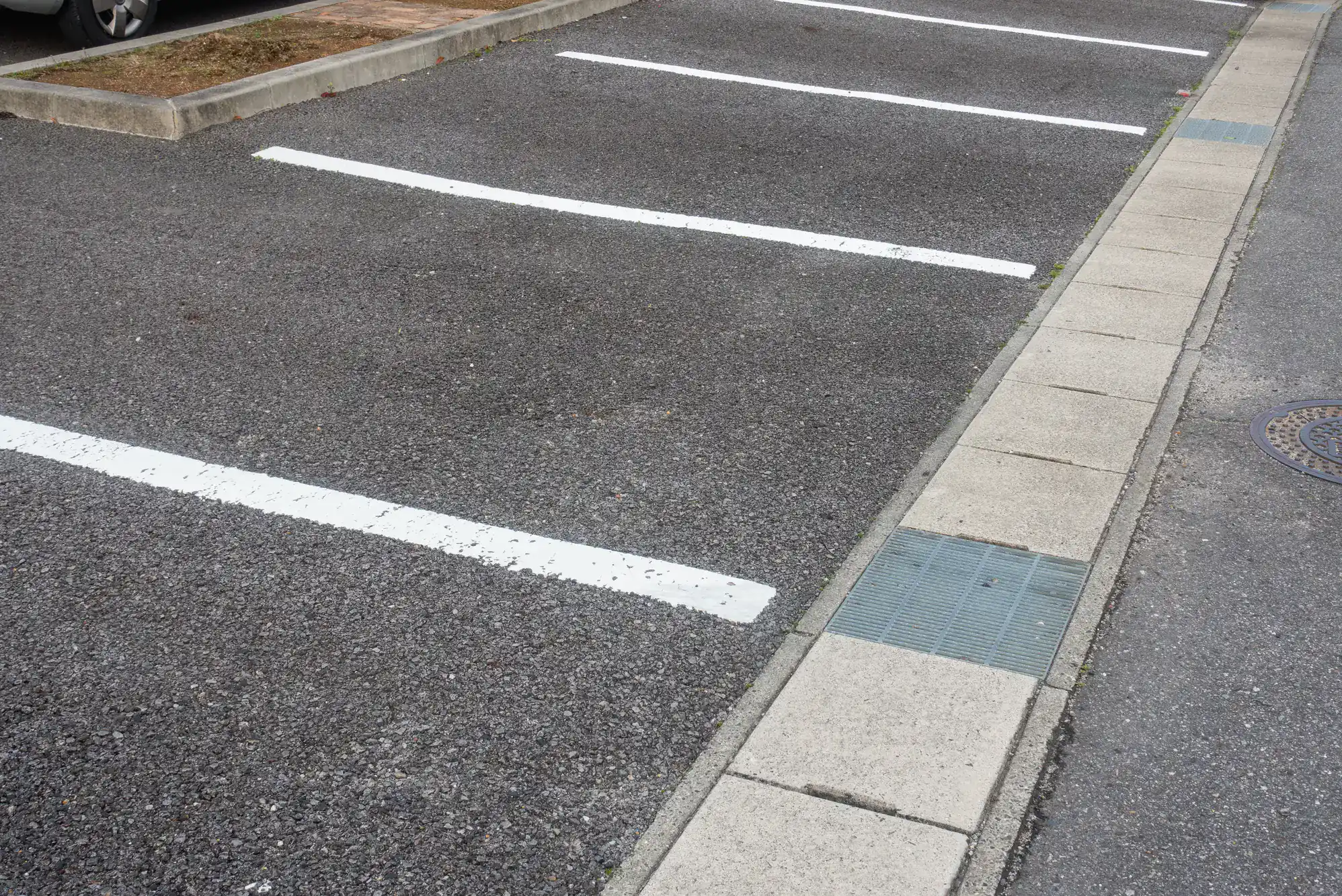
Installation follows the proposal. Subbase preparation comes first, then hot-mix asphalt laid and compacted to commercial-grade thickness typically 3 to 5 inches depending on the traffic load your lot carries. Curing takes 24 to 48 hours before light traffic and up to a week before heavy use. Line striping, including ADA-compliant markings, is the final step. Most commercial lots in Odenton are completed within 3 to 7 days from start to finish.
Ready to get started?
Commercial parking lot paving and residential driveway paving are not the same job. The materials are different, the subbase requirements are different, and the tolerance for error is different. A lot serving a defense contractor campus off Route 175, a medical facility near the Seven Oaks corridor, or a retail center in Piney Orchard carries truck deliveries, high daily vehicle counts, and tenants who expect the surface to hold up year after year. That requires commercial-grade hot-mix asphalt, proper compaction, and a drainage design built for the actual load not a residential mix applied to a larger footprint.
We handle the full scope: new parking lot construction for ground-up commercial projects, full-depth asphalt replacement for lots that have passed the point of maintenance, resurfacing and overlay for surfaces that still have structural integrity, sealcoating and crack filling to extend the life of a lot that’s been properly maintained, and line striping that meets ADA federal requirements. Everything under one contractor, one proposal, and one point of contact.
For Odenton property managers overseeing aging lots built during the BRAC-era development wave many of which are now 10 to 20 years old this full-service model means you’re not coordinating three separate vendors to address what is ultimately one interconnected surface.
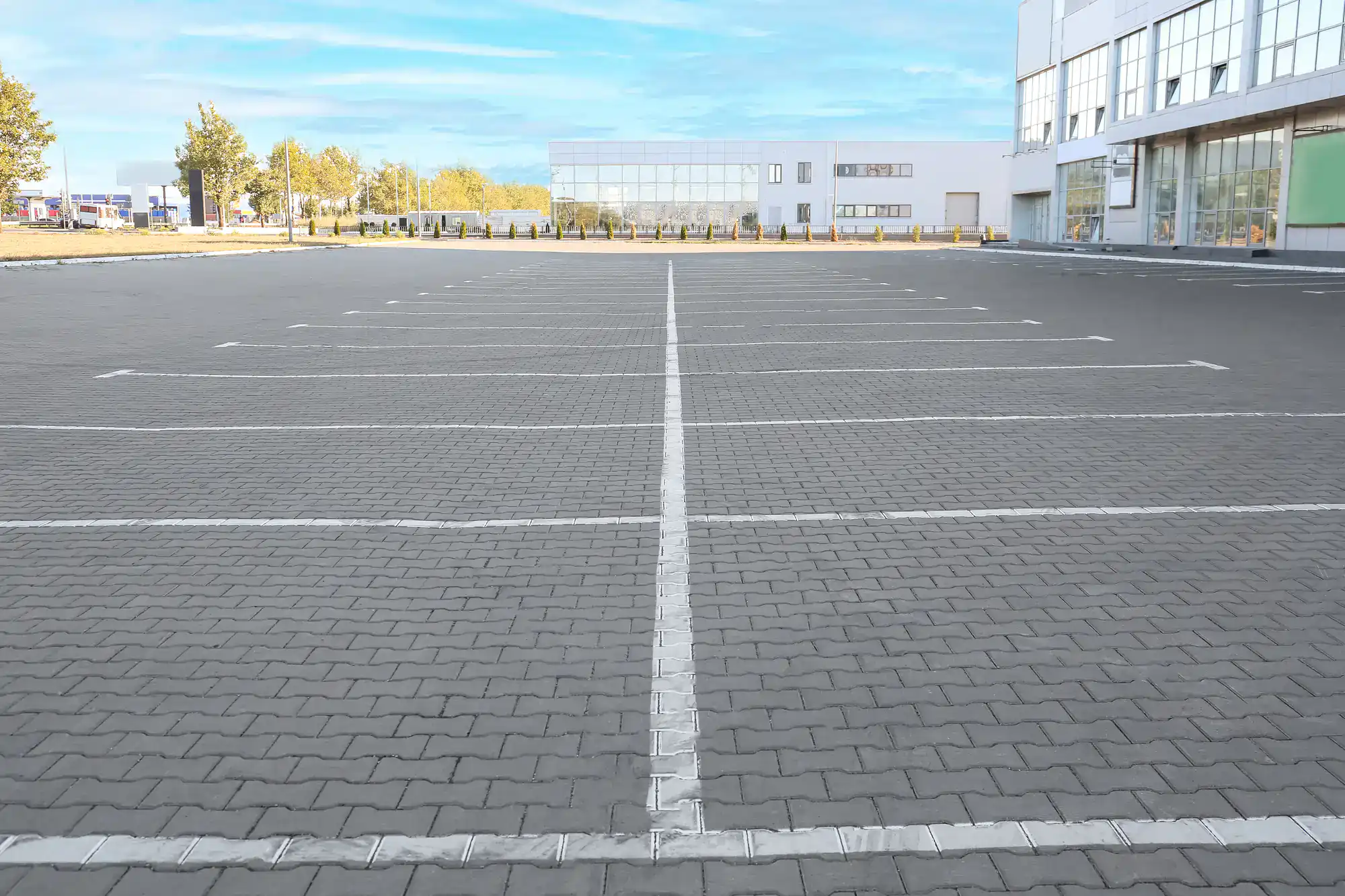
Because Odenton is an unincorporated community, there’s no city government handling permits everything runs through Anne Arundel County’s Department of Inspections and Permits. For new parking lot construction or significant reconfigurations, a commercial permit is typically required before work begins. That includes site plan review, which in Anne Arundel County often involves stormwater management evaluation tied to the county’s Chesapeake Bay restoration requirements. If your project disturbs a meaningful area of impervious surface, you may need to address drainage or stormwater controls as a condition of approval.
For straightforward resurfacing or overlay work on an existing lot, the permit threshold is lower, but it’s still worth confirming with the county before you start. We handle this review as part of the project planning process so by the time a proposal is in your hands, you already know what’s required and what the timeline looks like with permitting factored in.
The honest answer is that it depends on the scope, and anyone quoting you a number without seeing the lot first isn’t giving you a real number. That said, here’s what actually drives cost: lot size, current pavement condition, subbase depth required, drainage work needed, and whether ADA reconfiguration is part of the project. In the Odenton market, full-depth replacement for a mid-size commercial lot typically runs in the range of $3 to $7 per square foot depending on those variables. Resurfacing over a structurally sound base is less. Sealcoating and crack filling as a standalone maintenance service is significantly less.
What matters more than the per-square-foot number is what you’re comparing. A lower bid that skips proper subbase prep or uses undersized asphalt thickness will cost more over a 5-year horizon than a properly installed lot that holds up through a decade of Maryland winters. For a written estimate specific to your Odenton property, the process starts with a site visit not a phone quote.
Freeze-thaw cycling is the primary reason commercial parking lots in Odenton deteriorate faster than property owners expect. When surface cracks go unfilled, water works its way into the pavement structure. When that water freezes, it expands and that expansion fractures the asphalt from the inside. One winter cycle makes the crack wider. The next one makes it deeper. By the time it’s a visible pothole, the damage has already spread below the surface.
Odenton doesn’t get the urban heat island buffer that slightly moderates temperatures in Baltimore proper, which means the freeze-thaw cycles here are consistent and hard on pavement year after year. The right response is a combination of proper installation adequate asphalt thickness, drainage design that keeps water away from the subbase and a maintenance schedule that includes sealcoating every 3 to 5 years and crack filling before each winter season. Lots that follow this cycle routinely last 20-plus years. Lots that don’t tend to need full replacement within 10.
ADA parking requirements are federal, which means they apply uniformly to commercial properties in Odenton regardless of what Anne Arundel County’s local codes say. The core requirements cover the ratio of accessible spaces to total spaces, minimum dimensions for standard accessible spaces and van-accessible spaces, the required width of access aisles, maximum slope limits across the accessible route, and clearly marked signage. For a lot with 25 spaces, for example, at least one must be van-accessible. For a lot with 100 spaces, four accessible spaces are required, including one van-accessible.
Where property managers often get caught is not in the number of spaces but in the slope and access route requirements. A space can be correctly sized and marked but still non-compliant if the surface slope exceeds 2% or if the accessible route to the building entrance is obstructed. First-violation fines under the ADA reach $75,000. We design ADA compliance into every commercial paving project in Odenton from the layout phase not as a line item added at the end.
Hot-mix asphalt requires an ambient temperature of at least 50°F to be installed properly, which in Odenton typically opens the installation window from mid-April through October. Spring and fall are both strong seasons spring because property managers are responding to winter damage and want projects completed before summer heat, fall because it’s the last window before temperatures drop and the next freeze-thaw season begins.
The practical reality is that spring books fast. Once the weather breaks in March and April, contractors’ schedules fill quickly as everyone who deferred a project over winter moves at once. If you’re managing a commercial property in Odenton and you know a paving project is coming whether it’s a full replacement or a sealcoating cycle the best time to get a proposal in hand is late winter, even if the work won’t happen until April or May. That gives you time to get through Anne Arundel County permitting if required and lock in a schedule before the spring backlog builds.
Yes, and for most commercial properties along Odenton’s Route 175 corridor or within the Piney Orchard and Seven Oaks commercial areas, phased paving is the standard approach not the exception. Closing an entire lot for a week isn’t realistic when you have tenants, customers, or daily foot traffic that can’t stop. Phased paving divides the lot into sections, completing one section at a time while the rest remains accessible. It adds some coordination to the project, but it keeps your operation running and your tenants from fielding complaints.
The key to making phased paving work is planning the sequence correctly from the start accounting for traffic flow, emergency vehicle access, ADA route continuity throughout the project, and the logical order of sections based on drainage and subbase conditions. That planning happens during the site assessment and gets documented in the written proposal so everyone knows what’s happening, when, and in what order. For high-traffic commercial properties in Odenton, this is a conversation worth having before the quote is finalized, not after.
Other Services we provide in Odenton