
Hear from Our Customers

A deteriorating parking lot isn’t just an eyesore it’s a liability. Whether you’re managing a medical office near Calvert Health, a retail space along Solomons Island Road, or a professional building near the Prince Frederick courthouse complex, the condition of your lot is the first thing every visitor, patient, or client sees before they walk through your door. Cracks, potholes, and faded striping communicate neglect before you’ve had a chance to say a word.
Calvert County’s climate is genuinely hard on asphalt. The peninsula averages 43.1 inches of rain and nearly 20 inches of snow annually, and winter temperatures swing above and below freezing regularly. That freeze-thaw cycle is the primary reason parking lots in Prince Frederick deteriorate faster than property owners expect water gets into surface cracks, freezes, expands, and forces those cracks wider every single winter. A lot that wasn’t built with proper drainage grading and subbase preparation doesn’t stand a chance against that cycle.
When the work is done right, you get a surface that handles real commercial traffic, holds its integrity through Calvert County winters, and doesn’t require constant patching. You also get ADA-compliant striping and accessible routes that protect you from federal exposure something that matters especially in Prince Frederick, where medical and government facilities make up a significant portion of the commercial market.
We’ve been operating across Maryland and Virginia since 2011. That’s 14 years of Mid-Atlantic winters, freeze-thaw cycles, and commercial paving projects that had to perform not just look good on day one. We hold MHIC License #159766, carry BBB A+ accreditation, and are based out of Annapolis about 35 miles up Route 2/4 from Prince Frederick. Close enough to know this market, credentialed enough to be accountable in it.
In a county seat like Prince Frederick, where the Inspections and Permits office is literally on Main Street and commercial buyers range from county facility managers to medical office landlords, the bar for contractor vetting is higher than in most suburban markets. MHIC licensing is verifiable through the Maryland database before you sign anything. BBB accreditation is public. Fourteen years in business is the kind of track record that fly-by-night crews simply can’t fake.
We handle every phase of a commercial lot’s lifecycle new construction, resurfacing, crack filling, sealcoating, and line striping so you’re not managing three vendors to maintain one parking lot.
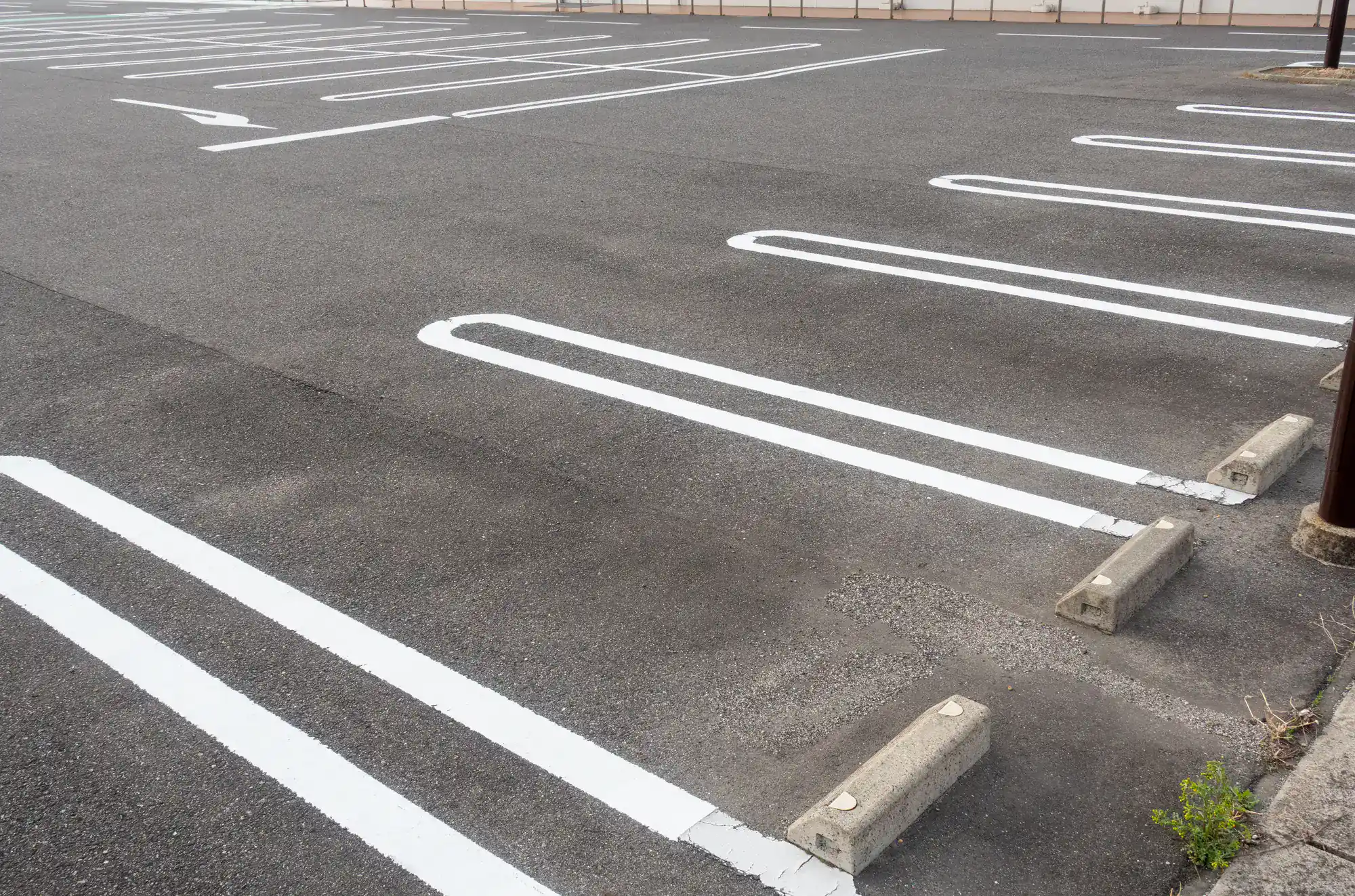
It starts with a site assessment. Before any asphalt gets laid, we evaluate the existing surface, drainage patterns, and subbase conditions. In Prince Frederick, this step matters more than most contractors let on the peninsula’s clay-heavy soils and documented freeze-thaw dynamics mean that a lot built on an inadequate base will fail prematurely, regardless of how good the asphalt mix is. Drainage grading gets mapped here, because 43.1 inches of annual rainfall needs somewhere to go that isn’t sitting under your pavement.
From there, we prepare a written quote itemized, specific, and signed before any work begins. For commercial projects in Prince Frederick, that process also includes navigating Calvert County’s permitting requirements through the Inspections and Permits office at 150 Main Street. Projects that disturb more than 5,000 square feet require full grading permit review, and commercial lots must meet Calvert County’s stormwater management standards under Chapter 123. We handle that documentation you don’t have to figure out what the county needs.
Installation runs April through October when temperatures stay consistently above 50°F, which is the minimum for proper hot-mix asphalt compaction. Once the base course is down, Calvert County requires as-built plan submission before the project can advance a step we handle as part of the job, not hand off to you to figure out. Final striping, ADA markings, and accessible route design complete the project before the lot reopens.
Ready to get started?
We cover the full range of commercial parking lot services in Prince Frederick and across Calvert County new asphalt parking lot installation, resurfacing and overlays, crack filling, sealcoating, and parking lot line striping. For property owners managing retail centers along Route 2/4, office buildings near the courthouse corridor, or medical facilities adjacent to Calvert Health, that means one contractor handles the work from initial grading through final striping, with no handoffs and no gaps in accountability.
New parking lot construction includes subgrade preparation, base course installation, surface course paving, drainage grading, and complete ADA-compliant striping accessible space ratios, van-accessible aisles, and compliant route markings built into the design from the start, not added as an afterthought. For properties near Calvert Health Medical Center or county government facilities where patient and visitor accessibility is non-negotiable, this matters more than it does in a standard retail environment.
For existing lots that have taken a few too many Calvert County winters, resurfacing and overlay work can extend pavement life significantly without the cost of full replacement provided the subbase is still sound. Sealcoating every two to four years slows oxidation and surface degradation caused by road salt and weather exposure. Crack filling stops the freeze-thaw cycle from turning a surface crack into a pothole before the next winter hits. Each service is available individually or as part of an ongoing maintenance program built around your lot’s specific condition and traffic load.
Yes, in most cases. Because Prince Frederick is unincorporated, all permitting runs through Calvert County’s Inspections and Permits office, located at 150 Main Street, Floor 3, in Prince Frederick. For commercial paving projects, the key thresholds are grading disturbance and stormwater impact. As of March 2023, grading activities that disturb less than 5,000 square feet and move less than 100 cubic yards of earth no longer require a full grading permit application, but they do still require a Plot Plan submission. Most commercial parking lot projects exceed those thresholds and require full permit review.
Beyond grading, Calvert County’s stormwater management ordinance under Chapter 123 requires that Environmental Site Design techniques be evaluated before any structural drainage solutions are implemented. That affects how your lot gets graded and how runoff is managed especially relevant given the county’s 43-plus inches of annual rainfall. We handle permit documentation and as-built plan submissions as part of the commercial project scope, so you’re not navigating the county’s requirements on your own.
It has a significant impact, and most property owners in Prince Frederick don’t fully understand why until they’ve watched a lot deteriorate faster than expected. Calvert County averages 43.1 inches of precipitation and 19.4 inches of snowfall per year, and winter temperatures in Prince Frederick regularly oscillate above and below 32°F. That freeze-thaw cycle is the primary mechanical force that destroys asphalt from the inside out water enters surface cracks, freezes, expands, and forces those cracks wider over and over again through the winter months.
A lot built with proper drainage grading, adequate base depth, and quality compaction can survive that cycle for 20 to 25 years with regular maintenance. A lot that was built fast and cheap inadequate base, poor drainage, rushed compaction will start showing serious deterioration within five to seven years under Prince Frederick conditions. The difference isn’t visible on day one. It shows up after the third or fourth winter, when the repair costs start stacking up. Getting the subbase and drainage right at the start is what separates a long-lasting lot from one that becomes a recurring expense.
Resurfacing also called an overlay means applying a new layer of asphalt over the existing surface after milling or cleaning. It works well when the subbase is still structurally sound and the existing pavement has surface-level deterioration: cracking, oxidation, minor rutting, or general wear. It costs significantly less than full replacement and can add 10 to 15 years of life to a lot that’s been maintained reasonably well.
Full replacement means removing the existing pavement entirely, re-grading the subbase, and starting from scratch. That’s necessary when the base has failed when you’re seeing alligator cracking across large sections, significant heaving from freeze-thaw damage, or drainage problems that can’t be solved at the surface level. In Prince Frederick, where clay-heavy soils and wet winters put real stress on subbase stability, a lot that’s been neglected for too long often needs full replacement rather than an overlay. The honest answer is that you can’t know which option is right without a site assessment. A reputable contractor will tell you which one actually makes sense for your specific lot not just which one costs more.
Maryland requires paving contractors to hold a Home Improvement Commission (MHIC) license to legally perform work in the state. That license is publicly verifiable you can search any contractor’s license number through the Maryland MHIC database before you sign a contract or hand over a deposit. We hold MHIC License #159766, which is searchable and current.
This matters in the Prince Frederick market specifically because the area has seen its share of unlicensed crews working the Route 2/4 corridor particularly in spring and summer when demand peaks and property managers are eager to get lots repaired before the busy season. Unlicensed contractors have no accountability to Maryland’s licensing system, no access to the MHIC guaranty fund that protects property owners if a contractor fails to perform, and no verification of competency. If a contractor can’t or won’t give you their MHIC license number upfront, that’s a clear signal to keep looking. Any legitimate contractor operating in Prince Frederick should provide it without hesitation.
The reliable window for commercial asphalt paving in Prince Frederick runs from mid-April through October. Hot-mix asphalt requires ambient temperatures consistently above 50°F to compact and cure properly below that threshold, the mix cools too quickly, compaction suffers, and the finished surface is more vulnerable to early cracking and weather damage. Southern Maryland’s spring arrives earlier than in more northern parts of the state, which means the season here opens a bit sooner than it does in, say, Western Maryland.
The practical advice for Prince Frederick property managers is to assess your lot in February or March right after winter has done its worst and schedule your quote early. Paving contractors in Calvert County fill their spring and summer calendars fast, and the best contractors are often booked weeks out by the time May arrives. If you’re managing a retail property along Solomons Island Road or a medical facility with high daily foot traffic, scheduling early also gives you more flexibility to phase the work in a way that minimizes disruption to your tenants or patients.
Yes the ADA applies to parking lots serving places of public accommodation, which includes virtually every commercial property in Prince Frederick: retail centers, medical offices, professional buildings, churches, and any facility open to the public. The requirements aren’t optional, and federal enforcement has become more active in recent years. First-violation fines can reach $75,000 per incident under federal ADA guidelines.
The specific requirements include minimum ratios of accessible spaces to total spaces one accessible space per 25 total spaces at minimum van-accessible aisles at least eight feet wide, running slopes no greater than 1:12 on accessible routes, and cross slopes no greater than 1:48. In Prince Frederick, where a significant portion of commercial parking serves patients at Calvert Health Medical Center, visitors to county government offices, and clients at professional services firms, the proportion of users who depend on accessible parking tends to be higher than in a purely retail environment. Building ADA compliance into the design from the start rather than retrofitting it after a complaint is both the legally sound approach and the more cost-effective one. Retrofitting accessible features into a finished lot almost always costs more than designing them in correctly the first time.
Other Services we provide in Prince Frederick