Hear from Our Customers
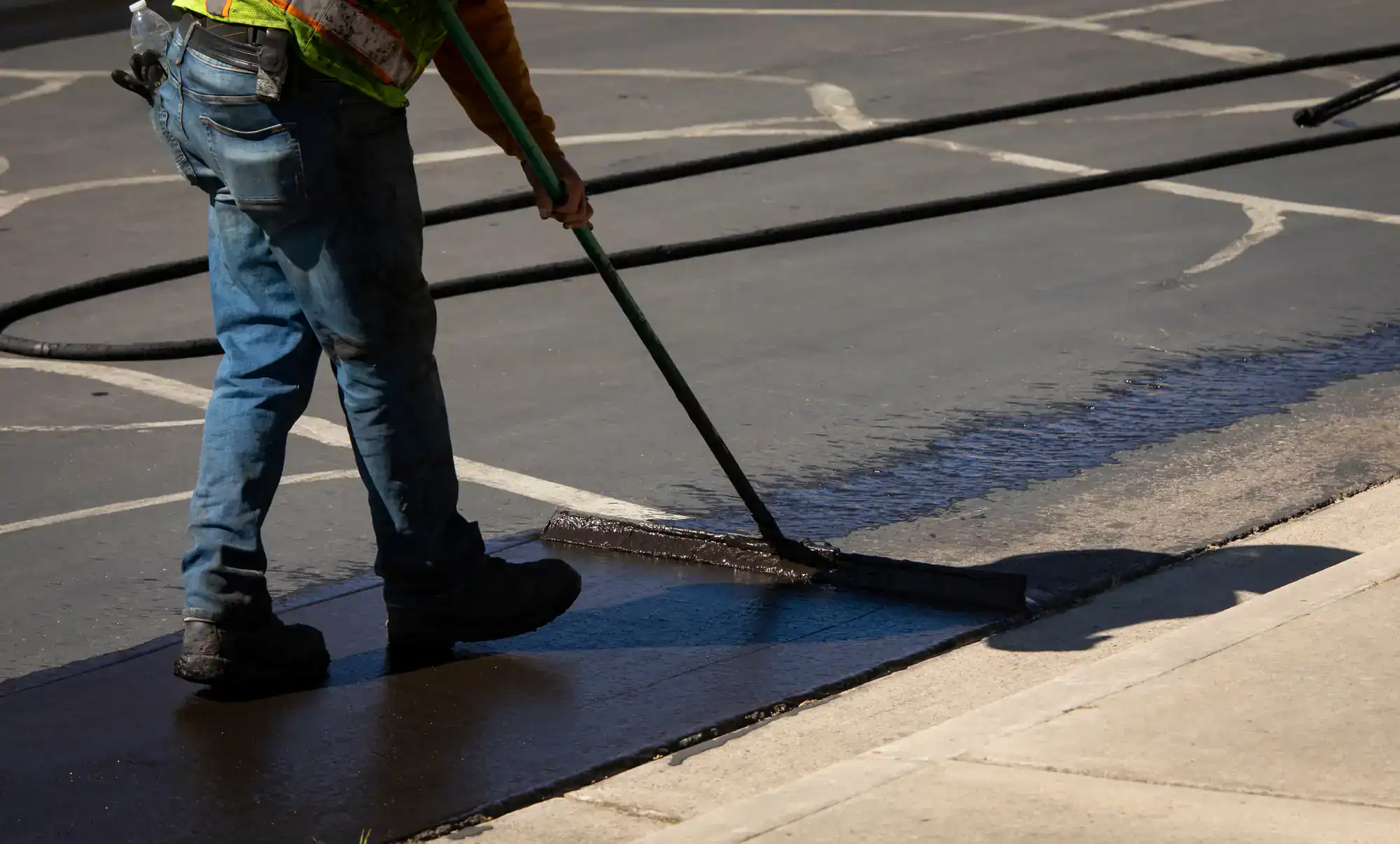
Brooklyn Park sits in a pocket bounded by I-695 to the south and I-895 to the north two of the most heavily salted highway corridors in Anne Arundel County. That salt doesn’t stay on the road. It travels. It lands on your driveway, works into every unsealed crack, and starts breaking down the asphalt binder from the surface down. A properly applied sealcoat creates a barrier that stops that process before it gets expensive.
Then there’s the freeze-thaw problem. The Anne Arundel County area sees somewhere between 10 and 20 complete freeze-thaw cycles in a typical Maryland winter not just cold days, but full cycles where temperatures cross 32°F in both directions. Every time that happens, water that’s already in an unsealed crack expands, then contracts, then widens the gap a little more. By March, what looked like a hairline crack in October is a structural problem. Sealcoating before winter closes that door.
Most homes in Old Brooklyn Park, Arundel Gardens, and Roland Terrace were built between the 1940s and 1960s. That means driveways that have been through 50 or 60 Maryland winters and the sealcoating that gets applied to them matters more, not less. A fresh, properly prepped coat restores the surface, slows oxidation, and extends the life of an asset that would cost $4,200 to $9,000 to replace outright. For a community where median home values have climbed toward $290,000, spending a few hundred dollars to protect that investment is one of the more straightforward decisions a homeowner can make.
We’ve been operating in Maryland since 2011, with a physical office in Annapolis and a service area that covers Anne Arundel County including Brooklyn Park and the surrounding communities of Ferndale, Linthicum, and Glen Burnie. Edward Smith himself brings over 40 years of personal experience in the asphalt industry, which means he has seen what Maryland winters do to driveways across every era of construction this region has produced.
The credential that matters most in Brooklyn Park is our MHIC License #159766. Maryland’s Home Improvement Commission requires it for any contractor performing residential work in the state, and it’s publicly verifiable at the Maryland DLLR website. In a community like Brooklyn Park where door-to-door sealcoating crews are a known and documented problem that license number is the clearest line between a legitimate contractor and one you should turn away at the door.
We also carry a BBB Accredited A+ rating. Not because it looks good on a website, but because it means there’s a third party you can contact if something goes wrong. That kind of accountability matters, and it’s something most of the trucks that show up uninvited on your street can’t offer.
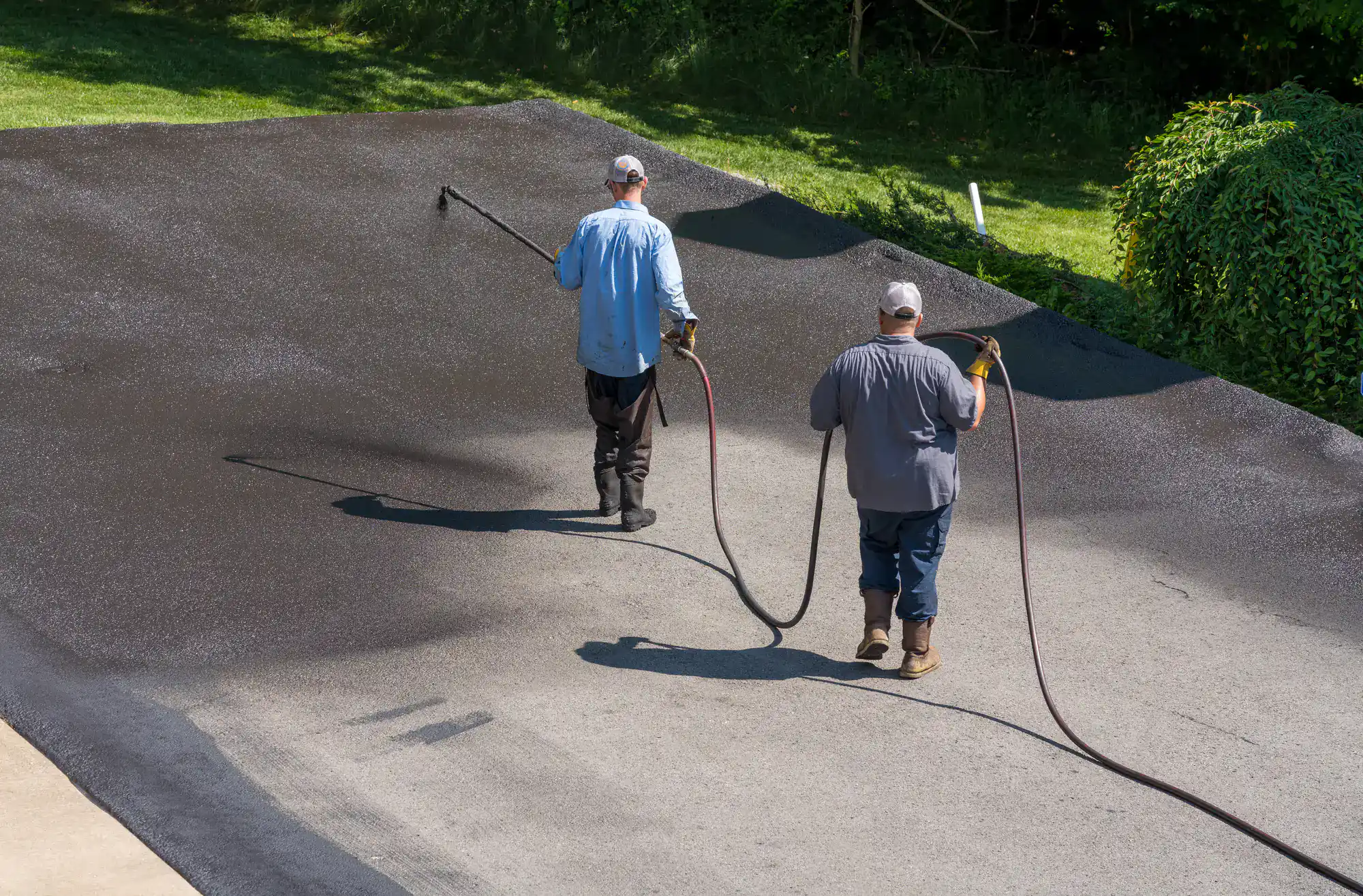
The first thing that happens on any job is a real assessment of your driveway’s condition. This matters more in Brooklyn Park than in a lot of other places, because the housing stock here is older. A driveway that’s been through 50 winters and multiple prior sealcoating applications needs to be evaluated before anything is applied not just sprayed over. If there are structural cracks, they get filled with proper crack filler first. Applying sealcoat over unfilled cracks is the single most common reason sealcoating fails within a season, and it’s exactly what separates a contractor who knows what they’re doing from one who doesn’t.
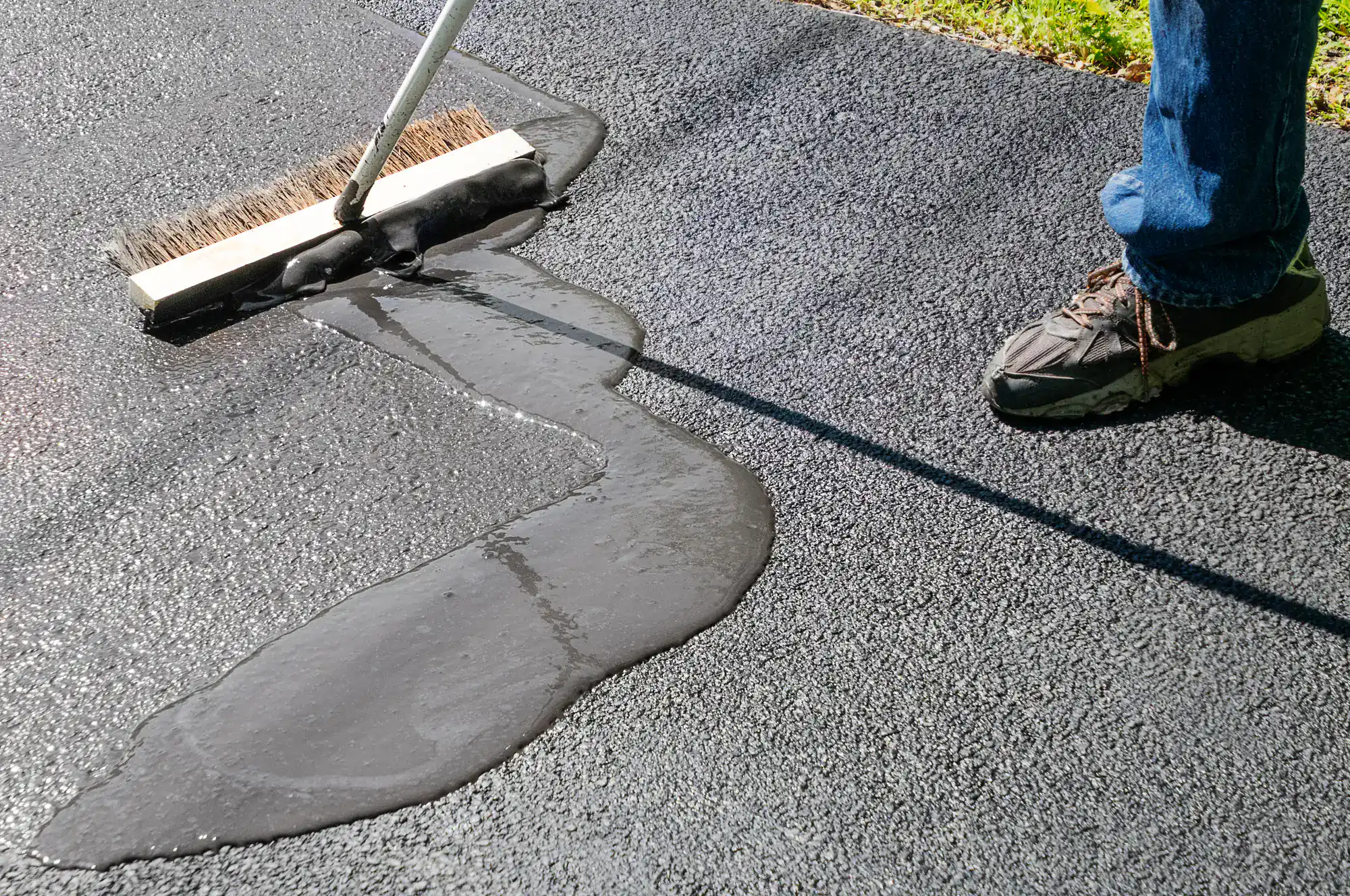
Once the surface is prepared, it gets cleaned thoroughly debris, oil spots, and any loose material removed. Sealcoat applied over a contaminated surface won’t bond, and it won’t last. After cleaning, the sealcoat is applied in the appropriate number of coats for the driveway’s condition and age. Older driveways often need more attention at this stage, and that’s accounted for upfront, not discovered mid-job.
Cure time typically runs 24 to 48 hours depending on temperature and humidity conditions that are reliably workable in Brooklyn Park from roughly mid-spring through early fall. The sealcoating season here runs May through September, with late spring and late summer being the strongest windows. If you’re coming off a rough winter and you’re seeing new cracks, that’s your cue. No permit is required for routine residential driveway sealcoating in Anne Arundel County, so there’s no administrative delay between your estimate and getting the work done.
Ready to get started?
Our asphalt driveway sealcoating service in Brooklyn Park covers the full process: surface assessment, crack filling, cleaning, and sealcoat application. There’s no version of this job where prep gets skipped to save time. For Brooklyn Park’s older driveways many of which have accumulated layers of prior sealcoating, oxidized surfaces, and existing crack damage that preparation step is often what determines whether the job holds up through the next winter or starts peeling by November.
Beyond residential driveways, we also handle commercial parking lot sealcoating and blacktop maintenance for properties along the MD 648 and MD 2 corridors. That includes crack repair, resurfacing, and line striping for businesses operating in and around the Brooklyn Park area. The same standards apply regardless of the job size proper prep, quality materials, and a finished surface that’s built to last through Anne Arundel County’s seasonal conditions.
The work is backed by MHIC License #159766, which is the legal requirement for any residential home improvement contractor operating in Maryland. It’s also backed by over four decades of hands-on experience with asphalt in this region. If your driveway needs more than sealcoating if it’s at the point where resurfacing or full replacement makes more financial sense that’s something you’ll hear upfront, during the estimate, not after the crew has already shown up. Honest assessments are part of the job.
The standard recommendation is every two to three years, but in Brooklyn Park the case for staying closer to that two-year mark is stronger than in a lot of other places. You’re dealing with road salt spray from I-695 and I-895, a high number of freeze-thaw cycles each winter, and if your home was built before 1970 a driveway that has already been through decades of stress. All of those factors accelerate surface wear and oxidation.
A driveway that gets sealed on a consistent schedule stays in significantly better structural shape than one that gets neglected for five or six years and then needs emergency attention. The math is simple: regular sealcoating every two to three years costs a fraction of what crack repair, patching, or full replacement runs. If you’re not sure where your driveway stands, a free estimate will tell you whether you’re in maintenance territory or whether there’s more work needed before sealing makes sense.
Sealcoating is a protective surface treatment. It seals the existing asphalt against water, salt, UV damage, and petroleum-based contaminants. It doesn’t add structural thickness or fix deep damage it protects what’s already there and slows further deterioration. If your driveway has surface oxidation, minor cracking, and general wear but is still structurally sound underneath, sealcoating is the right call.
Resurfacing also called overlaying involves applying a new layer of asphalt over the existing surface. It’s appropriate when the driveway has significant cracking, potholes, or surface failure that goes beyond what sealcoating can address. For many Brooklyn Park driveways built in the 1950s and 1960s, the answer depends on what’s happening beneath the surface, not just what it looks like on top. That’s exactly the kind of assessment that happens before any work is recommended. You won’t be sold sealcoating on a driveway that needs resurfacing, and you won’t be pushed toward resurfacing on a driveway that just needs a good seal.
Yes but the cracks need to be filled first, and that’s not a step that should be skipped. Applying sealcoat directly over open cracks doesn’t seal them. The sealcoat bridges the surface temporarily, but water still gets in from the sides, and once the next freeze-thaw cycle hits, the crack opens wider and the sealcoat above it breaks apart. It’s one of the most common reasons homeowners end up calling for a second opinion after a job that looked fine in September falls apart by February.
The right process is to fill structural cracks with a proper crack filler not sealcoat let it cure, and then apply the sealcoat over a prepared, stable surface. For driveways in Arundel Gardens, Pumphrey, or Old Brooklyn Park that have been through 40 or 50 winters, crack filling is often a significant part of the job, not an afterthought. The condition of your specific driveway determines how much prep is needed, and that gets assessed before any quote is finalized.
The single most important thing to check is their MHIC license number. Maryland’s Home Improvement Commission requires any contractor performing residential home improvement work including driveway sealcoating to hold a valid MHIC license. It’s not optional, and it’s not just a formality. You can verify any MHIC number at the Maryland DLLR website before you agree to anything.
This matters in Brooklyn Park specifically because the area is a documented target for itinerant sealcoating crews. Dense neighborhoods near major highway interchanges which describes Brooklyn Park almost exactly are where these operations tend to work. They knock on doors, mention leftover material from a nearby job, collect a cash deposit, and either disappear or deliver work that fails within a season. Our MHIC number is #159766. Look it up. Any contractor who can’t give you a verifiable MHIC number should not be touching your driveway.
The workable sealcoating season in Anne Arundel County runs roughly May through September. Sealcoating requires ambient temperatures above 50°F and a dry window of at least 24 hours conditions that are reliably met in Brooklyn Park from mid-spring through early fall. The two strongest demand windows are late spring, when homeowners assess the damage from the previous winter’s freeze-thaw cycles, and late August through September, when the goal is to get protected before the next cold season begins.
If you’re coming off a winter where you noticed new cracking or surface deterioration, spring is the time to act not because it’s a marketing window, but because every additional freeze-thaw cycle makes existing damage worse. Waiting until fall means your driveway has gone through another full summer of UV oxidation on top of whatever the winter left behind. The sooner a damaged surface gets sealed, the less prep work is needed and the better the final result holds up.
No permit is required for routine residential driveway sealcoating in Anne Arundel County. Brooklyn Park is an unincorporated community within the county it doesn’t have its own municipal government or separate permitting process so county rules apply, and standard sealcoating falls well outside the threshold that triggers a permit requirement. There’s no excavation, no structural change, and no work that touches public right-of-way, which means there’s no administrative delay between scheduling your estimate and getting the job done.
Where permitting can become relevant is if you’re doing more significant work expanding a driveway footprint, adding new impervious surface, or making changes that affect stormwater drainage. Those scenarios fall under different rules. But for the vast majority of Brooklyn Park homeowners who need their existing driveway cleaned, cracked, and sealed before winter, there’s nothing standing between you and getting it done except the weather window and your schedule.
Other Services we provide in Brooklyn Park