Hear from Our Customers
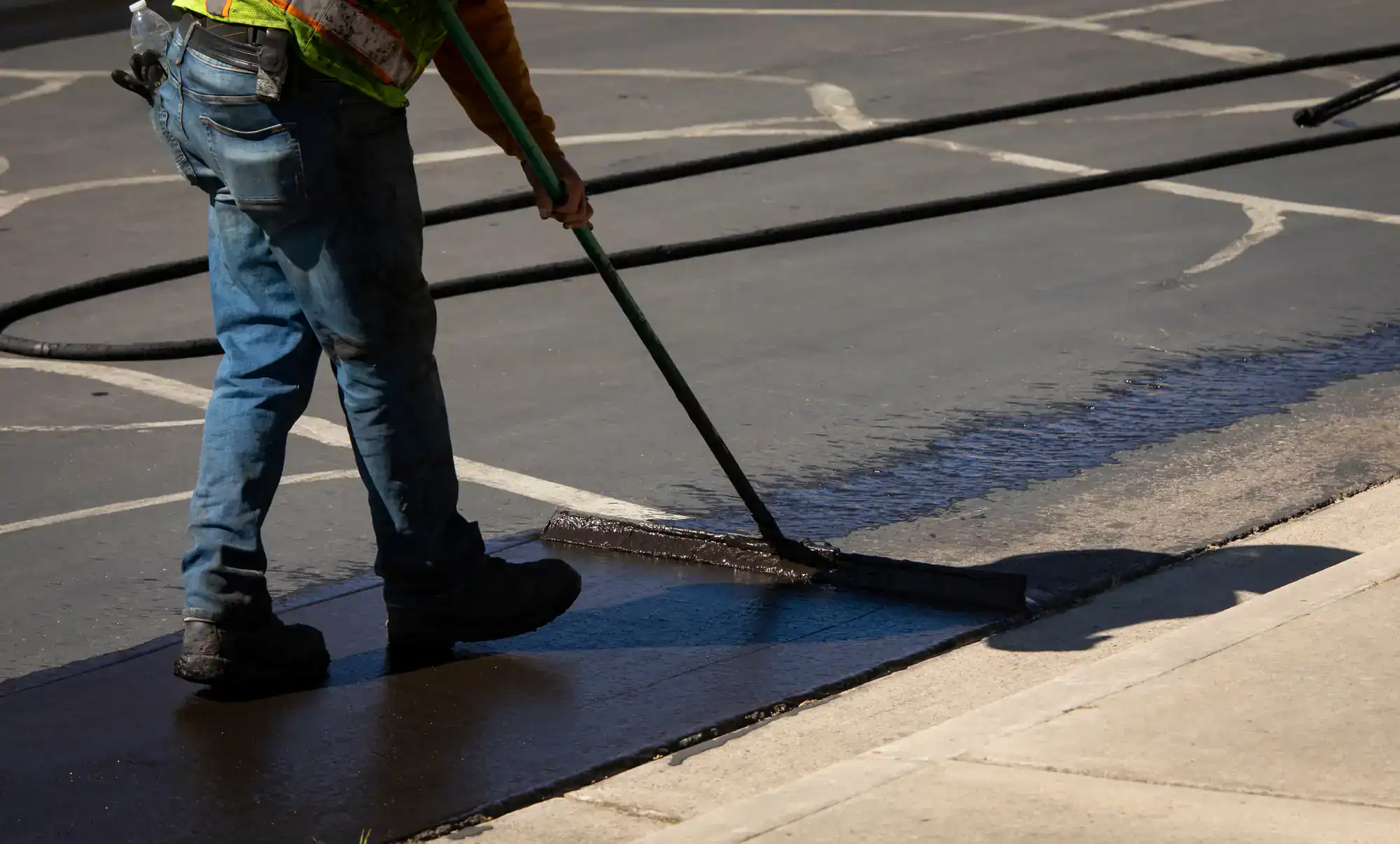
Living on the western shore of the Chesapeake Bay puts your property in a different category than homes twenty miles inland. The salt-laden air that blows in off the water accelerates asphalt oxidation the same process that dries out the binder holding your pavement together, turns it gray, and makes it crack. A properly applied sealcoat creates a moisture and UV barrier that slows that process down significantly, keeping your driveway flexible and structurally sound instead of brittle and crumbling.
Calvert County averages over 43 inches of rain per year and regular freeze-thaw cycling through January and February. Water that gets into unsealed asphalt through surface cracks doesn’t just sit there it freezes, expands, and widens those cracks from the inside out. That’s how potholes start, and that’s how a driveway that could’ve lasted 25 years ends up needing full replacement in 10. Sealcoating every two to three years breaks that cycle before it gets expensive.
There’s also the property value side of this. The median home value in Chesapeake Beach is $444,600. A cracked, oxidized, faded driveway signals neglect to buyers and appraisers and it costs far more to fix than it would have to maintain. Spending $250–$400 on asphalt sealcoating now versus $4,200–$9,000 on full replacement later is one of the clearest ROI decisions a homeowner can make.
We’re based in Annapolis about 25 miles from Chesapeake Beach via MD 260 and MD 2 and have been serving Maryland and Virginia homeowners for over 14 years. The personal industry experience behind our company goes back over four decades, which means the person overseeing your job has seen what works, what fails, and why across every material, every season, and every type of coastal and inland Maryland condition.
We hold MHIC License #159766, which is the Maryland Home Improvement Commission credential required by law for any residential paving or sealcoating work in the state. That license is publicly verifiable. We also carry BBB Accredited Business status with an A+ rating. These aren’t decorative credentials they’re the baseline for accountability that every homeowner in Calvert County deserves from a contractor they invite onto their property.
From waterfront neighborhoods along Bayside Road to residential streets off MD 260, the driveways in Chesapeake Beach face conditions that inland contractors simply don’t have experience with. That gap in understanding shows up in the work. We’ve built our reputation on understanding those specific coastal pressures and applying solutions that actually hold up to them.
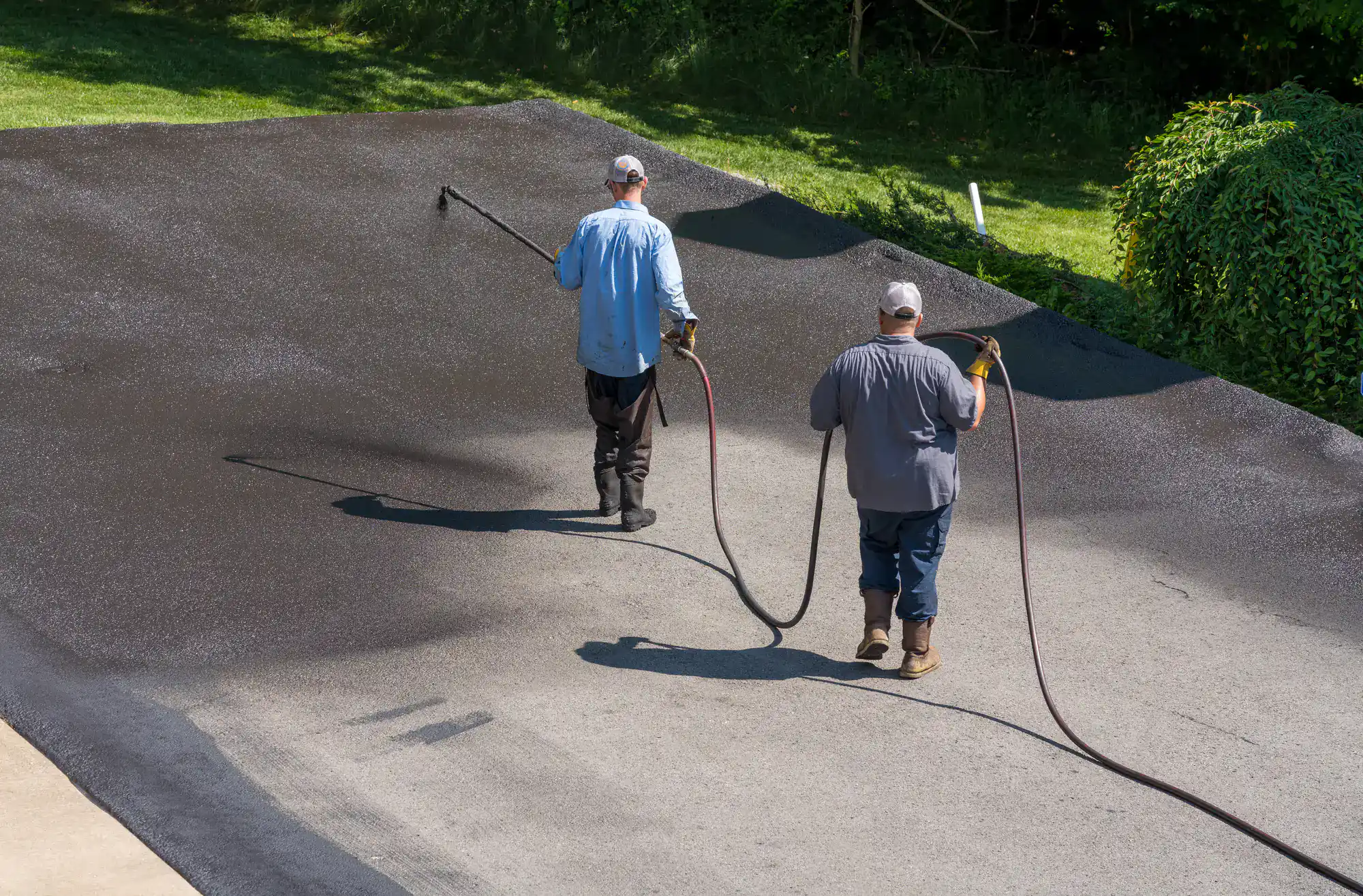
The first thing that happens before any sealant touches your driveway is a thorough surface assessment. Existing cracks, oil spots, and surface deterioration all get identified and addressed before anything is applied. In a coastal environment like Chesapeake Beach where salt air and humidity have likely already worked their way into the pavement skipping this step is how you get sealcoat that peels in a season. It doesn’t get skipped.
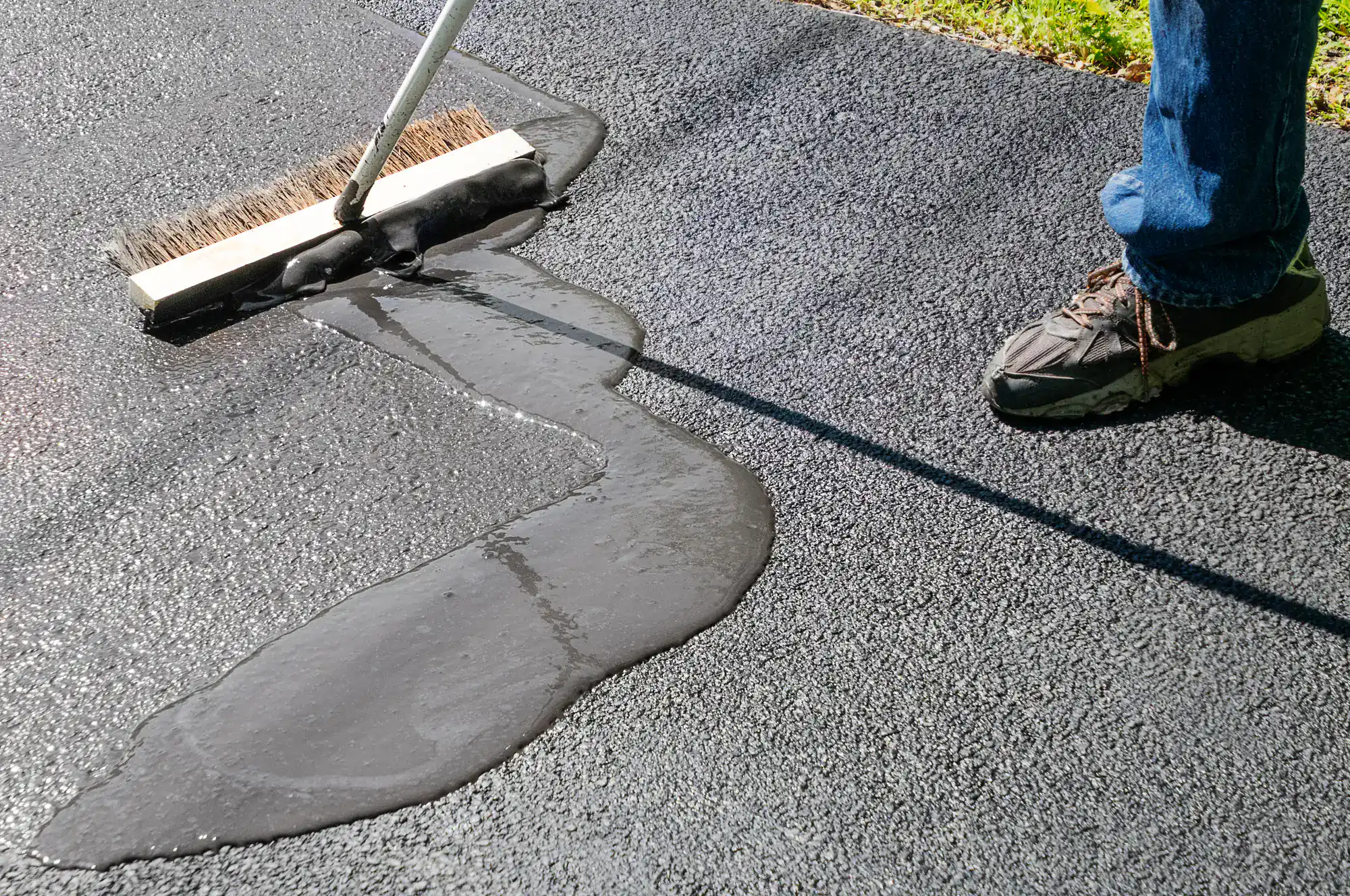
Surface prep starts with power blowing and sweeping to clear debris, followed by oil and chemical spot treatment with a primer. Any cracks get filled before the sealcoat goes down. This matters because sealcoating over an unprepped surface doesn’t protect anything it just covers up a problem that’s still getting worse underneath. Once the surface is clean and treated, we apply the sealcoat in a way that forces it into the pavement’s pores, not just painted across the top.
Timing matters here too. The ideal sealcoating window in Chesapeake Beach runs from May through September, when temperatures are consistently above 50°F and the application can cure properly. If you’re thinking about getting this done before the summer season before the marina parking lots fill up and the neighborhood is in full use spring is the right call. Most jobs are completed in a single visit, and the surface is ready for light traffic within 24 to 48 hours.
Ready to get started?
Asphalt driveway sealcoating in Chesapeake Beach, MD isn’t a one-size-fits-all service not when your pavement is dealing with Bay humidity, airborne salt, UV exposure off open water, and Maryland winters all at once. What we apply to your driveway, and how we apply it, needs to account for all of that. The sealcoat we use is professional-grade material, not a big-box store product, and our application process is built around surface longevity not speed.
Beyond residential driveways, the Chesapeake Beach area has real commercial sealcoating needs too. Parking areas at marinas, waterfront restaurants, and businesses near the Chesapeake Beach Water Park take on heavier traffic loads during the summer season while facing the same coastal degradation conditions as any residential surface. We apply the same preparation and application standards to parking lot coating for commercial properties as we do to residential work because the consequences of cutting corners show up just as fast on a busy marina lot as they do on a homeowner’s driveway.
It’s also worth knowing that routine driveway sealcoating maintaining an existing surface does not require a separate municipal permit in Chesapeake Beach. The requirement that does apply is the Maryland MHIC license, which every contractor performing this work on a residential property in Calvert County is legally required to hold. We hold MHIC License #159766, and you can verify it before you ever pick up the phone.
For most Chesapeake Beach homeowners, every two to three years is the right interval. That said, the Bay-area environment can push that timeline closer to two years if your driveway gets heavy sun exposure, sits near the water, or shows signs of surface oxidation that gray, dried-out look that means the asphalt binder is losing its flexibility. A driveway that’s been neglected for four or five years may need crack filling and resurfacing work before a standard sealcoat is even appropriate.
The best way to think about it is this: sealcoating is maintenance, not repair. If you’re doing it on schedule, each application is straightforward and relatively inexpensive. If you’re waiting until the damage is visible and significant, you’re no longer in maintenance territory you’re in repair territory, and the cost difference is substantial. Staying on a two-to-three-year cycle in Calvert County’s coastal climate is the simplest way to keep that gap from opening up.
Yes and it’s one of the most underappreciated factors for homeowners in waterfront communities like Chesapeake Beach. Salt particles in the air are hygroscopic, meaning they attract and hold moisture. When they settle on an asphalt surface, they promote water infiltration into the pavement’s porous structure. Over time, that moisture works its way into the binder layer and accelerates the oxidation process the same mechanism that dries out and cracks asphalt even without any physical traffic damage.
This is meaningfully different from what homeowners in inland Calvert County towns like Prince Frederick or Huntingtown deal with. They have freeze-thaw cycling and UV exposure, but not the compounding effect of airborne salt. For Chesapeake Beach properties, a sealcoat that’s kept current isn’t just cosmetic maintenance it’s a functional moisture and salt barrier that the pavement genuinely needs to hold up over time. Letting it go too long between applications leaves the surface exposed to a set of conditions it wasn’t designed to handle unprotected.
The clearest indicators for sealcoating are surface oxidation that faded gray color minor surface cracking, and a general loss of that dark, sealed appearance. If your driveway looks tired but the underlying structure is still intact, sealcoating is typically the right call. It restores the protective layer, brings back the appearance, and extends the pavement’s functional life without the cost of more invasive work.
Driveway resurfacing and sealing becomes the conversation when the damage goes deeper significant cracking that extends through the pavement, areas where the surface has started to break apart, or sections where water has clearly gotten under the asphalt and caused structural movement. In Chesapeake Beach, where freeze-thaw cycling and coastal moisture can accelerate that kind of subsurface damage, it’s worth having an experienced contractor take a look before assuming a sealcoat alone will solve the problem. Applying sealcoat over structural damage doesn’t fix it it just delays the more expensive conversation.
Yes, and this is one of the most important things to verify before hiring anyone for this work. The Maryland Home Improvement Commission requires any contractor performing sealcoating or paving work on a residential property in Maryland including Calvert County to hold a valid MHIC license. This isn’t a technicality. The MHIC specifically identifies driveway sealcoating as one of the most common home improvement scam categories in the state, with unlicensed operators working door-to-door, demanding cash upfront, and either disappearing or applying materials that fail within weeks.
Chesapeake Beach and the surrounding Southern Maryland communities are not immune to this. If a contractor can’t give you an MHIC license number you can verify on the state’s website, that’s a clear signal to walk away. We hold MHIC License #159766 look it up before you call if you want to. That’s exactly the kind of transparency a licensed contractor should be comfortable offering.
The practical sealcoating window in Chesapeake Beach runs from May through September. Sealcoat needs temperatures consistently above 50°F to cure properly, and it needs at least 24 hours without rain after application. Maryland winters rule out most of the off-season, and early spring can be unpredictable enough that late April is often too early to count on reliable conditions.
May and June tend to be the sweet spot temperatures are stable, rain is manageable, and you’re getting the work done before the summer season is in full swing. For Chesapeake Beach homeowners, that timing matters. Whether you’re maintaining a primary residence, getting a rental property ready for summer guests, or just want the driveway looking sharp before the neighborhood fills up for the season, spring scheduling puts you ahead of the curve. Fall is a solid secondary window if you miss the spring getting a fresh sealcoat down before winter freeze-thaw cycling starts is always a smart move.
For a typical residential driveway in Chesapeake Beach, professional sealcoating generally runs in the range of $250 to $400. The actual number depends on the driveway’s square footage, its current condition, and how much prep work is needed before the sealcoat can go down crack filling, oil spot treatment, and surface cleaning all factor into the total. A driveway that’s been maintained regularly costs less to service than one that’s been neglected for several years and needs more extensive prep.
The more useful number to keep in mind is what full asphalt driveway replacement costs: typically $4,200 to $9,000 or more for a standard residential driveway. Routine sealcoating every two to three years at a fraction of that cost is what keeps replacement off the table for as long as possible. For homeowners in Chesapeake Beach, where median property values sit near $444,600 and the coastal environment puts extra wear on exterior surfaces, that math is straightforward. The investment in maintenance is significantly smaller than the cost of waiting until the damage demands more.
Other Services we provide in Chesapeake Beach