Hear from Our Customers
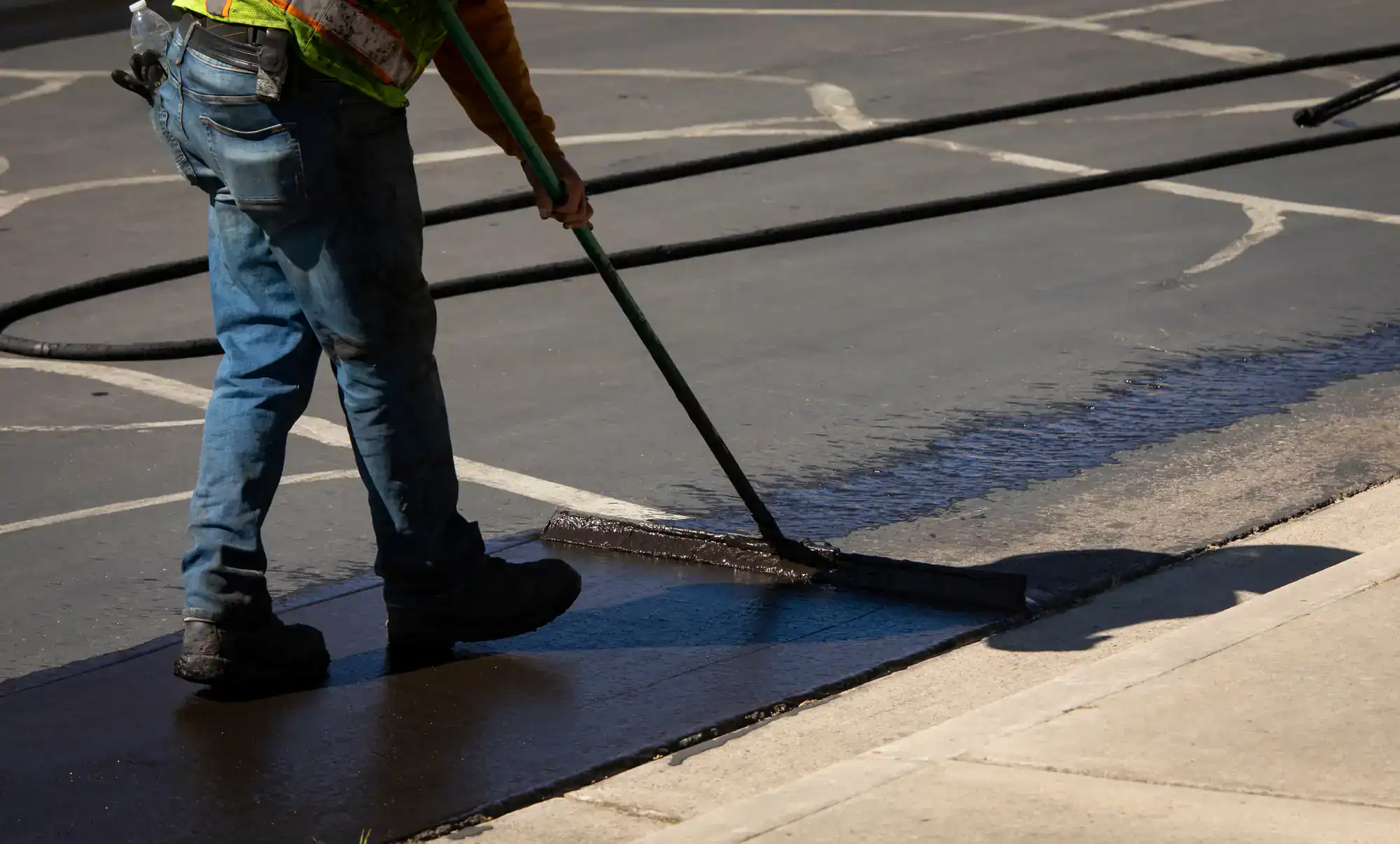
A sealcoated driveway isn’t just about appearance it’s about keeping a $600,000+ asset from losing value quietly over time. Most driveways in Gambrills were built in the 1990s and 2000s, which means most surfaces in ZIP code 21054 are between 20 and 35 years old. That’s the age range where asphalt either gets maintained or gets replaced. The difference in cost between those two outcomes is significant a professional sealcoating application runs $250–$400. A full driveway replacement runs $4,200–$9,000 or more.
Maryland’s climate does real damage here. Gambrills sees January lows averaging 23.5°F and July highs pushing 87°F that’s a 60-plus degree seasonal swing that puts asphalt through constant stress. In winter, water works its way into surface cracks, freezes, expands, and widens those cracks from the inside. Maryland and Central and Northern Virginia’s own Public Works department has warned residents that freeze-thaw cycles can cause pavement to deteriorate rapidly almost overnight in severe cases. In summer, UV radiation breaks down the binder compounds in asphalt, turning it gray, brittle, and increasingly porous. A sealcoat addresses both. It seals the surface against water infiltration before winter hits and reflects UV exposure during the long Maryland summer.
If your driveway is faded, showing hairline cracks, or just hasn’t been touched in a few years this is the moment where a relatively small investment stops a much bigger problem from forming.
We’ve been operating out of Annapolis since 2011 less than 15 miles from Gambrills via Route 3. That’s not a coincidence. Maryland and Central and Northern Virginia is the market we know, and the communities along the Route 3 corridor including Gambrills, Crofton, and Odenton are neighborhoods we’ve been working in for over a decade.
The credentials matter here, and they’re verifiable. Our MHIC License #159766 is publicly searchable at the Maryland Home Improvement Commission website. Our BBB Accreditation carries an A+ rating a status that the most prominent competitor physically located in Gambrills on Davidsonville Road does not hold. You can check both in under a minute, and we’d encourage you to.
Behind the license numbers is over 40 years of hands-on paving experience. That means the person overseeing your driveway has seen what Maryland winters do to improperly prepped asphalt, and knows exactly how to prevent it.
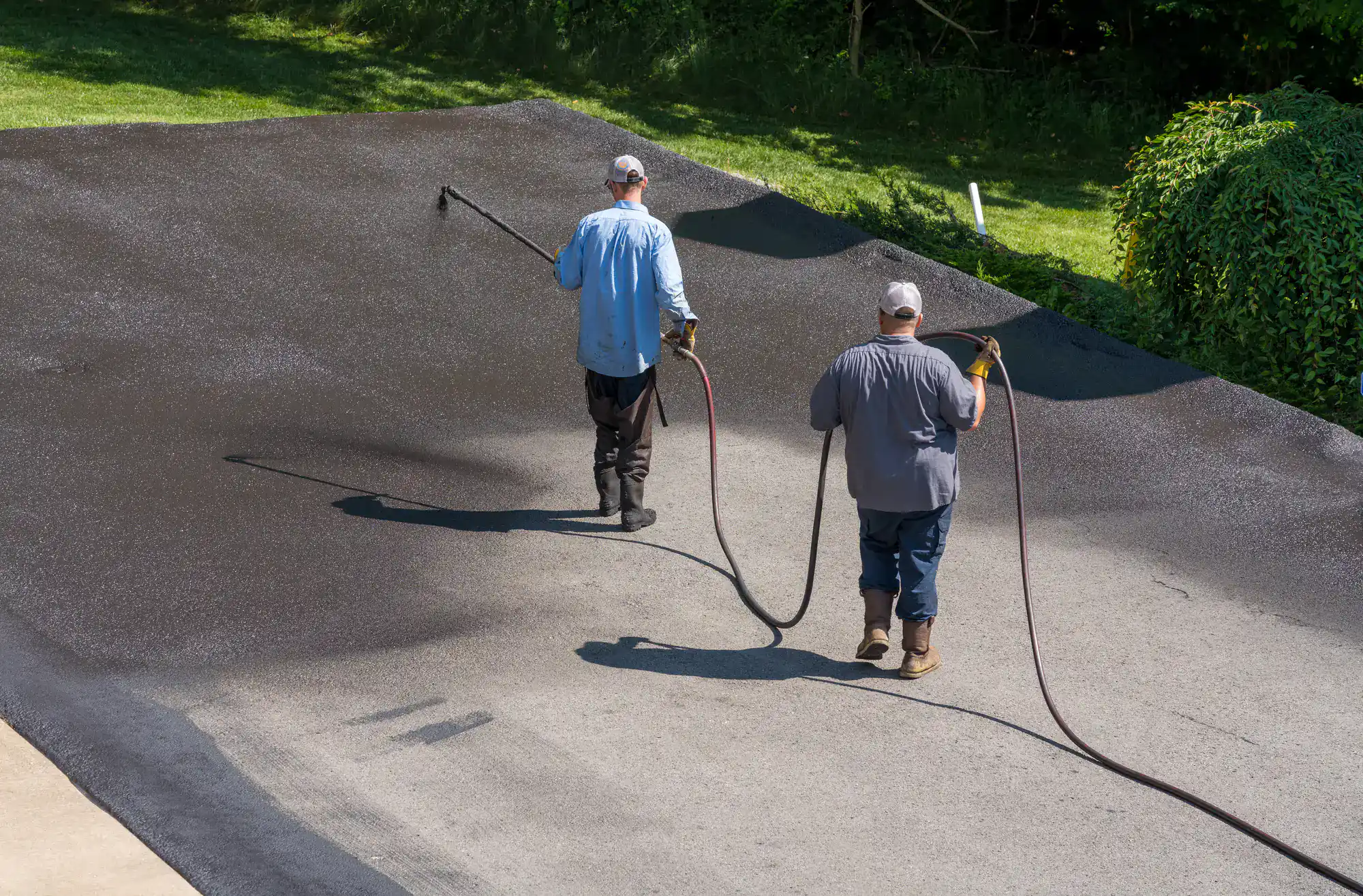
The most common reason sealcoating fails within a year isn’t the product it’s the prep. Cracks that weren’t filled, oil spots that weren’t treated, surfaces that weren’t properly cleaned and dried before the sealant went down. That’s where most contractors cut corners, and it’s exactly where we don’t.
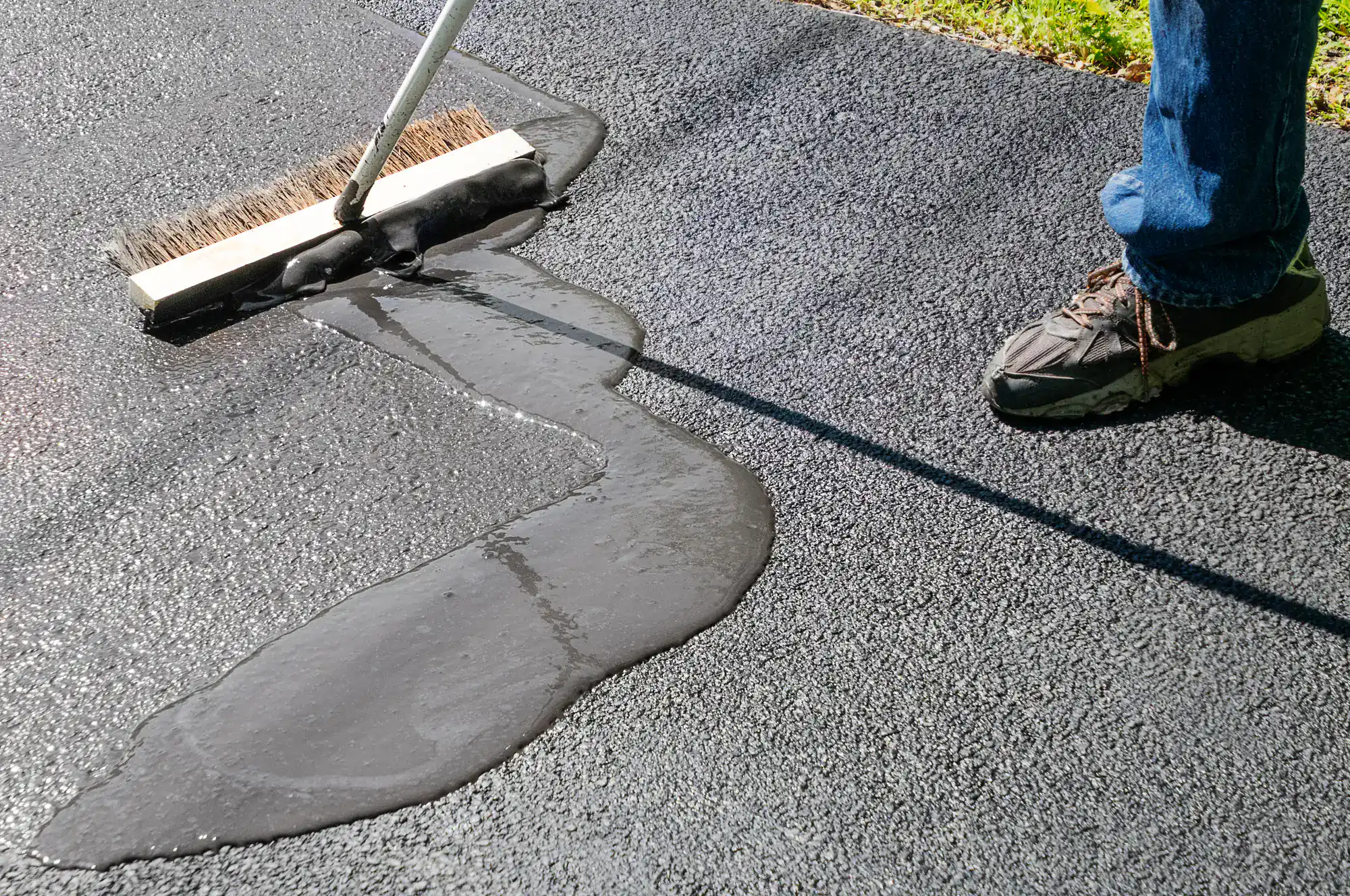
Every job starts with a full surface inspection. We sweep and power-blow the driveway to clear debris, then treat any petroleum spots oil drips, gasoline stains, antifreeze residue with a dedicated primer. These spots are common on Gambrills driveways precisely because this is a commuter community. Most households here are running two vehicles daily to Fort Meade, Annapolis, or Baltimore, and those driveways accumulate petroleum deposits over time. Untreated, those spots prevent the sealant from bonding and become failure points within months. After spot treatment, we fill cracks before any sealcoating goes down not after.
Once the surface is properly prepped, we apply professional-grade sealcoating material formulated for Maryland’s climate range. Timing matters here too. Sealcoating requires temperatures above 50°F and dry conditions for at least 24 hours before and after application. In Gambrills, that puts the primary service window from late April through early October with peak demand in May and June after winter damage becomes visible, and again in August and September before temperatures drop. We’ll tell you honestly where your driveway stands and what it actually needs whether that’s sealcoating, crack repair first, or a more involved conversation about resurfacing.
Ready to get started?
Asphalt driveway sealcoating is the core of what we do in Gambrills, but it doesn’t exist in isolation. Depending on the condition of your surface, the right starting point might be crack repair or patching before sealcoating goes down and we’ll tell you that upfront rather than seal over a problem and let you find out next spring. Our services for Gambrills homeowners include professional asphalt sealcoating, crack filling and repair, driveway resurfacing, and new asphalt paving for residential properties. For commercial clients near the Waugh Chapel Towne Centre corridor or elsewhere in the 21054 area, we also handle parking lot sealcoating and line striping.
One thing worth knowing if you’re in a newer development like Enclave at Waugh Chapel or Summerfield Village: new asphalt needs to cure for at least 6 to 12 months before sealcoating. Applying sealant too early traps gases in the asphalt and causes premature surface failure. If you moved in recently, we’ll assess your driveway and give you a straight answer on timing rather than take your money before the surface is ready.
There’s no municipal permit required for residential driveway sealcoating in Gambrills as an unincorporated community, it falls under Maryland and Central and Northern Virginia jurisdiction, and private driveway maintenance doesn’t require a county permit. What Maryland state law does require is that any contractor performing this work holds a valid MHIC license. Ours is #159766. Ask any contractor you’re considering for theirs before signing anything.
For most driveways in Gambrills, every two to three years is the right maintenance interval but the honest answer depends on how your specific driveway is holding up. A surface that’s showing early fading or hairline cracking may need attention sooner. One that was properly sealed two years ago and still looks solid might be fine to wait another season.
What accelerates the timeline in this area is Maryland’s climate. The freeze-thaw cycle Gambrills experiences every winter with January lows averaging around 23°F is one of the most damaging forces asphalt faces. Water infiltrates tiny surface openings, freezes, expands, and widens those gaps. UV oxidation during the summer months compounds the damage by drying out the binder layer. If you’re in a home that was built in the 1990s or early 2000s and you’ve never had the driveway sealed, or it’s been more than three years since the last application, that’s a good indicator it’s time to get it looked at before the next winter does more work.
For a standard residential driveway in Gambrills, professional sealcoating typically runs between $250 and $400 depending on the size of the surface, its current condition, and whether crack filling or spot treatment is needed before the sealant goes down. Larger driveways or surfaces with significant deterioration will be toward the higher end of that range.
The number that matters more is the comparison: a full driveway replacement in this area costs $4,200 to $9,000 or more. Consistent sealcoating every two to three years is what keeps you from having that conversation. For Gambrills homeowners with median home values around $600,000, a $300 sealcoating application is one of the more straightforward maintenance investments available low cost, measurable protection, and a direct impact on curb appeal if you’re ever thinking about resale.
Maryland requires every contractor performing residential home improvement work including driveway sealcoating to hold a valid MHIC license issued by the Maryland Home Improvement Commission. You can verify any contractor’s license number in seconds at the MHIC’s public lookup tool. If a contractor can’t give you an MHIC number, that’s your answer.
This matters especially in Gambrills because Route 3 is a well-traveled corridor for door-to-door paving operators who approach homeowners claiming to have leftover materials from a nearby job. The MHIC has specifically identified driveway sealcoating as one of the most common home improvement scam categories in Maryland. These operators are typically unlicensed, demand cash, and either disappear or deliver work that fails within weeks. Our MHIC license number is #159766 it’s on every estimate we provide, and you’re welcome to look it up before you decide anything.
Sealcoating requires surface temperatures above 50°F and dry conditions for at least 24 hours before and after application which in Gambrills puts the workable window from approximately late April through early October. Outside of that range, the sealant won’t cure properly and you’ll end up with a failed application.
The two peak windows within that season are late spring and late summer. May and June are popular because homeowners can see the winter damage clearly cracking, fading, surface deterioration and want to address it before the heat of summer sets in. August and September are the second wave, typically driven by homeowners who want to protect their driveways before the next freeze-thaw season begins. If you’re assessing your driveway after a Gambrills winter and noticing new cracks or significant fading, spring is the right time to schedule. Don’t wait until fall and risk running out of ideal weather days.
Sealcoating and crack repair are two different things, and the order matters. Sealcoating applied over unfilled cracks doesn’t fix them it covers them temporarily, and they’ll reopen and widen through the next freeze-thaw cycle. For Gambrills driveways that have been through 20 or 30 Maryland winters, surface cracking is common, and it needs to be addressed before sealant goes down.
The right process is crack filling first, then sealcoating. Cracks are cleaned out, filled with a flexible crack filler designed to move with temperature changes, allowed to cure, and then the sealcoating is applied over the prepared surface. For driveways with more significant structural damage large sections of deterioration, alligator cracking, or base-layer issues patching or resurfacing may need to happen before sealcoating makes sense. We’ll look at your driveway and tell you exactly what it needs. If crack repair is the right starting point, that’s what we’ll recommend, not a sealcoating application that won’t hold.
Surface preparation is the single biggest factor in how long a sealcoating job lasts. A properly prepped driveway can hold a sealcoat for three to five years. A rushed one where oil spots weren’t treated, debris wasn’t fully cleared, or the surface wasn’t dry before application can start failing within a season. The sealant simply won’t bond to a contaminated or improperly prepared surface.
For driveways in Gambrills specifically, petroleum contamination is a real consideration. This is a commuter-heavy community most households are running two vehicles daily, and driveways accumulate oil drips, gasoline residue, and antifreeze over time. Those spots require a dedicated primer treatment before sealcoating, not just a coat applied over them. Our process addresses this directly: we inspect the surface, treat petroleum spots, fill cracks, clear all debris, and only then apply the sealant. It takes more time upfront, but it’s the difference between a job that lasts and one you’re calling about again next spring.
Local Resources
Other Services we provide in Gambrills