
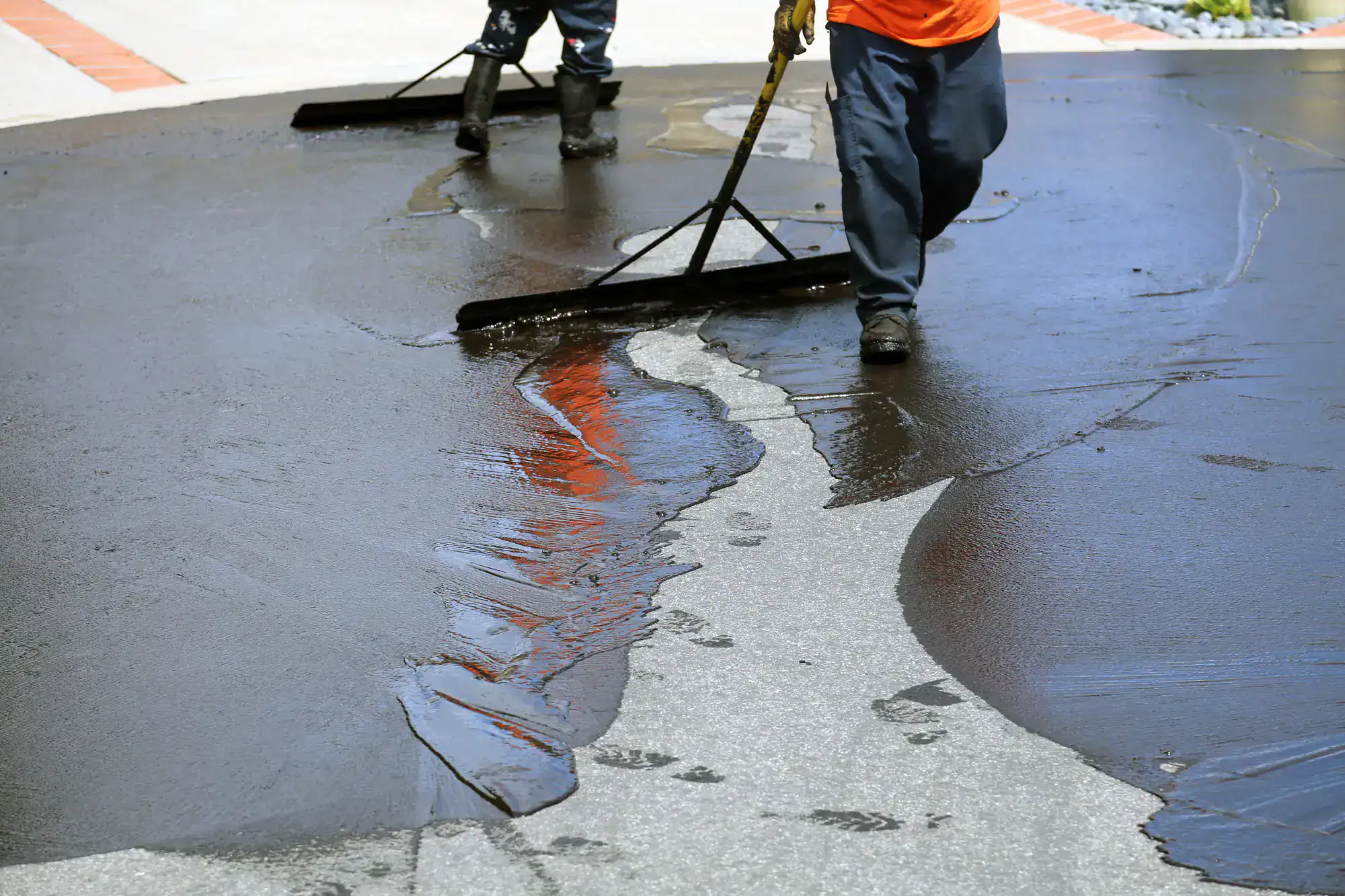
Hear from Our Customers
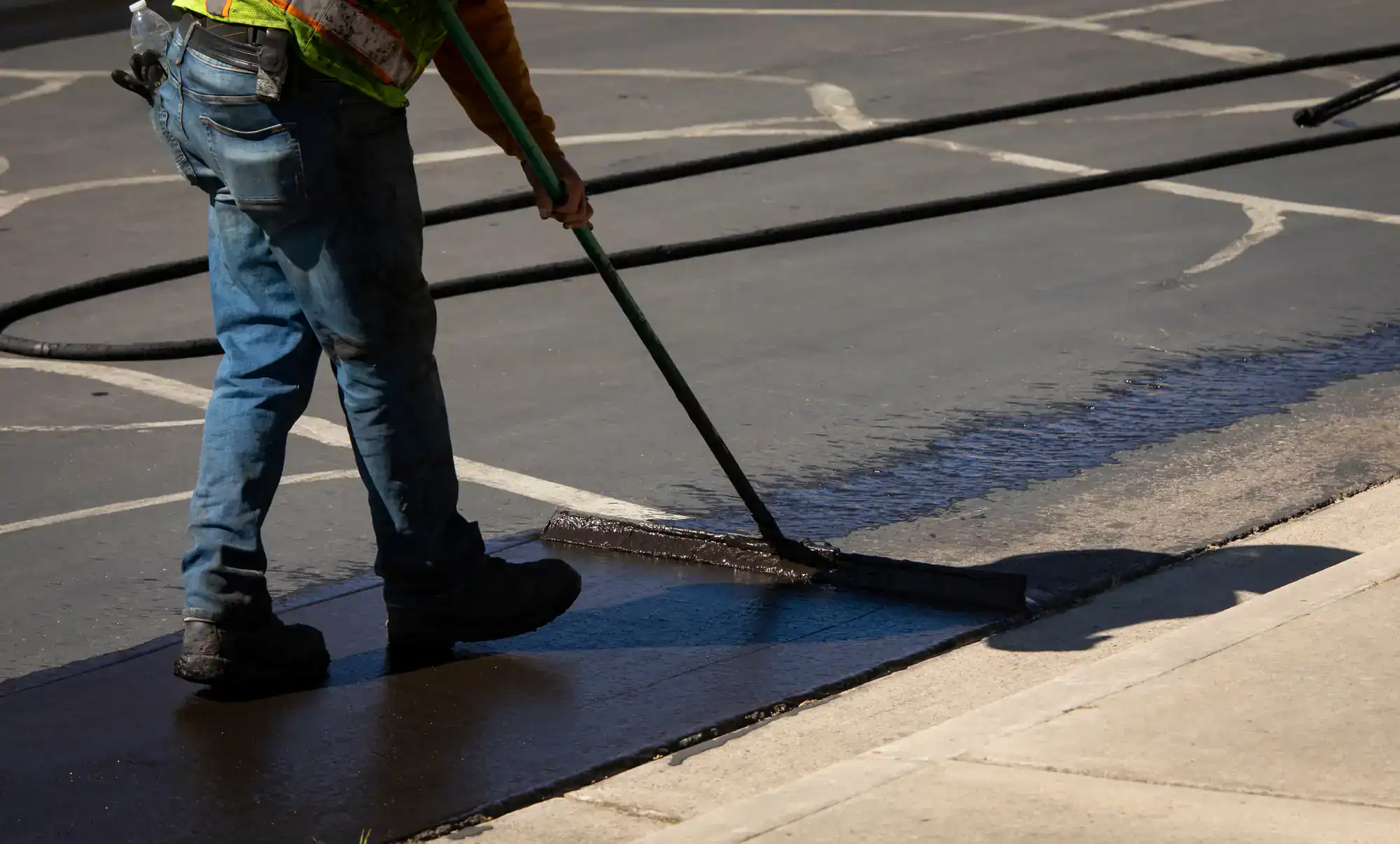
Living on the Hog Neck peninsula means your driveway faces conditions that most contractors from outside the area have never thought about. The Magothy River and Chesapeake Bay surround Lake Shore on three sides, and that constant marine air carries salt and moisture that breaks down asphalt binder faster than anything an inland neighborhood deals with. An unsealed driveway in Sunset Beach or Holly Hill Harbor doesn’t just look worn it’s actively deteriorating beneath the surface.
Then there’s Maryland’s freeze-thaw cycle. Water finds every hairline crack in unprotected asphalt, freezes overnight, expands, and widens that crack. Do that for two or three winters in a row, and what started as a surface check becomes a structural problem that costs several thousand dollars to fix or tens of thousands to replace entirely. A proper sealcoating application stops that cycle before it starts.
Beyond the protection angle, there’s the straightforward reality of what your driveway says about your home. In a community where median home values run well into the mid-to-high six figures, a faded, oxidized driveway doesn’t just look neglected it signals to buyers and neighbors alike that the property hasn’t been cared for. A fresh, sealed surface changes that impression immediately. It’s not cosmetic work. It’s asset maintenance.
We’ve been operating out of Annapolis since 2011 about 15 to 20 miles from Lake Shore via MD-100 and Mountain Road. That’s not a distant contractor sending a crew into unfamiliar territory. We’re a local Anne Arundel County business that understands this climate, these roads, and what bay-adjacent conditions actually do to asphalt over time.
We bring more than four decades of personal paving experience to every job. Our business holds MHIC License #159766 the state credential Maryland law requires for any home improvement contractor, and one that the Maryland Home Improvement Commission itself warns homeowners to verify before signing anything. It’s publicly searchable. Look it up before you call us.
Our BBB Accreditation and A+ rating aren’t mentioned here to impress you they’re mentioned because in a category where door-to-door sealcoating scams are a documented, state-acknowledged problem, third-party verification matters. You deserve to know exactly who’s showing up to your driveway before they get there.
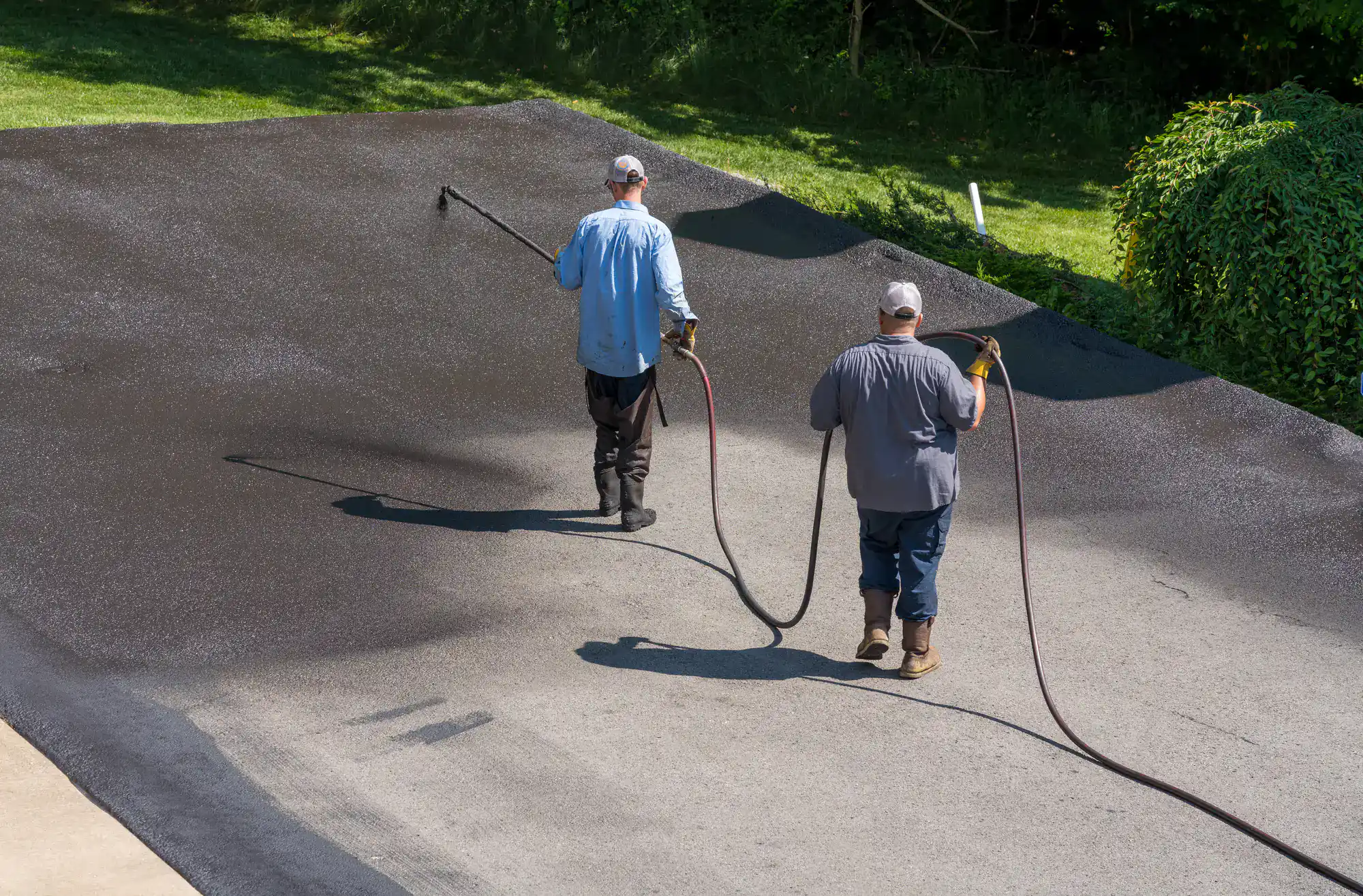
Almost every premature sealcoat failure peeling, cracking, delamination traces back to one thing: poor surface prep. Before a drop of sealcoat goes down, we thoroughly clean the driveway to remove dirt, debris, and any oil or chemical deposits. If you’ve been staging a boat trailer in the driveway, there’s a good chance there are petroleum drips on the surface. Those get treated with a primer before anything else happens, because sealcoat won’t bond properly over untreated oil spots.
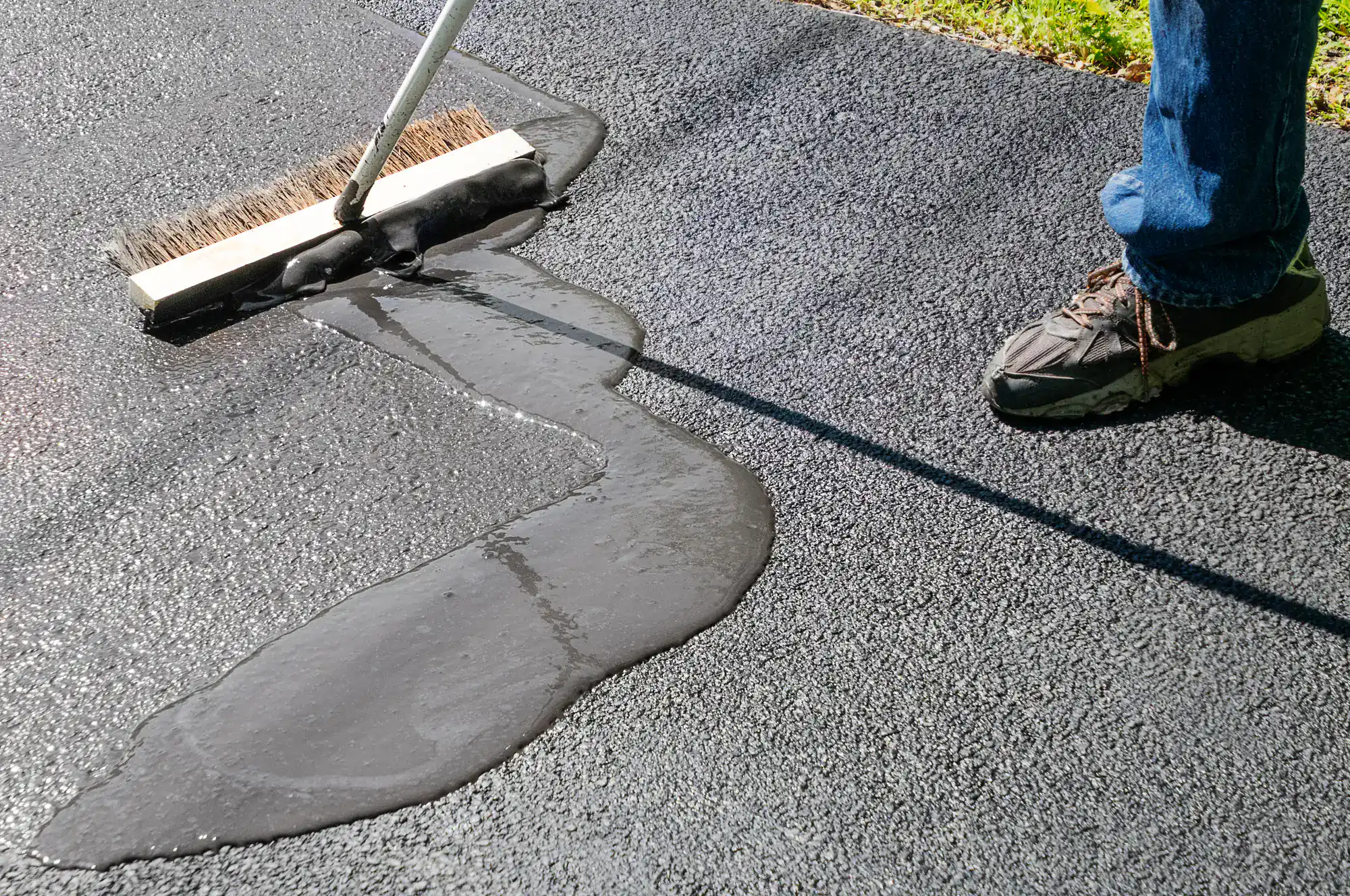
After cleaning and spot treatment, we fill existing cracks and allow them to cure. This step matters more in Lake Shore than in most places the combination of marine moisture in the soil and Maryland’s freeze-thaw winters means cracks that aren’t properly addressed before sealing will continue to grow underneath the new surface. Once prep is complete, we apply two coats of professional-grade sealcoat at the correct coverage rate and allow it to cure fully before reopening the driveway to traffic.
Timing matters here too. The sealcoating window in Anne Arundel County runs roughly May through September temperatures need to be above 50°F and dry conditions need to hold for at least 24 hours after application. New asphalt also needs a minimum of six months to cure before it can be sealed, so if your driveway was installed in the fall or winter, the following spring or summer is the right time to schedule.
Ready to get started?
Our asphalt driveway sealcoating in Lake Shore, MD covers the full scope of what a proper job requires not just the application itself. That means surface cleaning, oil spot priming, crack filling, and two coats of professional-grade sealcoat applied at the right thickness for Maryland’s climate. You’re not getting a single rushed coat brushed over a dirty surface. That’s the kind of work that peels before the first winter is out.
For homeowners in waterfront neighborhoods like Belhaven Beach or Bodkin Creek, where driveways regularly support boat trailers and marine equipment, the surface prep step is especially important. Petroleum and oil deposits from marine engines are a documented asphalt degradant, and they need to be treated before sealing not painted over. The finished surface is harder, more resistant to concentrated load stress, and better protected against the petroleum exposure that comes with nautical living.
Under Maryland state law, any contractor performing driveway sealcoating in Lake Shore must hold a valid MHIC license. Lake Shore is an unincorporated community in Anne Arundel County, so there’s no separate local permit required for residential driveway sealing but the MHIC requirement applies statewide and is non-negotiable. Our license number is #159766, and it’s verifiable online before you commit to anything.
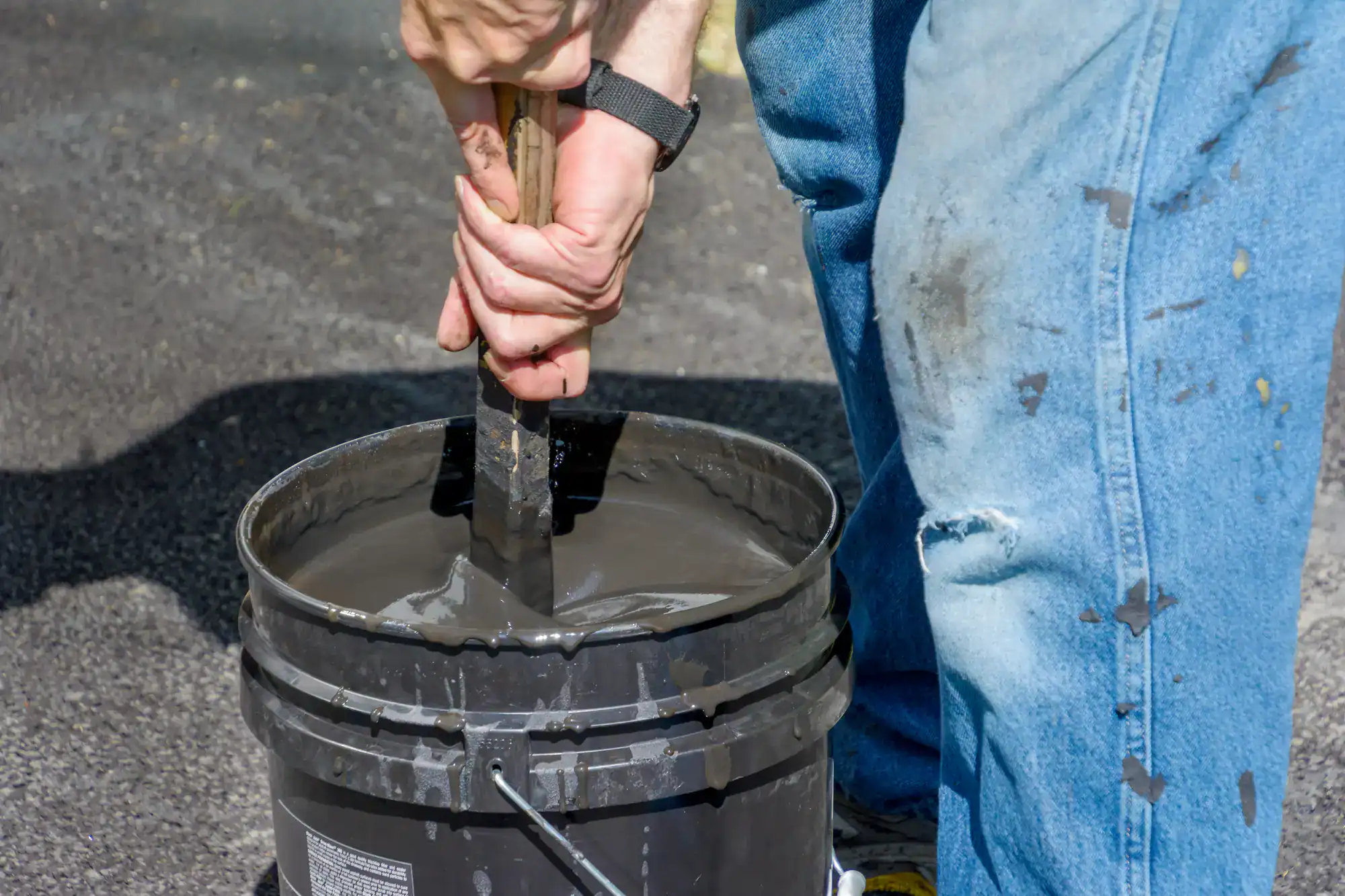
For most driveways in Lake Shore, every two to three years is the right interval. The conditions here salt air off the Magothy River, high humidity from the bay, and Maryland’s freeze-thaw winters accelerate surface oxidation faster than what you’d see in an inland Anne Arundel County neighborhood. If your driveway is starting to look gray and brittle rather than deep black, or if you’re seeing surface cracking, those are signs it’s time regardless of when it was last sealed.
The other variable is traffic. With an average of three cars per household in Lake Shore, plus boat trailers and seasonal marine equipment for many waterfront residents, driveways here see more concentrated stress than a typical suburban surface. Higher traffic and heavier loads can wear through a sealcoat layer faster. A quick visual inspection each spring after the last freeze-thaw cycle has done its work is a practical way to assess where you stand.
For a standard residential driveway, professional sealcoating typically runs in the $250 to $400 range. The actual number depends on the size of your driveway, how much crack filling is needed beforehand, and the condition of the surface going in. Driveways that haven’t been sealed in several years or that have significant oil staining from marine equipment may require more prep work, which affects the final price.
What’s worth keeping in mind is the comparison. A full driveway replacement in Anne Arundel County runs $4,200 to $9,000 or more for a standard residential surface. Sealcoating every two to three years is what keeps you from getting there prematurely. On a home worth $500,000 to $800,000 or more which describes a significant portion of Lake Shore’s housing stock that math is straightforward. Spend a few hundred dollars now, or spend several thousand dollars later.
It does, and it’s one of the less-talked-about maintenance factors for homeowners on the Hog Neck peninsula. Salt air is corrosive to the petroleum-based binder that holds asphalt aggregate together the same way it accelerates rust on metal, it degrades the binding compounds in asphalt over time. The result is a surface that becomes brittle, oxidizes faster, and develops surface cracking earlier than a comparable driveway in an inland location like Crofton or Odenton would.
Homeowners in Sunset Beach, Holly Hill Harbor, and other neighborhoods close to the Magothy River or the bay itself are dealing with more atmospheric salt exposure than most people realize. It’s not dramatic you’re not watching your driveway dissolve but over several seasons without a protective sealcoat layer, the cumulative effect is visible and costly. A quality sealcoat creates a barrier between the asphalt surface and the marine air, significantly slowing that oxidation process.
In Maryland, any contractor performing driveway sealcoating is required to hold a valid Maryland Home Improvement Commission (MHIC) license. The MHIC maintains a publicly searchable database at their website where you can look up any contractor’s license number before signing a contract or handing over a deposit. This takes about two minutes and is the single most important step you can take to avoid being scammed.
The MHIC itself has flagged driveway sealcoating as one of the most common home improvement scam categories in Maryland. The typical pattern involves a contractor who claims to have leftover material from a nearby job, pushes for cash-only payment, and either disappears or applies roofing oil instead of actual sealcoat. These operators cannot produce a valid MHIC number because they don’t have one. Our MHIC license is #159766 look it up before you call, and apply the same standard to any other contractor you’re considering.
The practical sealcoating window in Lake Shore runs from late spring through early fall roughly May through September. Sealcoat requires surface temperatures above 50°F and dry conditions for at least 24 hours after application to cure properly. Maryland’s mid-Atlantic climate delivers those conditions reliably within that window, though the marine humidity around the Hog Neck peninsula can affect drying time even on warm days. We account for humidity, not just temperature, when scheduling the work.
There are two natural peaks in demand. The first is late spring, when homeowners assess what the winter’s freeze-thaw cycles did to their driveway surface. The second is late summer or early fall, as a way to get a fresh protective layer down before temperatures drop again. If you’re planning ahead, late May through June is generally the most practical time to schedule the worst of the winter damage is visible, the summer heat hasn’t peaked yet, and there’s enough of the season left to let the surface cure fully before the next cold stretch arrives.
No and this is one of the more common mistakes homeowners make after getting a new driveway installed. Fresh asphalt needs a minimum of six months to cure before it’s ready for sealcoating. The oils in new asphalt need time to stabilize and harden. Sealing too early traps those oils beneath the surface, which can actually soften the asphalt and cause premature surface damage rather than preventing it.
For Lake Shore homeowners who had a driveway installed in the fall or early winter, that means waiting until the following spring or summer to schedule sealcoating which also happens to align with the optimal application window for Maryland’s climate. In the meantime, the new surface doesn’t need anything. Just let it cure. Once that six-month mark has passed and temperatures are consistently above 50°F, you’re in the right window to get the first sealcoat down and start the proper maintenance cycle going forward.
Other Services we provide in Lake Shore