Hear from Our Customers
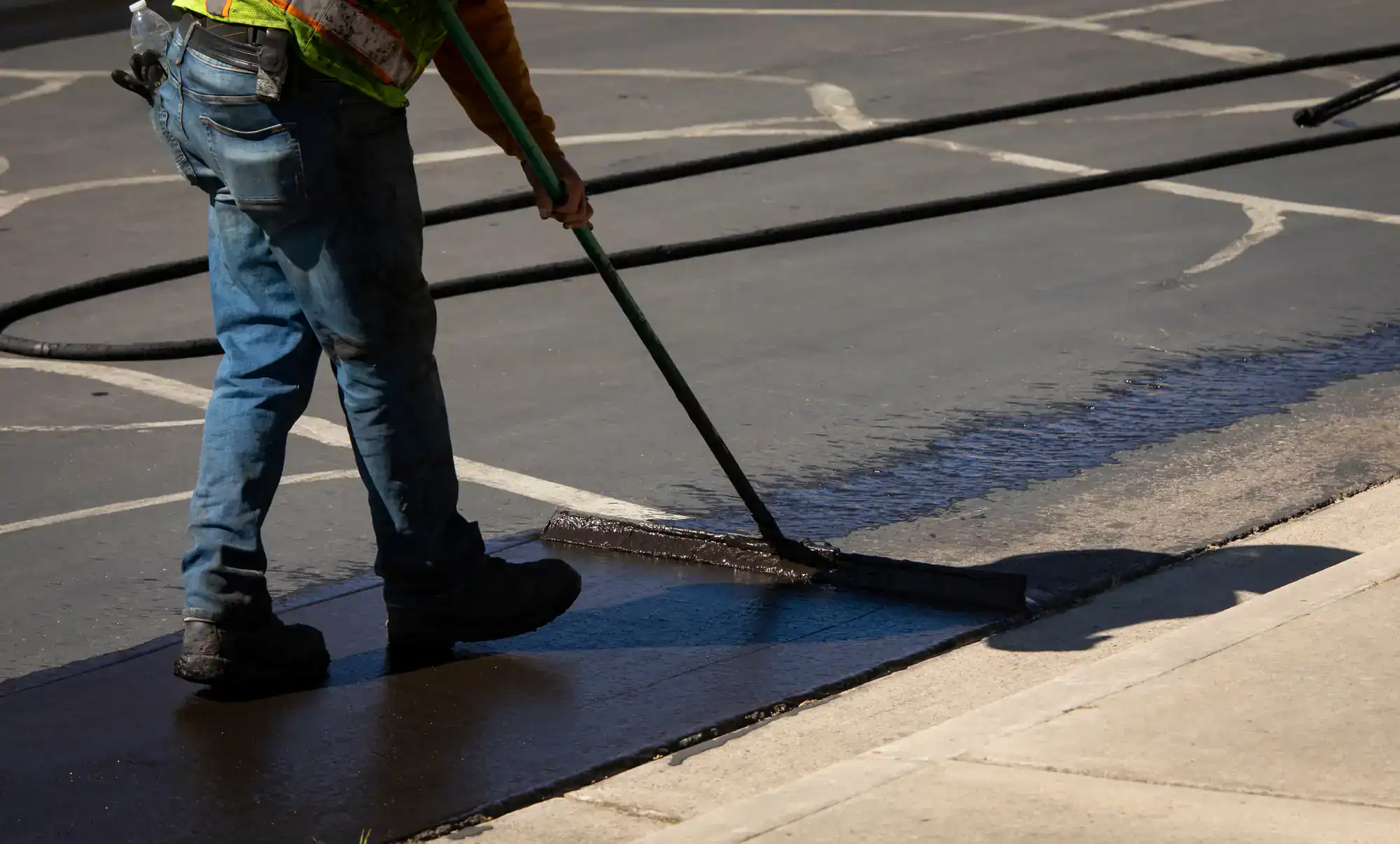
Asphalt doesn’t fail all at once. It grays out, starts cracking at the edges, and then one hard winter later you’re looking at a driveway that needs full replacement. In Naval Academy, that process moves faster than most people expect because the environment here isn’t forgiving.
You’re dealing with salt-laden air off the Severn River and the Chesapeake Bay, which accelerates oxidation in the asphalt binder faster than it would in an inland Maryland community. Add in the freeze-thaw cycles that run through every Annapolis winter temperatures swinging from the upper 20s to the mid-80s and every small crack that goes unsealed becomes a channel for water. Water gets in, freezes, expands, and widens that crack from the inside out. By spring, what started as surface wear is now structural damage.
Professional asphalt driveway sealcoating creates a barrier against all of that. UV oxidation slows down. Water infiltration stops. Chemical runoff from the road salt applied along Rowe Boulevard and College Avenue every winter has less to work with. A sealcoated driveway in this area can last 15 to 30 years with regular maintenance. An unsealed one in this coastal climate won’t get close to that.
We’re headquartered at 1125 West St in Annapolis a few minutes from Gate 1 on King George Street in Naval Academy. This isn’t a regional franchise routing calls from out of state. We’re a local operation that has been working driveways throughout Anne Arundel County since 2011, through every hard winter and coastal storm season this area has seen.
We hold MHIC License #159766 the state-required credential for any contractor performing residential paving or sealcoating work in Maryland. You can verify that license yourself at the MHIC website before you make a single call. Edward Smith Paving is also BBB Accredited with an A+ rating, and carries 40-plus years of personal asphalt industry experience behind every job.
In a market where unlicensed operators are a documented problem and where military families new to Naval Academy may not know what to look for those credentials aren’t just badges. They’re the baseline for doing business the right way.
Most sealcoating failures come down to skipped steps. A crew shows up, sprays a coat over a dirty or cracked surface, and leaves. Six months later the sealant is peeling and the cracks it was supposed to protect are worse than before. That’s not how we work.
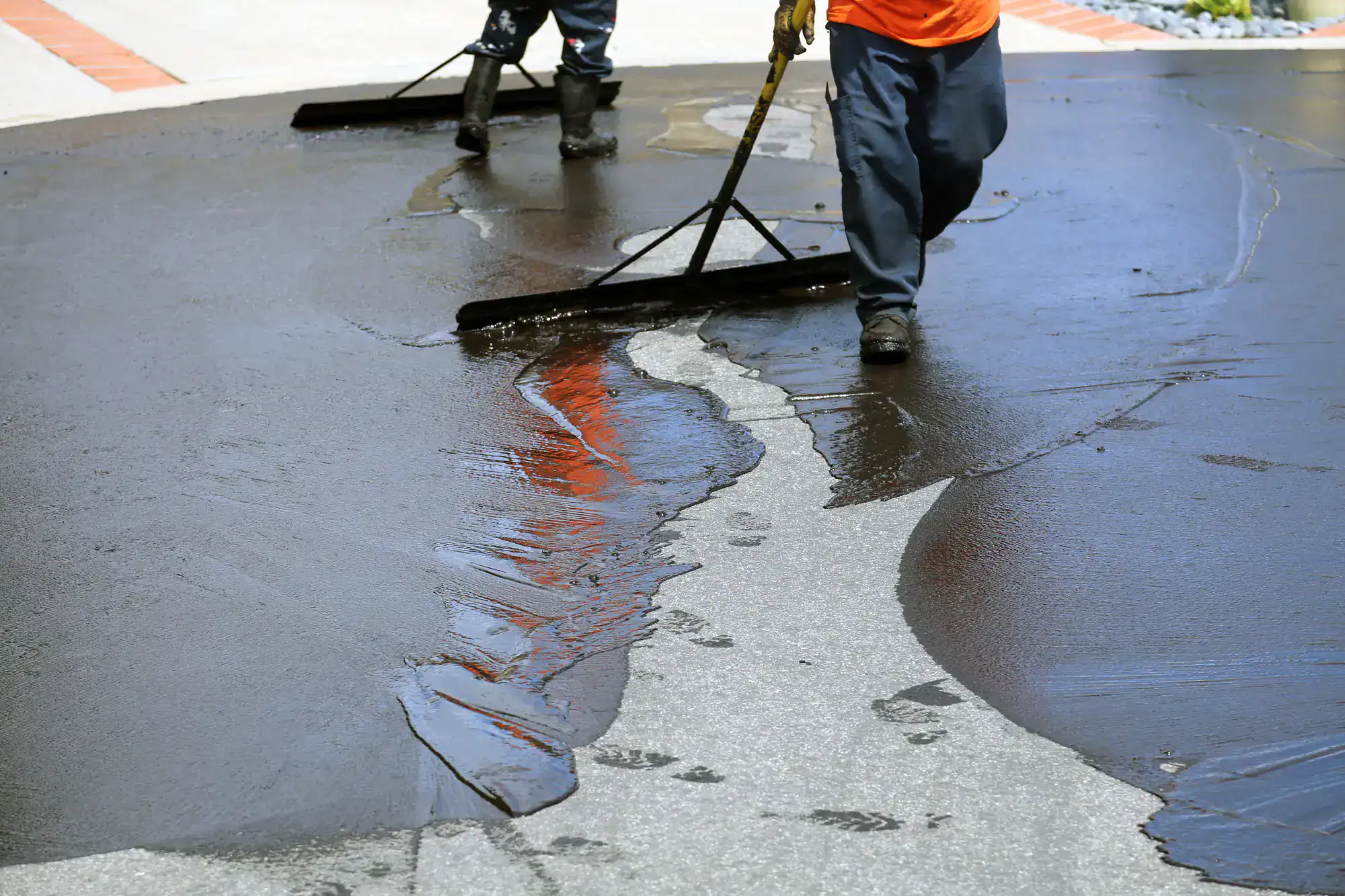
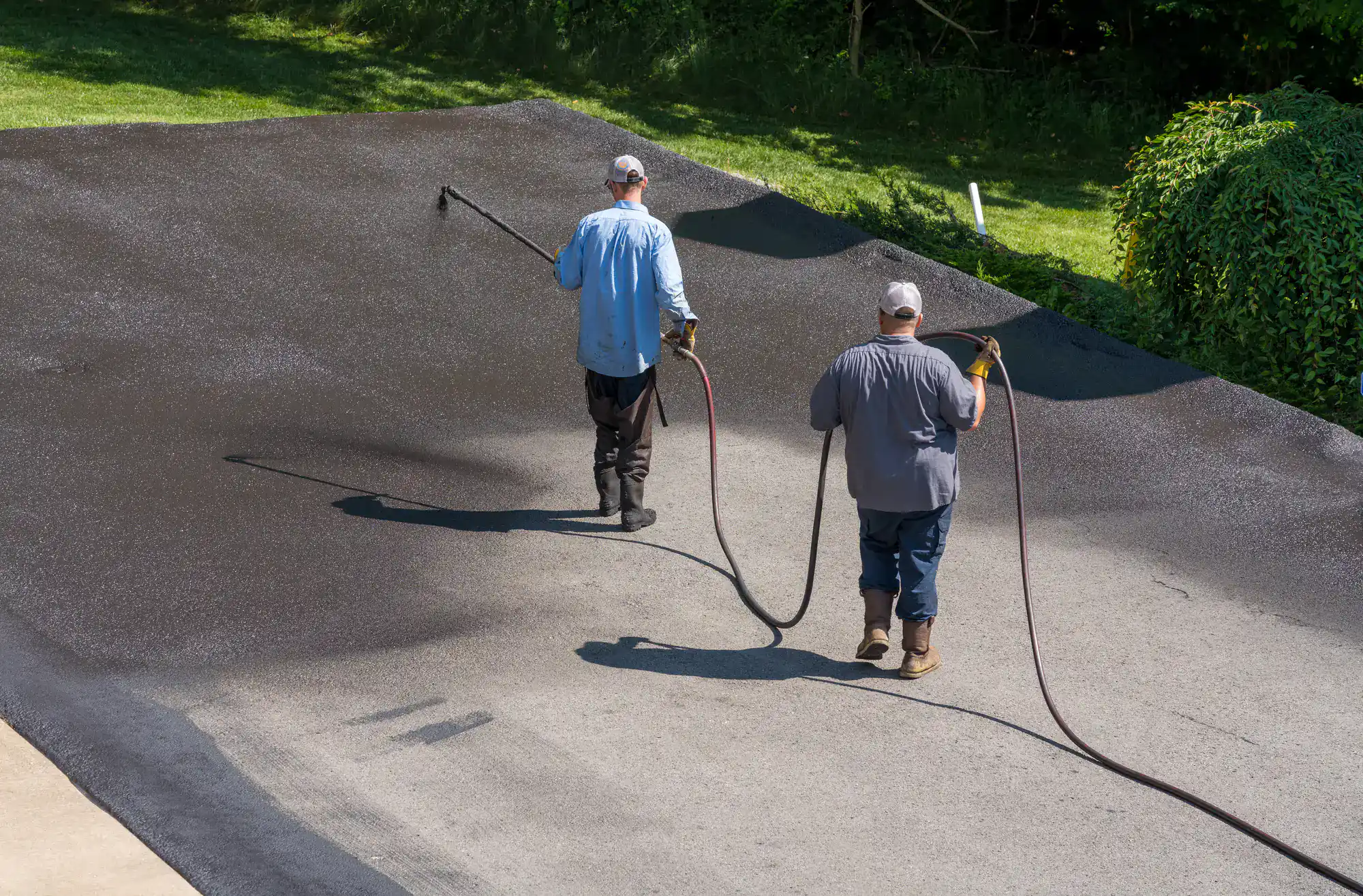
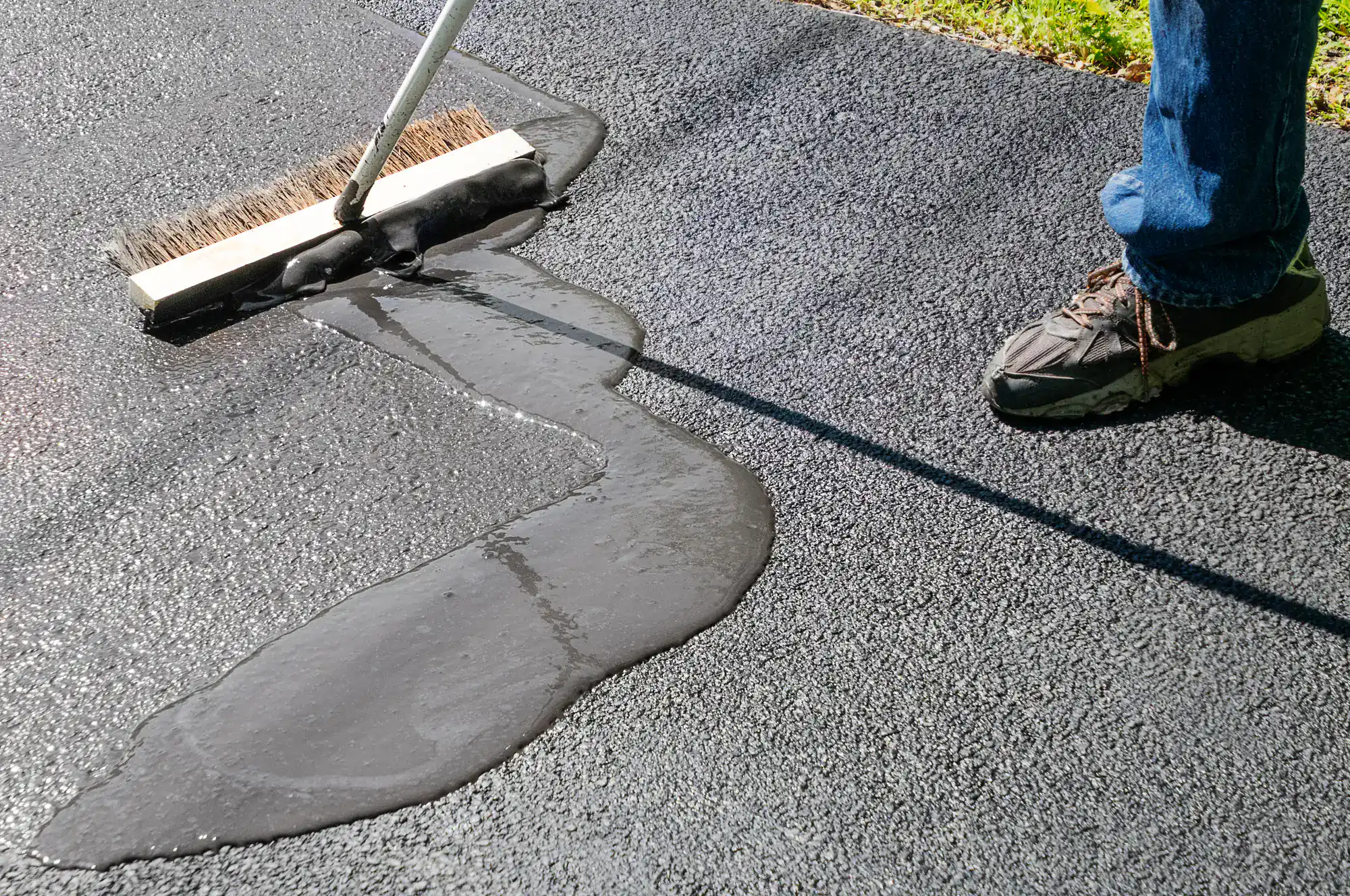
Our process starts with a thorough surface cleaning removing dirt, debris, and any organic buildup that would prevent the sealant from bonding properly. Oil spots and fuel stains get treated with a primer before anything else goes down, because sealant won’t adhere over contamination. Any existing cracks are filled before the sealcoat is applied, not after. In Naval Academy and the surrounding Annapolis area, where older homes and driveways many built in the 1940s or earlier are common throughout the 21402 ZIP code, crack filling is rarely a minor step. Decades of coastal moisture exposure means most driveways in this area have surface deterioration that needs to be addressed before a sealcoat can do its job.
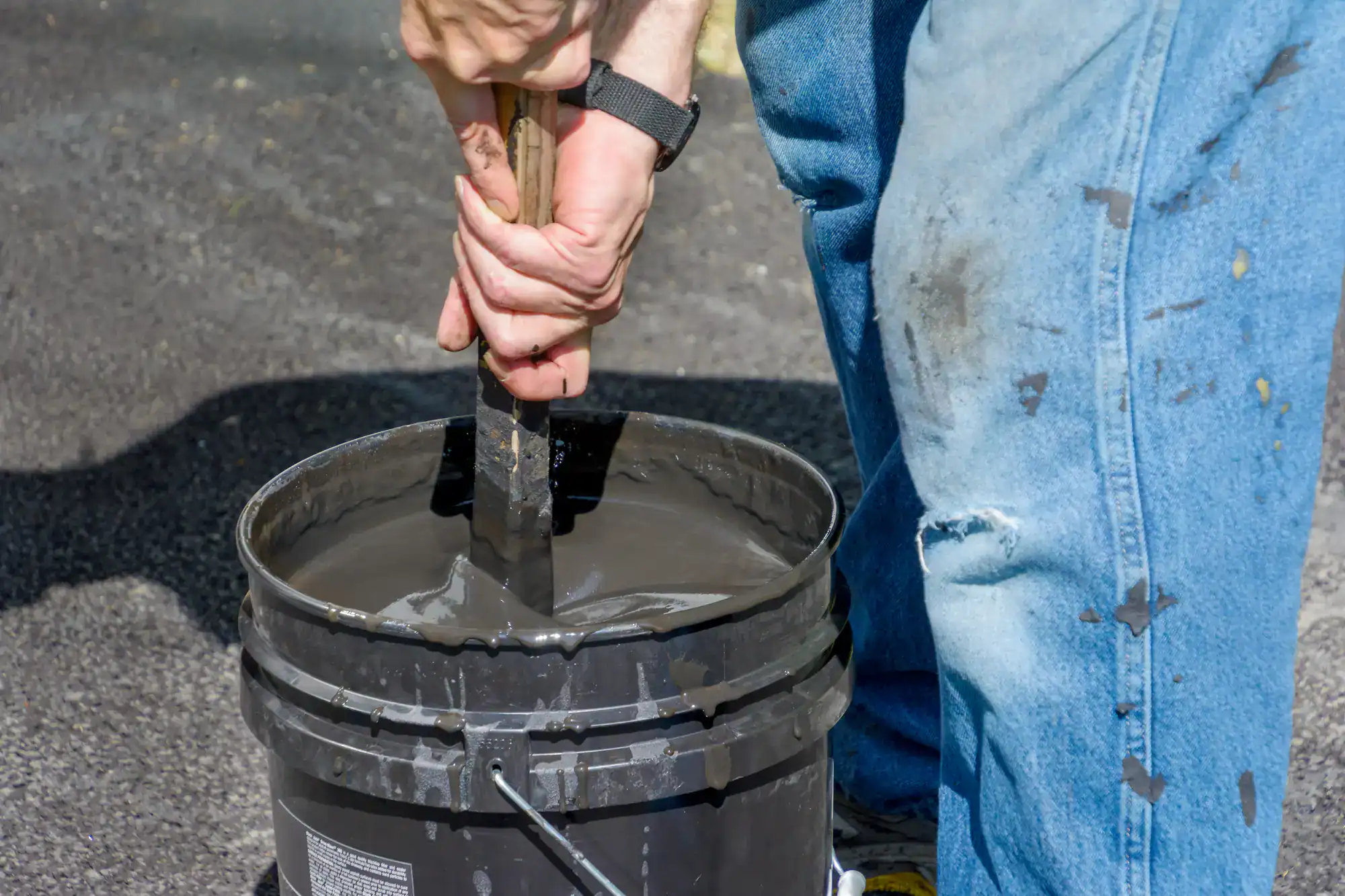
Once the surface is properly prepped, we apply professional-grade sealant with the right coverage for the square footage. Then it needs time to cure typically 24 to 48 hours depending on temperature and humidity. In a coastal environment like Naval Academy, where weather can shift quickly off the Bay, scheduling around dry conditions matters. That’s something a local contractor who knows this area’s patterns understands in a way an out-of-town crew simply doesn’t.
Ready to get started?
Residential asphalt driveway sealcoating with us covers the full scope of what a proper job requires surface cleaning, oil spot priming, crack filling, professional sealant application, and curing guidance. There are no stripped-down packages designed to get a truck on your driveway for a low number and then upsell you on the steps that should have been included from the start.
For homeowners in Naval Academy and the greater Annapolis area, the condition of the existing surface is usually the biggest variable. Properties near the waterfront along the Severn River corridor, or in neighborhoods that have seen decades of coastal moisture exposure, often need more prep work than a newer inland driveway would. That gets assessed upfront during your free estimate not discovered mid-job and used as leverage for a higher invoice.
Commercial property owners and those managing parking lots in the area can also get parking lot coating and driveway resurfacing and sealing through our team. Standard residential driveway sealcoating doesn’t require a building permit in Anne Arundel County for maintenance work on an existing surface but every job is completed by an MHIC-licensed contractor, which is what Maryland law requires regardless of project size. If you’re not sure what your driveway actually needs, the estimate conversation will tell you clearly, without pressure.
In most parts of Maryland, the general recommendation is every two to three years. But in Naval Academy and the Annapolis area, the coastal environment pushes that toward the shorter end of that range for most driveways. Salt air off the Chesapeake Bay and Severn River oxidizes the asphalt binder faster than it would in an inland community, which means the surface grays out and becomes brittle more quickly. If your driveway gets direct sun exposure and sits close to the waterfront or low-lying areas with high moisture, you’re likely looking at every two years to maintain real protection.
The best way to gauge it is to look at the surface itself. If it’s visibly gray rather than black, if you’re seeing hairline cracks forming, or if water is no longer beading on the surface after rain, those are signs the existing sealant has broken down and the asphalt underneath is exposed. Don’t wait until the cracks are wide enough to see from the street by that point, sealcoating alone may not be enough.
The short answer is that deterioration compounds. What starts as surface oxidation the asphalt turning gray and drying out progresses to hairline cracking, then wider cracks, then edge crumbling, and eventually structural failure that sealcoating can no longer fix. At that point, you’re looking at resurfacing or full replacement, which runs $4,200 to $9,000 for a standard residential driveway. A sealcoat application that could have prevented all of that costs a fraction of that figure.
In Naval Academy specifically, the timeline between “needs sealing” and “needs replacing” is shorter than it would be in a drier inland climate. The combination of coastal moisture, freeze-thaw cycles through every Annapolis winter, and road salt runoff from heavily treated roads like Rowe Boulevard and College Avenue accelerates every stage of that deterioration. Skipping maintenance here doesn’t just delay a cost it multiplies it.
For standard maintenance sealcoating of an existing residential driveway, Anne Arundel County does not typically require a building permit. You’re maintaining a surface that’s already there, not constructing something new. That said, if the scope of work expands to full driveway replacement or significant resurfacing, that conversation changes, and it’s worth confirming with the county directly for your specific situation.
What does apply statewide regardless of project size is the Maryland Home Improvement Commission licensing requirement. Any contractor performing residential home improvement work in Maryland, including driveway sealcoating, is legally required to hold a valid MHIC license. This isn’t optional, and it’s one of the most commonly overlooked things homeowners skip when vetting a contractor. We hold MHIC License #159766, which you can verify at the MHIC website. If a contractor can’t give you a license number, that’s your answer before you go any further.
The condition of the base is what separates a driveway that can be saved from one that can’t. If the surface has widespread alligator cracking the pattern that looks like a dried-up lakebed that’s typically a sign of base failure, and sealcoating over it won’t hold. The same goes for large potholes or areas where the asphalt has heaved or sunken significantly. Sealcoating is a surface treatment, not a structural repair.
On the other hand, if you’re dealing with surface oxidation, hairline cracking, or isolated cracks that haven’t compromised the base layer, sealcoating combined with crack filling can extend the life of that driveway by years. In Naval Academy and the Annapolis area, where many homes and driveways date back several decades, it’s common to find driveways that are in rough cosmetic shape but still structurally sound underneath. A proper inspection before any work begins will tell you which situation you’re actually in and a legitimate contractor will give you that assessment honestly rather than defaulting to the higher-ticket option.
The sealcoating window in Naval Academy and the Annapolis area runs roughly May through October. You need temperatures consistently above 50 degrees Fahrenheit and dry conditions for the sealant to cure properly both of which are reliably available in that window. Outside of those months, cold temperatures prevent the material from bonding correctly, and you end up with a sealcoat that peels or wears prematurely.
Within that window, late spring May into early June tends to be the most valuable timing for most homeowners. It lets you address whatever damage the previous winter’s freeze-thaw cycles caused before summer UV exposure compounds the oxidation. The Annapolis area can also see unexpected rain events off the Chesapeake Bay in late summer and early fall, which can complicate scheduling if you wait too long. Getting on the schedule earlier in the season gives you more flexibility and means your driveway is protected through the hottest and wettest months before the next winter arrives.
The single most important thing to verify is the MHIC license. Maryland’s Home Improvement Commission requires any contractor performing residential paving or sealcoating work to hold a valid license and they maintain a public database where you can look it up by name or license number before you commit to anything. Our license number is #159766. That’s not a detail buried in the fine print it’s something you should check on your own before signing anything with any contractor.
Beyond the license, watch for the patterns Maryland’s own consumer protection resources flag as red flags: a contractor who shows up unsolicited claiming they have leftover materials from a nearby job, pressure to decide the same day, or a cash-only payment requirement. Those aren’t coincidences they’re a documented playbook used by unlicensed operators who target residential driveways throughout the state. In a community like Naval Academy and Annapolis, where military families on PCS orders may be new to Maryland and unfamiliar with the state’s licensing requirements, that risk is real. A licensed, BBB-accredited contractor with a verifiable Annapolis address and 14-plus years of local operation is the straightforward alternative to all of that.
Other Services we provide in Naval Academy