Hear from Our Customers
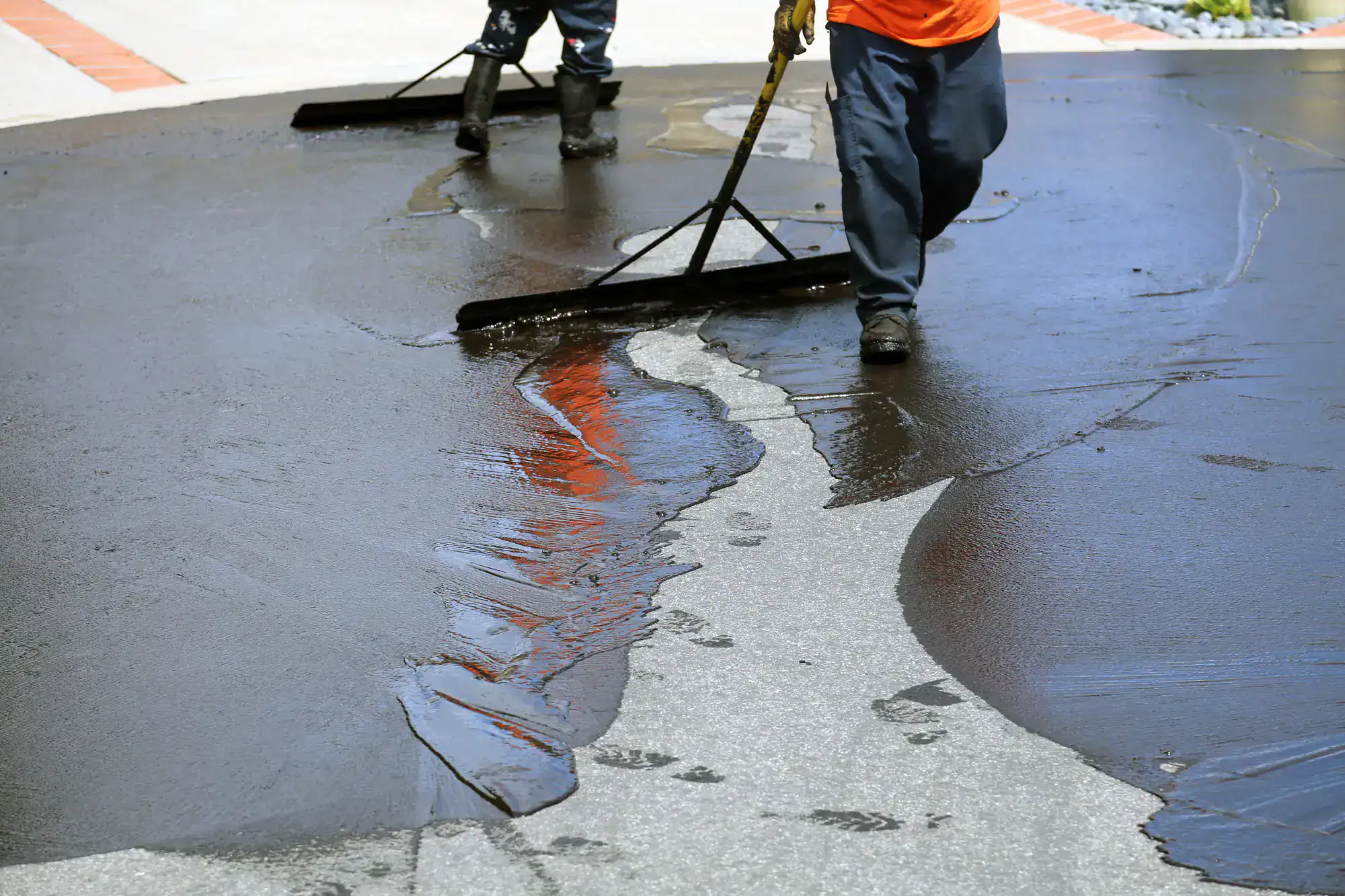
Every winter in Prince Frederick, the same thing happens. Temperatures hover right around freezing, moisture works its way into small surface cracks, and when it freezes, it expands. By the time spring arrives, what started as a hairline crack has turned into something you can’t ignore. Sealcoating cuts that cycle off at the source by creating a waterproof barrier across the entire surface one that water, road salt, and de-icing chemicals can’t penetrate.
That road salt matters more than most people realize. Calvert County crews treat the main commuting corridors every winter to keep traffic moving. Every time you pull in or out of your driveway in Prince Frederick, you’re tracking those chemicals onto your asphalt. On an unsealed surface, that’s not just cosmetic it actively breaks down the binder holding the aggregate together. Sealcoating stops that contamination at the surface, where it belongs.
The financial case is just as straightforward. With median home values in Calvert County sitting around $460,200, your driveway is part of a significant asset. A professional sealcoating application every two to three years costs a fraction of what full driveway replacement runs which in Maryland can reach $4,200 to $9,000 or more. You’re not spending money on maintenance. You’re avoiding a much larger expense later.
We’ve been doing this work in Maryland since 2011, backed by more than four decades of hands-on asphalt experience. That experience wasn’t built somewhere else and imported here it was built in this climate, on these roads, through the same winters that Prince Frederick homeowners deal with every year. We’re based in Annapolis, about 30 miles from Prince Frederick, which means the same Calvert County corridor you commute on is the one we work along daily.
Maryland law requires any contractor performing home improvement work including driveway sealcoating to hold an MHIC license. We hold MHIC License #159766, which you can verify directly through the Maryland Home Improvement Commission’s public database before you ever call us. We also carry BBB Accreditation with an A+ rating a second, independent checkpoint that confirms we’re an established, accountable business. In a market where the MHIC itself flags driveway sealcoating as one of the most common home improvement scam categories in the state, those aren’t minor details.
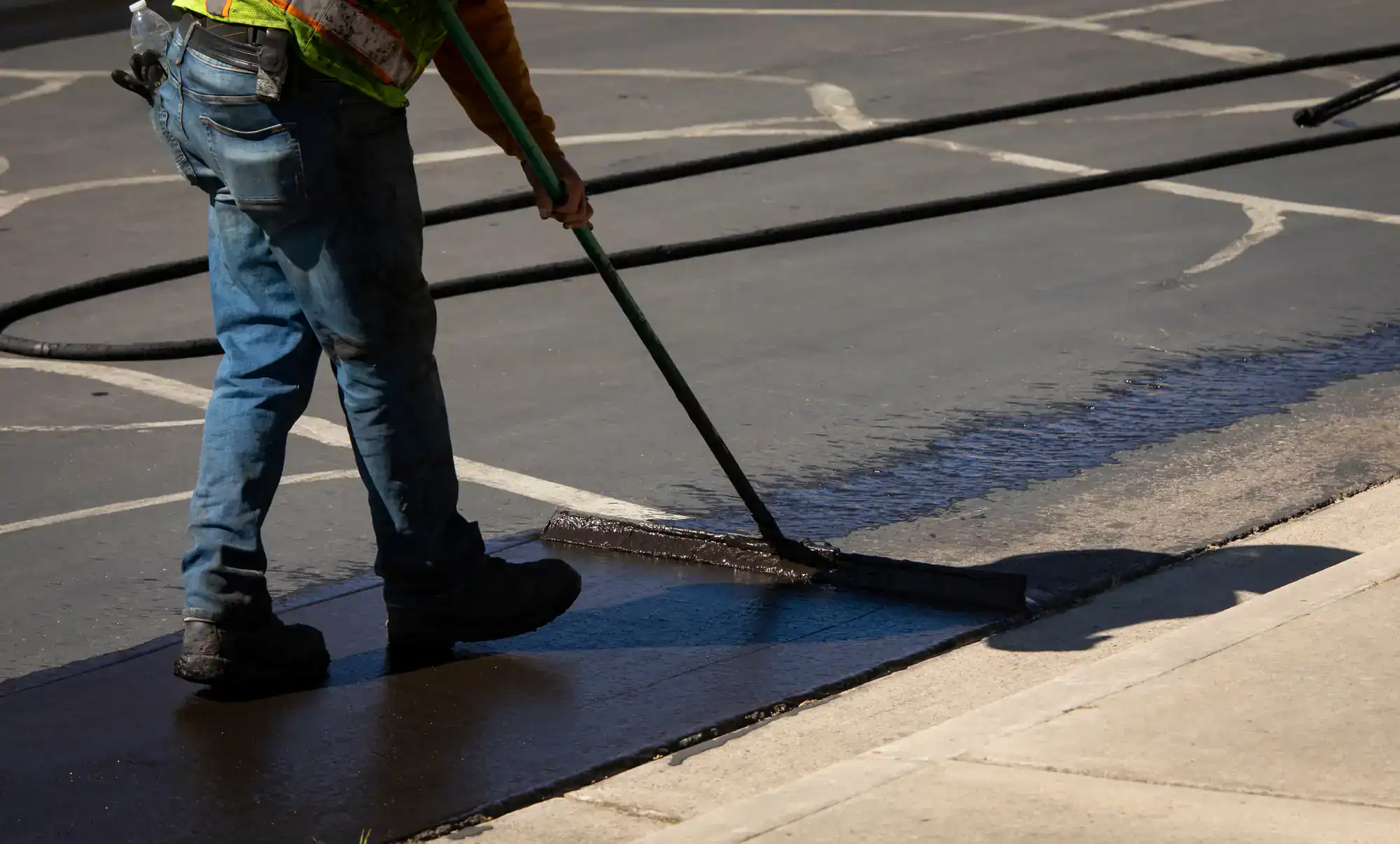
The prep work is where most contractors either earn their price or cut corners and it’s the part you can’t see once the job is done. Before any sealcoat goes down, we thoroughly clean the surface, treat oil and chemical spots with a primer, and fill any existing cracks. Skipping those steps is the reason sealcoating peels, alligator-cracks, or wears off within a season. It’s also the most common difference between a job that lasts and one that doesn’t.
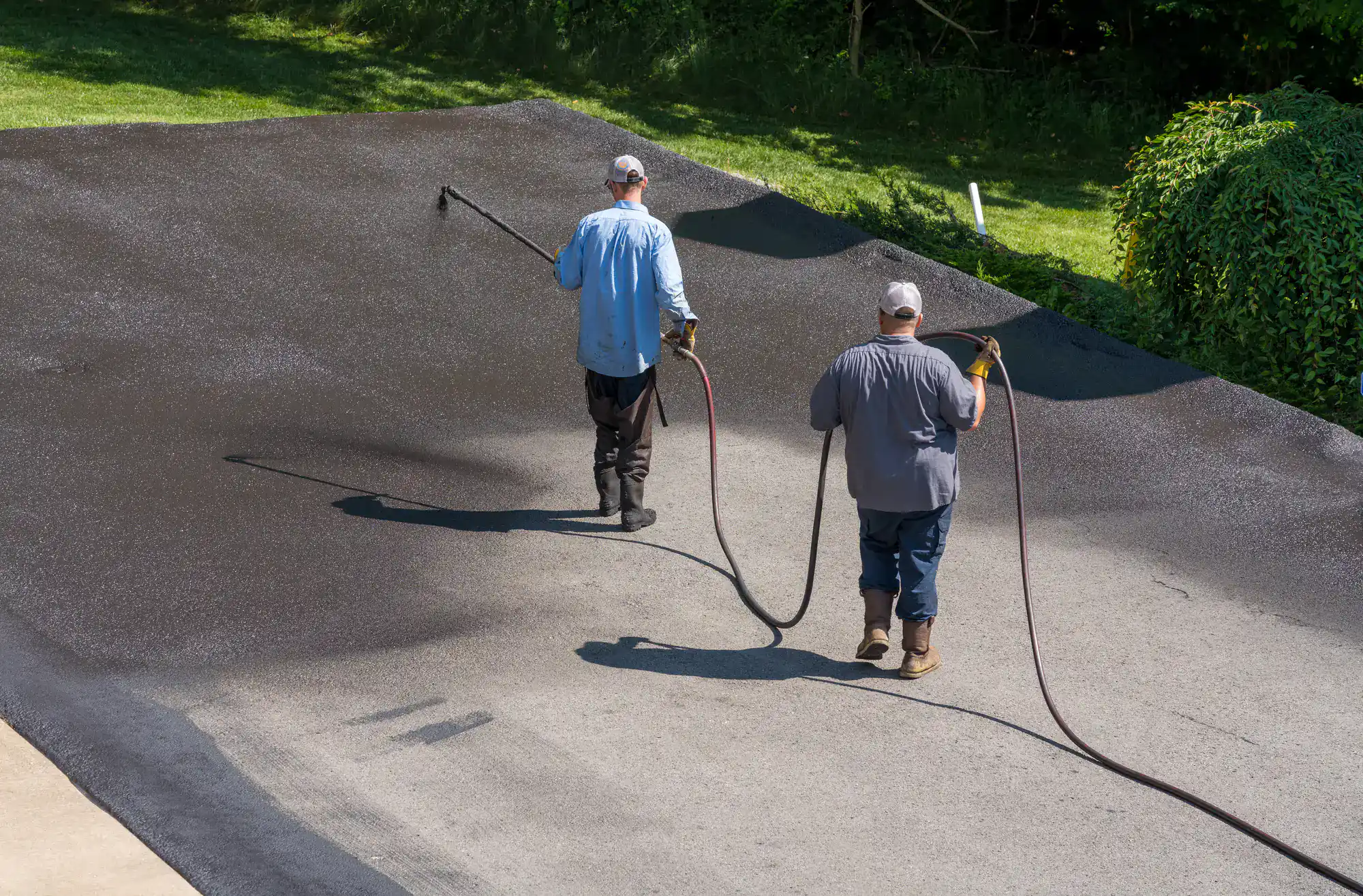
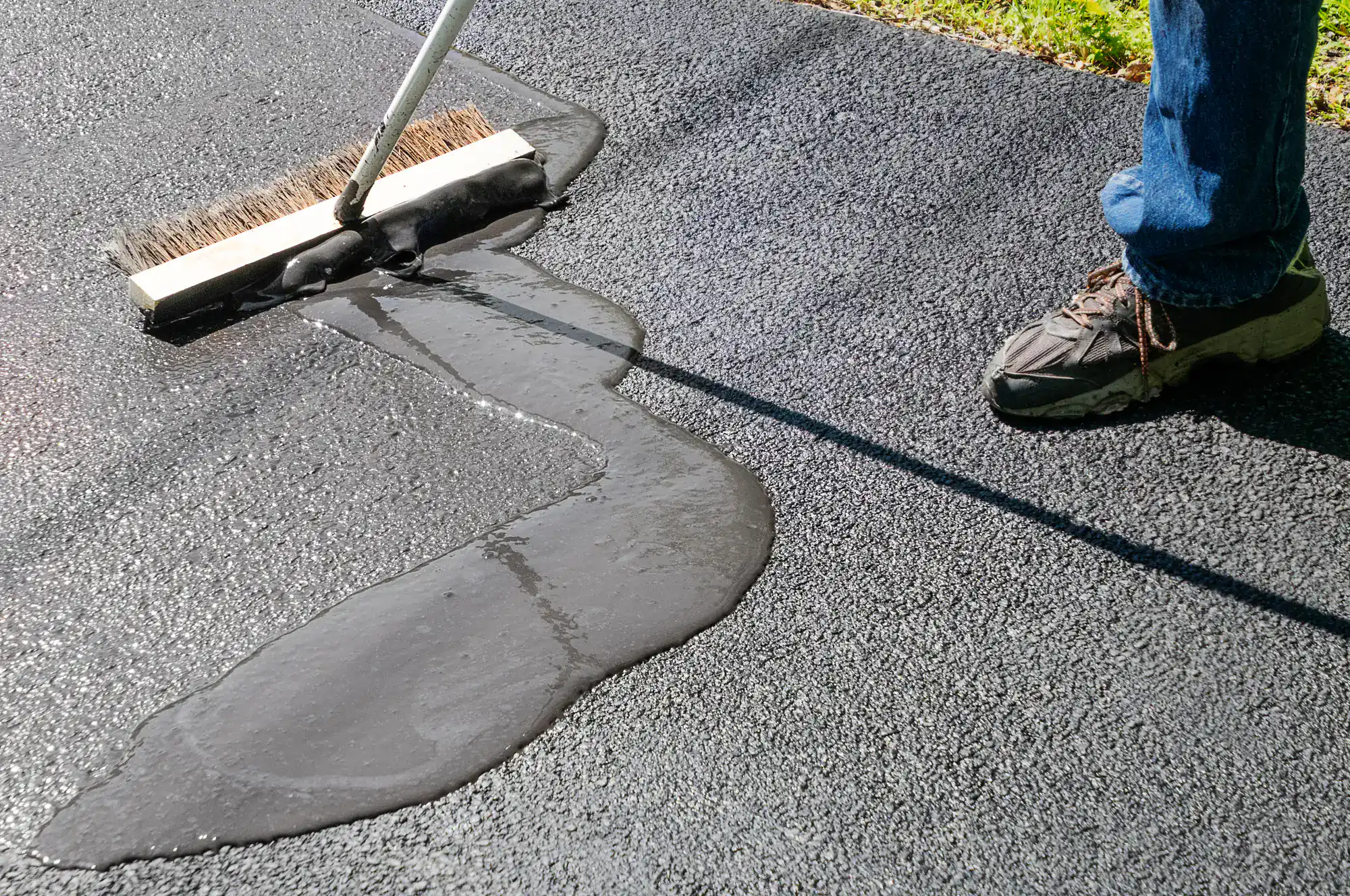
Once the surface is properly prepared, we apply the sealcoat at the right coverage rate for the condition of your asphalt. In Prince Frederick, timing matters sealcoating requires ambient temperatures above 50°F and a dry 24-hour window before and after application. That puts the reliable working season roughly between May and September. Spring tends to fill up fast, especially after a hard winter, because every homeowner who watched their driveway crack all season wants it addressed at once. Booking early in the season is the practical move.
After application, you’ll need to stay off the surface foot traffic typically needs 24 hours, vehicle traffic longer depending on temperature and humidity. We’ll give you a clear timeline before we leave so there’s no guesswork on your end. The driveway will be noticeably darker and more uniform, and more importantly, it’ll be protected heading into the next season.
Ready to get started?
We handle both residential driveway sealcoating and commercial parking lot coating throughout Prince Frederick and the broader Calvert County area. Whether you’re a homeowner in College Station with a standard two-car driveway or a property manager overseeing a commercial lot, the process and the standard of work are the same. No separate crews, no different level of attention based on job size.
On the residential side, our service includes surface cleaning, oil-spot priming, crack filling, and full sealcoat application everything needed to properly protect the asphalt, not just make it look dark for a few weeks. For commercial properties, that extends to line striping, parking lot maintenance programs, and resurfacing where needed. Prince Frederick’s active development pipeline including newer communities like Magnolia Ridge and Patuxent Commons also means there’s a steady need for first-time sealcoating on asphalt that’s finished its initial curing period.
One thing worth knowing if you’re evaluating contractors in this area: Maryland’s MHIC licensing requirement applies to all of this work. Any contractor performing driveway sealcoating or parking lot coating in Calvert County without an MHIC license is operating illegally and if something goes wrong, you have no recourse through the state’s Home Improvement Commission. MHIC #159766 is our license. Look it up before you decide.
For most driveways in Prince Frederick, every two to three years is the right interval but the actual timing depends on how your specific driveway is holding up. Calvert County’s winters are particularly hard on asphalt because temperatures regularly hover right at the freeze-thaw threshold, which means repeated expansion and contraction in the surface. If you’re seeing surface graying, minor cracking, or areas where the asphalt feels rough or porous, that’s your driveway telling you the protective layer has worn through.
A driveway that gets sealed on a consistent schedule tends to stay in better shape between applications because the sealcoat never fully breaks down before it’s refreshed. One thing to avoid is sealing too frequently applying sealcoat every year builds up layers that can crack and peel on their own. Every two to three years, tied to actual surface condition, is the practical standard for this climate.
For a standard residential driveway in Prince Frederick, you’re typically looking at $250 to $400 depending on size, surface condition, and how much crack filling is needed before the sealcoat goes down. Larger driveways or those needing significant prep work will land toward the higher end. Commercial parking lots are priced differently based on square footage and whether line striping is included.
What puts that number in perspective is the alternative. Full driveway replacement in Maryland runs $4,200 to $9,000 or more. A sealcoating application every two to three years is the maintenance that keeps replacement a choice rather than a necessity. If a contractor quotes you significantly below the range above and shows up without a verifiable MHIC license number, that’s a warning sign not a deal. The Maryland Home Improvement Commission specifically flags low-ball driveway sealcoating offers as one of the most common scam patterns in the state.
The single most important check is the MHIC license. Maryland law requires any contractor performing home improvement work including driveway sealcoating to hold a Maryland Home Improvement Commission license. You can verify any contractor’s license number directly through the MHIC’s public online database. If a contractor can’t give you a license number, or gives you one that doesn’t check out, walk away.
This matters especially in Prince Frederick and Calvert County because the area attracts door-to-door sealcoating operators every spring, particularly after hard winters. The common pattern is a claim of leftover materials from a nearby job, a cash-only payment demand, and high-pressure same-day pricing. Some of these operators apply roofing oil instead of actual sealcoat it looks similar when wet but fails within months. A licensed contractor will give you a written estimate, accept standard payment, and provide a license number you can verify before any work starts. Our MHIC number is #159766.
No and this is one of the more common mistakes new homeowners make, especially in areas like Magnolia Ridge or Patuxent Commons where new residential construction is actively happening. Fresh asphalt needs time to fully cure before sealcoating. The oils in new asphalt need to off-gas and harden, and that process typically takes six months to a year depending on temperature and sun exposure. Sealing too early traps those oils beneath the surface and can actually soften the asphalt rather than protect it.
In practical terms, if your driveway was installed in the fall, plan to sealcoat it the following summer or early fall not the following spring. If it was installed in spring or early summer, you may be able to sealcoat it by late fall of the same year, but a professional assessment of the surface condition is the right call before proceeding. When in doubt, waiting an extra season is better than sealing prematurely.
The workable window in Prince Frederick runs roughly May through September. Sealcoating requires ambient temperatures above 50°F and dry conditions for at least 24 hours before and after application which rules out most of the fall and all of winter. Late spring, specifically May and June, is when demand spikes hardest. After a Calvert County winter with significant snowfall and repeated freeze-thaw cycles, homeowners who’ve been watching their driveways deteriorate all season want the work done as soon as temperatures allow.
The practical consequence of that spring surge is that the better contractors in the area book up quickly. If you’re planning to sealcoat this season, reaching out early even before temperatures are consistently warm enough to schedule puts you in the queue before the rush. Early fall, around September, is a solid secondary window if you missed the spring. Getting the driveway sealed before winter is the goal either way.
Yes and for Prince Frederick homeowners specifically, this is one of the stronger arguments for keeping your driveway sealed on a regular schedule. Calvert County road crews treat the main commuting corridors with road salt and de-icing chemicals throughout the winter to keep traffic moving. Every time you pull in or out of your driveway, you carry that salt and chemical residue onto your asphalt surface. On an unsealed driveway, those substances work their way into the surface and actively degrade the asphalt binder the material that holds everything together.
A properly applied sealcoat creates a chemical-resistant barrier at the surface level, stopping that contamination before it penetrates. It won’t make your driveway immune to everything, but it dramatically slows the oxidation and surface breakdown that road salt accelerates. If your driveway connects directly to a treated road which most driveways in Prince Frederick do an unsealed surface is fighting a losing battle every single winter. Sealing it is the straightforward fix.
Other Services we provide in Prince Frederick