Not sure if your driveway needs repaving, resurfacing, or just a seal coat? Here's what Southern Maryland homeowners actually need to know before making a decision.
Your driveway doesn’t fail overnight. It happens gradually — a crack here, a soft spot there, a color that’s gone from deep black to a washed-out gray. And then one spring, after another Maryland winter, you’re standing in your driveway wondering if you’ve waited too long.
The good news is that most homeowners haven’t. But understanding your options before calling anyone is the smartest first step you can take. This page covers the questions we hear most often from homeowners across Anne Arundel, Calvert, and St. Mary’s Counties — and gives you straight answers so you can make a confident, informed decision.
Repaving isn’t just laying down fresh asphalt and calling it a day. Done right, it starts with a thorough assessment of what’s underneath. The existing surface is removed, the base is inspected and graded for proper drainage, and new asphalt is installed at the correct thickness — typically two to three inches for a residential driveway — then compacted with a mechanical roller.
The result isn’t just cosmetic. A properly repaved driveway is structurally rebuilt from the ground up, which is why it can last fifteen to twenty years or longer with routine maintenance. Skipping steps in that process — especially base preparation — is the most common reason driveways fail well before they should.
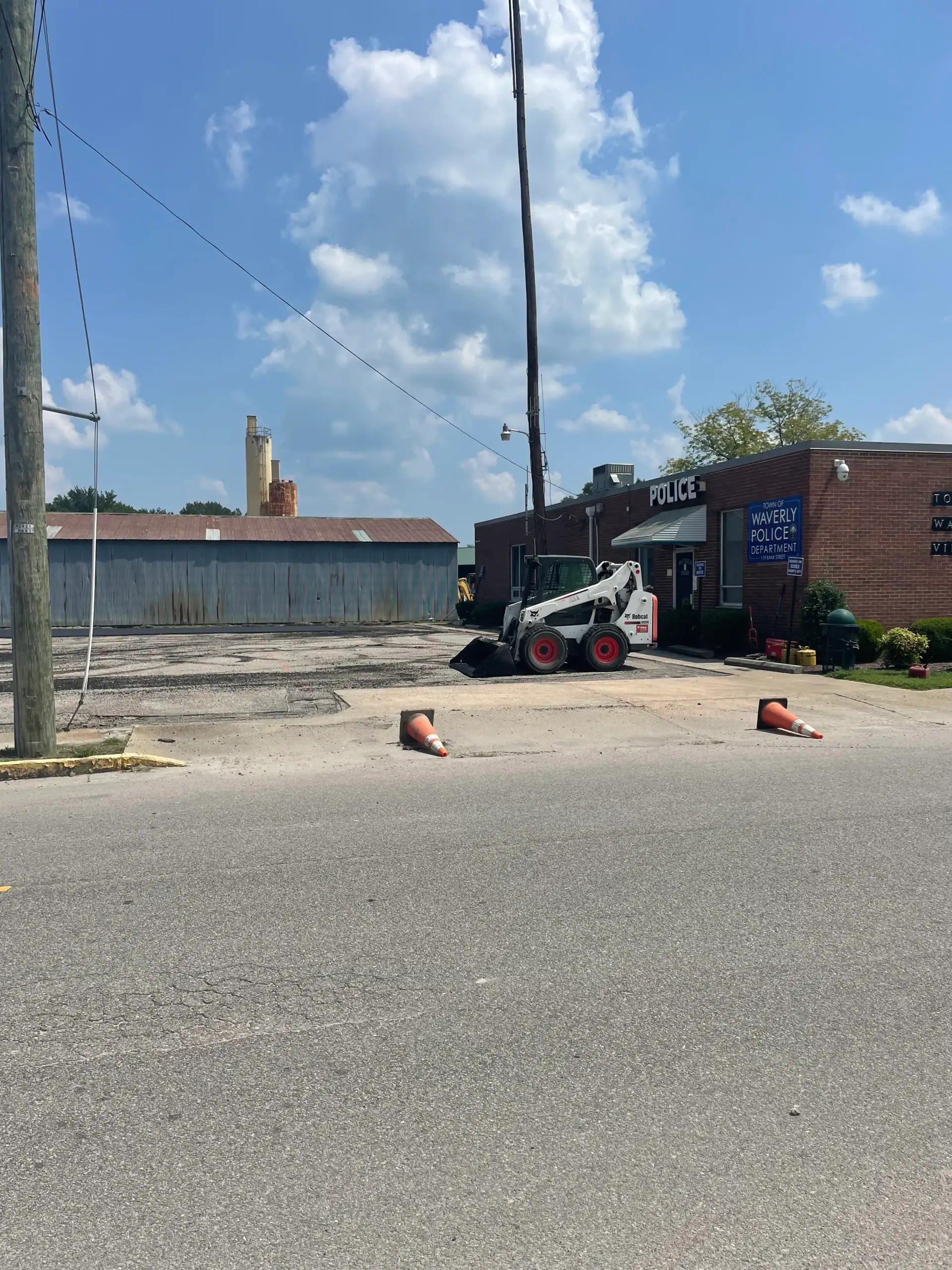
This is the question most homeowners get wrong, and it’s not their fault — the terms get used interchangeably, but they describe two very different scopes of work.
Resurfacing, sometimes called an overlay, means applying a new layer of asphalt — usually one and a half to two inches — directly over the existing surface. It’s a legitimate option when the foundation beneath is still structurally sound and less than about a quarter of the surface needs repair. If your driveway has minor surface cracking, some fading, and the edges are still holding together, resurfacing can extend its life by eight to fifteen years at a lower cost than full replacement.
Full repaving is what the job calls for when the damage goes deeper. If cracks have reached the base layer, if the surface heaves or sinks in spots, or if you’ve already had it resurfaced once before, putting another overlay on top is like patching over a problem that’s already moved past the surface. You’ll spend money and still end up repaving within a few years anyway.
Here in Anne Arundel, Calvert, and St. Mary’s Counties, freeze-thaw cycles are the main culprit behind that kind of structural damage. Water finds its way into surface cracks, freezes, expands by roughly nine percent, and widens those cracks from the inside out. By the time you’re seeing significant surface deterioration in the spring, the damage has usually been building through multiple winters. That’s why we always assess the base before recommending anything — resurfacing over a compromised foundation isn’t a repair, it’s a delay.
The honest answer is that not every driveway needs the most expensive option. If resurfacing is the right call for your situation, that’s what we’ll tell you.
There’s a difference between a driveway that needs attention and one that needs to be replaced. Most homeowners aren’t sure where that line is, and that uncertainty is what keeps people putting off a decision that would actually save them money.
The clearest sign is color. Asphalt that has gone from black to a light gray has oxidized — the binders that hold the material together have broken down, and the surface has become brittle. At that point, driveway sealcoating is a cosmetic fix, not a structural one. A gray, brittle driveway that gets sealed looks better temporarily but continues to deteriorate underneath.
Beyond color, pay attention to the edges. Crumbling or broken edges are a strong indicator that the base has shifted or that water has been working its way under the surface for some time. Potholes — even small ones — tell the same story. They don’t form from surface wear alone. They form when water infiltrates a crack, freezes, expands, and the asphalt above collapses into the void below.
For homeowners in Calvert County and St. Mary’s County especially, where properties tend to sit on larger lots with longer driveways, tree root intrusion adds another layer of complexity. Roots from the wooded surroundings common in areas like Huntingtown, Lusby, and Leonardtown can heave and crack asphalt from below in ways that no surface treatment can fix. If your driveway has visible heaving or sections that rise and fall unevenly, the issue is likely structural and needs to be addressed at the base level.
If you’re seeing more than one or two of these signs together, a full repaving assessment is worth scheduling before another winter makes the decision for you.
Want live answers?
Connect with a Edward Smith Paving expert for fast, friendly support.
Most homeowners don’t think about their driveway until something goes wrong. When they do start looking for answers, they have the same core concerns: Is this going to cost more than I expect? How do I know I’m hiring someone legitimate? And how long is this actually going to last?
These are fair questions, and they deserve direct answers. Here’s what we hear most often from homeowners across our service area — and what we tell them.
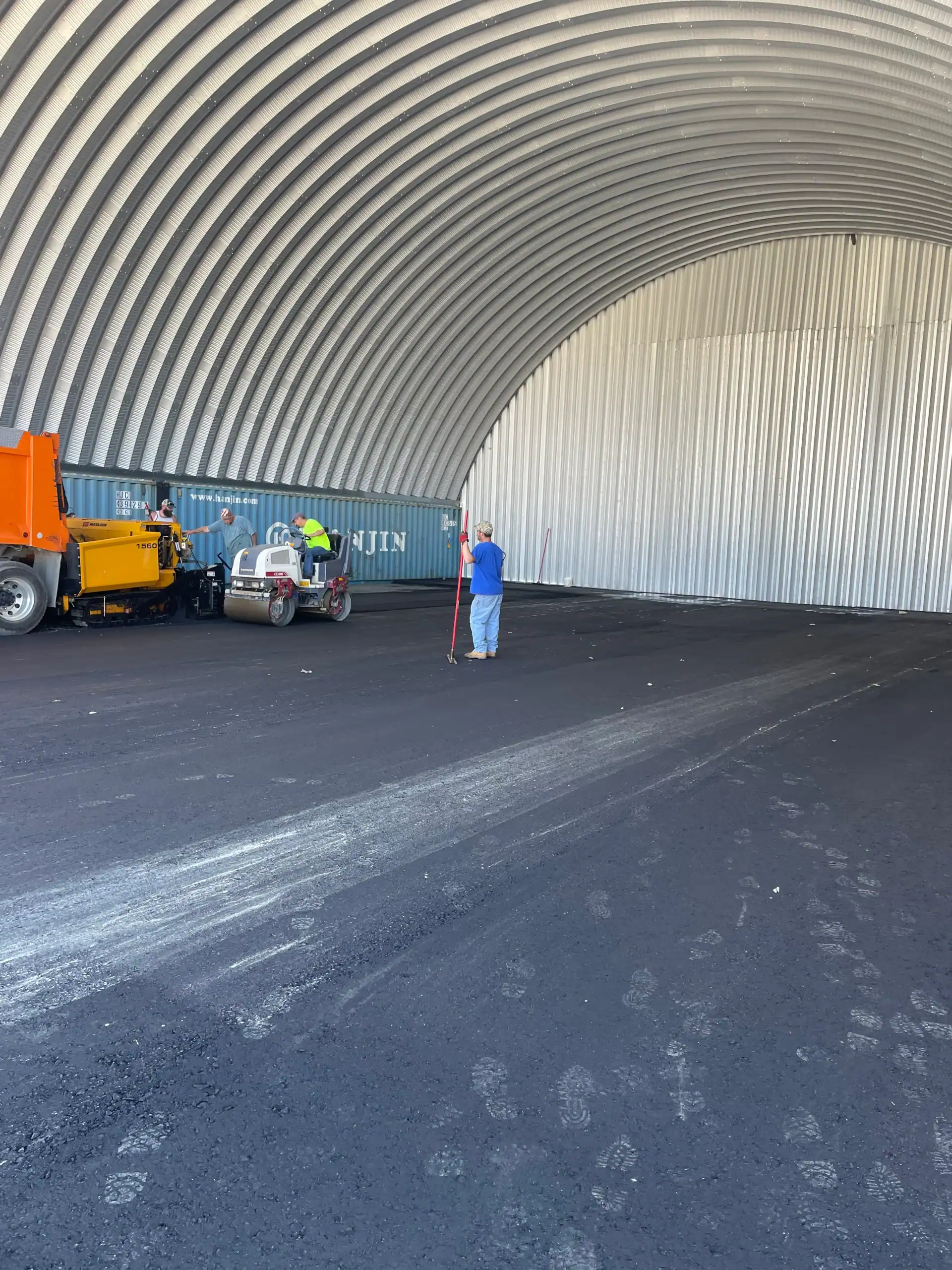
Nationally, homeowners spend anywhere from $1,400 to $12,100 to repave a driveway, with the average landing around $6,800. Those numbers are real, but they’re also wide enough to be almost useless without more context.
What actually moves the price here comes down to a few key factors. The size of the driveway is the obvious one, but it matters more in our region than in many other markets. In Calvert County and St. Mary’s County, rural properties along Route 2/4 and the Patuxent River corridor routinely have driveways of a hundred feet or more. A driveway that’s three times the size of a typical suburban driveway in Crofton or Odenton is going to cost proportionally more, and that’s worth factoring into your planning before you get quotes.
The condition of the existing base is the other major variable. If the base is solid and drainage is adequate, the job is more straightforward. If there’s been root intrusion, poor grading, or long-term water damage to the subbase, that needs to be addressed before new asphalt goes down — and that adds cost. It’s also the work that separates a driveway that lasts twenty years from one that needs attention again in five.
Resurfacing is less expensive than full repaving — typically in the range of three to ten dollars per square foot depending on scope and prep work — but it’s only the right option when the foundation warrants it. Getting a detailed, in-person assessment before committing to either option is the only way to get a price that actually reflects your specific situation. We provide free on-site estimates for exactly this reason.
One more thing worth knowing: driveway sealcoating your new driveway within the first six to twelve months and every two to three years after that adds roughly $500 per application but meaningfully extends the life of the surface. In a climate like ours — where UV oxidation in the summer and freeze-thaw cycles in the winter work against asphalt year-round — it’s not optional maintenance. It’s the difference between a driveway that lasts fifteen years and one that lasts twenty-five or more.
This question comes up more than almost any other, and for good reason. Paving scams are a documented problem in Maryland — door-to-door contractors claiming to have leftover asphalt from a nearby job, offering steep discounts for same-day work, and delivering surfaces that crack and crumble within a season. The Maryland Department of Labor specifically warns consumers to verify licensing before hiring any home improvement contractor.
In Maryland, anyone performing driveway paving work is legally required to hold an active Maryland Home Improvement Commission license — an MHIC license. Getting that license isn’t easy. It requires at least two years of real-world experience, passing a state exam, maintaining minimum liability insurance of $50,000, and contributing to the MHIC Guaranty Fund. That fund exists specifically to protect homeowners: if a licensed contractor fails to complete work or performs it improperly, you can recover up to $30,000 through the state. Hire an unlicensed contractor and you have no such protection.
Every legitimate paving contract in Maryland must include the contractor’s MHIC license number in writing before any payment changes hands. If a contractor can’t or won’t provide that number, that’s your answer.
We hold active MHIC License #159766, current through August 2026, and carry a BBB A+ rating through the BBB of Greater Maryland. Those aren’t just credentials — they’re accountability. For military families near Pax River in St. Mary’s County or homeowners in Annapolis and Severna Park who are managing a significant home investment, knowing there’s a licensed, insured contractor behind the work matters. Over forty years in this industry and more than 5,000 driveways paved across Anne Arundel, Calvert, and St. Mary’s Counties, we’ve built this business on the kind of reputation that doesn’t survive shortcuts.
If you’re comparing quotes and one comes in dramatically lower than the others, ask to see the MHIC number before you go any further. The savings aren’t worth the risk.
Every driveway situation is a little different. The right answer for a homeowner in Chesapeake Beach with a short suburban driveway isn’t necessarily the same as the right answer for a property owner in Hollywood or Mechanicsville with two hundred feet of cracked asphalt and tree roots pushing up from below. What’s consistent is the process: look at the base, assess the damage honestly, and recommend what actually makes sense for the long term.
If your driveway is showing signs of wear — cracking, fading, drainage issues, or edges that are starting to break down — the best thing you can do is get an in-person assessment before another Maryland winter makes the problem harder and more expensive to fix.
Edward Smith Paving serves homeowners throughout Anne Arundel, Calvert, and St. Mary’s Counties. Reach out to schedule your free estimate and get a straight answer about what your driveway actually needs.
Summary:
Article details:
Share: