Hear from Our Customers
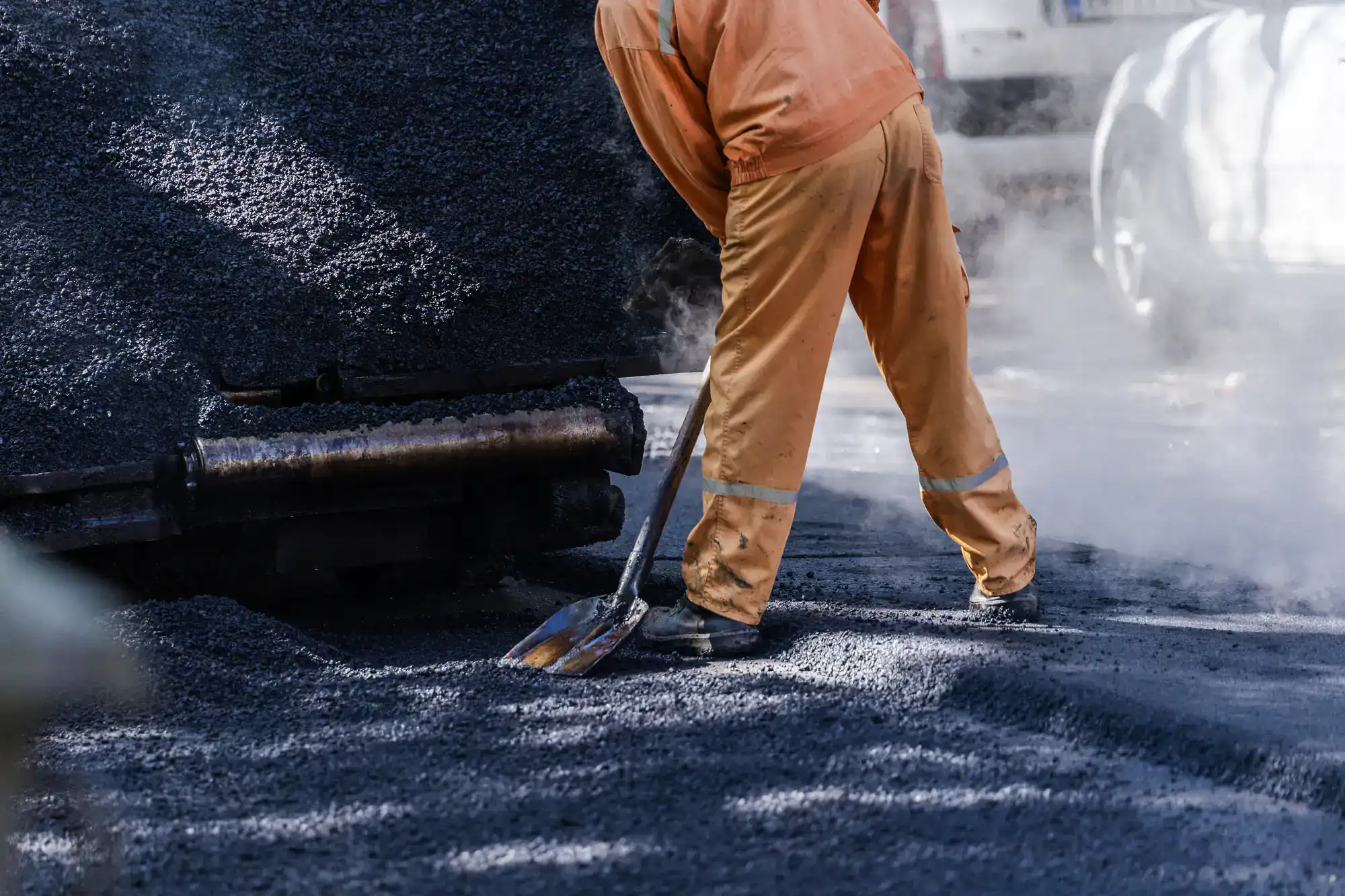
When semi-trucks, refrigerated units, and freight vehicles are rolling across your lot every day the way they do at facilities along Route 1 and Route 175 a surface that wasn’t engineered for that load won’t last. You’ll see cracking within a couple of years, rutting near loading areas, and drainage problems that get worse every winter. Proper commercial asphalt paving in Jessup means the right base preparation, the right asphalt thickness for your actual traffic, and a surface that holds up instead of slowly falling apart.
Jessup’s freeze-thaw cycle is the other factor most property owners underestimate. Every winter, water finds its way into surface cracks, freezes, expands, and thaws widening those cracks a little more each time. By spring, what started as a hairline crack is a pothole, and what started as a pothole is a base failure. A properly installed and maintained commercial pavement can last 20 to 30 years in Maryland’s climate. One that was under-spec’d or left without maintenance won’t come close.
The practical result of getting this right is straightforward. Your lot handles the traffic without deteriorating ahead of schedule. You’re not dealing with liability from cracked surfaces or ADA compliance issues from heaved pavement. And you’re not facing a $40,000 reconstruction bill because a $10,000 repair got pushed down the priority list for three years.
We’ve been operating in Maryland and Virginia since 2011, holding MHIC License #159766 a state credential that requires passing a rigorous exam and demonstrating real field experience before a single project is permitted. We carry a BBB A+ rating and bring over four decades of combined industry experience to commercial paving work across the region.
Jessup sits at the intersection of Howard County and Anne Arundel County, and depending on where your property sits, your permitting process runs through a different county authority entirely. That dual-county reality trips up a lot of contractors. Our experience across both Maryland and Virginia means navigating those regulatory differences is part of the job not something you have to figure out on your own.
Our full scope covers commercial asphalt paving, sealcoating, crack filling, parking lot repair, and ADA-compliant line striping. That matters because your pavement doesn’t stop needing attention after the initial install. Having one contractor who handles every stage of that lifecycle from new installation through long-term maintenance means no handoffs, no gaps, and no excuses.
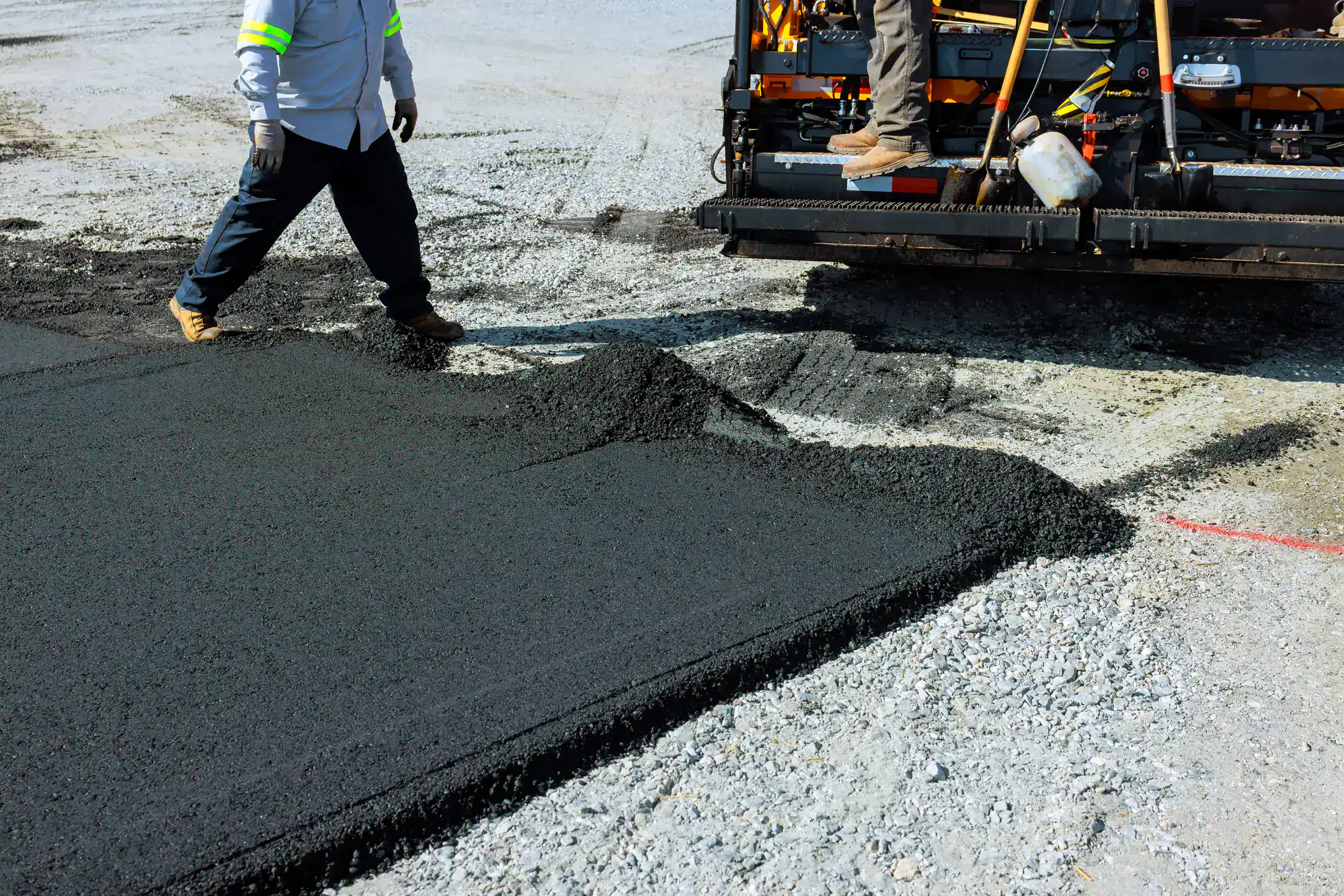
It starts with a free site assessment. Not a quick walk-around and a number on a napkin an actual evaluation of your pavement’s current condition, drainage, subgrade integrity, surface wear, and what your traffic load genuinely demands. For a logistics facility off Tarbay Drive or a commercial property along Washington Boulevard, that assessment looks different than it does for a small retail lot, and the spec should reflect that.
From there, you get a clear scope of work. What needs to be done, why, and what it will cost. If your project requires permits and on the Howard County side of Jessup, commercial paving improvements often do that process gets handled without dropping it in your lap. The installation itself is sequenced to minimize disruption to your operations. For active distribution and freight facilities, that means coordinating around your inbound and outbound schedules so your lot doesn’t become a bottleneck.
Timing matters in Maryland. The paving window runs roughly from late March through October, when ambient temperatures stay above 50°F for proper asphalt installation and curing. If you’re assessing winter damage now or planning a capital project for spring, the right move is to get the site assessment done early before the season gets busy and scheduling gets tight.

Ready to get started?
Commercial asphalt paving in Jessup covers a wide range of property types warehouse truck courts, distribution center access roads, institutional campus lots, multi-tenant retail parking, and everything in between. The common thread is that each one requires a different specification. A cold storage facility running refrigerated semi-trucks needs a heavier base and greater asphalt depth than a standard office parking lot. Getting that wrong on the front end is expensive on the back end.
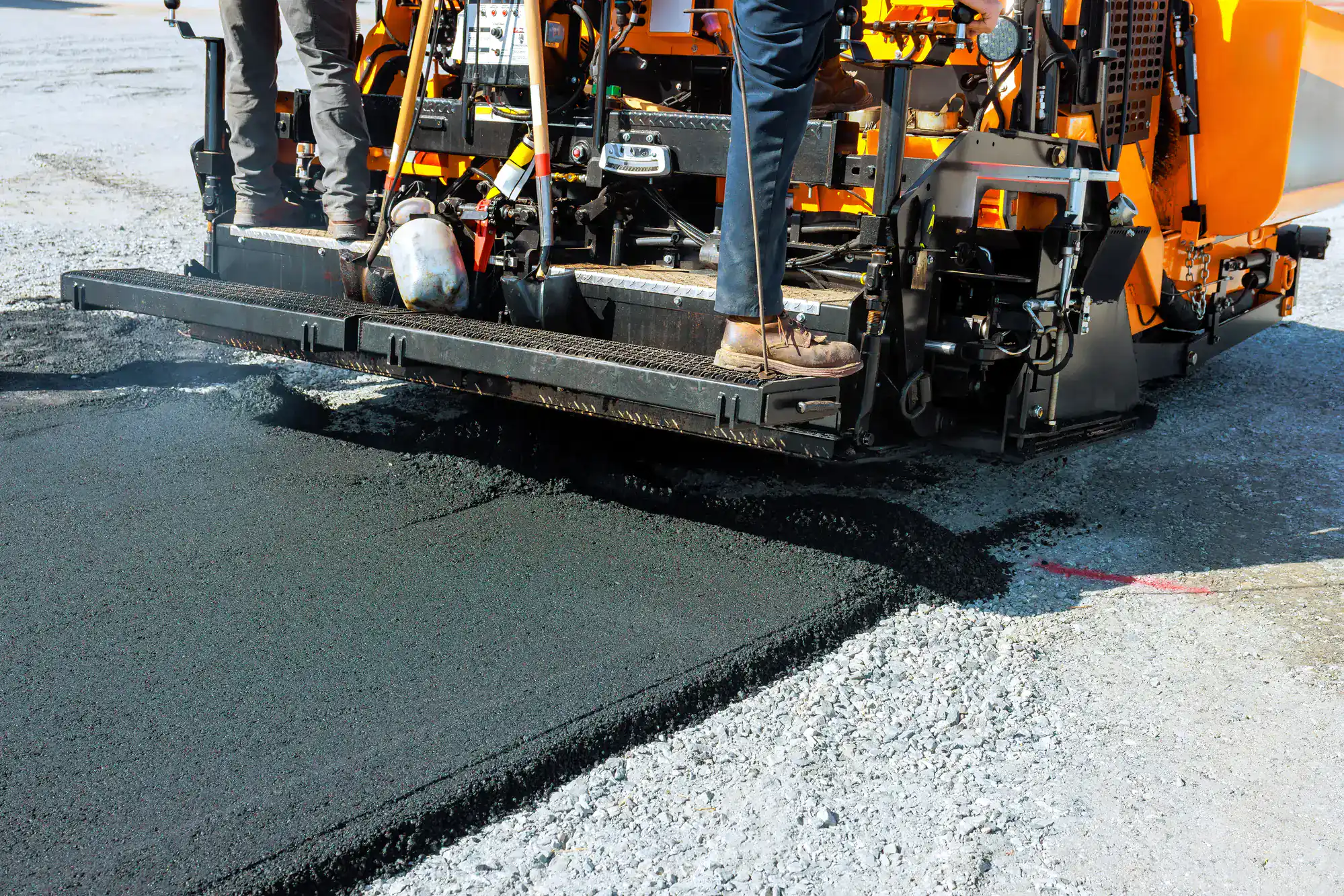
Every commercial paving project we complete includes subgrade evaluation and preparation, proper grading for drainage, and asphalt installation to the thickness your traffic load requires typically four inches or more for commercial applications handling heavy vehicles. ADA compliance is built into the scope, not added as an afterthought. That means accessible space counts, van-accessible designations, proper cross-slopes on accessible routes, and International Symbol of Accessibility markings that meet federal standards. For institutional and government-adjacent properties in Jessup, that compliance piece isn’t optional it’s a baseline requirement.
After the pavement is down, the maintenance side of the equation matters just as much. Sealcoating, periodic crack filling, and line re-striping are what extend the life of a commercial surface from a decade to two or three. We handle all of it, so you’re working with one point of contact across the full lifecycle of your pavement not coordinating three separate vendors every time something needs attention.
It depends entirely on where your property sits. Jessup straddles both Howard County and Anne Arundel County, and the two jurisdictions run separate permitting systems. Properties on the Howard County side fall under Howard County’s Department of Planning and Zoning, while properties on the Anne Arundel County side go through the Anne Arundel County Department of Inspections and Permits, with applications processed through their Land Use Navigator portal.
For commercial paving improvements particularly new installations, significant resurfacing, or drainage modifications permits are typically required regardless of which county governs your address. The scope of work determines what’s needed. A straightforward sealcoat and restripe usually doesn’t trigger a permit requirement. A full parking lot replacement or new access road construction almost always does. If you’re not sure which county you’re in or what your project requires, that’s exactly the kind of thing that gets sorted out during the site assessment before any work begins.
For a commercial parking lot handling standard passenger vehicles, two to three inches of asphalt over a compacted base is a common specification. That’s not what you want if your lot is seeing semi-trucks, delivery vehicles, or heavy freight equipment on a daily basis which describes most of the logistics and distribution facilities operating in and around Jessup.
For heavy commercial applications, four inches of asphalt is a typical starting point, and truck courts or loading dock aprons that take the most concentrated axle load often warrant even more. The base preparation underneath matters just as much as the asphalt depth a properly graded and compacted subgrade is what keeps the surface from shifting, cracking, and failing prematurely under repeated heavy loads. Skimping on base prep is one of the most common reasons commercial lots fail years ahead of schedule, and it’s not something you can fix without tearing the surface back up.
Maryland’s freeze-thaw cycle is the primary driver of pavement deterioration in this region, and Jessup is squarely in that climate zone. The pattern is straightforward: water infiltrates existing surface cracks, temperatures drop below freezing, the water expands as it freezes, and then thaws widening the crack slightly each time. Repeat that process through a full Maryland winter and what started as minor surface cracking becomes a pothole, and what started as a pothole can compromise the base layer underneath.
The practical implication for commercial property owners is that surface maintenance crack filling and sealcoating isn’t cosmetic. It’s the primary defense against water infiltration, and it’s what separates a parking lot that lasts 25 years from one that needs major reconstruction in 10. The spring season, typically March through May, is when most of the winter damage becomes visible in Jessup and when the demand for commercial paving assessment and repair is highest. Getting your lot evaluated early in the season before the schedule fills up puts you in a better position to address issues before they compound through another summer of heavy traffic.
A properly installed commercial asphalt surface with the right base preparation, appropriate thickness for the traffic load, and a consistent maintenance schedule can realistically last 20 to 30 years in Maryland’s climate. The key phrase is “consistent maintenance schedule.” That means sealcoating every three to five years to protect the surface from oxidation and water infiltration, crack filling as needed between sealcoat cycles, and line re-striping as the markings fade.
Without that maintenance, the lifespan drops significantly. Unsealed asphalt oxidizes, becomes brittle, and develops surface cracking that accelerates once water starts getting into the base. By the time a neglected lot reaches the 10 to 15-year mark, you’re often looking at a full reconstruction rather than a repair and the cost difference is substantial. A repair that runs $10,000 today can become a $30,000 to $50,000 reconstruction project within a few years once base deterioration sets in. For commercial property managers in Jessup overseeing high-value facilities, the math on proactive maintenance versus deferred action is not close.
Yes, and for most of the commercial properties in Jessup where logistics facilities, warehouses, and freight operations run on tight inbound and outbound schedules this is a standard part of the planning conversation. Closing a truck court or blocking loading dock access during active freight operations isn’t just inconvenient; it’s a supply chain problem. Any commercial paving contractor working in this market needs to understand that and plan accordingly.
The typical approach is phased paving dividing the work area into sections so that part of the lot or access route remains operational while another section is being worked. Off-hours scheduling is another option for facilities where nighttime or weekend work is feasible. The right approach depends on your specific layout, your traffic patterns, and your operational constraints. That’s part of what gets mapped out during the initial site assessment, so the project plan reflects your actual situation rather than a one-size-fits-all schedule.
The first thing to verify is the MHIC license number. Maryland’s Home Improvement Commission license requires passing a state-administered exam and demonstrating a minimum of two years of real field experience it’s not automatic, and not every contractor operating in Jessup carries one. You can verify any MHIC number directly through the Maryland Department of Labor. We hold MHIC License #159766, and that number is verifiable.
Beyond licensing, look at whether the contractor has genuine commercial experience not just residential paving scaled up. Commercial projects in Jessup involve heavier load specifications, drainage engineering, ADA compliance requirements, and often dual-county permitting considerations that a primarily residential contractor won’t be set up to handle. Ask specifically about projects comparable to yours in scope and traffic load. Ask how they handle permitting across Howard County and Anne Arundel County. And look at whether they can manage the full scope paving, sealcoating, repair, and striping or whether you’ll be coordinating multiple vendors every time your pavement needs attention. A contractor who can do all of it, and who has the credentials to back it up, is worth more than the lowest number on a bid sheet.
Other Services we provide in Jessup