Hear from Our Customers
The BWI Business District doesn’t slow down. Office parks along West Nursery Road, hotels cycling guests around the clock, logistics facilities running heavy freight in and out your pavement is absorbing all of it. When the surface starts failing, it doesn’t just look bad. It creates liability, it signals neglect to tenants and visitors, and it quietly gets more expensive every season you push it off.
A $10,000 repair left alone for two or three winters in Maryland and Central and Northern Virginia routinely becomes a $30,000–$50,000 reconstruction. Maryland’s freeze-thaw cycle is relentless road salt works its way into surface cracks, moisture gets in, refreezes, and expands the damage from the inside out. By the time it’s visible, the subbase is already compromised.
The commercial properties in Linthicum and the BWI corridor that look sharp year after year aren’t spending more they’re spending smarter. Sealcoating on schedule, cracks filled before winter, striping maintained before it fades into a code issue. That’s not extra cost. That’s the maintenance program that keeps a $50,000 problem from replacing a $10,000 one.
We’ve been doing commercial asphalt work in Maryland since 2011 over 14 years operating under Maryland and Central and Northern Virginia’s permitting requirements, ADA standards, and stormwater regulations. That’s the same regulatory framework that governs every commercial property in Linthicum Heights and the BWI Business District. We’re not learning your county’s rules on your project.
We hold MHIC License #159766 a state-issued credential from the Maryland Department of Labor that requires passing a rigorous state exam and demonstrating real field experience. It’s publicly searchable. Pair that with our BBB Accreditation and A+ rating, and you have credentials that hold up to the kind of procurement scrutiny that national firms and government contractors in the BWI corridor actually apply.
We’re also licensed in Virginia which matters if you manage properties on both sides of the state line, a common situation for companies operating out of the Linthicum area and the broader BWI region.
It starts with a free on-site assessment. For commercial properties in Linthicum, that means evaluating your lot’s drainage performance, subbase condition, surface deterioration patterns, current ADA compliance status, and the actual traffic load your pavement is handling. A hotel lot off Aviation Boulevard has different demands than a flex-space parking field at the BWI Tech Park. The assessment reflects that.
From there, you get a detailed recommendation not a ballpark number, but a scope you can take to ownership or put in front of a capital budget committee. If the surface is repairable, we’ll tell you that. If it’s at the end of its service life and patching is just delaying an inevitable replacement, we’ll tell you that too. Many of the commercial properties in the Linthicum area were originally paved in the late 1980s and 1990s that pavement is 30 to 40 years old now, and some of it is past the point where repair makes financial sense.
Once work is scheduled, we coordinate around your operational needs. Phased paving, off-hours work, maintaining access to critical areas these aren’t special requests, they’re standard practice for commercial paving in an active business environment. Maryland and Central and Northern Virginia may require permits for projects affecting drainage or impervious surface coverage, and we handle that process as part of the job.

Ready to get started?
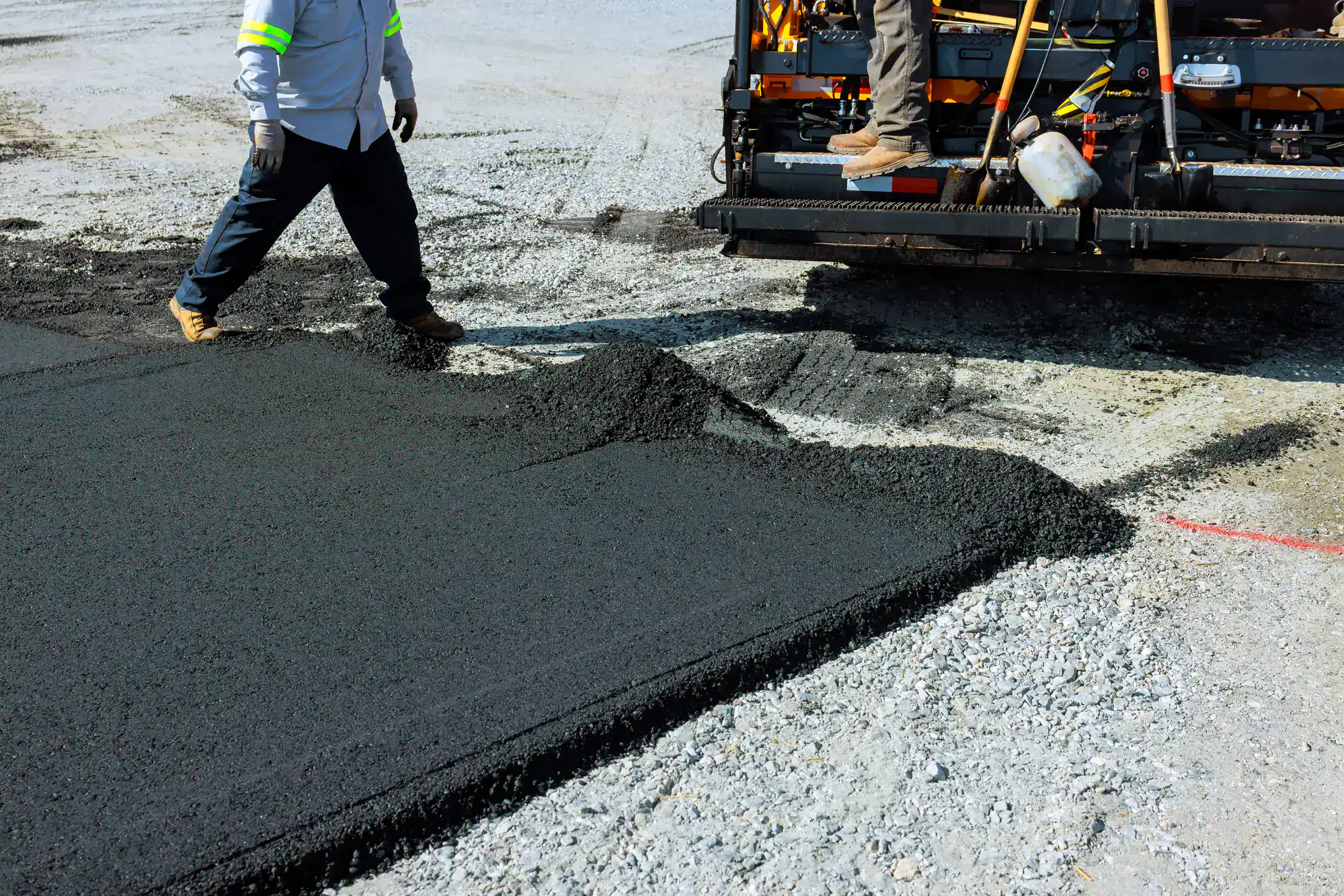
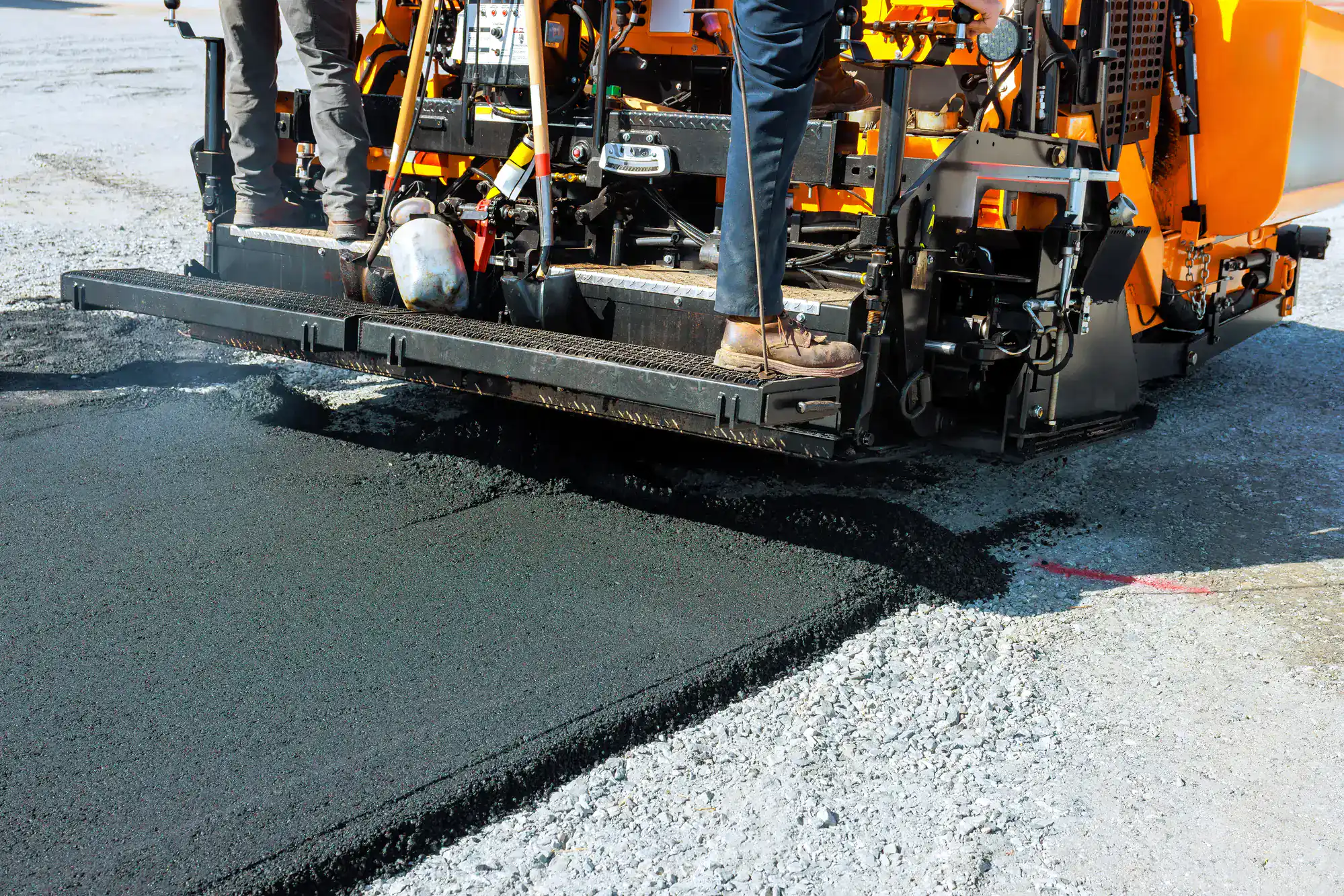
Commercial asphalt paving in Linthicum covers more than just pouring and compacting. The full scope includes subgrade preparation, proper asphalt thickness for your traffic load typically 4 inches or more for commercial use surface installation, and finish grading for drainage. For properties in the BWI corridor where heavy vehicle traffic is the norm, getting the spec right upfront is what separates a 25-year surface from one that starts failing in year eight.
Beyond installation, the pavement lifecycle includes sealcoating to protect the binder from oxidation and chemical exposure, crack filling before winter freeze-thaw cycles turn hairline fractures into structural failures, and ADA-compliant line striping that meets both federal standards and Maryland and Central and Northern Virginia’s parking accessibility guidelines. Faded or missing pavement markings aren’t just an aesthetic issue in this county they’re a code compliance matter. Every vehicle in a commercial lot is required to be positioned within a marked space.
We handle all of it. New installation, resurfacing, patching, sealcoating, crack repair, and striping under one contractor relationship. For property managers overseeing multiple assets in the 21090 zip code or across the broader BWI Business District, that means one call, one scope, one accountable vendor.
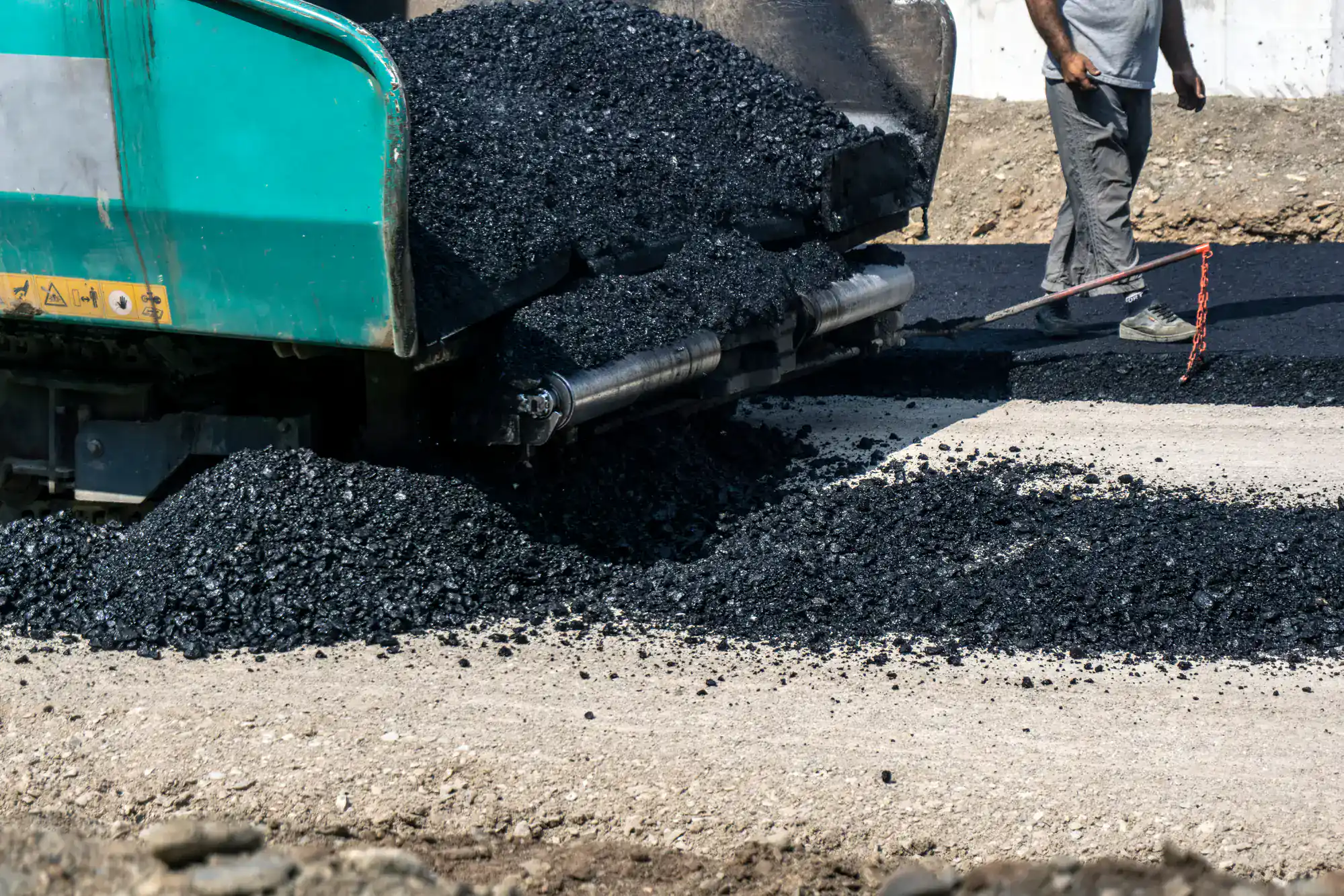
Commercial asphalt paving typically runs $4–$10 per square foot, but that range moves based on several real factors: the current condition of your subbase, the thickness spec required for your traffic load, whether you need full replacement or resurfacing, and the total square footage of the project. A hotel parking lot off West Nursery Road that handles shuttle buses and rental vehicles daily needs a heavier spec than a small office lot and that difference shows up in the price.
The most accurate number comes from an on-site assessment, not a phone estimate. What looks like a resurfacing job from the street sometimes turns out to need subbase repair first, which changes the scope entirely. Getting a detailed, itemized proposal before you commit is how you avoid cost surprises mid-project and how you build a capital budget line that actually reflects the real scope of work.
The optimal window for asphalt installation in Linthicum is late spring through early fall roughly May through October when temperatures are consistently warm enough for proper compaction and curing. Asphalt needs to be laid and compacted above a minimum temperature threshold, and the Mid-Atlantic shoulder seasons can be unpredictable enough to cause problems if you’re cutting it close.
That said, spring is when demand peaks. After Maryland’s freeze-thaw winters, post-winter damage becomes visible in March and April, and every commercial property manager in Maryland and Central and Northern Virginia is looking at the same cracked, heaved surfaces at the same time. If you’re planning a paving project for spring, the time to schedule it is Q4 of the prior year not March, when the calendar is already filling up. Getting on the schedule early is the most practical thing you can do.
It depends on the scope of the project. Routine maintenance work crack filling, sealcoating, line striping typically doesn’t require a permit. But projects that affect drainage, change the grading of your lot, or expand the impervious surface coverage of your property may trigger permit requirements under Maryland and Central and Northern Virginia’s development regulations, which are administered by the County’s Department of Inspections and Permits.
As of December 1, 2025, Maryland and Central and Northern Virginia implemented updated code requirements for new permit applications, so if you’re planning a larger commercial paving project in Linthicum, it’s worth confirming current requirements before you start. When we do the site assessment, we’ll flag anything that’s likely to require a permit and walk you through what that process looks like it’s part of scoping the job correctly, not an afterthought.
ADA compliance for commercial parking lots is governed by federal standards and enforced locally through Maryland and Central and Northern Virginia’s parking accessibility guidelines. The requirements cover the number of accessible spaces required based on total lot size, the dimensions of standard and van-accessible spaces, the surface condition of accessible routes, and the presence of proper signage. One thing that often surprises property managers in Linthicum: Maryland and Central and Northern Virginia’s code specifies that every vehicle must be positioned within one marked parking space which means faded or missing pavement markings are a compliance issue, not just a cosmetic one.
For properties in the BWI Business District especially those with federal government tenants or high public-facing traffic ADA compliance gets scrutinized at a higher level than in purely residential or light commercial areas. When we complete a paving or resurfacing project, ADA-compliant line striping is part of the scope. You shouldn’t have to source a separate striping contractor to close out a compliance requirement.
Properly installed commercial asphalt the right thickness, the right subbase, the right compaction has a designed service life of 20 to 30 years. In practice, how long your lot actually lasts depends heavily on how consistently it’s maintained and what kind of traffic it carries. A hotel parking lot in the BWI corridor running shuttle buses and rental vehicles is going to age faster than a lightly used office lot, even if both were paved the same year.
Maryland’s climate is one of the harder environments for asphalt. The freeze-thaw cycle, road salt exposure, and summer heat all stress the pavement in different ways at different times of year. A sealcoating program every 3–5 years significantly extends surface life by protecting the asphalt binder from oxidation and chemical penetration. Crack filling before winter is equally important water that gets into a crack before a hard freeze expands it from the inside. The lots that hold up the longest aren’t the ones that were built the best they’re the ones that were maintained consistently.
This is one of the first questions commercial property managers in the BWI area ask, and it’s the right one. In a district where hotel guests need parking access around the clock and office tenants arrive every morning expecting a functional lot, shutting everything down for days isn’t realistic. The standard approach for active commercial properties is phased paving completing one section of the lot at a time while keeping the rest accessible, then moving to the next phase once the first has cured.
We coordinate the work schedule around your operational needs before the project starts, not during it. That means knowing your peak traffic hours, identifying which access points and areas are non-negotiable, and building the work sequence around those constraints. For properties along West Nursery Road or within the BWI Tech Park corridor, we’ve worked around exactly these kinds of operational requirements before. The goal is a completed lot that meets commercial-grade specs without your tenants, guests, or employees ever feeling like the job came at their expense.
Local Resources
Other Services we provide in Linthicum