

Hear from Our Customers

Piney Point sits on roughly two square miles of land surrounded by four square miles of water. That ratio matters when you’re paving. Low-lying, tidal-adjacent ground means water doesn’t just fall on your lot it comes at it from every direction. A parking lot installed without serious drainage engineering in this environment won’t crack in year ten. It’ll crack in year three.
When it’s done right, your lot handles the freeze-thaw cycles that hit St. Mary’s County every winter without opening up from the inside out. It sheds water instead of holding it. It stays intact through the summer traffic surge that hits waterfront businesses along the Lower Potomac every season. And it doesn’t need a full tear-out five years from now because the base was never built for where it sits.
The loblolly pines that give Piney Point its name drop needles and organic debris year-round, trapping moisture against the surface and accelerating deterioration if the asphalt isn’t properly sealed and maintained. A lot built and maintained for Piney Point’s specific conditions coastal humidity, salt air off the Potomac, high water table, organic canopy debris lasts 20 years or more. One that isn’t? You’ll be having this conversation again much sooner.
We’ve been operating in Maryland since 2011. That’s not a marketing number it’s the difference between a contractor who’s still around when something needs to be addressed and one who isn’t. We hold MHIC License #159766, which is publicly verifiable through the Maryland Home Improvement Commission, and earned BBB A+ accreditation in 2024.
We serve St. Mary’s County and the broader Southern Maryland peninsula from our Annapolis headquarters, with active operations on both the Maryland and Virginia sides of the Potomac. That matters for a community like Piney Point, which sits right on the river’s edge we’re not a contractor who’s never worked below Annapolis and is figuring out the logistics of MD Route 249 on the day of your job.
We handle every phase of a commercial lot’s life: new installation, resurfacing, crack repair, sealcoating, and ADA-compliant line striping. One contractor, one point of contact, from the first pour through the long-term maintenance cycle.
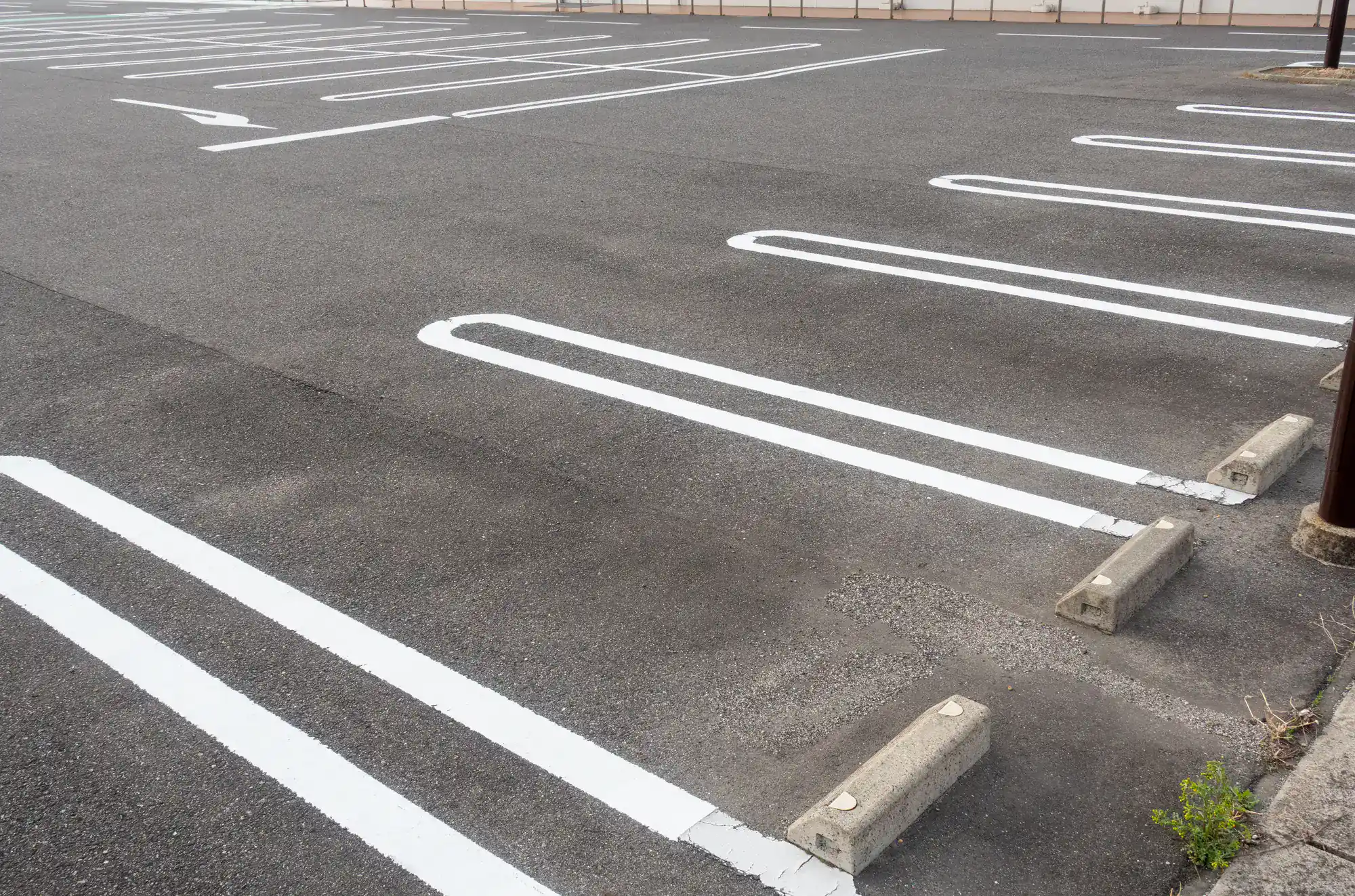
Every project starts with a site assessment, and in Piney Point, drainage is the first thing we evaluate not the last. Given the community’s proximity to St. George’s Creek and the Potomac, and the low-lying coastal topography throughout the area, grading and water management decisions get made before anything else. If your lot is near tidal water, that assessment also accounts for St. Mary’s County’s Critical Area regulations, which can affect permitting for new impervious surface close to the shoreline. We know to check this before breaking ground not after.
Once the site is assessed, the process moves through subbase preparation, grading for positive drainage, and commercial-grade hot-mix asphalt installation at the thickness your traffic load requires. Commercial lots aren’t built like driveways. The material spec and compaction standards are different, and cutting corners on either one is exactly how a lot fails ahead of schedule.
Asphalt installation in Maryland requires ambient temperatures above 50°F, so the practical window runs April through October. For waterfront businesses and seasonal operations in the Lower Potomac area, the spring shoulder season April through early June is typically the right time to schedule. Your lot gets paved and fully cured before summer traffic arrives, and your peak season runs without a cone in sight. Phased paving is also an option for larger lots where keeping part of the surface open during the project matters.
Ready to get started?
We cover the full scope of commercial parking lot work new parking lot construction, asphalt parking lot installation, overlays, crack filling, hot patching, sealcoating, and parking lot line striping with full ADA compliance. For commercial property owners and institutional facilities in Piney Point and across St. Mary’s County, that means you’re not coordinating a separate striping crew after the paving is done or hunting for a different contractor when the sealcoat is due.
ADA compliance is built into every commercial project from the design phase. That means correct accessible space ratios, van-accessible aisles, proper running and cross slopes, and clearly marked accessible routes not added as an afterthought and not left to a separate contractor to figure out. For facilities like the Paul Hall Center or any business open to the public in St. Mary’s County, getting this right from the start avoids federal first-violation fines that can reach $75,000 per incident.
For ongoing maintenance, we offer tailored maintenance programs that include scheduled sealcoating typically every two to three years in a coastal environment like Piney Point, where salt air and humidity accelerate surface oxidation faster than inland locations. Sealcoating runs approximately $0.15 to $0.30 per square foot and is the single most cost-effective way to extend your lot’s lifespan toward the 20-to-25-year mark without a full replacement. Commercial lots also follow a 15-year IRS depreciation schedule, which means how you maintain and document the asset has real tax implications something worth discussing with your accountant when you’re planning a new installation or major resurfacing.
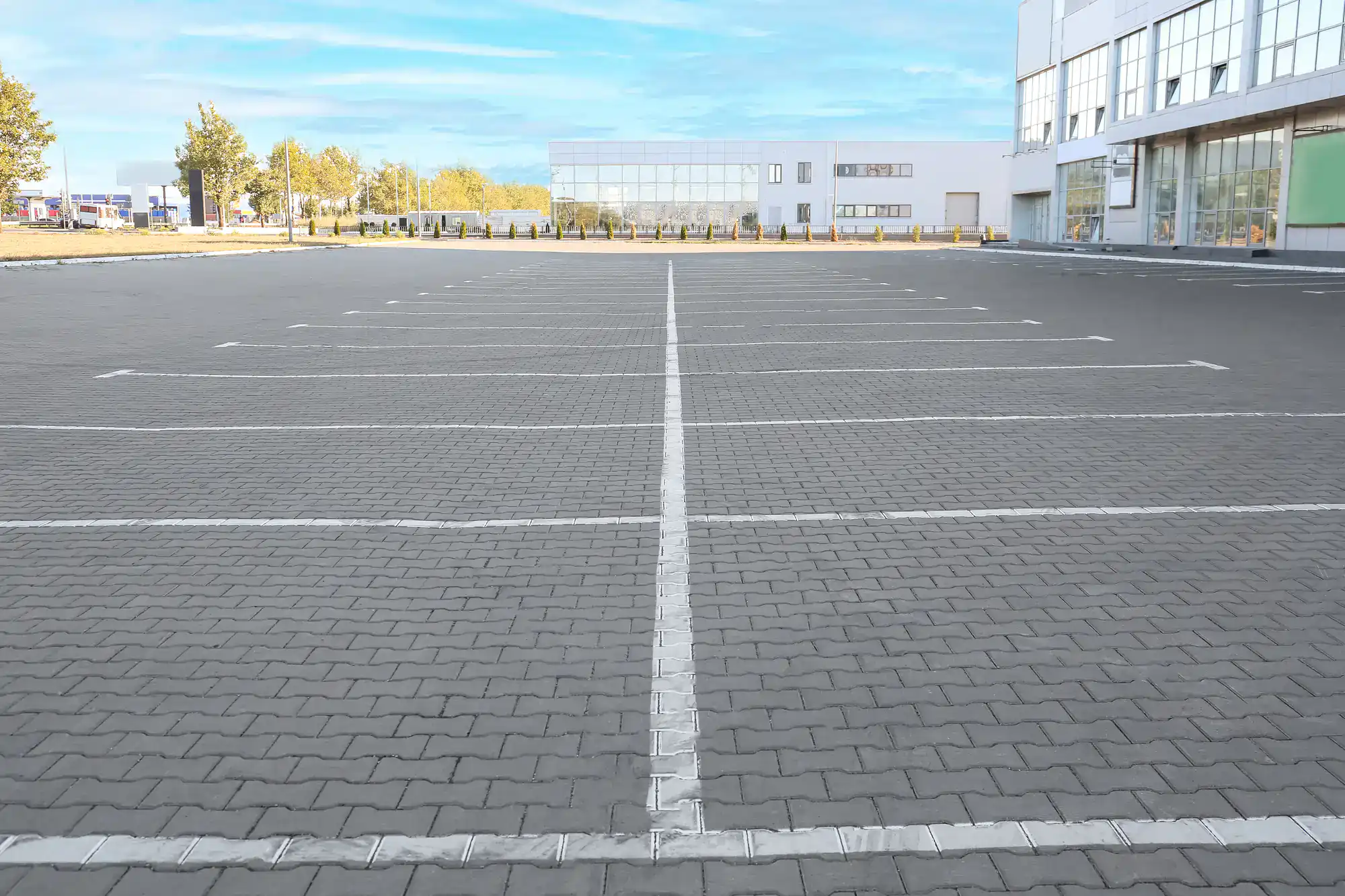
Yes, and it’s not something to treat as optional. Piney Point’s land area is roughly two square miles surrounded by four square miles of water. The water table is high, the topography is low-lying, and tidal influence from the Potomac River and St. George’s Creek affects how water moves through and around the ground beneath your lot. In this environment, standing water on a parking lot surface isn’t just an inconvenience it’s the primary mechanism of premature asphalt failure. Water infiltrates cracks, freezes in winter, expands, and fractures the pavement from the inside out.
Proper drainage design for a parking lot in Piney Point means grading the subbase to direct water away from the pavement, engineering positive surface slopes so water moves off the lot rather than pooling on it, and selecting a subbase material that manages moisture rather than retaining it. It also means accounting for St. Mary’s County’s Critical Area regulations, which govern development within 1,000 feet of tidal waters and can affect permitting for new impervious surface near the shoreline. We evaluate all of this before any material is ordered.
A properly installed and maintained commercial asphalt parking lot in southern Maryland should last 20 to 25 years. The key phrase is “properly installed and maintained” both matter, and neither alone is sufficient. Installation quality determines the structural integrity of the lot from day one: the right subbase depth, correct compaction, and commercial-grade hot-mix asphalt at the appropriate thickness for your traffic load. Maintenance determines how well that structure holds up against the specific conditions it faces year after year.
In Piney Point specifically, maintenance is more time-sensitive than it is inland. Salt air off the Potomac, high humidity, and the organic debris from the surrounding loblolly pine canopy all accelerate the oxidation of asphalt binders, causing the surface to become brittle and crack-prone faster than it would in a drier, inland location. A sealcoating program applied every two to three years slows that process significantly. Combine that with prompt crack filling when small surface cracks appear before water infiltrates and freeze-thaw cycling widens them and a well-built lot in Piney Point can realistically reach the 20-year mark without a full tear-out and replacement.
In most cases, yes at least partially. For waterfront businesses, marinas, and seasonal operations in the Lower Potomac area, closing an entire parking lot during peak season isn’t realistic, and it doesn’t have to be. Phased paving divides the lot into sections that are paved in sequence, keeping one portion open and usable while the other is being worked on. The tradeoff is that phased work takes longer and requires more coordination, but for a business that depends on summer traffic along MD Route 249 or at the Piney Point waterfront, it’s often the right call.
The better answer is to plan ahead. Asphalt installation in Maryland requires ambient temperatures above 50°F, so the practical paving window runs April through October. For seasonal businesses in Piney Point, scheduling in the spring shoulder season April through early June means the work is done and the lot is fully cured before your peak traffic arrives. New asphalt needs 24 to 48 hours before it can handle vehicle traffic, and full cure takes approximately 30 days, though the lot is usable well before that point. Getting the timing right eliminates the need to choose between an open lot and a finished one.
Commercial asphalt parking lot installation typically runs between $2.00 and $4.50 per square foot, depending on the scope of work, the condition of the existing subbase, and the thickness required for your traffic load. A small lot at the lower end of that range and a large institutional lot with heavy vehicle access like a training facility or waterfront campground will land at different points in that range for reasons that are specific to the project. Getting a quote without a site assessment is how misunderstandings happen.
What changes the number most is what’s already there. A new parking lot construction project on bare ground has different cost drivers than an overlay on an existing surface, which is different again from a full tear-out and reinstallation on a lot that’s structurally failed. In Piney Point specifically, site conditions matter: proximity to tidal water can affect subbase requirements, drainage engineering adds scope to projects near the Potomac or St. George’s Creek, and any project involving significant new impervious surface near the shoreline may require permitting through St. Mary’s County Land Use and Growth Management. All of that gets evaluated in a site assessment before a number is put on paper.
It depends on the scope and location of the project. Piney Point is an unincorporated community with no municipal government of its own, so all permitting runs through St. Mary’s County specifically the Department of Land Use and Growth Management and the Department of Public Works. For commercial paving projects that involve new impervious surface, significant site grading, or stormwater changes, a grading permit and stormwater management review are typically required at the county level.
The additional factor specific to Piney Point is Maryland’s Critical Area law, which regulates development within 1,000 feet of tidal waters. Given that Piney Point sits at the confluence of the Potomac River and St. George’s Creek, a significant portion of the community falls within that buffer. If your property is in the Critical Area overlay, new impervious surface or major site disturbance near the shoreline may trigger additional review. This isn’t a reason to avoid the project it’s a reason to hire a licensed contractor who knows to check this before mobilizing equipment. Identifying permit requirements early is part of the site assessment process, not something that should surface as a surprise mid-project.
The fastest way is to verify the contractor’s MHIC license number directly through the Maryland Home Improvement Commission’s public license lookup. Maryland law requires contractors performing commercial surface work to hold a valid MHIC license, and the database is publicly accessible. If a contractor can’t give you a license number, or if the number doesn’t come back clean in the database, that’s a hard stop not a yellow flag.
This matters more in rural communities like Piney Point than it does in denser commercial markets. The thin contractor pool in southern St. Mary’s County means unlicensed or transient operators have more room to operate without being filtered out by market competition. The “leftover asphalt” scam where crews show up unsolicited offering to pave a lot with material supposedly left over from a nearby job is a documented and recurring problem in rural Maryland. A licensed contractor with a verifiable MHIC number, a physical business address, and years of operating history in the state is accountable in ways that an unlicensed crew simply isn’t. Our MHIC License #159766 is publicly verifiable, we’ve operated in Maryland since 2011, and the BBB A+ accreditation earned in 2024 adds a second layer of external accountability. Those aren’t credentials that appear overnight.
Other Services we provide in Piney Point