Hear from Our Customers
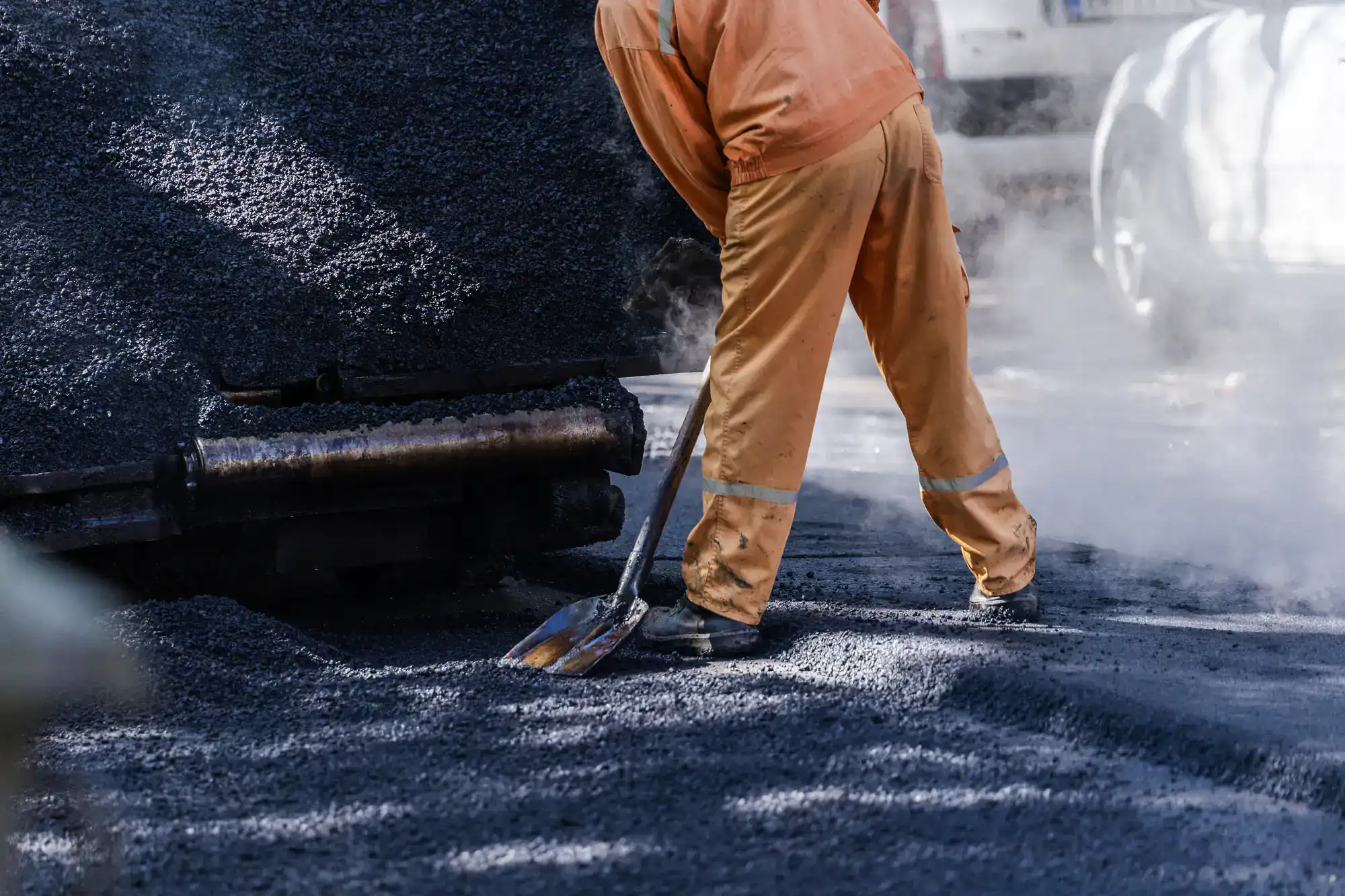
In Riva, your pavement is doing more work than you might think. With 15% of the area covered by water and tidal ground along the South River and Beards Creek running right beneath the surface, moisture is always present and moisture is the number one reason asphalt fails early. When we install commercial asphalt paving correctly here, with drainage designed for this specific environment, you get a surface that doesn’t heave, doesn’t crack prematurely, and doesn’t turn into a liability after two Maryland winters.
For HOA communities like Berkshire, Stone Ridge, and Annapolis Landing, that matters in a very practical way. A deteriorating parking area or access road isn’t just an eyesore it’s a safety issue, an ADA exposure, and a signal to residents and prospective buyers that the property isn’t being managed well. In a market where homes average $400,000 to over $1 million, the condition of shared pavement directly affects how people perceive the value of what they own.
The long-term math is straightforward. A well-installed commercial asphalt surface, maintained with sealcoating and crack filling on a regular schedule, can last 20 to 30 years. Ignore it, and you’re looking at full reconstruction not a repair within a decade. Getting it right the first time, with a contractor who understands Riva’s specific conditions, is the investment that actually pays off.
Edward Smith Paving is based in Annapolis about seven miles from Riva and holds Maryland Home Improvement Commission License #159766. That license isn’t just a number on a website. It required passing a state exam, demonstrating real experience, and maintaining proper insurance. It’s publicly verifiable, and it’s the clearest line between a contractor who’s accountable and one who isn’t.
We’ve been operating in Anne Arundel County since 2011, which means we know the permitting requirements, we understand how the county’s stormwater management rules apply to commercial paving near tidal waterways, and we’ve worked on properties throughout the South River corridor in Riva and surrounding communities. When you’re managing an HOA in Riva or a commercial property along the Riva Road corridor, you’re not dealing with a crew that’s going to disappear after the job. You’re working with a licensed, BBB Accredited contractor who’s been here and plans to stay.
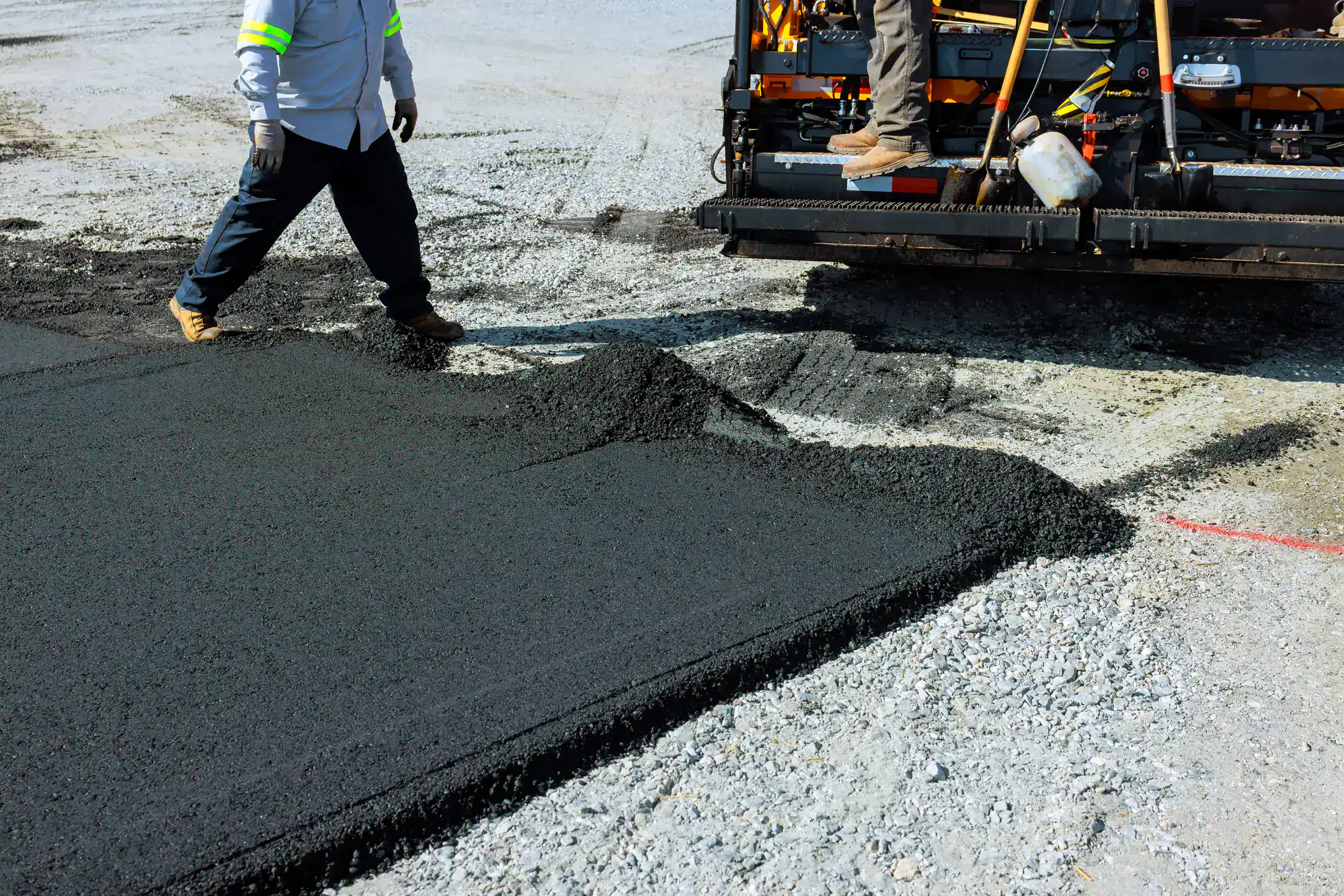
It starts with a site assessment. Before any equipment shows up, we walk your property and look at what’s actually going on base condition, drainage patterns, existing damage, and what the surface is being asked to handle. For commercial properties near Beards Creek or the South River in Riva, that drainage evaluation isn’t optional. It determines how the base gets built and whether your pavement lasts 10 years or 25.
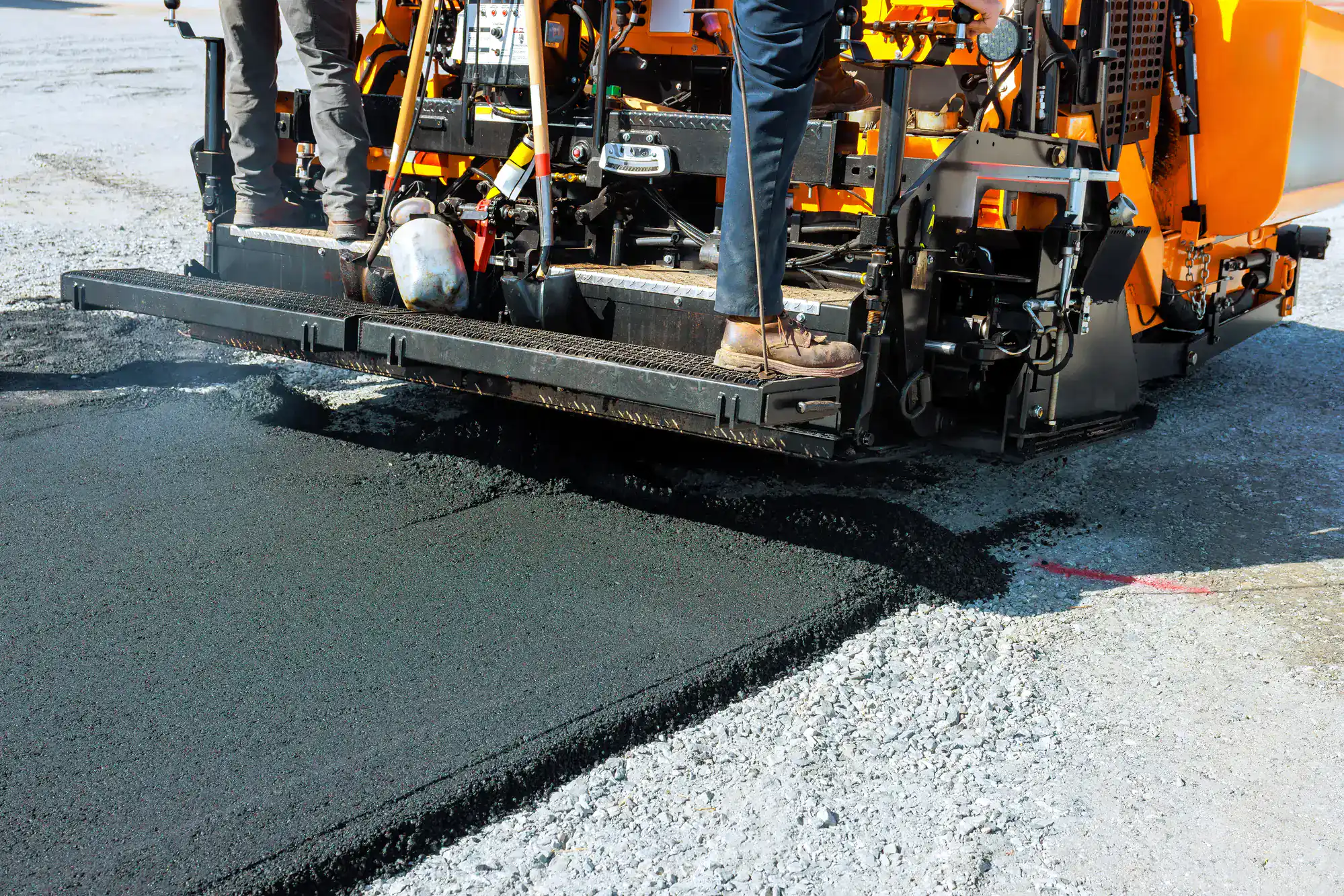
From there, we handle subgrade preparation, which is the part most people never see but is entirely responsible for how the finished surface holds up. If the base isn’t right, nothing on top of it will be either. Once the base is solid, asphalt is installed at the correct depth for commercial load requirements not the minimum that gets the job done cheaply, but the spec that holds up under real traffic. For commercial parking lots and HOA access roads, that typically means four inches or more of compacted asphalt over a properly graded stone base.
After installation, we handle line striping and ADA-compliant parking layout if that’s part of the scope. Anne Arundel County enforces ADA requirements through the building permit process, and any commercial property with public parking needs to be compliant. Timing matters here too spring and early summer are the best windows for new installation and resurfacing in this area, and we plan project schedules around Riva’s seasonal conditions so curing happens in the right temperature range.
Ready to get started?
Commercial asphalt paving in Riva, MD covers more than just laying blacktop. What you actually get from us is a full-scope service: site evaluation, base preparation, asphalt installation, sealcoating, crack repair, and ADA-compliant line striping all handled through one point of contact. For HOA boards managing multiple common areas, or property managers overseeing commercial spaces along the Riva Road corridor near the Shoppes at Riva or Beacon Square, that single-vendor structure removes a lot of coordination headaches.
Sealcoating deserves specific attention here. Maryland’s humid climate accelerates UV oxidation of asphalt binder, which makes the surface brittle and prone to cracking faster than in drier states. Sealcoating every three to five years slows that process significantly and keeps moisture from infiltrating the base which, in Riva’s waterfront environment, is especially important. It’s not a cosmetic service. It’s a protective one.
Crack repair and ongoing maintenance programs are also part of what we offer, because the best commercial paving investment is one that gets maintained. A parking lot or access road that gets assessed each spring after Maryland’s freeze-thaw season, with cracks filled before water gets in, will outlast one that gets ignored by years. If you’re managing a property in Riva and you don’t have a maintenance plan in place, that’s the first conversation worth having.
It affects it more than most people expect. Riva sits along the South River and Beards Creek, and that waterfront proximity means ground moisture levels are consistently higher than in inland parts of Anne Arundel County. When moisture saturates the subgrade beneath asphalt, it weakens the base and causes the surface to heave, crack, and develop potholes far earlier than it should.
The answer isn’t to avoid paving near water it’s to design the drainage correctly from the start. That means proper subgrade grading, adequate stone base depth, and surface slopes that move water away from the pavement edge rather than letting it pool. Contractors who don’t account for Riva’s moisture environment during installation will produce pavement that fails within a few years. The difference between a 10-year surface and a 25-year surface often comes down entirely to how drainage was handled on day one.
A properly installed commercial asphalt surface in Maryland with the right base, correct asphalt depth, and a consistent maintenance schedule can last 20 to 30 years. What shortens that lifespan is Maryland’s freeze-thaw cycle combined with deferred maintenance. Water gets into hairline cracks, freezes, expands, and turns small surface issues into structural failures. In Riva’s high-moisture environment, that cycle is more aggressive than in drier inland communities. Sealcoating every three to five years and filling cracks annually are the two maintenance steps that protect the base and keep the surface in the 20-to-30-year range. Skip those, and you’re looking at full reconstruction in 10 to 12 years which costs three to five times more than a proper maintenance program would have.
Commercial-grade, without question. Shared parking areas, access roads, cul-de-sacs, and community driveways in HOA communities like Berkshire, Stone Ridge, and Annapolis Landing carry traffic loads and usage patterns that residential driveway specs simply aren’t built for. Residential asphalt is typically installed at two to three inches. Commercial-grade installation for shared community surfaces should be four inches or more, over a properly compacted stone base.
Beyond the structural spec, HOA common areas also have ADA compliance requirements that residential driveways don’t. Accessible parking spaces, van-accessible designations, compliant cross-slopes, and clear accessible routes all have to meet federal standards. Anne Arundel County reviews these requirements through the building permit process, and an HOA that falls out of compliance through faded striping, crumbling accessible routes, or missing signage is carrying real liability exposure. Getting the installation right from the start, with commercial specs and compliant striping, is the cleaner path.
Late spring through early fall roughly May through October is the primary paving window in Riva. Asphalt needs to be installed and cured above a minimum temperature threshold, and Maryland’s winters make that impossible from roughly November through March. The material won’t compact or cure properly in cold conditions, which leads to surface defects that show up quickly.
The most strategic time to schedule, though, is early spring right after winter ends and before the busy season hits. March and April are when the freeze-thaw damage from the previous winter becomes visible in Riva: new cracks, heaved sections, potholes that opened up overnight. Getting an assessment done in early spring lets you plan and schedule work for May or June, before the summer heat peaks and before contractor schedules fill up. For HOA boards and property managers in Riva who are budgeting for capital improvements, Q4 planning with a spring execution window is the most efficient approach.
Commercial paving costs vary based on lot size, current surface condition, base requirements, and scope but for context, a straightforward resurfacing project on a mid-size commercial parking lot in Anne Arundel County typically runs somewhere between $3 and $7 per square foot. Full-depth reconstruction, which involves removing the existing surface and rebuilding the base, runs higher. Sealcoating alone is significantly less usually in the range of $0.15 to $0.25 per square foot for a commercial surface.
What drives cost up in Riva specifically is the drainage work that waterfront conditions often require. If the base needs regrading to address moisture infiltration issues, that adds to the project scope. The honest answer is that an accurate number requires a site assessment there’s no reliable way to quote a commercial paving project without seeing the surface, understanding the drainage situation, and knowing what the base looks like. What we can tell you is that a deferred repair in Riva’s climate compounds quickly, and the gap between what a repair costs today versus what reconstruction costs in five years is significant.
The condition of the base is what determines that answer not just how the surface looks. Surface-level cracking, fading, and minor potholes are typically repair territory: crack filling, patching, and resurfacing can address those issues without tearing everything out. But if the base has been compromised if you’re seeing alligator cracking across large sections, significant heaving, or areas where the pavement is sinking that’s a sign the subgrade has failed, and resurfacing alone won’t fix it.
In Riva, moisture is the most common culprit behind base failure. When water infiltrates through neglected cracks and saturates the subgrade over multiple freeze-thaw cycles, the base loses its load-bearing capacity. At that point, you’re putting new asphalt on a foundation that can’t support it, which means the new surface will fail just as fast as the old one. A proper site assessment where someone actually looks at the base condition, not just the surface is the only reliable way to know which path makes sense for your property. That’s where every project with us starts.
Other Services we provide in Riva