
Hear from Our Customers
A cracked, deteriorating parking lot isn’t just an eyesore it’s a liability. For commercial properties in Tall Timbers, the stakes are higher than most places. You’re dealing with salt air off the Potomac, a high water table on low-lying peninsula terrain, and freeze-thaw cycles every winter that widen cracks faster than they would ten miles inland. The environment here is harder on asphalt than a standard suburban lot, and a surface that wasn’t installed or maintained correctly will show it within a few seasons.
For marina operators, HOA boards managing communities like The Landings at Piney Point, or any waterfront business owner in the 20690 ZIP code, deferred maintenance compounds fast. A repair that costs $10,000 today can easily become a $40,000 reconstruction project in two to three years once water gets under the base. That’s how asphalt deterioration works when drainage is poor and the surface isn’t sealed against moisture intrusion.
When the work is done right proper base depth, correct drainage design, quality asphalt, and a sealcoating schedule that accounts for your coastal exposure you’re looking at a surface that lasts 20 to 30 years. That’s the difference between a capital expense you make once and one you keep repeating.
We’ve been operating since 2011 over 14 years of commercial and residential asphalt work across Maryland and Virginia. The principals behind Edward Smith Paving bring more than four decades of combined industry experience to every project. That means the people assessing your site and overseeing your job have seen nearly every paving scenario that exists in this region.
We hold MHIC License #159766 a Maryland Home Improvement Commission credential that requires passing a state exam and documenting real, verifiable field experience. We’re also BBB Accredited with an A+ rating. In a market where unlicensed crews are common and accountability is rare, those aren’t small things.
We serve all of St. Mary’s County, including the southern peninsula communities of Tall Timbers, Piney Point, and Valley Lee. If you’ve called other contractors and been told your location is too far out, you already know how uncommon that is.
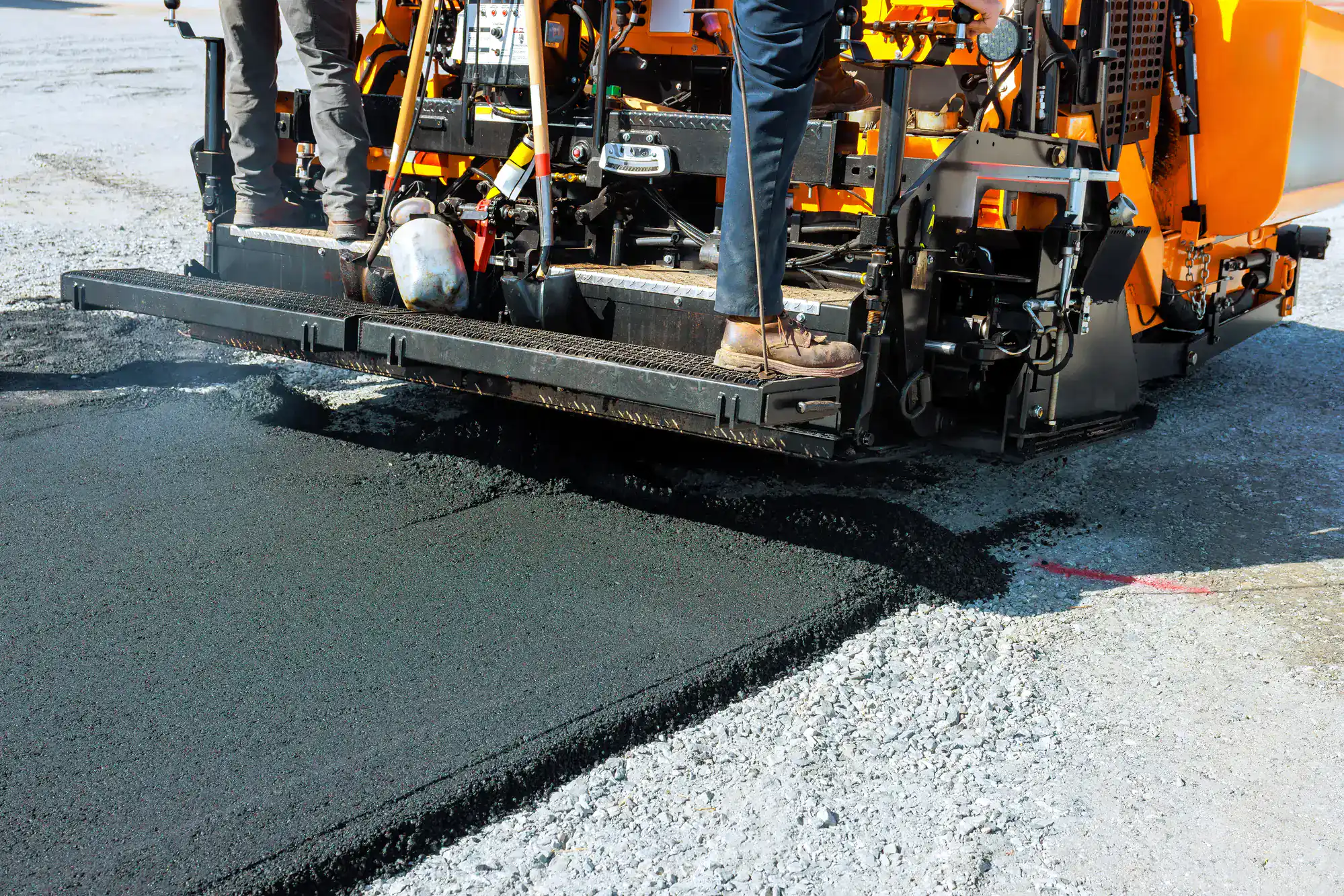
It starts with a site assessment not a quick glance from the truck window, but an actual evaluation of your existing surface, your drainage patterns, your subgrade condition, and your traffic load. For properties in Tall Timbers, that assessment pays special attention to drainage. The peninsula sits at roughly ten feet above sea level. Water doesn’t have far to go, and if it can’t move away from your pavement efficiently, it will move into it. That’s a base failure waiting to happen, and it’s something we look for before a single ton of asphalt gets ordered.
From there, we handle subgrade preparation, base installation, and paving in the correct sequence and to the correct spec. Commercial lots require a minimum of four inches of asphalt more in high-load areas like boat launch access roads or marina parking zones where trailer wheel loads concentrate stress on a narrow contact patch. We don’t cut corners on base depth because that’s where the lifespan of the surface is actually determined.
After paving, we handle line striping, ADA-compliant space designation, and sealcoating scheduling. If your project is near tidal water or involves changes to impervious surface area, we’ll flag the St. Mary’s County permitting considerations early so nothing catches you off guard mid-project. The goal is a finished surface you don’t have to think about for a long time.

Ready to get started?
Our commercial asphalt paving covers the complete scope new installation, overlay on existing surfaces, crack filling, sealcoating, line striping, and ADA compliance upgrades. For properties in Tall Timbers and the surrounding St. Mary’s County peninsula, sealcoating isn’t optional maintenance. Salt air oxidizes asphalt binder faster near the water, and a surface that isn’t sealed on a consistent schedule will age years ahead of one that is. We build that into the conversation from the start.
For marina operators and boat launch facilities, we design and install with marine traffic in mind. Boat trailers stress pavement differently than passenger vehicles the load is heavier and more concentrated and a lot that wasn’t spec’d for that use will rut and crack ahead of schedule. For HOA communities managing shared parking and private roads, we work within the bid and approval process that boards require, and our MHIC license gives your board a verifiable credential to document in the decision.
If your project falls within or near the Chesapeake Bay Critical Area which applies to much of the Piney Point peninsula we’ll help you identify whether St. Mary’s County permitting through the Department of Land Use and Growth Management is required before work begins. One contractor, full accountability, start to finish.
Yes and it’s worth understanding before you hire anyone. Properties in Tall Timbers and along the Piney Point peninsula are exposed to salt air from the Potomac River and St. George’s Creek. Salt air accelerates the breakdown of asphalt binder, which is the material that holds the aggregate together and gives the surface its structural integrity. A parking lot installed a half mile from tidal water will oxidize and become brittle faster than the same lot installed in Lexington Park or Leonardtown if it isn’t properly sealed and maintained.
What that means practically is that sealcoating isn’t just a nice-to-have for waterfront commercial properties it’s a necessary part of protecting your investment. It also means drainage design matters more here than in most places. The low-lying terrain on the peninsula creates water table and runoff challenges that an experienced contractor accounts for in the base design. If the contractor you’re talking to hasn’t mentioned drainage in relation to your specific site, that’s a gap worth pressing on.
Commercial asphalt paving typically runs between $4 and $10 per square foot, depending on the scope of work, the condition of the existing base, the thickness required, and any drainage or grading work the site needs. For properties in Tall Timbers and the southern St. Mary’s County peninsula, site-specific factors can influence that range particularly if the project involves a marina lot, boat launch access, or a shared HOA road that needs base remediation before paving.
The more useful number to keep in mind is the cost of waiting. A surface with early-stage cracking that needs $8,000–$12,000 in repair work today can deteriorate to the point where full reconstruction is the only option within two to three seasons, especially in a coastal environment where freeze-thaw cycles and moisture intrusion accelerate the damage. Getting an accurate estimate from a licensed contractor who has actually looked at your site is the only way to know where you stand.
It depends on the scope of the project and where your property sits. Because Tall Timbers is an unincorporated community, all permitting flows through St. Mary’s County specifically the Department of Land Use and Growth Management. For most standard resurfacing or overlay projects, a permit may not be required. But if your project involves expanding the paved footprint, altering drainage patterns, or if your property falls within the Chesapeake Bay Critical Area the 1,000-foot buffer from tidal waters that applies to much of the Piney Point peninsula you may need environmental review before work begins.
This is one of the reasons working with a licensed Maryland contractor matters. MHIC License #159766 reflects a contractor who operates within the state’s regulatory framework and understands when a permit conversation needs to happen before a project starts, not after. We identify these considerations during the site assessment phase so there are no surprises mid-project.
Commercial lots require a minimum of four inches of compacted asphalt as a general standard, but marina and boat launch facilities often need more or at minimum, a base design that accounts for the specific load profile of boat trailers. Trailer wheels concentrate a significant amount of weight on a narrow contact area, which creates localized stress that can cause rutting and cracking in pavement that wasn’t designed for it. Standard light-vehicle lot specs don’t always translate directly to marine-use facilities.
For properties like those near Tall Timbers Marina on Herring Creek Road, the right approach starts with understanding the heaviest loads the surface will regularly carry and designing the base depth and asphalt thickness accordingly. A contractor who installs a marina lot the same way they’d install a retail strip center parking lot is likely to leave you with a surface that underperforms within a few years. The site assessment is where that determination gets made correctly.
For most commercial properties, sealcoating every two to three years is a reasonable maintenance schedule. For properties in Tall Timbers and the broader Piney Point peninsula, erring toward the shorter end of that range makes sense. Salt air exposure, high humidity, and the proximity to tidal water all accelerate the oxidation of asphalt binder the process that causes surfaces to fade, dry out, and crack. Sealcoating creates a protective barrier that slows that process significantly.
The other factor to consider is timing. In southern St. Mary’s County, the boating season runs roughly April through October, which means marina lots and waterfront business parking areas see their heaviest use during that window. Scheduling sealcoating in late fall after the season winds down or in early spring before it picks back up is typically the least disruptive approach. It also means the surface has time to cure fully before heavy traffic returns.
Yes, and HOA boards are actually one of the most common commercial paving clients we work with. Communities like The Landings at Piney Point have shared parking areas, private roads, and common-area pavement that fall under the HOA’s maintenance responsibility. Boards typically go through a formal bid and approval process, and that’s something we’re set up to accommodate including providing detailed written estimates, scope documentation, and credential verification for the board’s records.
One thing worth confirming before your board approves any paving contractor: verify their MHIC license. In Maryland, the Home Improvement Commission license is publicly verifiable through the Department of Labor, and it’s the clearest indicator that the contractor has met the state’s experience and competency requirements. Our license number is #159766 your board can look it up before signing anything. For a community managing shared property on behalf of homeowners, that kind of verifiable accountability isn’t a formality. It’s exactly the kind of documentation a responsible board should have on file.
Other Services we provide in Tall Timbers