
Hear from Our Customers
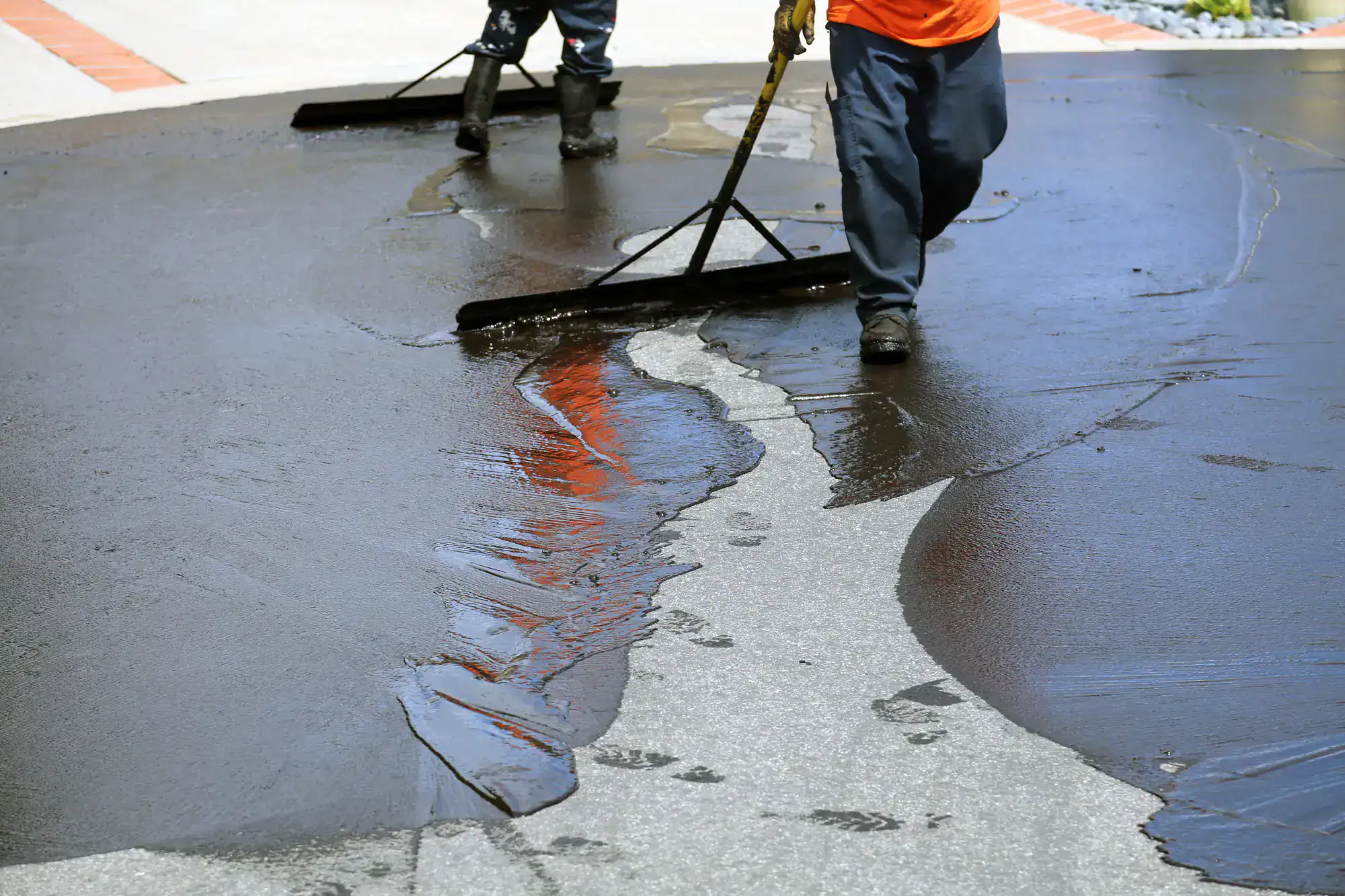
Cape St. Claire sits on a peninsula with water on three sides the Magothy River to the north, the Little Magothy to the east, and Deep Creek to the west. That geography is beautiful, but it’s hard on asphalt. Salt air accelerates oxidation, elevated soil moisture feeds freeze-thaw damage every winter, and unprotected driveways in this community age faster than they would five miles inland in areas like Arnold or Severna Park. A professionally applied sealcoat puts a barrier between your asphalt and all of it.
The financial case is straightforward. A standard driveway sealcoating in Maryland and Central and Northern Virginia typically runs $250–$400. A full driveway replacement runs $4,200 to $9,000 or more. When you’re protecting a home worth $560,000 or higher which describes most of Cape St. Claire that math isn’t hard. Sealcoating every two to three years keeps the surface intact, keeps the curb appeal strong, and keeps replacement costs years further down the road.
There’s also the community angle. Cape St. Claire has been a covenanted community since 1949. The CSCIA standards aren’t just paperwork they reflect a neighborhood that genuinely takes care of its properties. A cracked, faded driveway stands out here in a way it might not elsewhere. A freshly sealed surface doesn’t just protect the asphalt. It signals that the home behind it is looked after.
We’ve been operating out of Annapolis since 2011 about seven miles from Cape St. Claire via College Parkway. That’s not a detail buried in the fine print. It means the crew showing up at your driveway knows this area, knows the seasonal patterns on the Broadneck Peninsula, and isn’t driving in from three counties away.
We bring more than 40 years of personal experience in asphalt paving and sealcoating to every job. That depth of knowledge matters when you’re dealing with an older driveway, unusual cracking patterns, or a surface that needs more than just a coat it means you get an honest assessment, not a sales pitch. Our MHIC License #159766 is publicly verifiable on the Maryland DLLR website, and we carry a BBB Accreditation with an A+ rating.
In a service category where door-to-door scams are a documented problem across Maryland and Central and Northern Virginia, those credentials aren’t formalities. They’re the difference between a contractor you can hold accountable and one who’s gone before the sealcoat peels.
The most common reason sealcoating fails early peeling, flaking, bubbling is skipped prep work. A lot of operators apply product over a dirty or cracked surface and move on. That’s not how a sealcoat holds up through a Maryland winter, especially in a waterfront community like Cape St. Claire where moisture is already working against you.
We start with a thorough surface cleaning to remove dirt, debris, and any organic growth that’s crept in from the tree cover common throughout Cape St. Claire’s quiet, wooded streets. Oil spots get primed separately standard sealcoat won’t bond over petroleum contamination. Any cracks that have formed get treated before the sealcoat goes down, because sealing over an untreated crack doesn’t fix it, it just hides it temporarily.
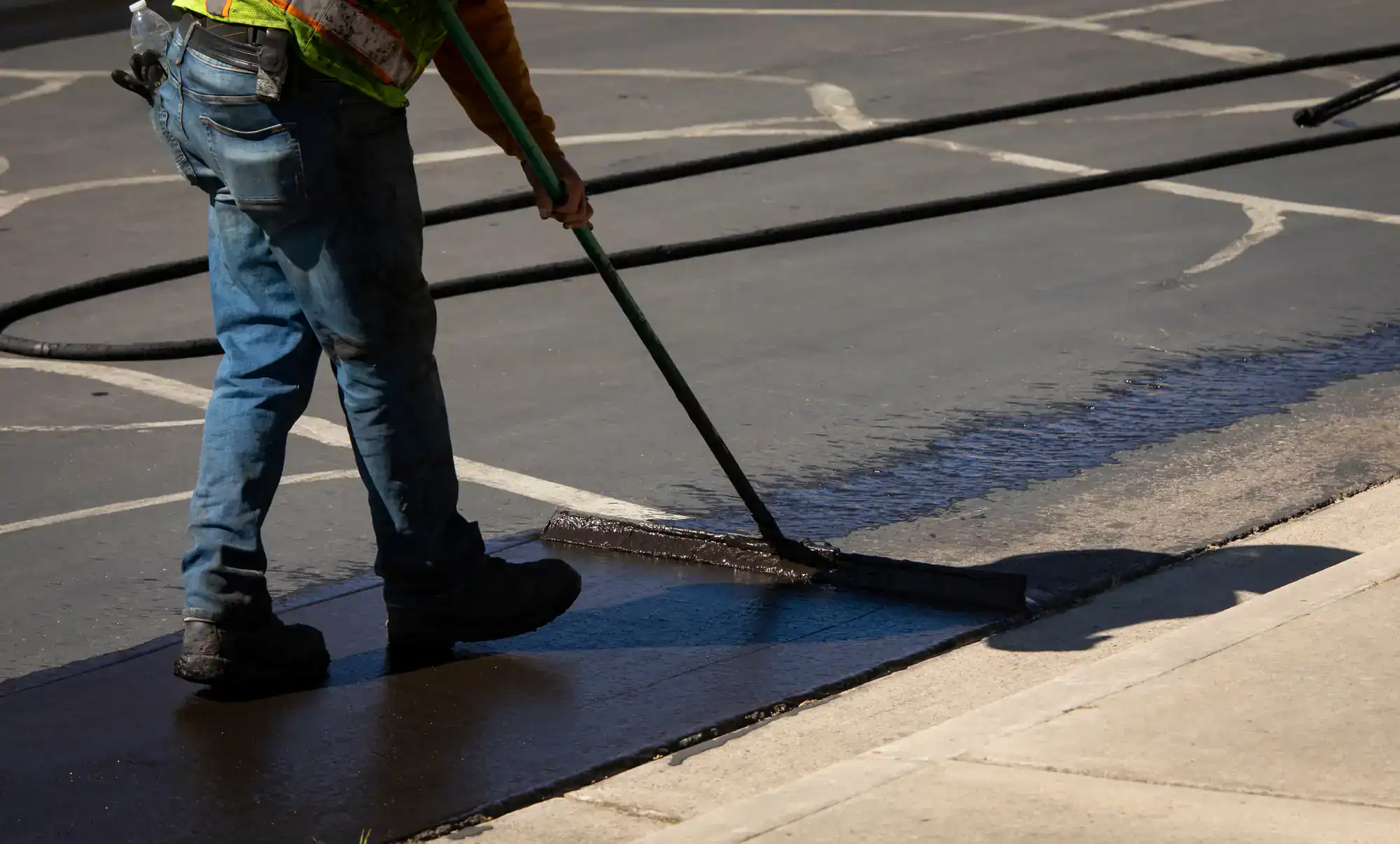
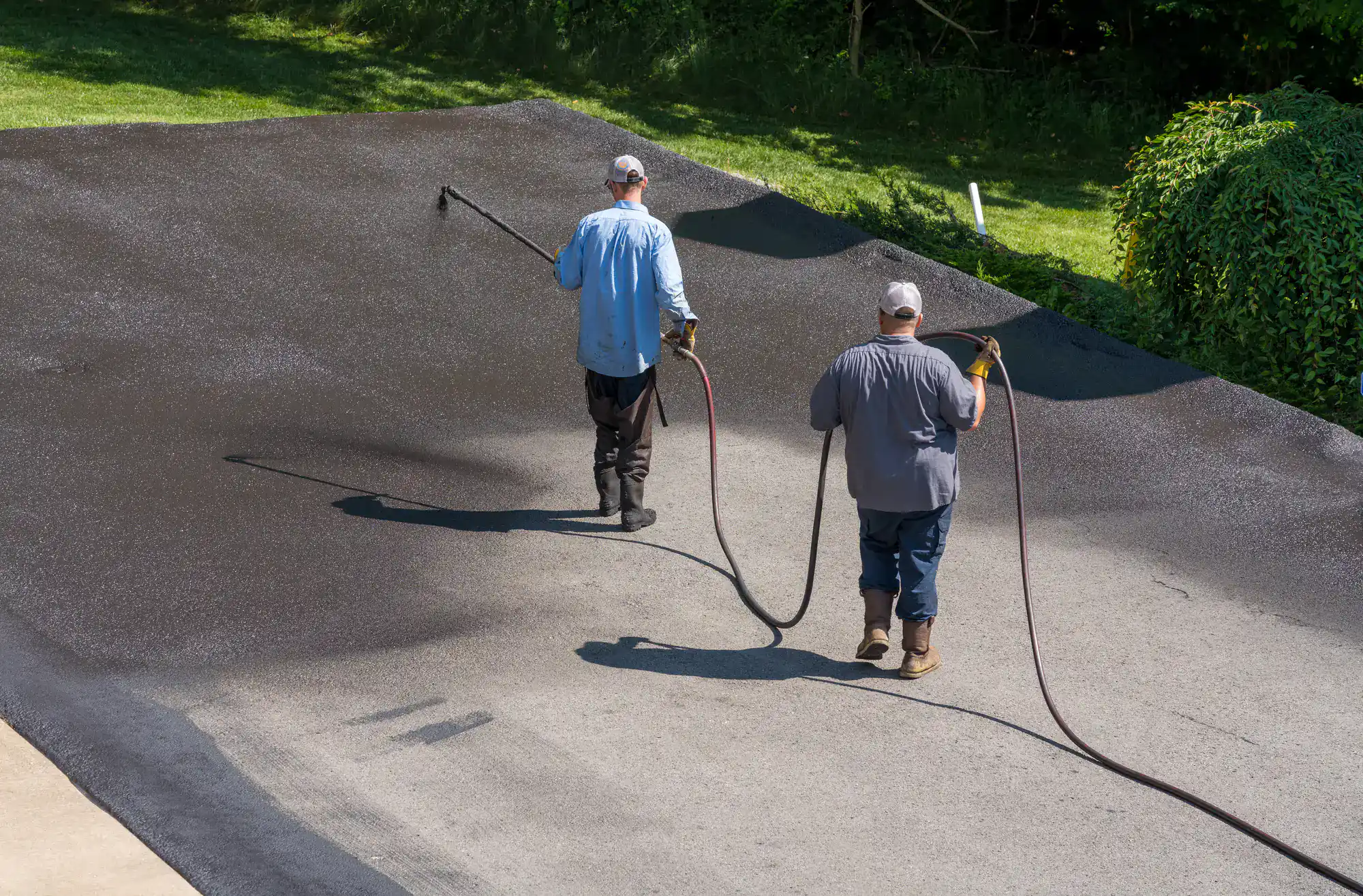
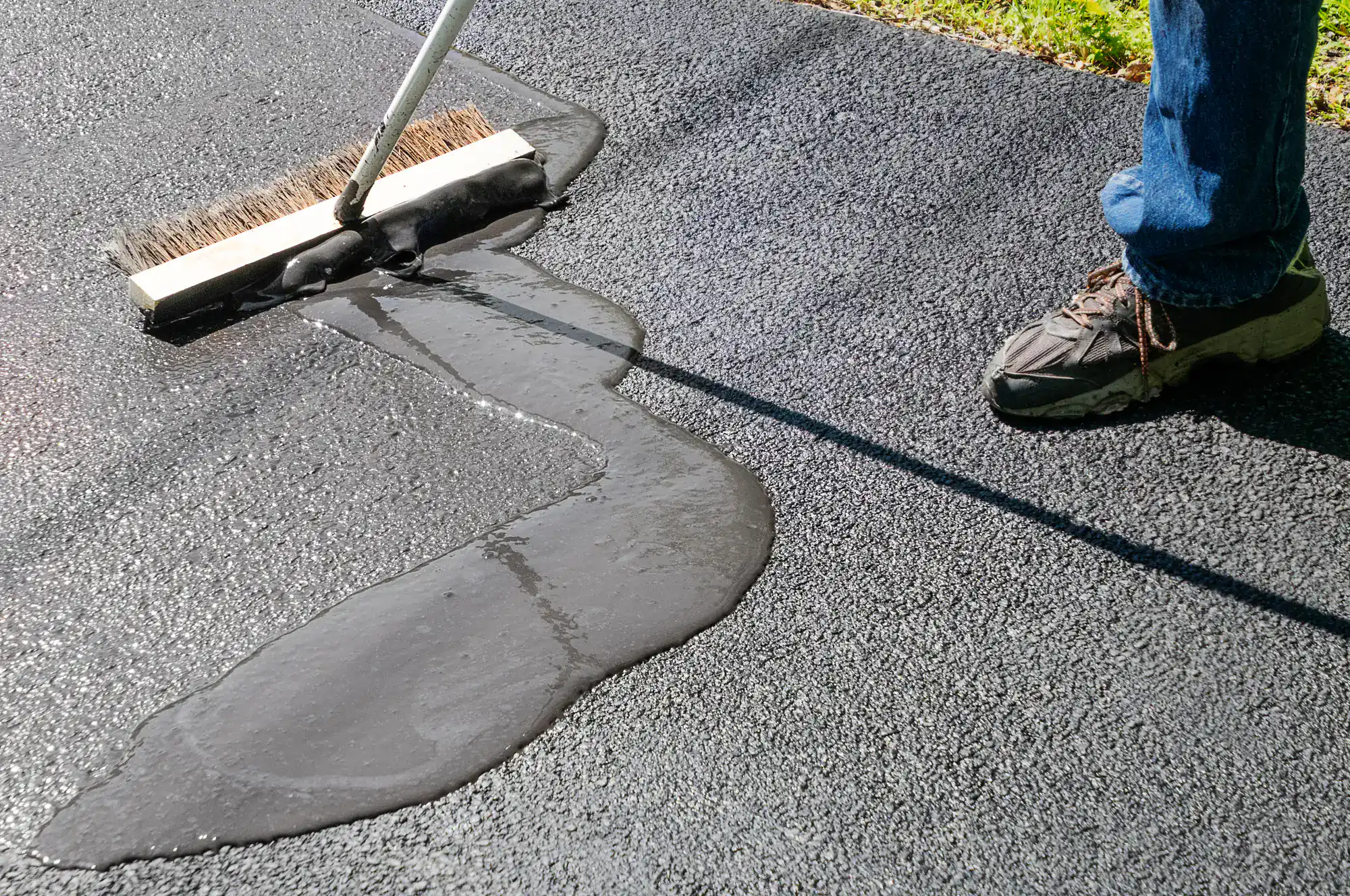
Once the surface is properly prepped, we apply the sealcoat evenly across the full driveway. In Maryland, the application window runs from late April through October temperatures need to stay above 50°F, and the surface needs to stay dry for at least 24 hours before and after. Timing matters. You’ll need to keep vehicles off the driveway for 24 to 48 hours after application. That’s a minor inconvenience for protection that lasts two to three years and keeps your driveway out of the repair-or-replace conversation for a long time.
Ready to get started?
Not every driveway in Cape St. Claire needs the same thing. Some need a straightforward sealcoat. Others particularly the mid-century ranch and split-level homes in the original covenanted community with driveways that haven’t been touched in a decade need crack repair or patching before any sealcoat goes down. Sealing over structural damage doesn’t fix it. It just delays the inevitable and usually makes the next repair more expensive.
We handle the full range: asphalt driveway sealcoating, crack filling, patching, resurfacing, and new paving for residential driveways and commercial parking lots in the Cape St. Claire area. When you call for an estimate, you get an honest read on where your driveway actually stands not a one-size-fits-all quote that ignores what’s underneath the surface.
No permit is required for residential driveway sealcoating in Maryland and Central and Northern Virginia, so there’s no waiting on county approvals before scheduling. What Maryland does require is that any contractor performing this work holds a valid MHIC license. That requirement exists precisely because driveway sealcoating is one of the most scam-prone home improvement categories in the state. Our MHIC License #159766 is verifiable before you ever sign anything and that’s exactly how it should work.
For most Cape St. Claire driveways, every two to three years is the right interval but the waterfront environment here can push that toward the shorter end. The combination of salt air off the Magothy River, elevated soil moisture from the surrounding waterways, and Maryland’s freeze-thaw winters means asphalt in this community oxidizes and degrades faster than it would in a drier, inland location like Gambrills or Crofton. You’ll notice it when the surface starts turning gray instead of holding its dark color that’s oxidation setting in, and it accelerates cracking once it takes hold.
If your driveway hasn’t been sealed in more than three years, or if it’s showing hairline cracks, fading, or surface brittleness, it’s worth getting an assessment before the next winter hits. Catching it at the sealcoating stage is a $250–$400 conversation. Waiting until you’re looking at structural damage turns it into a resurfacing or replacement conversation that costs significantly more.
For a standard residential driveway in Maryland and Central and Northern Virginia, professional sealcoating typically runs between $250 and $400. The final number depends on the size of the driveway, its current condition, and whether crack filling or oil spot priming is needed before the sealcoat goes down. Larger driveways or those requiring more prep work will land toward the higher end of that range.
It’s worth putting that number next to the alternative. A full driveway replacement in this area runs $4,200 to $9,000 or more depending on size and materials. Sealcoating every two to three years is one of the few home maintenance services where the math is genuinely simple a few hundred dollars now versus several thousand later. For homeowners in Cape St. Claire, where properties are valued well above the state median, protecting that investment at the driveway level is just good asset management.
The first thing to check is their MHIC license number. Maryland law requires every home improvement contractor including driveway sealcoating companies to hold a valid Maryland Home Improvement Commission license. You can verify any license number directly on the Maryland DLLR website in about 60 seconds. If a contractor can’t provide an MHIC number, or hesitates when you ask, that’s your answer.
This matters especially in Cape St. Claire and the broader Maryland and Central and Northern Virginia area because driveway sealcoating is one of the most frequently cited home improvement scam categories in Maryland. The typical pattern is a door-to-door operator claiming to have leftover material from a nearby job, offering a low cash price, and either doing substandard work or disappearing after taking payment. A licensed, established contractor with a real business address not just a phone number is a fundamentally different situation. Our MHIC license is #159766, and our BBB Accreditation and A+ rating are independently verifiable before you make any decisions.
Fall sealcoating is possible in Maryland, but the window is tighter than most homeowners realize. The application requires ambient temperatures above 50°F and dry conditions for at least 24 hours before and after the job. In Cape St. Claire, that window typically runs through late October, depending on the year. Once nighttime temperatures start dropping consistently below 50°F, the sealcoat won’t cure properly and the job shouldn’t be done.
If you’re considering fall sealcoating, the earlier in the season you schedule, the better. September and early October tend to offer the most reliable conditions in Maryland and Central and Northern Virginia. Getting the sealcoat down before winter means your driveway goes into the freeze-thaw season with a sealed surface, which is exactly when that protection matters most. Waiting until spring is a valid option too but it means your asphalt spends another winter unprotected, which adds up over time in a waterfront community like Cape St. Claire where moisture exposure is higher than average.
Yes, and it’s one of the more underappreciated factors in driveway maintenance for Cape St. Claire homeowners. Salt air accelerates asphalt oxidation the process by which the binder oils in asphalt break down, causing the surface to turn gray, become brittle, and start cracking. This happens to all asphalt over time, but it happens faster in coastal and waterfront environments where salt-laden air is a constant presence rather than an occasional factor.
Cape St. Claire’s peninsula geography puts virtually every driveway in the community within close proximity to tidal water the Magothy to the north, the Little Magothy to the east, Deep Creek to the west. That’s not the same exposure as a home a few miles inland toward Arnold or Severna Park. Sealcoating acts as the primary barrier against this oxidation process by sealing the surface and blocking the air and moisture that drive it. It doesn’t eliminate the environmental pressure, but it significantly slows the degradation timeline which is why the maintenance interval matters more here than it would in a less exposed location.
Sealcoating over untreated cracks doesn’t fix them it covers them temporarily. Within one or two freeze-thaw cycles, the cracks reappear through the sealcoat, often wider than before, because water has continued to work its way in underneath. In Cape St. Claire specifically, where soil moisture is consistently elevated due to the surrounding waterways, this process happens faster than it would on a drier site. What looks like a sealed surface in October can be visibly cracked again by March.
The right sequence is crack treatment first, then sealcoating. Depending on the severity, that might mean simple crack filling for hairline or narrow cracks, or patching for areas with more significant deterioration. Many driveways in the older sections of Cape St. Claire homes built in the 1950s through 1970s are at the stage where they need some level of repair work before a sealcoat makes sense. Getting an honest assessment of where your driveway actually stands before any product goes down is the only way to make sure the sealcoating holds up the way it’s supposed to.
Local Resources
Other Services we provide in Cape St. Claire