
Hear from Our Customers
Most homeowners don’t think about their driveway until there’s a crack wide enough to catch a heel or a pothole that’s starting to look permanent. By that point, the damage has usually been building for a few seasons and what started as a $300 sealcoating job is now a $2,000 repair conversation. In Crownsville, that timeline tends to move faster than most people expect.
Here’s why. The wooded lots that make this area so appealing the mature oaks and maples lining driveways off Generals Highway, the canopy cover throughout Herald Harbor also create a specific problem for asphalt. Decomposing leaves release organic acids that eat into the asphalt binder over time. Add in the freeze-thaw cycles that Anne Arundel County sees every winter, where temperatures swing above and below freezing repeatedly, and you’ve got moisture working its way into every small crack and expanding it from the inside out. The 2025-2026 winter was particularly rough on driveways throughout the Annapolis area, and Crownsville properties were no exception.
For waterfront homeowners in Herald Harbor and Arden on the Severn, there’s an additional layer salt air and tidal moisture from the Severn River accelerate oxidation faster than inland driveways. A properly applied sealcoat creates a barrier against all of it: UV exposure, organic acids, road salt runoff from Generals Highway, and the moisture that Maryland winters push into every surface crack. The result is a driveway that holds its integrity, holds its appearance, and holds its value as part of a property worth protecting.
We’ve been based in Annapolis since 2011 about seven miles from Crownsville. This isn’t a regional company routing crews from Baltimore or Northern Virginia. When you call for an estimate, you’re reaching a local operation that has been working Anne Arundel County driveways for over 14 years and knows exactly what Maryland’s climate does to asphalt over time.
We hold MHIC license #159766 the state-required credential for any contractor performing home improvement work in Maryland, including driveway sealcoating. The Maryland Home Improvement Commission has specifically flagged driveway sealcoating as one of the most scam-prone service categories in the state, particularly in semi-rural communities like Crownsville where door-to-door operators target large-lot homeowners. That license is publicly verifiable. Before any contractor touches your driveway, check it.
Beyond the credentials, our expertise spans more than four decades in the asphalt industry. That kind of experience means the person directing your job has seen what happens when prep work gets skipped, when sealcoat gets applied too thin, and when a crew leaves before the job is actually done. We also carry a BBB Accreditation with an A+ rating a third-party accountability signal you can check before you ever pick up the phone.
The most common reason a sealcoating job fails within a season or two isn’t the material it’s what didn’t happen before the material went down. Rushed surface prep is the number one cause of peeling, bubbling, and premature wear. We start with a thorough cleaning of the entire driveway surface: blowing out debris, removing organic buildup from leaf litter and tree sap, and making sure there’s no moisture or contamination left behind. On a wooded Crownsville lot, that step takes longer than it does on a clean suburban driveway and it should.
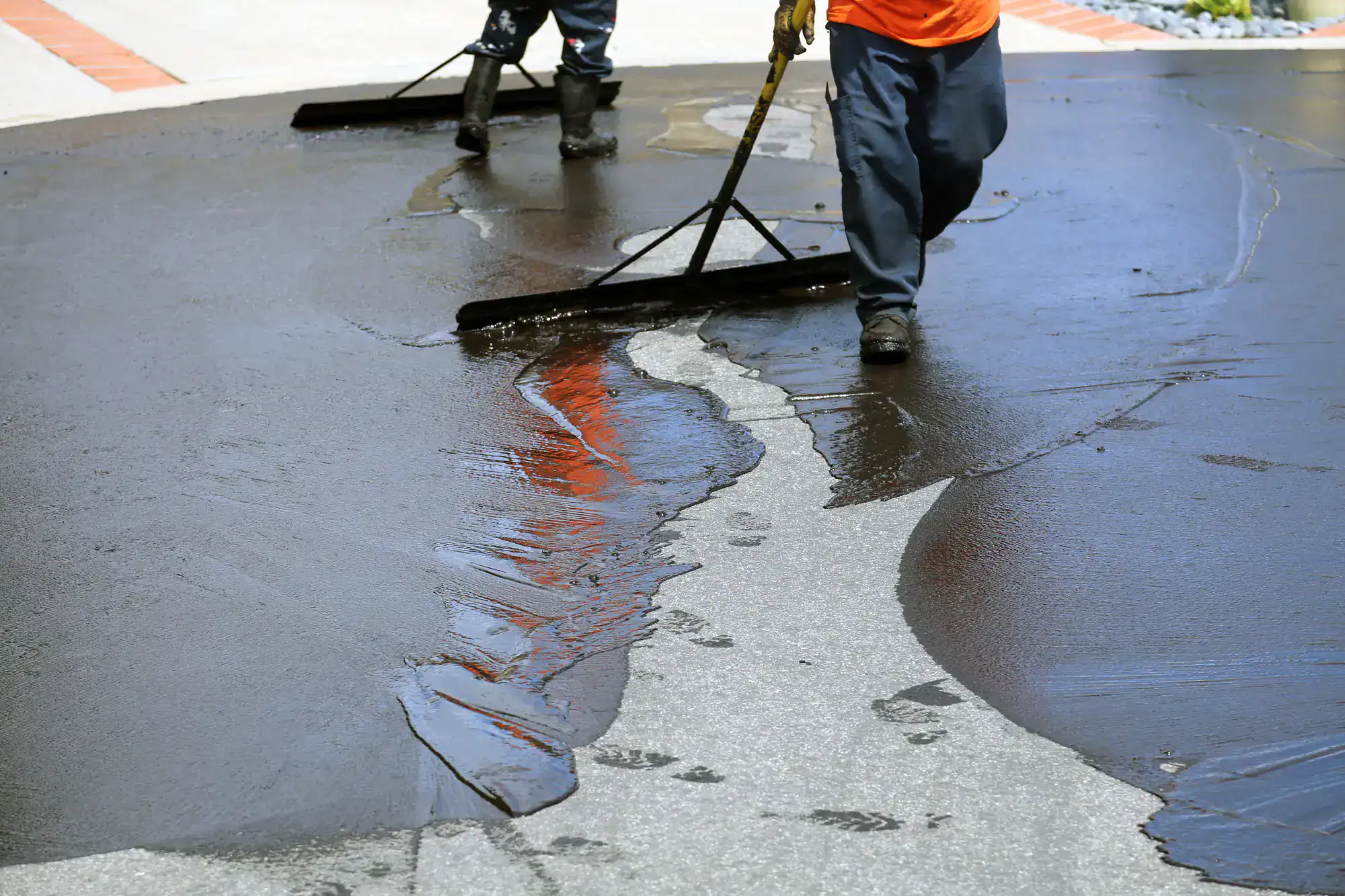
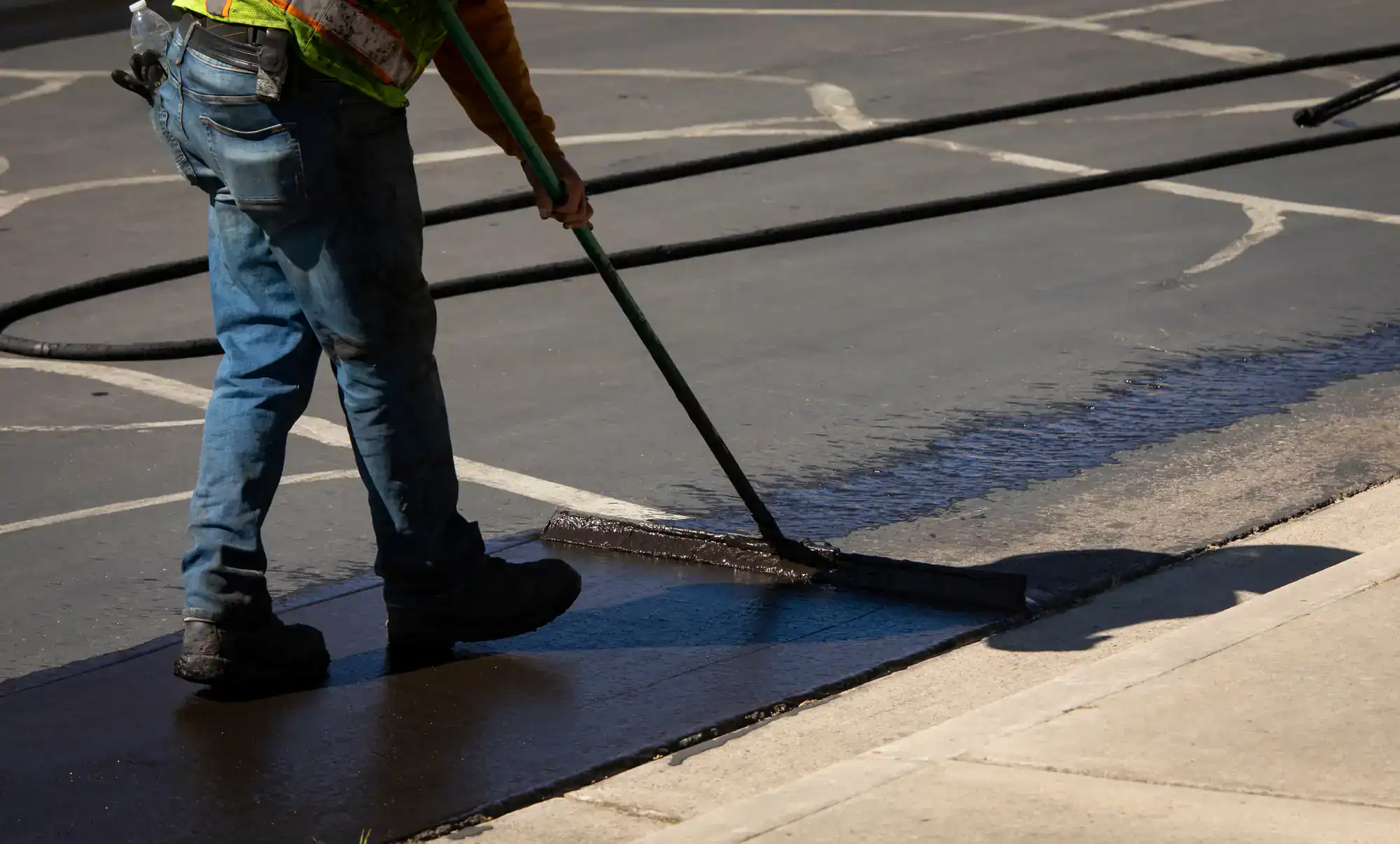
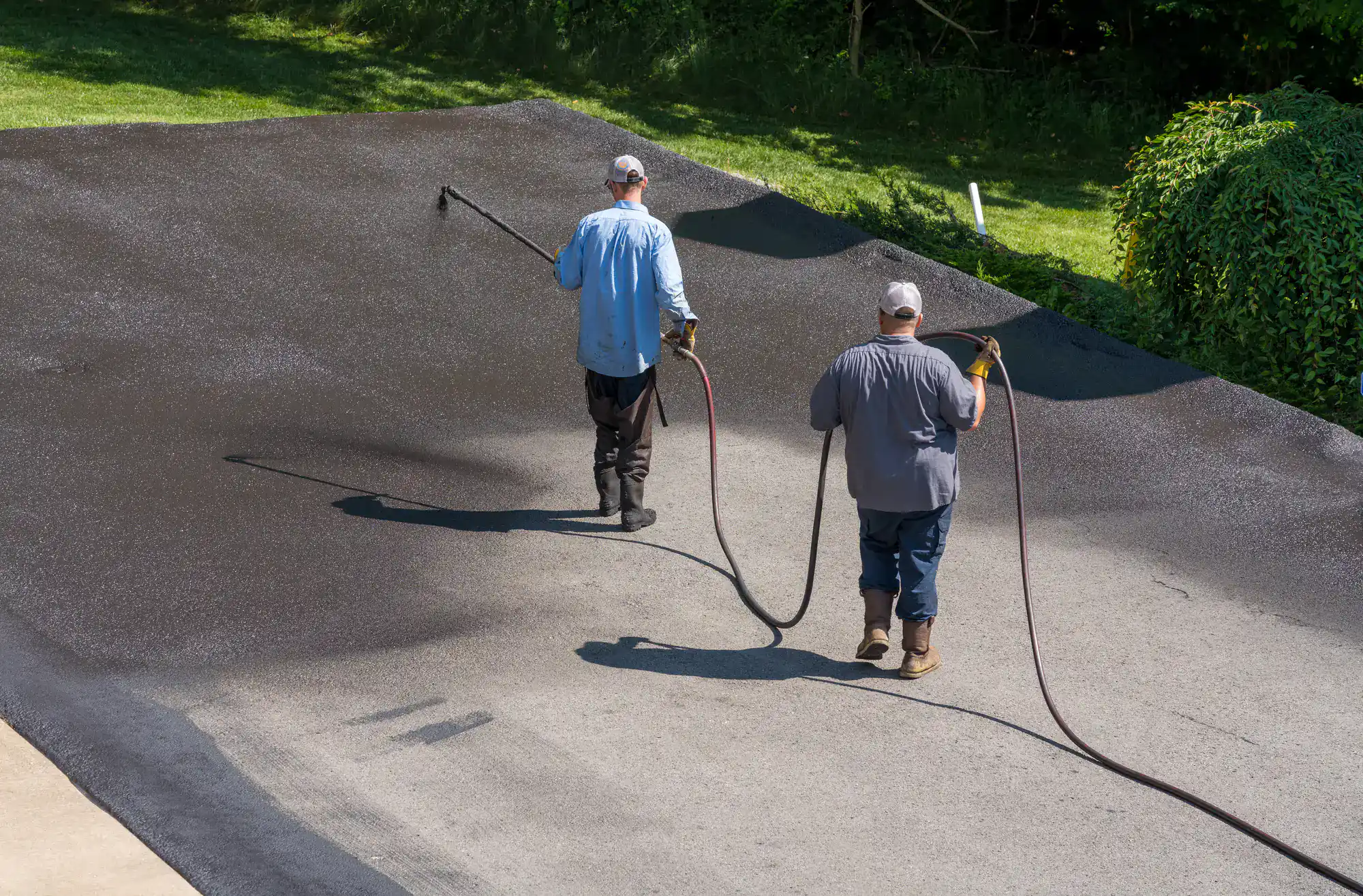
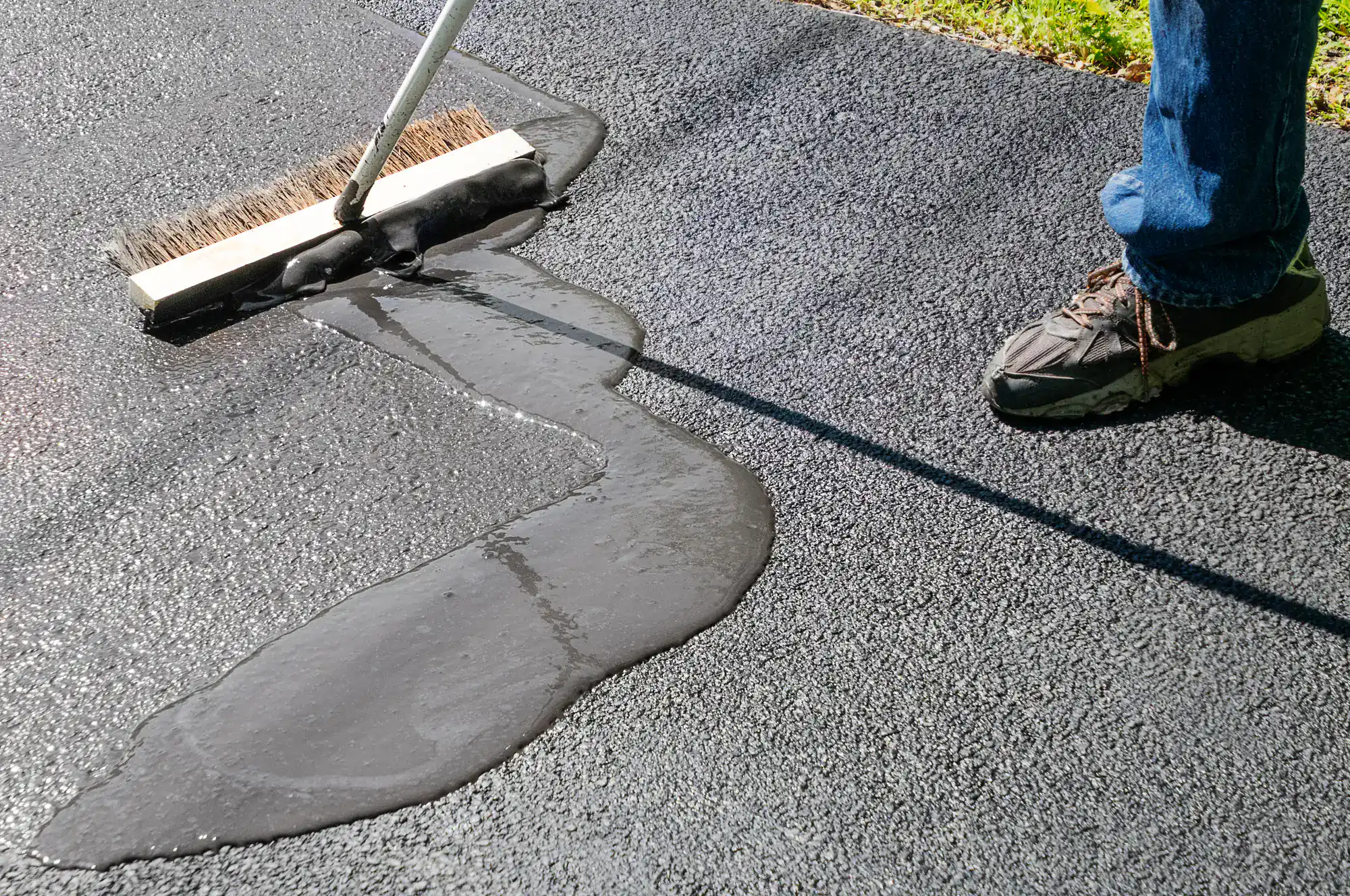
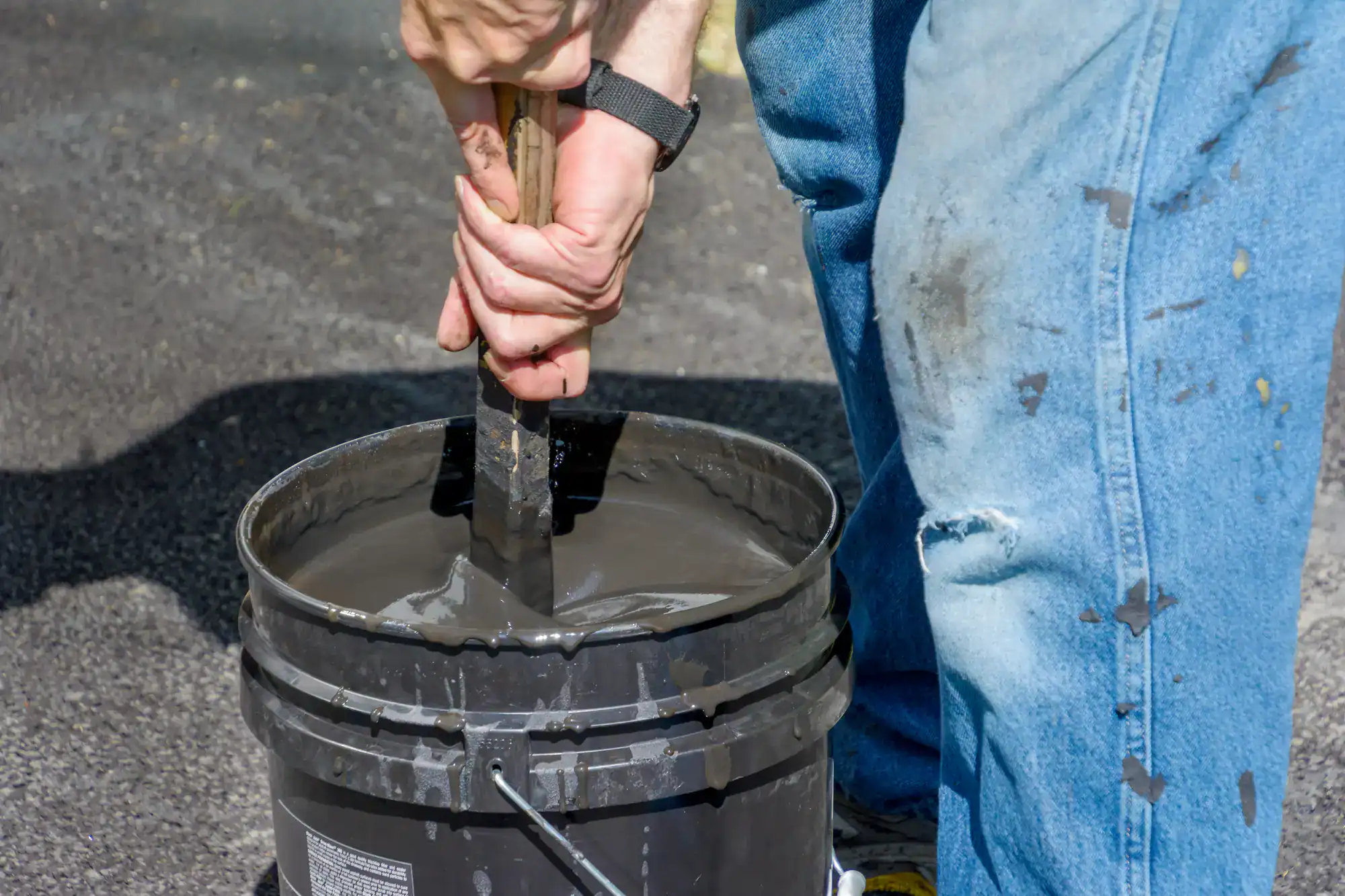
From there, any existing cracks get filled and treated before a single drop of sealant is applied. Skipping crack repair before sealcoating is like painting over a hole in the wall it looks fine for a few months, then the problem comes right back through. Once the surface is clean, dry, and repaired, the sealcoat goes down using commercial-grade squeegee equipment that forces the material into the asphalt’s pores rather than just sitting on top. That’s what creates real penetration and real protection, not just a dark surface that looks good for a few weeks.
After application, your driveway needs time to cure typically 24 to 48 hours depending on temperature and humidity. In Crownsville’s climate, the optimal window for sealcoating runs from late May through September, when overnight temperatures stay reliably above 50°F. Applying sealcoat outside that window risks improper curing and early failure. Crownsville has no municipal permitting requirements for driveway sealcoating all regulation falls under Anne Arundel County and the state MHIC licensing framework, which we fully meet.
Ready to get started?
Driveway sealcoating in Crownsville isn’t a one-size-fits-all job. The large-lot character of this community means driveways here are frequently 150 to 300 feet long sometimes longer with irregular edges, tree root pressure points, and surface conditions that vary based on how much canopy cover the driveway sits under. A proper job accounts for all of that, not just the square footage.
Every asphalt driveway sealcoating job we perform includes full surface cleaning and preparation, crack filling prior to application, and commercial-grade sealcoat applied with squeegee equipment for even, deep coverage. For homeowners in Herald Harbor or Arden on the Severn, the prep process pays particular attention to any surface oxidation or moisture damage caused by proximity to the Severn River conditions that require thorough surface treatment before sealant can bond properly. Cutting corners on prep in a waterfront-adjacent environment produces a job that fails within a season.
We also handle commercial parking lots in addition to residential driveways so if you manage a property along the Generals Highway corridor or near Crownsville Road, the same process and professional standards apply at any scale. Sealcoating every two to three years is the standard maintenance cycle for asphalt in Maryland’s climate. On a Crownsville property approaching $1 million in value, that recurring investment is one of the most cost-effective ways to protect your asset and avoid a full replacement conversation down the road.
In Maryland’s climate, the general recommendation is every two to three years for a well-maintained asphalt driveway. That said, Crownsville properties often need to be on the more frequent end of that range. The combination of heavy tree canopy, organic debris, and Anne Arundel County’s freeze-thaw winters puts more stress on asphalt here than in more exposed suburban environments where the surface dries out faster and sees less organic acid contact.
If your driveway is under significant tree cover which is common on the wooded lots throughout Crownsville and especially in the Herald Harbor area you may notice surface oxidation and graying happening faster than you’d expect. That graying is the asphalt binder breaking down, and once it starts, it accelerates. A fresh sealcoat every two years keeps that process interrupted and your driveway in good structural shape. If you’re past the two-year mark and the surface looks visibly faded or dried out, it’s worth getting an assessment before the next winter cycle does more damage.
The reliable window for driveway sealcoating in this part of Maryland runs from late May through September. Sealcoat needs overnight temperatures consistently above 50°F to cure properly, and it needs a dry window of at least 24 hours after application. In Anne Arundel County, that window opens up in late spring and starts to close in October as overnight temperatures become unpredictable.
Spring is also the most common time homeowners in Crownsville notice winter damage cracking, heaving, surface deterioration from road salt and freeze-thaw cycles and decide to act. If you’re looking at your driveway after a hard winter and thinking it’s time, spring and early summer scheduling fills up faster than most people expect. The further out you book, the more flexibility you have on timing. Sealcoating applied in cold or wet conditions won’t cure correctly and will peel so avoiding October through March is non-negotiable, not just a preference.
This is one of the most important questions you can ask, and the answer is straightforward: verify their MHIC license. In Maryland, any contractor performing home improvement work including driveway sealcoating is legally required to hold a Maryland Home Improvement Commission license. The MHIC’s own documentation specifically identifies driveway sealcoating as one of the most scam-prone home improvement categories in the state.
Crownsville’s semi-rural character and large wooded lots make it a known target for door-to-door operators who claim to have leftover asphalt from a nearby job, collect a deposit, and either do substandard work or disappear entirely. A legitimate contractor will have a verifiable MHIC license number ours is #159766, and you can look it up on the MHIC’s public database before you commit to anything. A BBB accreditation is also worth checking. These aren’t guarantees of a perfect job, but they are the baseline credentials that separate real contractors from the ones you should turn away at the door.
If you’re seeing cracks develop faster than expected, the most likely culprits are the freeze-thaw cycle and organic acid exposure both of which are especially intense in Crownsville’s environment. When water works its way into small surface cracks and then freezes, it expands and widens those cracks from the inside. Anne Arundel County winters oscillate above and below freezing repeatedly throughout the season, which means this cycle repeats dozens of times each winter. Every cycle makes the crack a little bigger.
The second factor is the tree canopy. Decomposing leaves release organic acids that slowly break down the asphalt binder the material that holds the aggregate together and gives the surface its flexibility. Once the binder starts to break down, the surface becomes brittle and cracks more easily. For driveways in heavily wooded areas off Generals Highway or in the Herald Harbor community, this process can move faster than homeowners expect. Sealcoating interrupts both processes by creating a protective barrier over the surface before damage compounds.
Sealcoating protects the surface of the asphalt, but it doesn’t address structural issues underneath and that distinction matters for longer Crownsville driveways where tree roots are actively pushing up from below. If you have visible heaving, raised sections, or areas where roots have already broken through the surface, those spots need to be assessed before sealcoating. Applying sealant over an active root problem won’t fix the underlying issue and may mask damage that’s getting worse.
That said, for driveways where root pressure is minimal and the surface is structurally sound, sealcoating still plays an important protective role. It slows the oxidation and moisture penetration that makes asphalt brittle over time and brittle asphalt is far more vulnerable to cracking under root pressure than a well-maintained, flexible surface. The honest answer is that a site assessment tells you more than a general rule. If you’re unsure whether your driveway is a sealcoating candidate or needs repair work first, a free estimate is the right starting point.
That gray, washed-out appearance is oxidation and it happens faster in Crownsville than in many other parts of Anne Arundel County because of the specific combination of conditions here. UV exposure breaks down the oils in the asphalt binder over time, causing the surface to lighten and lose flexibility. But in a heavily wooded environment, organic acids from leaf decomposition accelerate that process. Waterfront properties in Herald Harbor and Arden on the Severn add salt air to the mix, which further speeds up surface degradation.
The good news is that a driveway that looks faded but is still structurally intact is exactly what sealcoating is designed to address. A fresh coat restores the surface color, replenishes the protective layer, and slows the oxidation process going forward. If the graying has progressed to visible cracking or surface brittleness, crack filling before sealcoating is part of the process. Either way, catching it at the faded stage is far less expensive than waiting until the surface starts to break apart at which point you’re looking at repair or replacement costs that are a multiple of what a timely sealcoating would have run.
Other Services we provide in Crownsville