Hear from Our Customers
Crownsville driveways take a beating that most homeowners don’t fully see coming. The tree canopy that makes this community so appealing is the same reason your asphalt stays wet longer, thaws later in spring, and refreezes faster in winter. That cycle moisture in, freeze, expand, crack is what turns a surface that looked fine in October into a pothole-riddled mess by March. It’s not bad luck. It’s physics, and it’s predictable.
When the base is properly prepared and the surface is sealed before winter, that cycle loses most of its power. You’re not just getting a driveway that looks better you’re getting one that doesn’t need to be replaced in five years because someone skipped the drainage grading or laid asphalt over a compromised base. On a property valued near or above $1,000,000, that distinction matters more than the price difference between a quality job and a cheap one.
For commercial property owners along Generals Highway or near the Anne Arundel County Fairgrounds, the stakes are similar. High-traffic seasonal surfaces especially ones that absorb event parking loads nine weekends in a row during Renaissance Festival season wear fast without proper maintenance. A well-maintained lot with clean striping doesn’t just look professional. It protects you from liability and keeps you from facing a full replacement ahead of schedule.
We’ve been operating in Maryland for more than four decades, and we’ve worked through every type of Anne Arundel County property from large-lot rural residential driveways off Generals Highway to commercial parking lots that need to hold up through heavy seasonal use. We hold MHIC License #159766, which is verifiable through the Maryland Home Improvement Commission and legally required for any contractor doing this type of work in the state.
What that license actually means for you: if something goes wrong, you have legal recourse. The MHIC guaranty fund exists specifically to protect homeowners who hire licensed contractors. Unlicensed crews including the traveling pavers who target affluent residential neighborhoods like Crownsville offer none of that protection.
We handle residential driveways and commercial parking lots under the same license and the same crew. Whether you’re on a wooded lot near Bacon Ridge or managing a commercial property near Herald Harbor Road, you’re getting a contractor who knows this county and has the credentials to back it up.
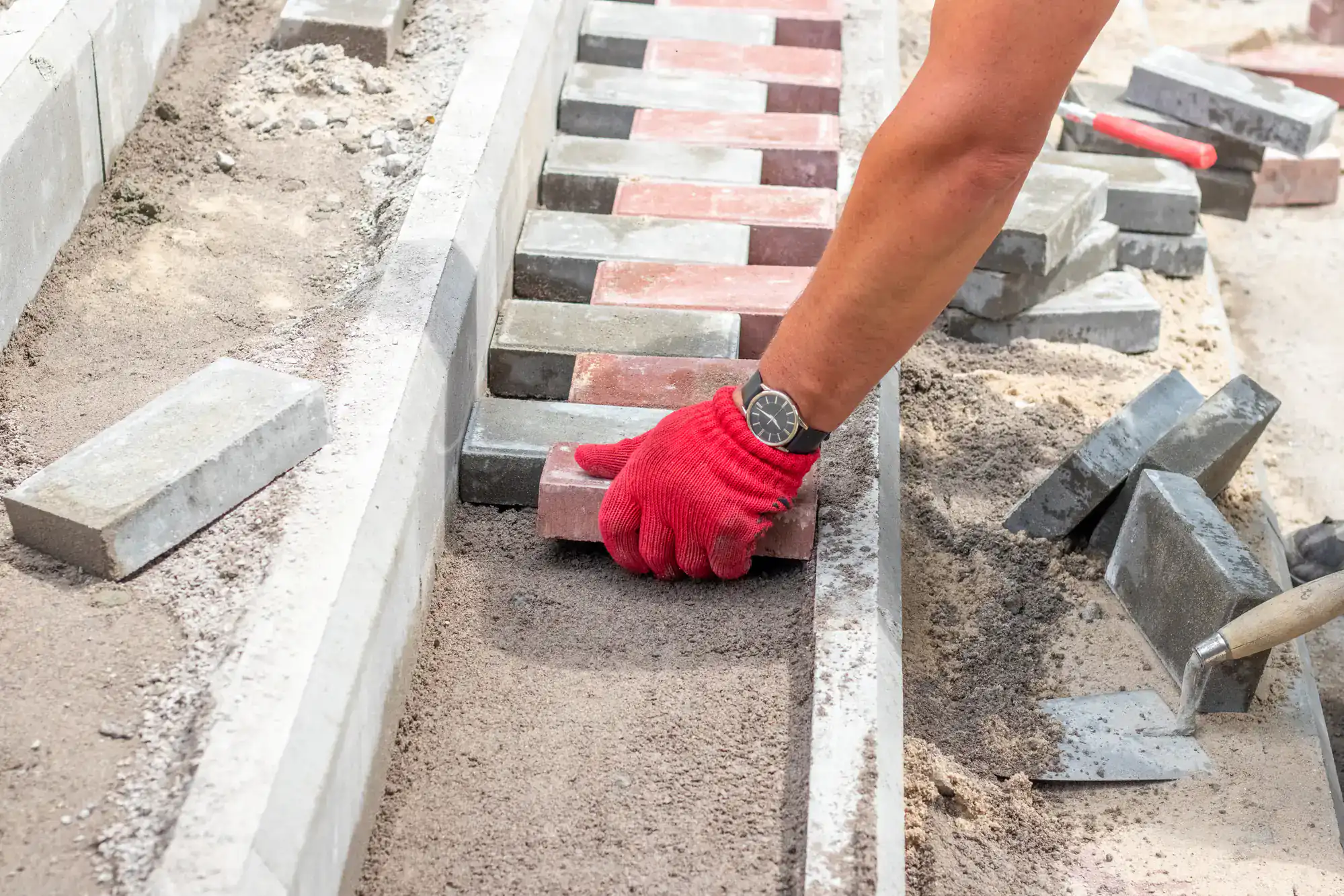
It starts with a free, written estimate. Not a verbal ballpark, not a number scrawled on a business card a written, itemized quote that covers scope, materials, timeline, and pricing. For a Crownsville driveway project, that estimate visit also includes a conversation about your property’s specific conditions: how long the driveway is, where the septic drain field is located, how the lot drains, and whether there are tree roots or grade changes that need to be accounted for before any equipment arrives.
That last part matters more here than in most communities. Because every home in Crownsville runs on a private well and septic system, heavy paving equipment has to be staged and routed carefully. A contractor who doesn’t ask about your underground infrastructure before showing up isn’t a contractor you want on your property. We ask and plan accordingly.
Once the project begins, the process follows a clear sequence: site preparation and base grading first, then asphalt installation, then any striping or sealcoating as applicable. For new installations, sealcoating is recommended within the first six months, then every three to five years after that especially in Crownsville’s shaded, moisture-retaining environment where unsealed surfaces deteriorate faster than in open suburban neighborhoods. The timeline for curing and when you can use your driveway again gets explained upfront, so there are no surprises with a three-car household trying to figure out where to park.
Ready to get started?
We cover the full range of asphalt services new driveway installation, commercial parking lot paving, sealcoating, crack repair, resurfacing, and parking lot striping. For Crownsville homeowners, that typically means starting with an honest assessment of whether your current surface needs repair, resurfacing, or full replacement. Given that the median home in this community was built around 1986, a lot of driveways here are pushing 35 to 45 years old. Most asphalt surfaces have a lifespan of 15 to 30 years with proper maintenance. If yours has never been resurfaced, the math isn’t in your favor.
For residential work, we build the process around the specific conditions of large-lot, wooded properties proper base preparation, drainage grading on sloped terrain, and sealcoating that protects shaded lanes that stay damp long after a rain. For commercial properties along the Generals Highway corridor, services extend to parking lot maintenance and line striping, including ADA-compliant markings for businesses that need to stay current with Anne Arundel County requirements.
If your driveway apron connects to a county-maintained road, an access permit through the county’s Bureau of Highways may be required something we can walk you through as part of the planning process. Nothing about this should feel complicated. The goal is a surface that holds up, looks right, and doesn’t need your attention again for a long time.
The honest answer depends on a few things: how old the surface is, how deep the damage goes, and what the base looks like underneath. Surface cracks and minor edge deterioration can often be addressed with crack filling and resealcoating that’s a repair situation. But if you’re seeing alligator cracking (the interconnected, web-like pattern that looks like a cracked desert floor), significant heaving, or sections where the asphalt is soft or sinking, that usually signals base failure. At that point, patching the surface is a temporary fix at best.
Given that most homes in Crownsville were built around 1986, a lot of driveways in this community are well past the 15-to-30-year expected lifespan of asphalt. If your driveway was original to the home and has never been resurfaced, a full replacement is likely the more cost-effective long-term decision even if the surface looks manageable on the surface. A free assessment from us will give you a straight answer on which direction makes sense for your specific property.
It does, and more than most people expect. Shaded asphalt stays wet longer after rain, thaws more slowly in late winter, and refreezes faster when temperatures drop at night. That repeated freeze-thaw cycle is one of the primary drivers of asphalt cracking and pothole formation in Maryland, and Crownsville’s wooded lots experience it more intensely than open suburban driveways that get full sun exposure and dry out faster.
Leaf litter compounds the problem. When leaves accumulate along driveway edges and stay wet, they hold moisture against the asphalt surface and accelerate edge deterioration. The practical takeaway is that sealcoating is more important not less on a shaded Crownsville driveway than it would be on an exposed suburban surface. Sealing within six months of installation and resealing every three to five years is the maintenance schedule that keeps moisture out and extends the life of the surface meaningfully. Skipping sealcoating on a shaded driveway is the single fastest way to shorten its lifespan.
For a straightforward residential driveway repaving same footprint, no changes to drainage patterns a permit is typically not required in Anne Arundel County. However, there are situations where county involvement becomes necessary. If your project involves modifying or widening the driveway apron where it meets a county-maintained road, you may need an access permit from the county’s Bureau of Highways. If the project changes how stormwater drains on your property particularly on larger lots where grading changes can affect neighboring properties or county road drainage that may trigger a stormwater management review.
Because Crownsville is an unincorporated community with no separate town government, all permitting flows through Anne Arundel County directly. There’s no local Crownsville permit office to navigate. We can help you identify whether your specific project requires any county approvals before work begins, so you’re not caught off guard mid-project.
Start with the MHIC license number. Maryland law requires all home improvement contractors including paving companies to hold a valid Maryland Home Improvement Commission license. Ask for the number and verify it yourself at the MHIC website. It takes about two minutes and tells you immediately whether the contractor is legitimate. We hold MHIC License #159766 verifiable, current, and required by law.
Beyond licensing, ask whether they carry liability insurance and workers’ compensation, whether the estimate will be provided in writing with itemized scope and pricing, and what their process is for locating septic system components before equipment arrives on your property. That last question is specific to Crownsville and communities like it where every home runs on a private well and septic system. A contractor who doesn’t ask about your drain field before bringing in a paver or roller is telling you something important about how they operate. The right contractor asks before you have to.
The optimal window for asphalt paving in Maryland runs from late spring through early fall roughly May through October when temperatures are consistently above 50°F and precipitation is manageable. Asphalt needs to be laid and compacted at the right temperature to bond properly, and cold weather shortens the window for the material to set before it stiffens.
For Crownsville specifically, the spring paving season tends to open a little later than in more sun-exposed suburban areas. The community’s heavy tree canopy means driveways and ground surfaces stay cooler and wetter longer into the spring, so late April or early May is typically when conditions are reliably right. If you’re planning a project, getting your estimate done in March or April puts you in a strong position to schedule early in the season before the summer backlog builds. Fall is also a viable window, but sealcoating done in October needs enough warm days remaining for proper curing before the first hard frost arrives.
Asphalt driveway installation runs approximately $7 per square foot on average, though that number moves based on site conditions, driveway length, base preparation requirements, and material costs at the time of your project. For context, a driveway that’s 200 feet long and 12 feet wide not unusual for a Crownsville property on a large wooded lot works out to roughly 2,400 square feet, putting a quality installation in the range of $15,000 to $20,000 or more depending on what the site requires.
That number can feel significant until you compare it to the alternative. A cut-rate installation that fails in five to seven years because the base wasn’t properly prepared or drainage wasn’t addressed will cost you more to replace than a quality job done right the first time. On a property valued near $1,000,000, the driveway is part of the first impression and the investment in doing it correctly is proportionate to what the property is worth. Sealcoating, which runs $3 to $7 per square foot and is recommended every three to five years, is the maintenance step that protects that investment long-term. We provide free, written estimates so you know exactly what you’re looking at before any commitment is made.
Other Services we provide in Crownsville