
Hear from Our Customers
Piney Point sits at the end of MD Route 249 on a peninsula that gets hit from every angle Potomac humidity, salt-laden air, tidal flooding, and Maryland freeze-thaw cycles that open cracks faster than most property owners expect. That combination doesn’t just shorten the life of an asphalt surface. It punishes one that wasn’t built right from the start.
When commercial asphalt paving is done correctly here, the difference shows up in years, not months. Properly graded surfaces shed water instead of holding it. A well-prepared base doesn’t shift when the ground beneath it gets saturated from a tidal surge. And a sealcoating program that accounts for coastal oxidation keeps the binder intact long enough to actually reach the 20-plus year lifespan commercial asphalt is supposed to deliver.
Whether you’re managing a marina access road, an HOA common area like Landings at Piney Point, or an institutional campus with heavy vehicle traffic, the outcome you’re after is simple: a surface that doesn’t fail before its time, doesn’t create liability exposure for the people using it, and doesn’t cost you three times as much to fix because the first installation cut corners on base prep and drainage.
We’ve been doing commercial asphalt work across Maryland and Virginia since 2011. That’s over 14 years of showing up, doing the job right, and standing behind it which is a longer track record than most of the paving operators working St. Mary’s County’s Southern Maryland market can offer.
We hold MHIC License #159766 a Maryland state credential that requires passing a licensing exam and demonstrating real contracting experience. It’s publicly verifiable, and it matters because unlicensed contractors working in rural peninsula communities like Piney Point leave property owners with zero regulatory recourse when something goes wrong. We also carry a BBB A+ rating, accredited since 2024, and operate in both Maryland and Virginia a dual-state footprint that reflects the kind of professional infrastructure required to serve commercial clients from the Annapolis area down through St. Mary’s County and across the Potomac.
It starts with a site assessment and in Piney Point, that assessment carries more weight than it does inland. The low-lying coastal geography here means drainage patterns, grading elevations, and water flow aren’t just important details, they’re the foundation of whether the finished surface lasts. Before any material gets laid, we evaluate the existing subgrade, identify problem drainage areas, and define the project scope based on what the site actually needs not a templated approach.
From there, subgrade preparation comes first. Commercial asphalt paving requires a minimum of 4 inches of asphalt over a properly compacted base more if the site sees heavy vehicle loads like boat trailers, delivery trucks, or institutional traffic. In St. Mary’s County, any project disturbing more than an acre of land requires NPDES stormwater compliance, and work within a county right-of-way needs a construction permit through St. Mary’s County’s Department of Public Works. We handle the project with those requirements in mind, so you’re not scrambling for permits after the fact.
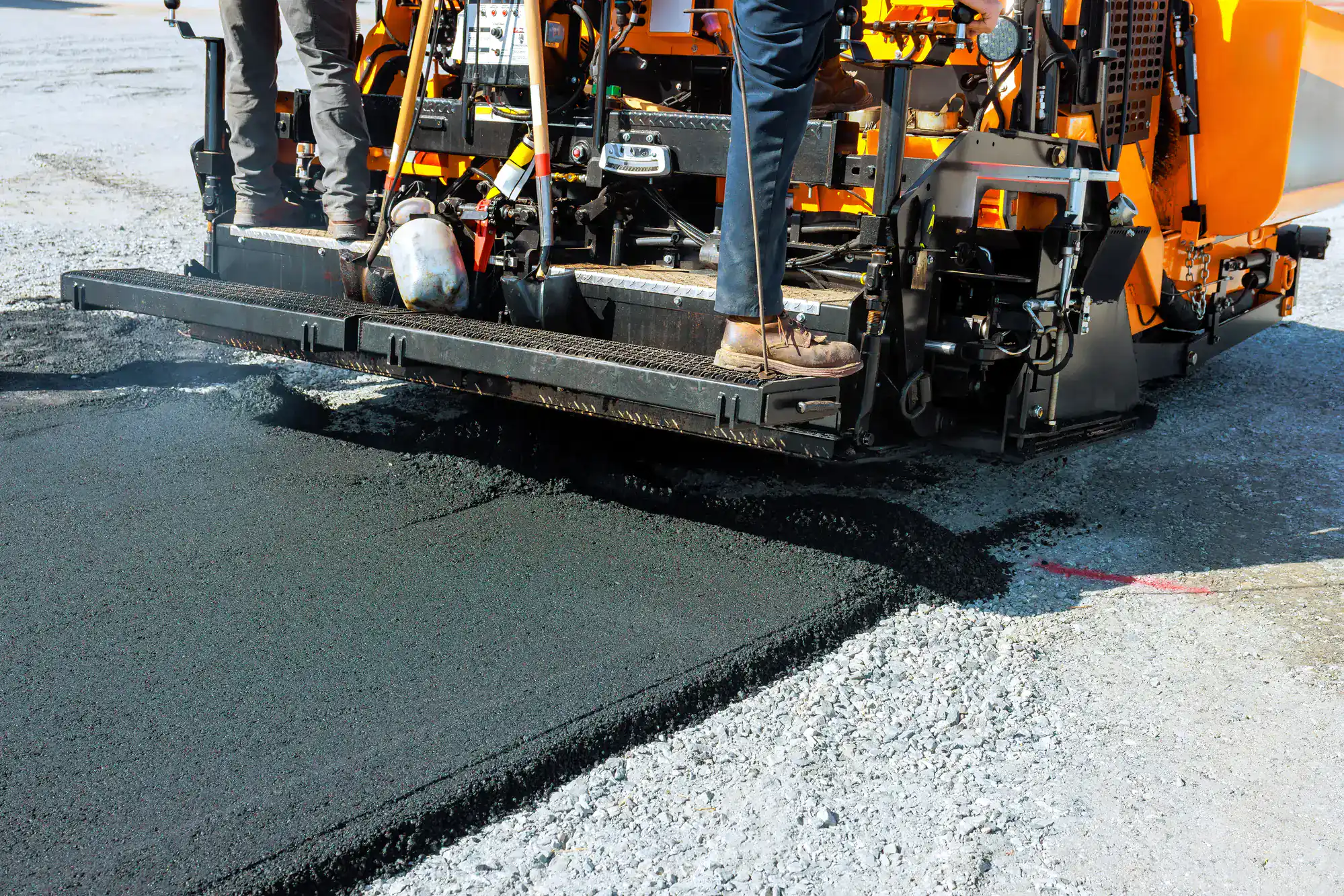
Once the base is set and graded, asphalt goes down in lifts, compacted properly at each stage. After installation, the timeline for sealcoating, line striping, and any ADA compliance work gets mapped out because in a coastal environment, waiting too long between installation and first seal is one of the fastest ways to shorten a surface’s lifespan.

Ready to get started?
We handle the complete commercial pavement lifecycle new asphalt installation, sealcoating, crack filling, parking lot line striping, and ADA-compliant parking lot upgrades. That matters in a community like Piney Point because coordinating separate vendors for each stage of a commercial paving project is a management headache most property owners and HOA boards don’t have time for. One contractor, one point of contact, one scope from start to finish.
For institutional and HOA clients the kind of commercial accounts that drive the most consistent paving demand in Piney Point that full-service capability translates directly into a predictable maintenance program. The Landings at Piney Point HOA, campus facilities at the Paul Hall Center for Maritime Training and Education, marina operators, and vacation rental property owners all share the same core need: a contractor who can assess current conditions, execute the work, and schedule the next maintenance cycle before the surface deteriorates to the point of requiring full reconstruction.
ADA compliance is built into every commercial parking lot project. Faded striping, non-compliant accessible space dimensions, and missing van-accessible designations are liability exposures that any commercial property serving the public needs to address and they’re details we handle as part of the standard commercial paving scope, not as an add-on.
The Potomac River waterfront environment in Piney Point creates specific conditions that accelerate asphalt deterioration faster than you’d see in an inland Maryland location. Salt-laden air humidity speeds up the oxidation of asphalt binder the component that holds the aggregate together and gives the surface its flexibility. As that binder oxidizes, the surface becomes brittle, cracks form earlier, and water infiltration begins the cycle of subgrade damage that leads to pothole formation and structural failure.
On top of that, Piney Point’s low-lying coastal geography means ground moisture levels are consistently higher than in inland communities, which intensifies the freeze-thaw damage Maryland winters deliver every year. Water infiltrates micro-cracks, freezes and expands, then thaws widening the crack with each cycle. The practical implication for commercial property owners here is straightforward: you need a sealcoating program on a tighter schedule than you would inland, and your installation needs to be executed with drainage and base preparation as the primary design priorities not afterthoughts.
Commercial asphalt paving costs in St. Mary’s County typically range from $3 to $7 per square foot for new installation, depending on the scope of subgrade work required, the thickness of the asphalt lifts, drainage engineering needs, and site access conditions. A small commercial parking lot in the 5,000–10,000 square foot range might run $15,000–$50,000 all-in. Larger institutional or HOA common-area projects scale from there based on site complexity.
What drives cost up in Piney Point specifically is the drainage engineering component. Sites with documented flooding exposure, tidal moisture influence, or poor existing grading require more extensive base preparation and grading work than a flat inland site and skipping that work to reduce the upfront number is exactly how a $20,000 installation becomes a $60,000 reconstruction five years later. The most useful thing you can do before budgeting is get a site assessment that evaluates actual drainage conditions, not just square footage.
For most commercial properties in Maryland, the standard recommendation is sealcoating every 2–3 years. In Piney Point’s coastal environment, erring toward the 2-year end of that range makes sense. Salt air oxidation, higher ambient moisture, and the UV exposure of a waterfront location all work against the asphalt binder more aggressively than in an inland setting. Waiting 3 years between seals in this environment often means the surface is already showing oxidation damage and early cracking by the time the next application goes down.
The timing within the year matters too. Maryland’s paving season runs from roughly late March through November asphalt and sealcoating both require minimum temperature thresholds to cure properly. The post-winter window in March and April is typically the best time to assess freeze-thaw damage from the preceding winter and schedule sealcoating before the surface deteriorates further through the warmer months. Summer humidity on the Potomac can extend sealcoating cure times, so scheduling earlier in the season is generally preferable.
Yes, depending on the scope of the project. In St. Mary’s County, any construction activity that disturbs one or more acres of land is regulated under the NPDES stormwater program, which requires a stormwater pollution prevention plan and implementation of sediment and erosion controls. Projects involving grading that exceeds 1,000 cubic yards of earthwork also require a grading permit and inspection fees through the county’s Department of Land Use and Growth Management.
Any work performed within a county right-of-way which can include portions of access roads, curb cuts, or driveway aprons requires a separate Construction Permit for Work within a County Right-of-Way from St. Mary’s County’s Department of Public Works. For properties in Piney Point specifically, the waterfront location also places many sites within or adjacent to the Chesapeake Bay Critical Area, a state-designated zone with additional environmental review requirements for impervious surface changes. A commercial paving contractor working in this area should be familiar with these requirements before the first piece of equipment arrives on site.
The core differences come down to thickness, load design, and drainage engineering. Residential driveways are typically installed at 2–3 inches of asphalt over a compacted base. Commercial surfaces parking lots, institutional driveways, marina access roads, HOA common areas require a minimum of 4 inches of asphalt, and often more when the site sees heavy vehicle loads like delivery trucks, institutional buses, or boat trailers.
Commercial paving also requires a higher level of drainage engineering. A residential driveway can get away with basic grading, but a commercial parking lot serving ongoing traffic needs a properly designed drainage system that accounts for stormwater runoff, slope, and water flow patterns across the full surface. In a community like Piney Point where tidal flooding and nuisance flooding are documented conditions, that drainage design is not optional it’s the single biggest factor in how long the surface actually lasts. Hiring a residential paving crew for a commercial project is one of the most common ways property owners end up with a surface that fails in five years instead of twenty-five.
For vacation rental and investment properties in Piney Point where median home values sit well above the St. Mary’s County average and roughly 19% of the housing stock is in seasonal or vacation use professional commercial-grade paving is a property value decision as much as a maintenance one. A cracked, potholed, or poorly drained driveway or parking area creates real liability exposure for guests, signals deferred maintenance to prospective buyers or renters, and deteriorates faster in a coastal environment than it would in an inland setting.
The math is straightforward. A properly installed and maintained asphalt surface on a waterfront investment property in Piney Point lasts 20-plus years when it’s built right and maintained on schedule. The same surface, installed by an underqualified contractor who skips base preparation or drainage grading, can fail within 5–7 years in this environment at which point you’re looking at full reconstruction costs rather than maintenance costs. For property owners who’ve already invested in a home valued at $500,000 or more on the Potomac River, professional paving is a relatively small line item against the asset it’s protecting.
Other Services we provide in Piney Point