

Hear from Our Customers

Spring repair season across Cape St. Claire and the surrounding Broadneck Peninsula is a real pattern, not a sales pitch. When temperatures drop and water gets into existing cracks, it expands, and what started as a surface issue becomes a structural one. A properly installed commercial parking lot built with the right base, the right mix, and proper drainage stops that cycle before it starts.
Cape St. Claire’s peninsula geography makes drainage engineering more important here than it is in most inland Maryland and Central and Northern Virginia communities. The community sits at the mouth of the Magothy River, bounded by water on three sides. That means moisture intrusion into your subbase is a real risk, not a hypothetical one. When drainage isn’t engineered correctly from the start, you’re not just dealing with puddles you’re accelerating the failure of the entire surface.
For commercial properties like the businesses along Cape St. Claire Road, or institutional facilities serving the broader Broadneck Peninsula, a well-built lot also means fewer liability exposures. Cracked, uneven pavement creates slip-and-fall risk. Faded or missing ADA markings create federal compliance risk. Getting the installation right upfront protects your property, your tenants, and the people using the lot every day.
We’ve been operating out of Annapolis since 2011 about 7 miles from Cape St. Claire on US Route 50. That proximity matters. Maryland and Central and Northern Virginia has specific permitting requirements, stormwater management standards tied to the Chesapeake Bay watershed, and seasonal paving windows that contractors unfamiliar with the region routinely get wrong. After 14 years working in this market, those details aren’t new to us. We understand the coastal moisture challenges that Cape St. Claire property managers deal with, the freeze-thaw cycles that hit the Broadneck Peninsula harder than inland areas, and the exact permitting path required by the county for new commercial construction.
We hold MHIC License #159766, which is a legal requirement for any paving contractor working in Maryland not a bonus credential. We also carry a BBB A+ rating with zero complaints on file. For property managers, HOA administrators, or institutional facilities deciding who gets a commercial paving contract, those aren’t small things. They’re the baseline for working with someone you can actually hold accountable.
Whether you’re managing a commercial property, overseeing a community facility, or handling a multi-tenant parking area on the Broadneck Peninsula, you deserve a contractor who knows the local code, shows up on schedule, and stands behind the work.
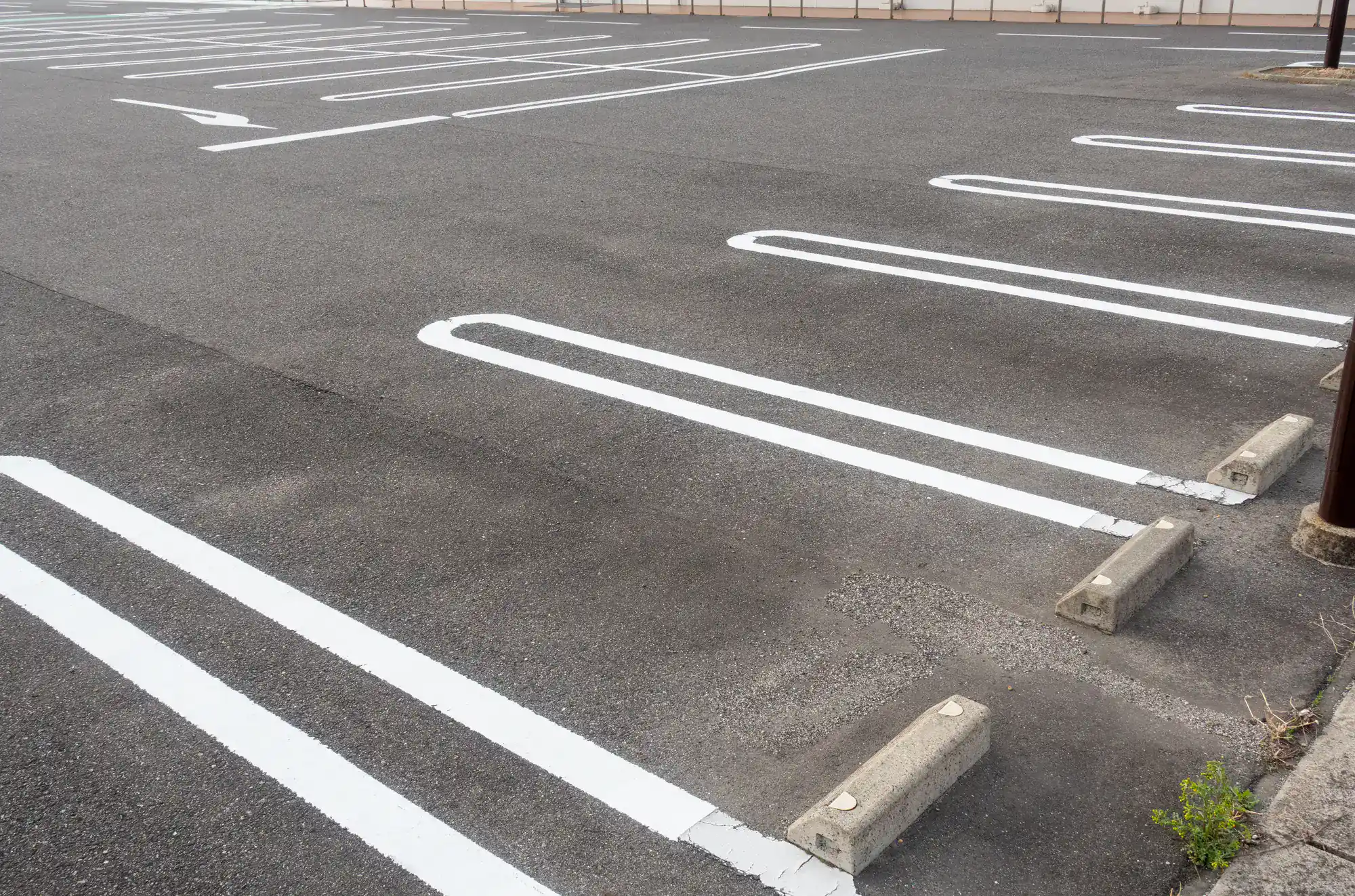
We start with a site assessment not a quick walkthrough, but a real evaluation of your existing surface condition, subbase integrity, and drainage. In Cape St. Claire, that drainage piece gets extra attention. The coastal geography here means water has more ways to work against your pavement than it does in an inland community. If the grading isn’t right, or if water is pooling toward the subbase rather than away from it, that gets addressed in the plan before a single inch of asphalt goes down.
From there, the scope is defined whether that’s a full-depth new installation, a mill and overlay on an existing surface, or a targeted repair approach. You get a written quote with clear line items before any work is scheduled. Maryland and Central and Northern Virginia projects in this area may also require grading permits or stormwater management documentation, particularly for new commercial parking lot construction. That permitting process is part of what we handle and what an unlicensed crew legally cannot.
Once work begins, the timeline and phasing are planned around your operation. If you’re managing an active commercial property, sections of the lot can be staged so access stays open during construction. When the surface is complete, line striping and ADA markings are applied to spec not as an afterthought, but as a required component of a finished, compliant commercial lot.
Ready to get started?
Commercial parking lot paving in Cape St. Claire covers more than just laying asphalt. The full scope of what a commercial property typically needs includes new lot installation, asphalt overlay on deteriorated surfaces, crack filling, sealcoating, parking lot line striping, and ADA-compliant marking. Managing those services across separate vendors creates accountability gaps and inconsistent results. Having one contractor who handles all of it and who is licensed and insured to do so in Maryland and Central and Northern Virginia simplifies the process and keeps quality consistent across every phase.
For properties that want to protect their paving investment long-term, we offer ongoing commercial maintenance programs. Sealcoating every two to five years, combined with regular crack filling, can extend a well-installed asphalt lot’s useful life to 25 years or more. For commercial property owners in Cape St. Claire where property values run well above the state median and the built environment is aging that kind of lifecycle planning makes real financial sense.
ADA compliance is built into every commercial project from the design stage. Federal requirements for accessible parking spaces, van-accessible aisles, slope limits, and clearly marked accessible routes apply to every commercial facility open to the public in this area. That includes shopping centers, marinas, institutional facilities, and any other commercial property serving the Broadneck Peninsula community.
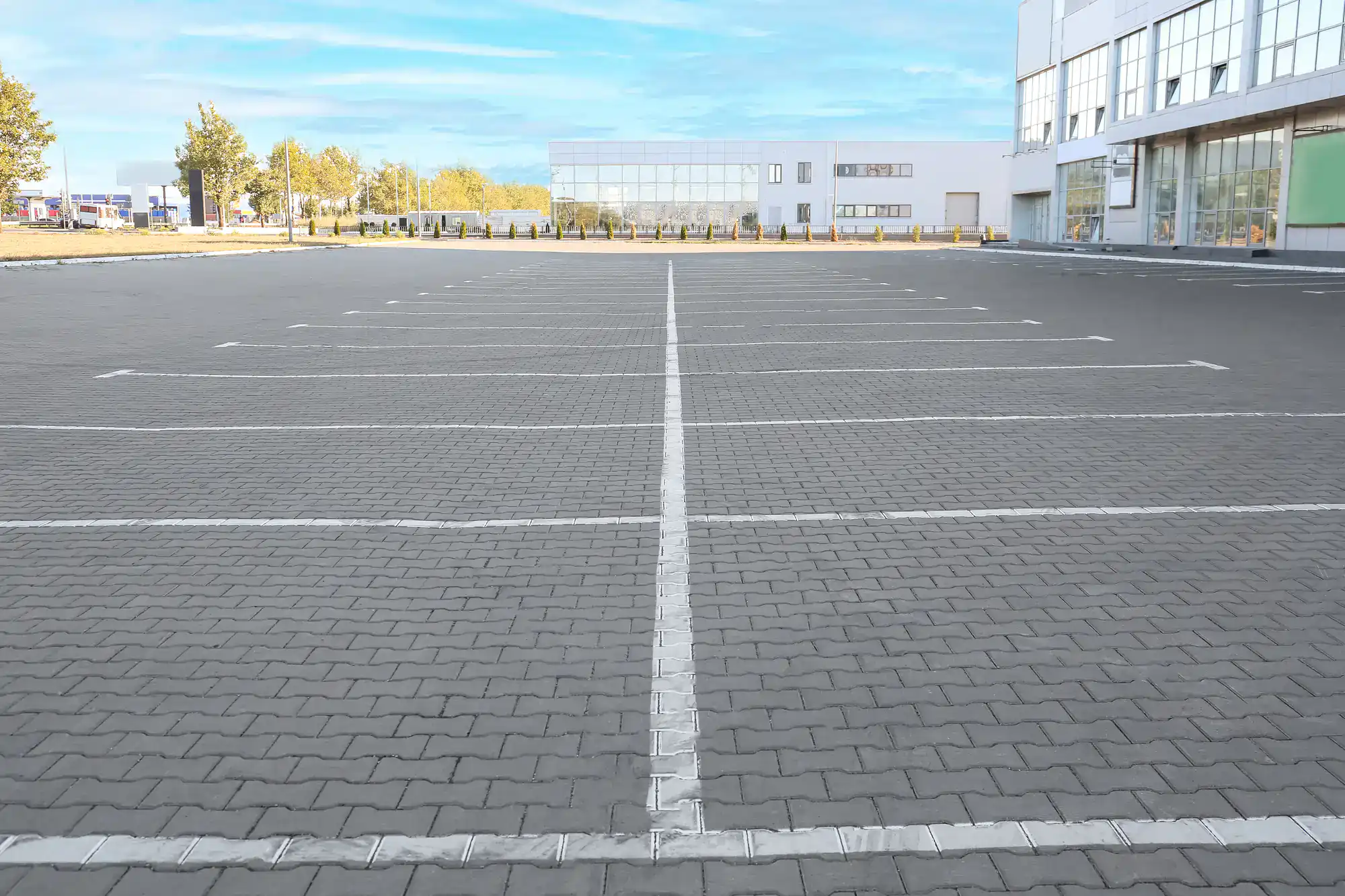
Maryland’s freeze-thaw cycle is one of the most damaging forces a commercial parking lot faces, and the Broadneck Peninsula doesn’t get a pass on that. When temperatures drop below freezing, any water that’s worked its way into existing cracks expands as it turns to ice. That expansion widens the crack, weakens the surrounding asphalt, and over several cycles, turns a surface-level issue into a structural failure that goes down into the subbase.
Cape St. Claire’s waterfront setting adds another layer to this. The community is bounded by the Magothy River and Little Magothy River, which means ambient moisture levels are higher here than in inland Maryland and Central and Northern Virginia communities. That moisture has more opportunities to infiltrate pavement that isn’t properly sealed or maintained. If your commercial lot has visible cracking going into fall, it’s going to look significantly worse by spring. Addressing it before winter or investing in a properly engineered installation that accounts for drainage from the start is the more cost-effective path.
Yes, and the permitting requirements depend on the scope of the project. Cape St. Claire is an unincorporated community within Maryland and Central and Northern Virginia, so all permitting, zoning, and regulatory oversight runs through the county not a local municipal office. For new commercial parking lot construction, that typically means grading permits and, in many cases, stormwater management documentation.
Maryland and Central and Northern Virginia sits within the Chesapeake Bay watershed, and the county enforces stormwater management requirements for new impervious surfaces which includes new asphalt parking lots. We can pull the required permits and coordinate with the county on stormwater compliance. An unlicensed crew legally cannot do that, which means you’re either left to manage the permitting yourself or you’re operating without required approvals. Either creates real exposure. MHIC License #159766 is the credential that allows us to handle that process on your behalf.
The honest answer is that it depends on what’s happening below the surface, not just what you can see on top. Surface cracks and minor deterioration can often be addressed with crack filling and sealcoating, or in some cases an asphalt overlay where a new layer of asphalt is applied over the existing surface after milling. That’s a significantly less expensive option than full replacement, and it works well when the subbase is still structurally sound.
Full replacement becomes the right call when the subbase has been compromised usually from water infiltration, heavy load stress over time, or years of deferred maintenance that allowed deterioration to go deeper than the surface layer. In Cape St. Claire, where much of the commercial built environment dates to the late 1970s and early 1980s, a lot of existing pavement is at or past the point where overlays are a viable long-term fix. A site assessment will tell you which situation you’re actually in, and a written quote will break down the cost difference between the two approaches so you can make an informed decision.
Federal ADA standards apply to any commercial parking facility open to the public, and they’re specific. The general requirement is one accessible space for every 25 total spaces, with at least one of those being van-accessible. Van-accessible spaces require an eight-foot-wide access aisle. Slope requirements are strict running slopes can’t exceed 8.33% and cross slopes can’t exceed 2.08% within accessible spaces and the routes connecting them to the facility entrance.
Beyond the space ratios and dimensions, accessible routes need to be clearly marked and maintained. Faded striping, cracked surfaces within accessible paths, or missing signage all create compliance exposure. For commercial properties in Cape St. Claire whether that’s a retail center, a marina, a church, or any other facility serving the public non-compliance carries federal fines starting at $75,000 for a first violation. ADA compliance isn’t an optional upgrade on a commercial paving project; it’s a legal requirement, and we engineer it into every commercial parking lot paving project from the planning stage.
A properly installed commercial asphalt parking lot in this region has a realistic useful life of 20 to 25 years sometimes longer with consistent maintenance. The key variables are installation quality, drainage engineering, and how well the surface is maintained over time through sealcoating and crack filling.
In Maryland and Central and Northern Virginia’s climate, sealcoating every two to five years is one of the most cost-effective things a commercial property owner can do to protect that investment. It slows oxidation from UV exposure, reduces water infiltration, and keeps the surface flexible enough to handle temperature swings. Skipping maintenance cycles doesn’t save money it shortens the lifespan of the lot and moves the full replacement timeline forward. For commercial properties on the Broadneck Peninsula, where the coastal environment adds moisture exposure on top of the standard Maryland freeze-thaw cycle, staying on a maintenance schedule matters more than it does in drier, more sheltered locations.
The paving industry has a well-documented problem with unlicensed operators crews that take a deposit, deliver substandard work, and are difficult or impossible to hold accountable after the fact. In Maryland, a valid MHIC license is a legal requirement for contractors performing home and commercial improvement work, and it’s not just a formality. The MHIC guaranty fund provides property owners with a legal avenue for recourse if a licensed contractor fails to deliver. That protection doesn’t exist with an unlicensed crew.
For property managers, HOA administrators, and institutional facility operators in Cape St. Claire including anyone managing assets under the Cape St. Claire Improvement Association’s Special Community Benefits District working with a licensed, insured contractor isn’t just a preference, it’s a fiduciary responsibility. Community funds and commercial property investments in this area represent real value. The Cape St. Claire Shopping Center, the community’s marinas, and its institutional facilities serve thousands of Broadneck Peninsula residents. The contractor you hire to pave those lots should be verifiably licensed, carry documented insurance, and have a track record in Maryland and Central and Northern Virginia. Our MHIC #159766 is publicly verifiable through the Maryland Department of Labor.
Local Resources
Other Services we provide in Cape St. Claire