Hear from Our Customers
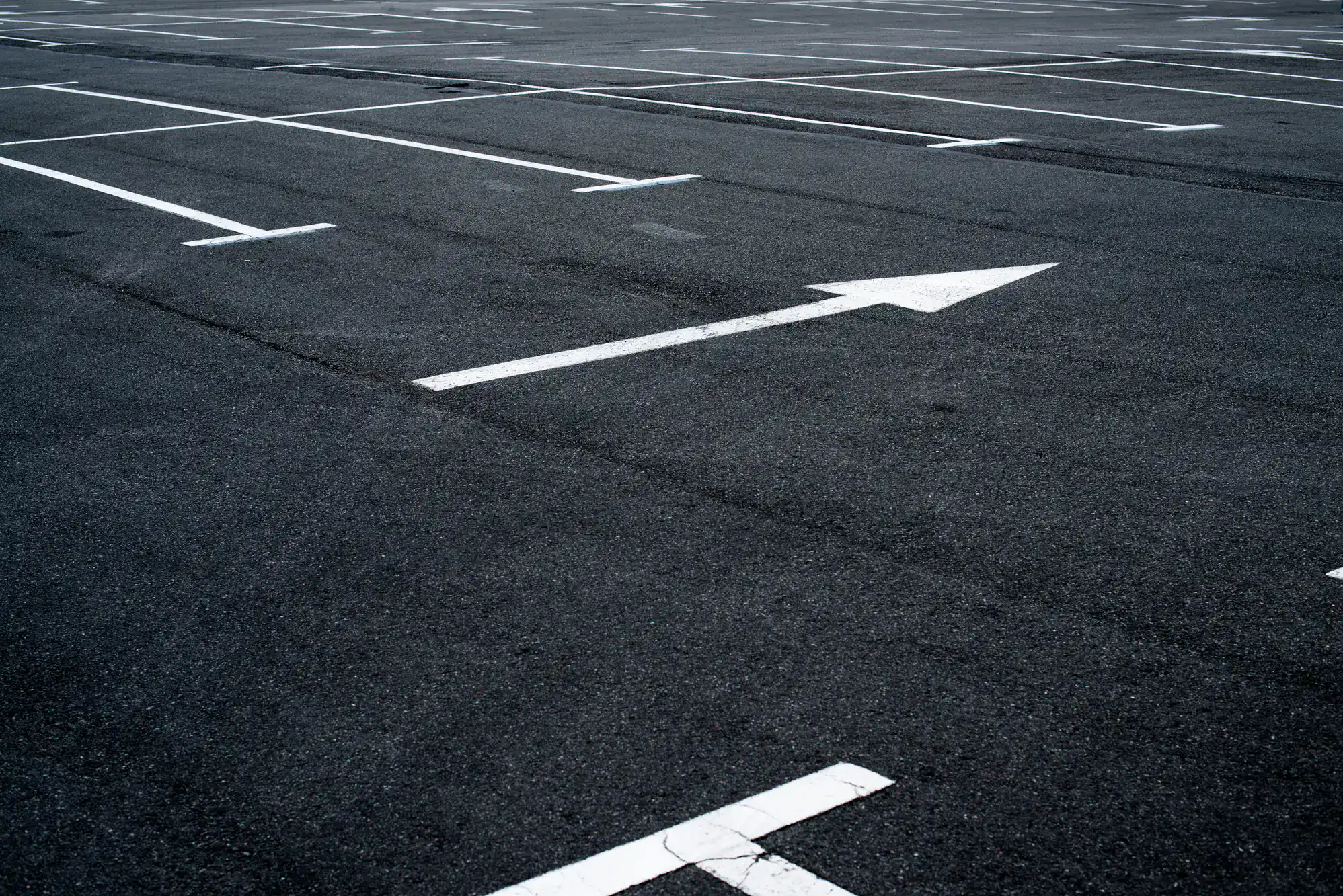
Most parking lots in Jessup aren’t dealing with the occasional delivery van. They’re handling loaded semis, refrigerated freight trucks, and fleet vehicles cycling in and out around the clock. When the asphalt underneath isn’t built for that kind of load, you’re not looking at gradual wear you’re looking at rutting, cracking, and potholes that show up faster than you’d expect and cost more to fix every time.
Maryland’s freeze-thaw cycle doesn’t help. From November through March, moisture works its way into every small crack, freezes, expands, and breaks the surface from the inside out. By spring, what looked manageable in October has turned into a pothole problem that’s a liability for every driver and pedestrian on your property. For the distribution centers, warehouses, and food industry operations that define Jessup’s commercial corridor along Route 1 and I-95, a failing lot isn’t just an eyesore it’s an operational problem.
A properly installed commercial asphalt parking lot, built to the right thickness and maintained consistently, lasts 15 to 25 years. That’s the difference between a capital investment and a recurring expense. When you get the installation right the first time and stay ahead of maintenance, you’re not repaving every seven years. You’re protecting the investment for the long haul.
We’ve been operating in Maryland since 2011 long enough to have seen what holds up in this climate and what doesn’t. We’re MHIC licensed (#159766), BBB A+ accredited, and we carry the insurance documentation that commercial property managers and facility operators require before we ever set foot on site. These aren’t optional extras they’re the baseline for doing business professionally in this state.
Jessup is a unique market. Our service area spans both Howard County and Maryland and Central and Northern Virginia, which means permitting and inspection requirements depend entirely on which side of the county line your property sits. We operate throughout both counties and understand how to navigate that without putting the burden on you to figure it out.
Whether you’re managing a warehouse off Maryland Route 175, overseeing a facility near the Maryland Food Center, or handling a commercial property along the Route 1 corridor, our approach is the same show up prepared, do the work correctly, and stand behind it.
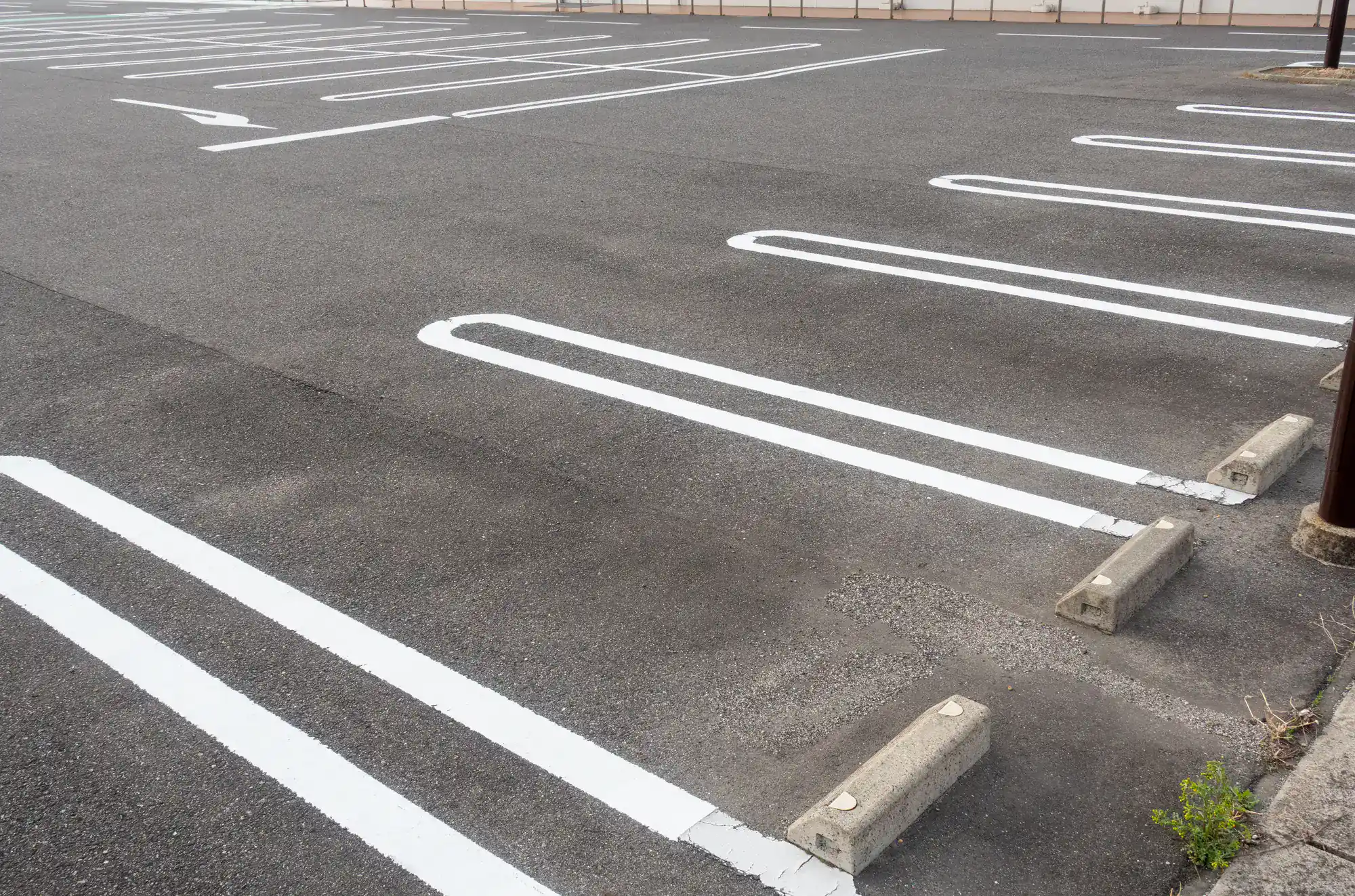
It starts with a site assessment. Before anything is quoted or scheduled, we evaluate the condition of your existing lot subbase integrity, drainage, current damage, and what the actual scope of work looks like. For active commercial facilities in Jessup, this step also includes a conversation about phasing. If your operation can’t go offline for a full week, we sequence the project so that portions of the lot stay accessible while work progresses in sections.
Once the scope is confirmed, you get a written proposal with material specifications, asphalt thickness, and a clear timeline. For new parking lot construction, that means full subgrade preparation, compaction, and commercial-grade hot-mix asphalt installed at the depth your traffic load actually requires not the minimum needed to pass a residential driveway inspection. For resurfacing or overlay work, it means honest assessment of whether the existing base can support a new surface or needs to be addressed first.
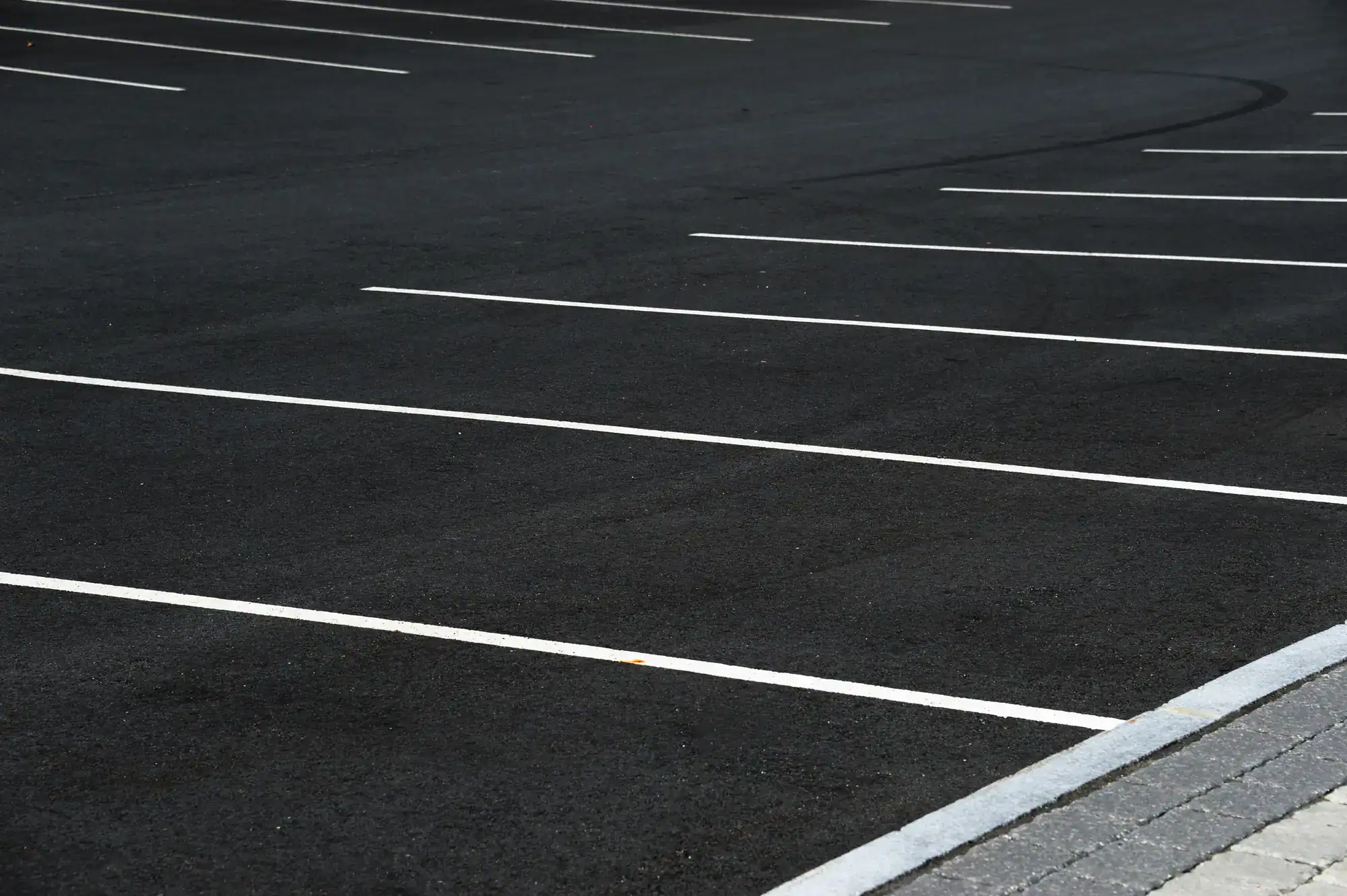
Hot-mix asphalt requires ambient temperatures above 50 degrees to install correctly, which puts the primary paving window between April and October in Maryland. If you’re planning a project, booking in the fall or winter for spring execution is the smartest move it locks in scheduling before the spring rush hits and gives you time to handle any permitting requirements through Howard County or Maryland and Central and Northern Virginia, depending on where your property sits. ADA-compliant line striping is handled as the final step, built into the project from the start so accessible space ratios, aisle widths, and slope requirements are engineered in not added as an afterthought.
Ready to get started?
We handle the full scope of commercial parking lot work new parking lot construction, asphalt overlays, sealcoating, crack filling, and ADA-compliant line striping. For Jessup’s industrial and commercial properties, that means you’re not coordinating between a paving company and a separate striping contractor or chasing two vendors to align schedules. One company handles the installation and every maintenance service that follows.
For heavy-vehicle commercial applications the kind of traffic that runs through Jessup’s distribution centers, food processing facilities, and warehouse operations along the I-95 and Route 1 corridor asphalt is specified at 3 to 5 inches or more depending on load requirements. That’s a meaningful difference from the lighter mix used on residential driveways or standard retail parking lots, and it’s the difference between a lot that holds up under daily freight traffic and one that starts showing stress within a few years.
Sealcoating every two to five years, combined with proactive crack filling before Maryland’s winter freeze-thaw cycle sets in, is the maintenance rhythm that keeps a commercial lot in good shape between major resurfacing cycles. For large employer facilities in Jessup whether that’s a logistics operation, a government-adjacent facility, or a commercial property with significant employee and vendor parking ADA compliance is also part of every project. Federal first-violation fines for non-compliant parking can reach $75,000, and accessible space ratios, van-accessible aisles, and slope requirements are built into every installation from day one.
Jessup is an unincorporated community that spans both Howard County and Maryland and Central and Northern Virginia, which means there’s no single permit office that covers the whole area. Which county has jurisdiction over your property depends entirely on where your parcel sits relative to the county line and the permitting requirements, inspection processes, and zoning considerations differ between the two.
Before any commercial paving project moves forward, the first step is confirming which county governs your specific address. Both counties require permits for new parking lot construction and significant resurfacing work on commercial properties. We operate throughout both counties and handle this determination as part of the project scoping process you don’t need to figure it out on your own before making a call.
For standard passenger vehicle parking, two to three inches of asphalt over a properly compacted base is typically sufficient. But that specification doesn’t hold up under the kind of traffic that runs through Jessup’s industrial corridor. Loaded tractor-trailers, refrigerated freight trucks, and heavy fleet vehicles put significantly more stress on pavement than a parking lot full of cars and if the asphalt isn’t thick enough or the subbase isn’t properly compacted, you’ll see rutting and structural failure within a few years rather than the 15 to 25 you should be getting.
For heavy commercial and industrial applications, asphalt is typically specified at three to five inches or more, depending on the specific load profile. The subbase preparation underneath matters just as much as the surface layer a thick asphalt installation on a weak or poorly graded base will still fail prematurely. Our site assessment before any project includes an honest evaluation of what your base can actually support.
Hot-mix asphalt needs ambient temperatures consistently above 50 degrees Fahrenheit to be installed and compacted correctly. In Maryland, that limits the practical paving window to roughly April through October. Trying to pave outside that window risks a surface that doesn’t bond properly, which leads to premature cracking and failure especially once the freeze-thaw cycle starts working on it.
The freeze-thaw cycle itself is one of the biggest threats to commercial parking lots in Jessup. Moisture gets into surface cracks in the fall, freezes and expands through the winter, and by March you’ve got damage that’s significantly worse than what you started with. The most cost-effective approach is to address any cracking and schedule sealcoating before winter sets in not after. If you’re planning a larger resurfacing or new installation project, booking in the fall for a spring start locks in your scheduling before the spring rush and gives you time to handle permitting before the season opens.
Federal ADA standards apply to all commercial parking facilities, and they’re more specific than most property owners realize. At minimum, you need one accessible space for every 25 total spaces. Van-accessible spaces require an eight-foot-wide access aisle. Running slopes in accessible spaces and along accessible routes can’t exceed 8.33 percent, and cross slopes are limited to 2.08 percent. Accessible routes from the parking area to building entrances also need to be clearly marked and maintained.
For Jessup’s large employer facilities distribution centers, warehouse operations, government-adjacent buildings, and institutional campuses these requirements apply to every parking lot, and enforcement has become more active in recent years. Federal first-violation fines can reach $75,000 per incident. ADA compliance should be engineered into the project from the design stage, not addressed after a complaint comes in. We build accessible space ratios, aisle widths, slope compliance, and striping into every commercial installation from the start.
Yes, and for most commercial facilities in Jessup, phasing isn’t just an option it’s a necessity. Distribution centers, food processing operations, and warehouse facilities that run continuous receiving and shipping schedules can’t simply close their parking lots for a week. The same applies to facilities near the Maryland Food Center complex, where truck traffic and loading dock access operate around the clock.
Phased paving sequences the work so that sections of the lot are taken offline one at a time while the rest remains accessible. It requires more detailed planning upfront and slightly longer overall project timelines, but it keeps your operation running without significant disruption. Curing timelines are built into the schedule from the start hot-mix asphalt typically needs 24 to 48 hours before light vehicle traffic and three to seven days before heavy commercial use. Those windows are planned around your operational schedule, not discovered as a surprise mid-project.
A properly installed and consistently maintained commercial asphalt parking lot should last 15 to 25 years. That range isn’t arbitrary it reflects the real difference between a lot that gets the right installation spec, regular sealcoating, and timely crack repair versus one that gets the minimum installation and no follow-up maintenance until it’s visibly failing.
In Jessup specifically, the combination of Maryland’s freeze-thaw winters and heavy commercial vehicle traffic creates an accelerated wear environment. Lots that handle daily freight and tractor-trailer traffic need to be built to a heavier specification than standard commercial parking, and they benefit from more frequent maintenance intervals typically sealcoating every two to three years rather than the standard three to five for lighter-traffic lots. From a financial standpoint, a commercial parking lot qualifies for depreciation under IRS Publication 946 on a 15-year schedule, which means the investment has a tax treatment that makes proactive maintenance even more cost-effective compared to repeated premature replacements.
Local Resources
Other Services we provide in Jessup