Hear from Our Customers
Charlotte Hall sits right at the northern edge of the St. Mary’s County peninsula, where Route 5 carries commuters, farm trucks, and heavy loads through every season. Your driveway takes the same beating. When freeze-thaw cycles hit and in Charlotte Hall they hit regularly water finds every crack, freezes, expands, and quietly destroys pavement from the inside out. A properly installed asphalt driveway handles that cycle better than concrete because it flexes instead of fractures. That’s just how the material behaves in a Mid-Atlantic climate.
Beyond the weather, homes in Charlotte Hall sit on large lots with longer driveways than you’d find in a denser suburb. That means more surface exposed to UV, more linear feet absorbing vehicle loads, and more opportunity for drainage issues to develop if the base wasn’t built right. When the work is done correctly from the start proper grading, compacted aggregate base, clean edges you get a driveway that doesn’t just look good on day one. It looks good in year fifteen.
And if your home is along or near Three Notch Road, or visible from the Route 5 corridor that sees over 39,000 vehicles a day, your driveway is part of your home’s first impression. A cracked, faded surface doesn’t just bother you it works against your property value every single day.
We’re a family-owned asphalt paving company that’s been passed down through three generations. That kind of longevity doesn’t come from advertising it comes from doing the work right and letting the results speak. We hold Maryland Home Improvement Commission License #159766, active and verifiable at labor.maryland.gov, and earned BBB Accreditation in August 2024. These aren’t just credentials on a website they’re checkpoints any Charlotte Hall homeowner can confirm before signing anything.
We serve the Southern Maryland corridor, including the Charles County and St. Mary’s County communities along Route 5. That means we’ve worked in Charlotte Hall and the surrounding area, understand the soil conditions, the drainage challenges that come with large rural lots, and the permitting landscape including MDOT SHA access requirements for driveways that connect to state roads. Every job gets our own Bobcat and dump trucks on-site. No subcontracted equipment, no scheduling gaps, no surprises.
Whether your property is near the Charlotte Hall Veterans Home area, out on a rural lot off a county road, or sitting on an acre-plus parcel that’s been in the family for years we’ve seen your setup before.
It starts with an in-person estimate. We come to your property, walk the driveway, look at the existing surface condition, check the grade and drainage, and give you a written quote based on what’s actually there not a phone guess based on square footage you measured yourself. For Charlotte Hall’s large-lot properties, this step matters more than it does anywhere else. A driveway that runs 150 feet through a wooded lot with drainage challenges on one side and a mature tree line on the other isn’t something you can price accurately from a desk.
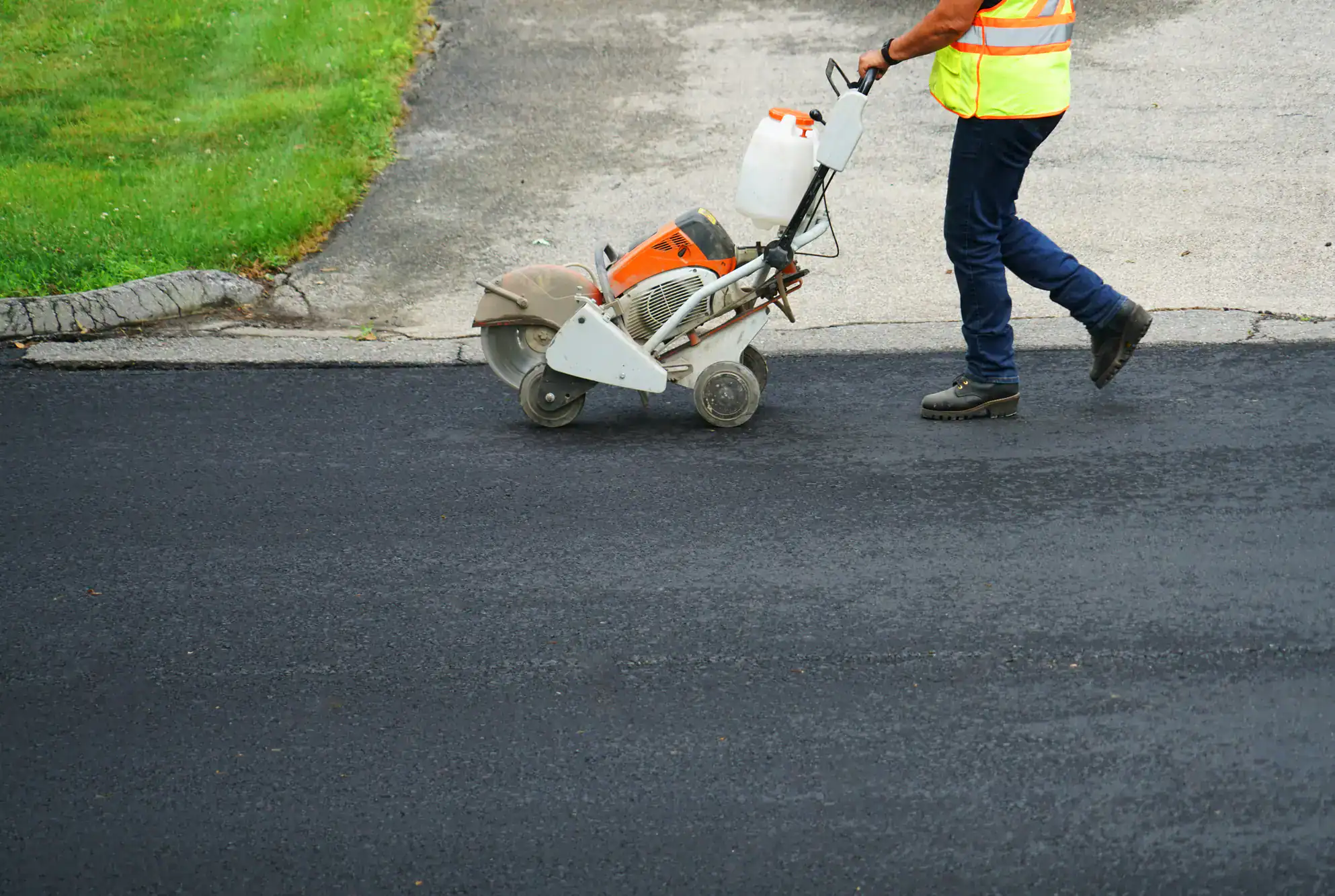
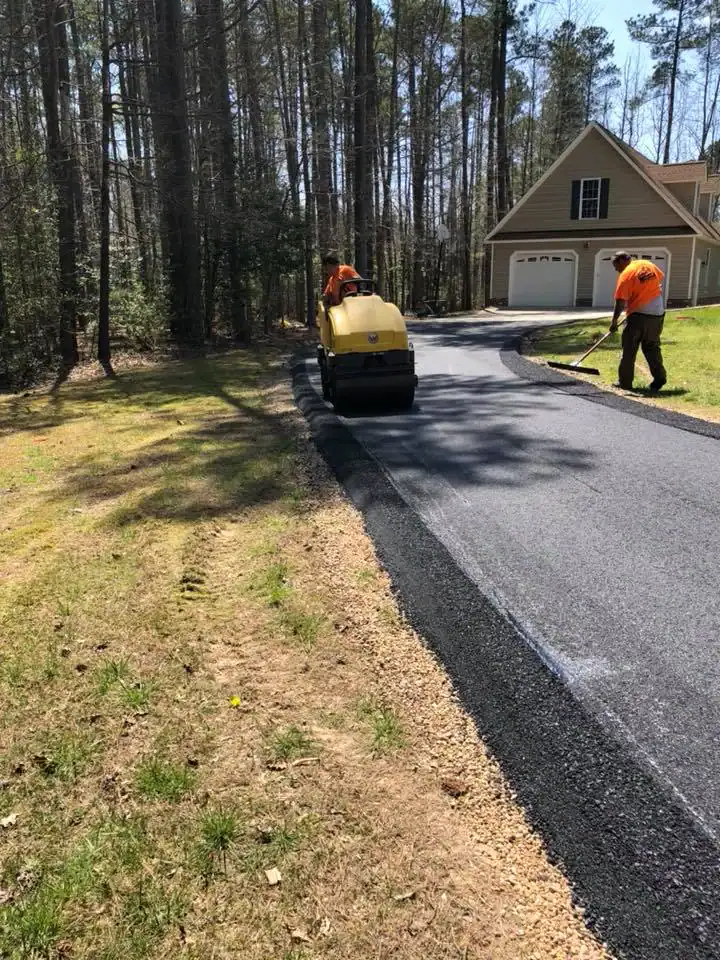
Once the project is scheduled, we arrive with the equipment needed for the full scope excavation, grading, base compaction, and paving. If your driveway connects to Route 5 or a county road, any required MDOT SHA or St. Mary’s County DPW&T access permits are part of the process we navigate correctly. The aggregate base goes in first typically 4 to 6 inches of compacted material because what’s underneath the asphalt determines how long the surface lasts. Skipping or rushing that step is how you end up with a driveway that starts cracking in year three.
After the asphalt is laid and compacted, you’ll get clear guidance on curing time before heavy vehicles return. In Southern Maryland’s summer heat, that window matters fresh asphalt softens under load before it fully cures. The job isn’t done until the edges are clean, the debris is hauled away, and the surface is ready for daily use.
Ready to get started?
We handle the full range of residential asphalt work new driveway installation, resurfacing over an existing surface when the base is still sound, full removal and replacement when it isn’t, and sealcoating to protect the investment after the work is done. For Charlotte Hall homeowners on large rural lots, the most common scenario is either a driveway that was installed years ago without proper base prep and has been deteriorating faster than expected, or a property that’s never had a paved driveway and is ready to move away from gravel.
The decision between resurfacing and full replacement comes down to base condition. If your existing asphalt has widespread cracking, soft spots, or drainage-related sinking, laying new asphalt on top of a compromised base just delays the same problems. If the base is solid and the surface damage is primarily cosmetic or weather-related, resurfacing is a cost-effective option that adds years of life. That assessment happens during the in-person estimate not as an upsell, but as an honest read of what your driveway actually needs.
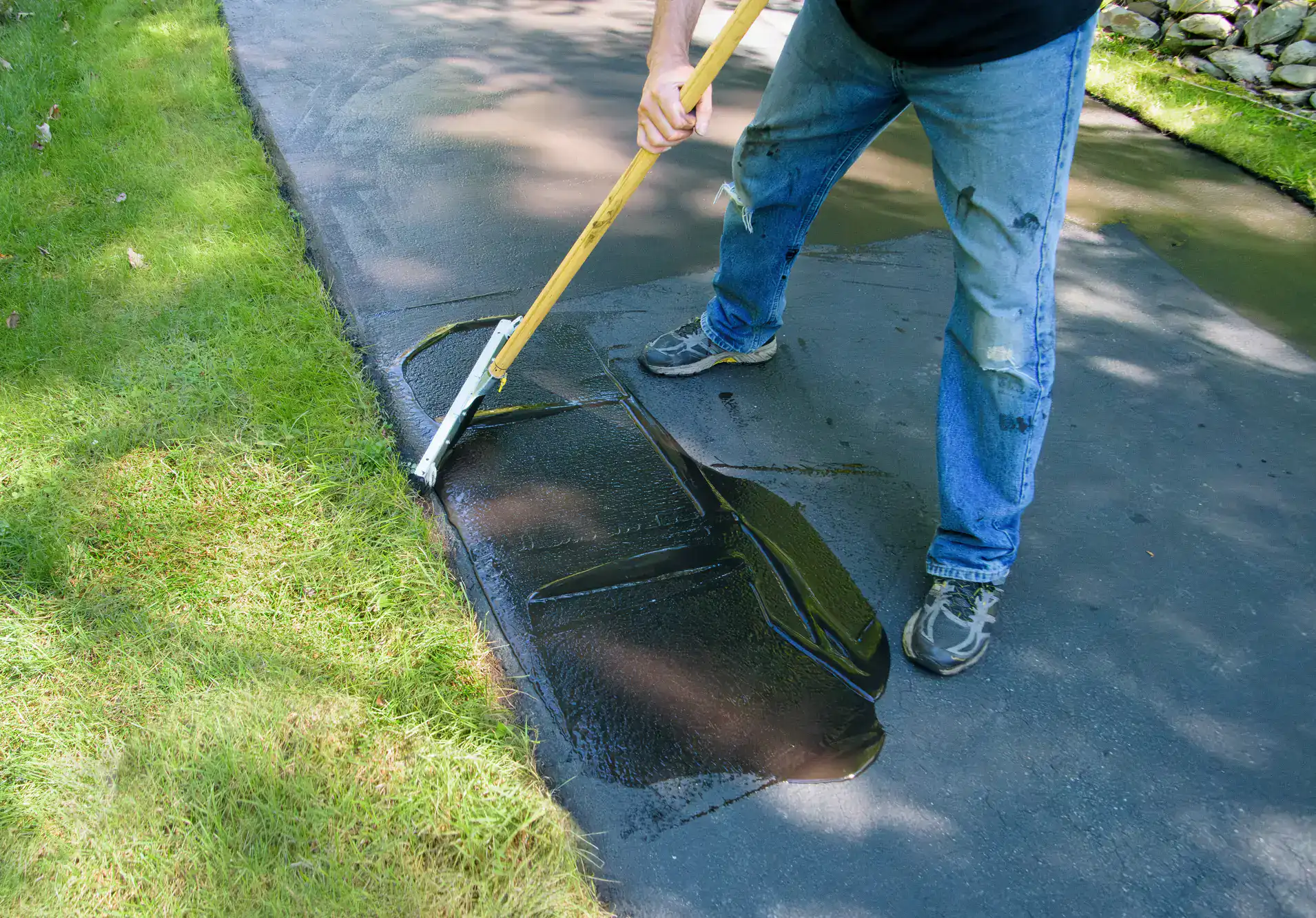
Sealcoating is the maintenance layer that extends everything. Applied roughly 90 days after new installation and repeated every two to three years, it seals surface cracks before water gets in, protects against UV breakdown during Southern Maryland’s hot summers, and keeps the surface looking clean and dark. At a fraction of the cost of resurfacing, it’s the most straightforward way to protect what you’ve invested. If you’re in a rural area of Charlotte Hall with tree canopy overhead and seasonal moisture, sealcoating isn’t optional maintenance it’s what keeps your driveway from becoming a repair project.
The honest answer is that it depends on your specific property, but here’s a useful range to work with. Most residential asphalt driveway installations run between $3,000 and $7,500, with an average around $5,000 to $5,500 for a standard suburban driveway. In Charlotte Hall, where lots are larger and driveways are typically longer and wider than what you’d find in a denser suburb, the realistic range for a full installation often runs $6,000 to $10,000 or more depending on total square footage, whether existing material needs to be removed, how much grading and drainage work the site requires, and how accessible the property is for equipment.
The best way to get a number that actually applies to your driveway is an in-person estimate. A written quote after a site visit gives you something real to work with not a range so wide it’s useless. Removal of an existing driveway typically adds $1 to $3 per square foot to the total, and sealcoating after installation is a separate line item worth budgeting for.
A properly installed asphalt driveway in Southern Maryland should last 20 to 30 years with reasonable maintenance. The key phrase is “properly installed” meaning a compacted aggregate base of 4 to 6 inches, correct grading for drainage, and asphalt laid at the right thickness. Driveways that skip base preparation or use inadequate material thickness often start showing significant deterioration within 5 to 8 years, particularly in a climate like Charlotte Hall’s where freeze-thaw cycles are a recurring factor every winter.
The other variable is maintenance. Sealcoating every 2 to 3 years is what keeps the surface sealed against water infiltration the primary mechanism of freeze-thaw damage. A driveway that gets sealcoated on schedule will consistently outlast one that doesn’t, even if both were installed identically. In areas with heavy tree canopy, like many rural lots in Charlotte Hall, sealcoating also helps counteract the moisture retention that shaded surfaces experience compared to sun-exposed driveways.
It depends on where your property sits and how your driveway connects to the road. Charlotte Hall straddles Charles and St. Mary’s counties there’s no independent town government so permitting authority falls to whichever county your parcel is in. If your driveway work involves any modification to a county road entrance or right-of-way, St. Mary’s County Department of Public Works and Transportation or Charles County’s equivalent will require a construction permit. That process may also involve a bond for entrance improvements.
If your driveway connects directly to Maryland Route 5 Three Notch Road that’s a state highway, which means MDOT SHA’s access management requirements apply. Any modification to a driveway entrance on a state road requires an access permit from the Maryland State Highway Administration. A licensed contractor who regularly works in this area knows how to navigate both county and state permit processes. An unlicensed or out-of-area contractor who doesn’t can leave you with compliance issues after the job is done.
For most Charlotte Hall homeowners, asphalt is the more practical choice and the climate is a big part of why. Southern Maryland’s winters regularly cycle above and below freezing, which puts pavement through repeated expansion and contraction. Asphalt is flexible by nature, which means it handles that movement without fracturing the way rigid concrete does. Concrete driveways in freeze-thaw climates are more prone to cracking along joints and edges, and concrete repairs are significantly more expensive and visible than asphalt repairs.
Cost is the other factor. Asphalt typically runs $6 to $9 per square foot installed, while concrete runs $10 to $18 per square foot or more depending on finishing. On a long rural driveway which is the norm on Charlotte Hall’s large-lot properties that difference adds up quickly. Concrete does last longer if maintained well and is easier to keep clean, but for a working driveway on a rural lot that sees pickup trucks, trailers, and seasonal heavy use, asphalt’s combination of durability, flexibility, and lower upfront cost makes it the more sensible investment in this region.
The surface is what you can see, but the base is what determines the answer. If your driveway has widespread alligator cracking the interconnected web pattern that looks like cracked mud soft spots that flex underfoot, areas where water pools and doesn’t drain, or sections that have visibly sunk or shifted, those are signs that the base layer has failed. Laying new asphalt over a compromised base doesn’t fix the underlying problem. It just covers it temporarily, and the same issues resurface within a few years.
If the damage is primarily surface-level cracks that haven’t spread throughout, fading, minor surface deterioration and the base is still firm and well-drained, resurfacing is a legitimate option that extends the driveway’s life at a lower cost than full replacement. The honest assessment of which situation you’re in happens during an in-person site visit. On large rural lots in Charlotte Hall, where driveways may have been installed years ago without proper base preparation, full replacement is more common than homeowners expect but it’s also the option that actually solves the problem rather than postponing it.
This is a real concern in Southern Maryland, and the BBB has documented enough cases in the region to take it seriously. The most common scenario involves a contractor knocking on your door claiming they have leftover asphalt from a nearby job and offering a discounted price to use it up. They take a deposit, do substandard work or disappear entirely, and there’s no recourse because they’re not licensed or traceable. Rural communities like Charlotte Hall where residents are more spread out and less likely to have a neighbor who just used the same contractor are particularly vulnerable to this approach.
The clearest protection is verifying a contractor’s Maryland Home Improvement Commission license before you agree to anything. Every legitimate residential paving contractor in Maryland is required to hold an MHIC license, and you can look up any license number at labor.maryland.gov in under a minute. We hold MHIC License #159766 active, verifiable, and tied to a real business with a real track record. Beyond licensing, look for BBB accreditation, consistent reviews across multiple platforms, and a contractor who insists on an in-person estimate and a written quote before any work begins. Anyone who pressures you to decide the same day they knock on your door is not someone you want paving your driveway.
Other Services we provide in Charlotte Hall