
Hear from Our Customers
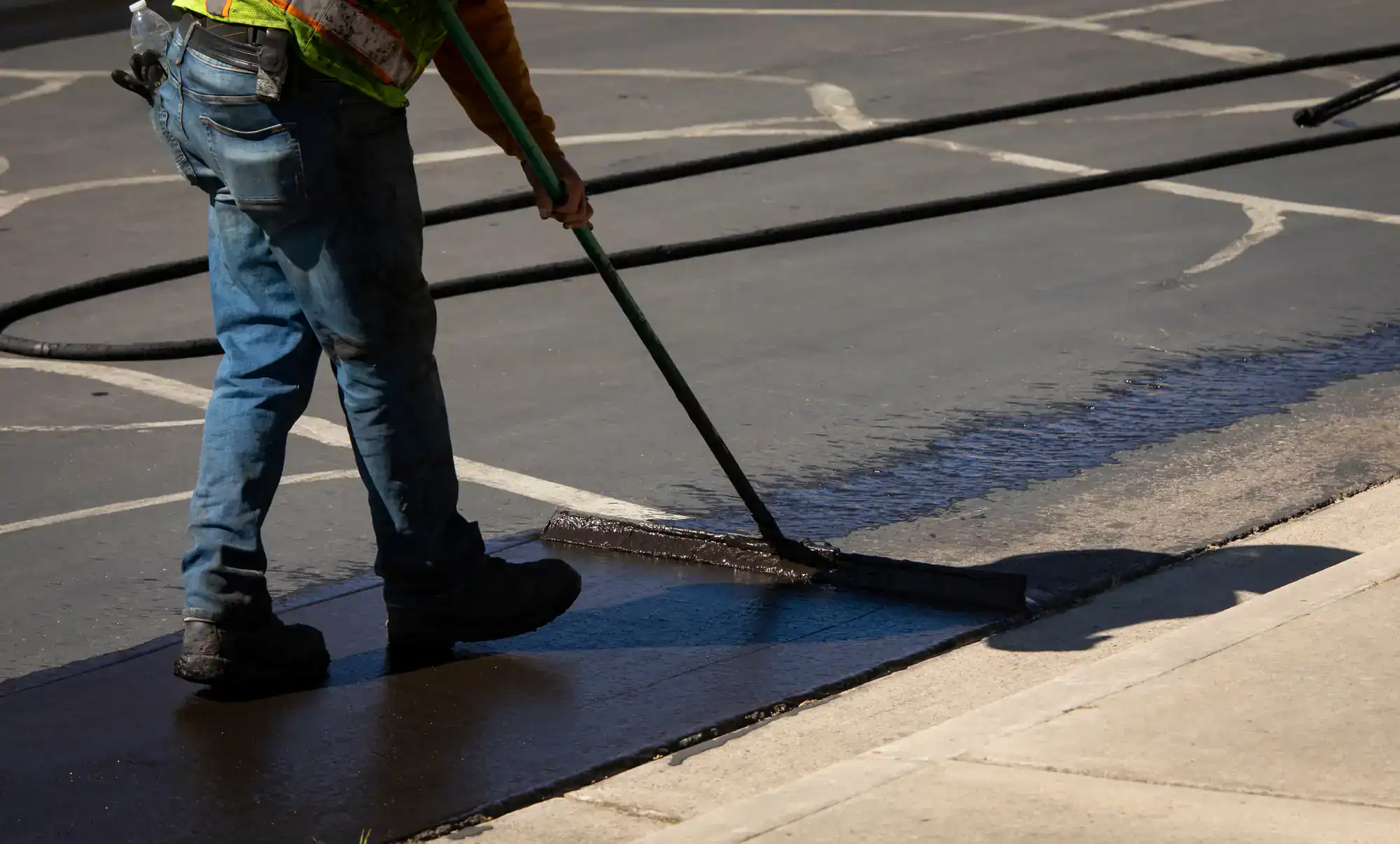
Most Riva homeowners don’t think about their driveway until there’s a crack wide enough to catch a heel or a surface so oxidized it looks like it belongs to an abandoned property. By that point, sealcoating alone isn’t enough you’re looking at crack repair, patching, or full resurfacing. The window to protect your asphalt cheaply is before that happens, not after.
Anne Arundel County averages 10 to 20 complete freeze-thaw cycles every winter. That’s not 10 cold days that’s 10 to 20 times the temperature crosses the freezing line in both directions, forcing water in and out of every micro-crack in your asphalt. Each cycle widens those cracks from the inside. Add the road salt runoff migrating off Riva Road onto your driveway, and you’ve got chemical and mechanical damage compounding every single season.
For the waterfront communities Sylvan Shores, Beverley Beach, Annapolis Landing there’s a third factor: coastal humidity and salt air off the South River accelerate UV oxidation of asphalt binders faster than inland driveways experience. Your driveway grays out, gets brittle, and starts cracking sooner than it should. A properly applied sealcoat is the barrier that slows all three of those processes down and in a neighborhood where homes sell in the $450,000 to $800,000 range, protecting that curb appeal matters more than most people account for.
We operate out of Annapolis about five to seven miles from Riva via Riva Road. That’s not a technicality. It means when something comes up, you’re not waiting on a crew from Baltimore or dealing with a call center. You’re working with a company that knows this stretch of Anne Arundel County, knows what Maryland winters do to driveways on the South River side, and has been doing this work since 2011.
Our principal has over 40 years of personal experience in the asphalt industry that’s not the age of the LLC, that’s a career’s worth of knowing what to look for when assessing a driveway and what actually needs to be done versus what can wait. We hold MHIC License #159766, which is the Maryland state credential legally required for any home improvement contractor working on your property. It’s verifiable, it’s current, and it’s the clearest line between a legitimate driveway sealcoating contractor and the cash-only operators who knock on doors in neighborhoods like South River Heights and Beverley Beach every spring. We also carry a BBB Accreditation with an A+ rating not because it looks good, but because it reflects how we actually operate.
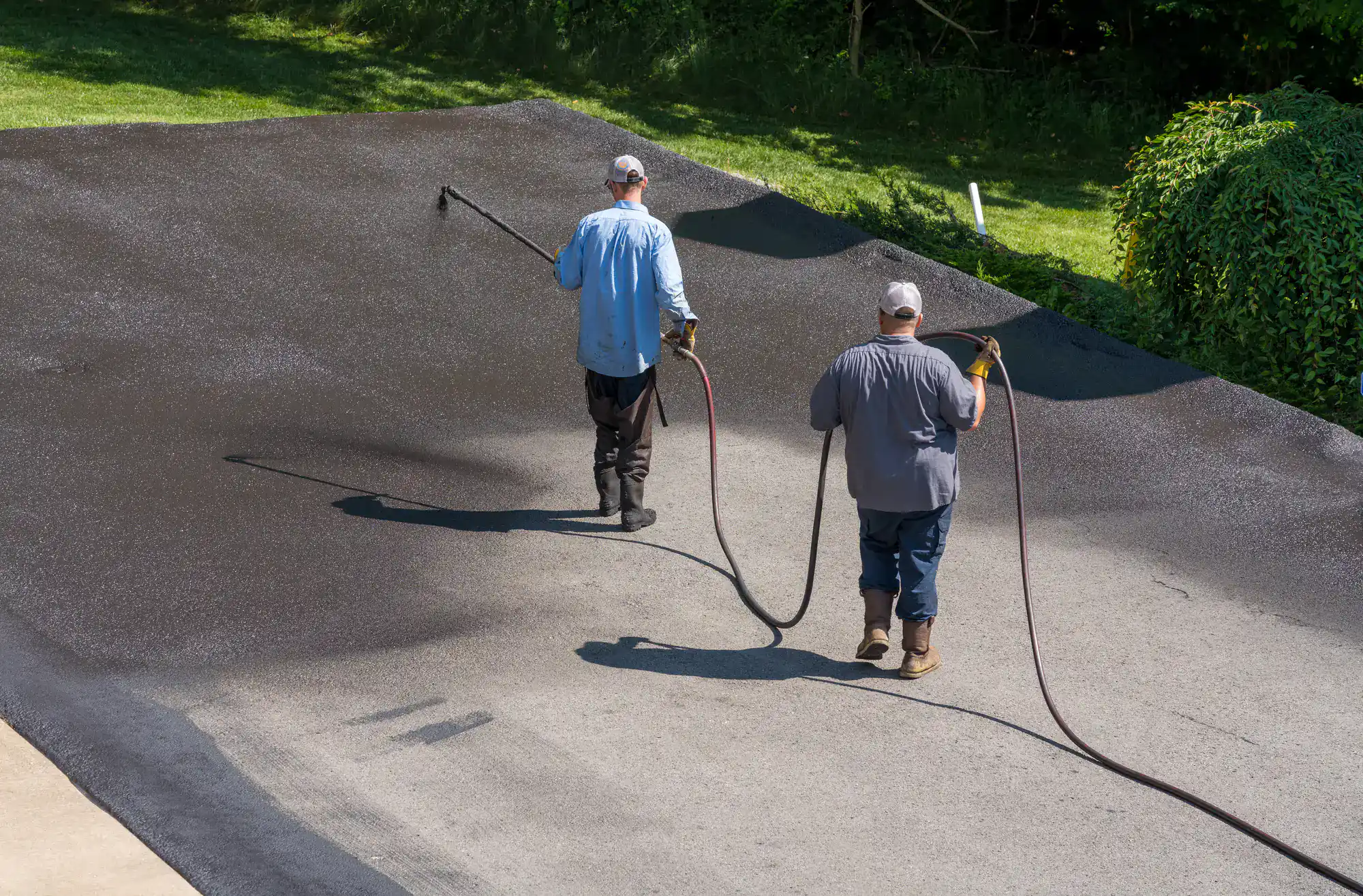
The first thing that happens is an honest assessment. Not every driveway in Riva needs the same approach. A newer home in Riva Trace with a two-year-old driveway has different needs than a 1950s-era home in South River Heights with a surface that’s been repaved once and is showing its age. We look at what’s actually in front of us and recommend the right service whether that’s sealcoating, crack repair first and then sealcoating, or something more involved like resurfacing.
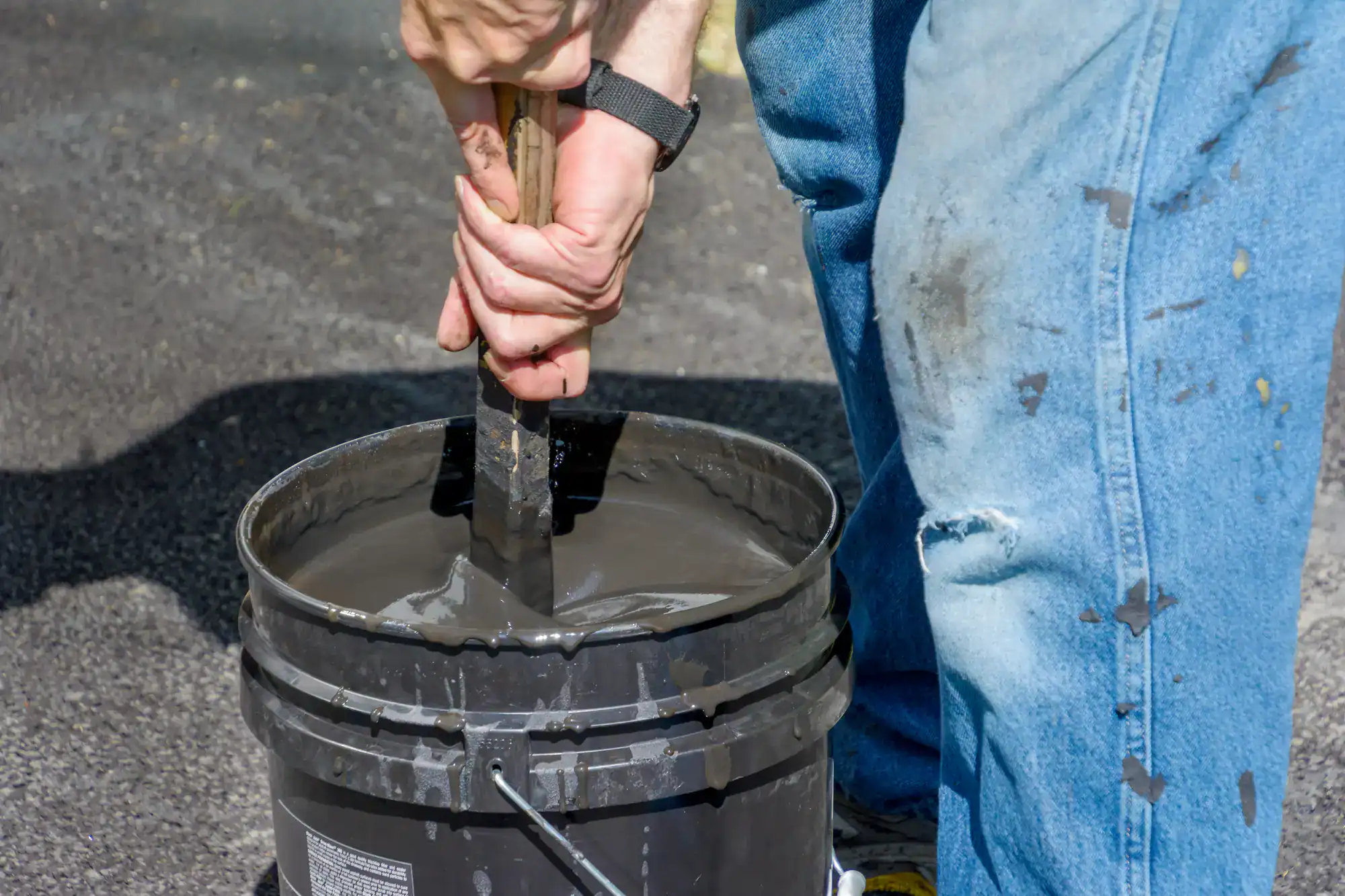
If sealcoating is the right call, surface preparation comes before anything else. That means clearing debris, cleaning the surface, and filling any existing cracks before a single drop of sealant goes down. This is where most low-cost jobs fail they skip prep to save time, and the sealant either peels or fails to bond within a season. Proper prep is not optional. It’s the difference between a sealcoat that lasts three to five years and one that looks bad by spring.
Once the surface is ready, the sealant is applied at the correct thickness not too thin to be effective, not so thick it traps solvents and causes long-term issues. In Maryland’s climate, timing matters too: sealcoating requires temperatures consistently above 50°F and a dry forecast window of at least 24 hours. The optimal window in Riva runs roughly May through September. After application, your driveway needs about 24 to 48 hours before light vehicle use, with full cure typically within two to four weeks. You’ll know exactly what to expect before our crew leaves.
Ready to get started?
Our asphalt driveway sealcoating in Riva, MD covers the full scope of what your driveway needs to be properly protected not just the cosmetic layer on top. We handle residential driveways across Riva’s neighborhoods, from the established homes in South River Heights and Sylvan Shores to newer construction in Riva Trace, as well as commercial parking lot coating for properties along the Riva Road corridor and near the Annapolis Technology Park.
Every sealcoating job includes surface cleaning, crack filling where needed, and application of a commercial-grade asphalt sealant that’s formulated to hold up against Maryland’s freeze-thaw cycles, road salt exposure, and the coastal humidity that accelerates oxidation in waterfront communities. This isn’t a watered-down mix or a roofing-oil substitute it’s actual sealcoat, applied correctly, by a crew that’s done this work for over a decade in Anne Arundel County.
Beyond sealcoating, we also offer new asphalt paving, patching, crack repair, full driveway resurfacing, and parking lot line striping. If your driveway is beyond the point where sealcoating alone solves the problem, you’ll hear that directly along with a clear explanation of what the right path forward actually looks like. No upsell, no runaround. Just a straight answer about what your driveway needs and what it’s going to cost.
For most driveways in Riva, every two to three years is the right interval but the honest answer is that it depends on what your driveway is actually showing. If the surface is still holding color and shedding water cleanly, you may be able to stretch to three years. If it’s starting to gray out or you’re seeing hairline cracking, two years is the smarter call.
Anne Arundel County’s freeze-thaw cycle is a real accelerant. With 10 to 20 complete freeze-thaw cycles in a typical Maryland winter, driveways here take more mechanical stress per season than homeowners in milder climates deal with. If your property is in one of Riva’s waterfront communities Sylvan Shores, Annapolis Landing, or along the South River add coastal humidity and salt air to that equation, and the case for staying on a consistent two-year schedule gets stronger. Letting it go four or five years between applications in this climate is how minor surface wear turns into a crack repair job.
Late spring through early fall is the window specifically when temperatures are consistently above 50°F and there’s no rain in the forecast for at least 24 hours. In the Annapolis and Riva area, that window runs roughly May through September, with May and June being peak season as homeowners assess winter damage and want to get ahead of the next freeze-thaw cycle.
Avoid scheduling sealcoating in early spring if temperatures are still swinging below freezing at night. The sealant needs consistent warmth to cure properly. If it’s applied when overnight temps are still dropping into the 30s, it won’t bond the way it should and you’ll see premature failure. Summer heat is actually favorable for curing just not if rain is imminent. A reputable contractor will check the forecast before scheduling your job and won’t push to get it done in marginal conditions just to clear their calendar.
The surface color tells you a lot. Fresh or recently sealed asphalt is dark black. Asphalt that needs attention starts turning gray that’s oxidation, and it means the binders are drying out and the surface is becoming brittle. At that stage, sealcoating is still the right answer. If you’re seeing cracks wider than a quarter-inch, alligator-pattern cracking across a section of the surface, or areas where the asphalt is crumbling at the edges, you’re past sealcoating alone and into crack repair or resurfacing territory.
For homeowners in South River Heights and older sections of Riva where driveways date back decades, this distinction matters. Sealcoating over a structurally compromised surface doesn’t fix the underlying problem it just covers it temporarily. A proper assessment will tell you whether you’re dealing with surface-level wear that sealcoating handles well, or deeper deterioration that needs to be addressed first. We’ll give you a straight read on which situation you’re in before recommending anything.
Maryland’s Home Improvement Commission the state’s own licensing body specifically identifies driveway sealcoating as one of the most common home improvement fraud categories in the state. The pattern is consistent: an operator shows up at the door claiming to have leftover material from a job nearby, offers a cash-only deal, and either disappears with a deposit or applies roofing oil or black paint instead of actual sealcoat. Affluent, visible neighborhoods like Beverley Beach and Sylvan Shores are targeted because the homes signal that residents have money to spend.
The simplest protection is to verify the contractor’s MHIC license before agreeing to anything. Maryland law requires any contractor performing home improvement work including driveway sealcoating to hold an active MHIC license. You can verify any license number at the Maryland MHIC website. Our license number is MHIC #159766. If a contractor can’t give you a verifiable license number and a written estimate, that’s the answer you need.
A properly applied sealcoat on a well-prepared surface typically lasts three to five years in Maryland conditions. The operative word is “properly” surface prep, correct product, correct application thickness, and adequate curing time all affect how long the sealant holds. A job that cuts corners on prep or applies sealant too thick can fail within a single season, regardless of what the contractor told you beforehand.
Maryland’s freeze-thaw cycle is harder on sealcoating than many homeowners realize. Each cycle stresses the surface, and if the sealant wasn’t bonded correctly to begin with, it starts to peel or crack at the edges within a year or two. In Riva specifically, the coastal exposure from the South River adds UV oxidation pressure on top of the mechanical freeze-thaw stress. That combination is why application quality matters more here than it might in a drier, inland climate and why choosing a contractor with real experience in Anne Arundel County conditions is worth more than saving fifty dollars on a quote.
No and sealing too early is one of the more common mistakes with new driveways. Fresh asphalt needs time to fully cure and off-gas the oils and solvents in the mix. If you seal it too soon, you trap those compounds beneath the surface, which can cause the asphalt to stay soft, deform under vehicle weight, and develop surface issues that are difficult to correct later.
The general guideline is to wait a minimum of six months after installation before sealcoating and in Maryland, if your driveway was installed in the fall, it’s better to let it go through one full winter and seal it the following spring. This is especially relevant for newer construction in communities like Riva Trace, where new homes and new driveways are being added as Riva grows outward from Annapolis. We’ll tell you honestly where your driveway is in that timeline. If it’s not ready, we’ll say so because sealing it prematurely doesn’t help anyone, and the goal is a sealcoat that actually performs.
Other Services we provide in Riva