Maryland's coal tar ban changed everything about driveway sealcoating. Here is what homeowners in Anne Arundel, Calvert, and St. Mary's County need to know before hiring anyone.
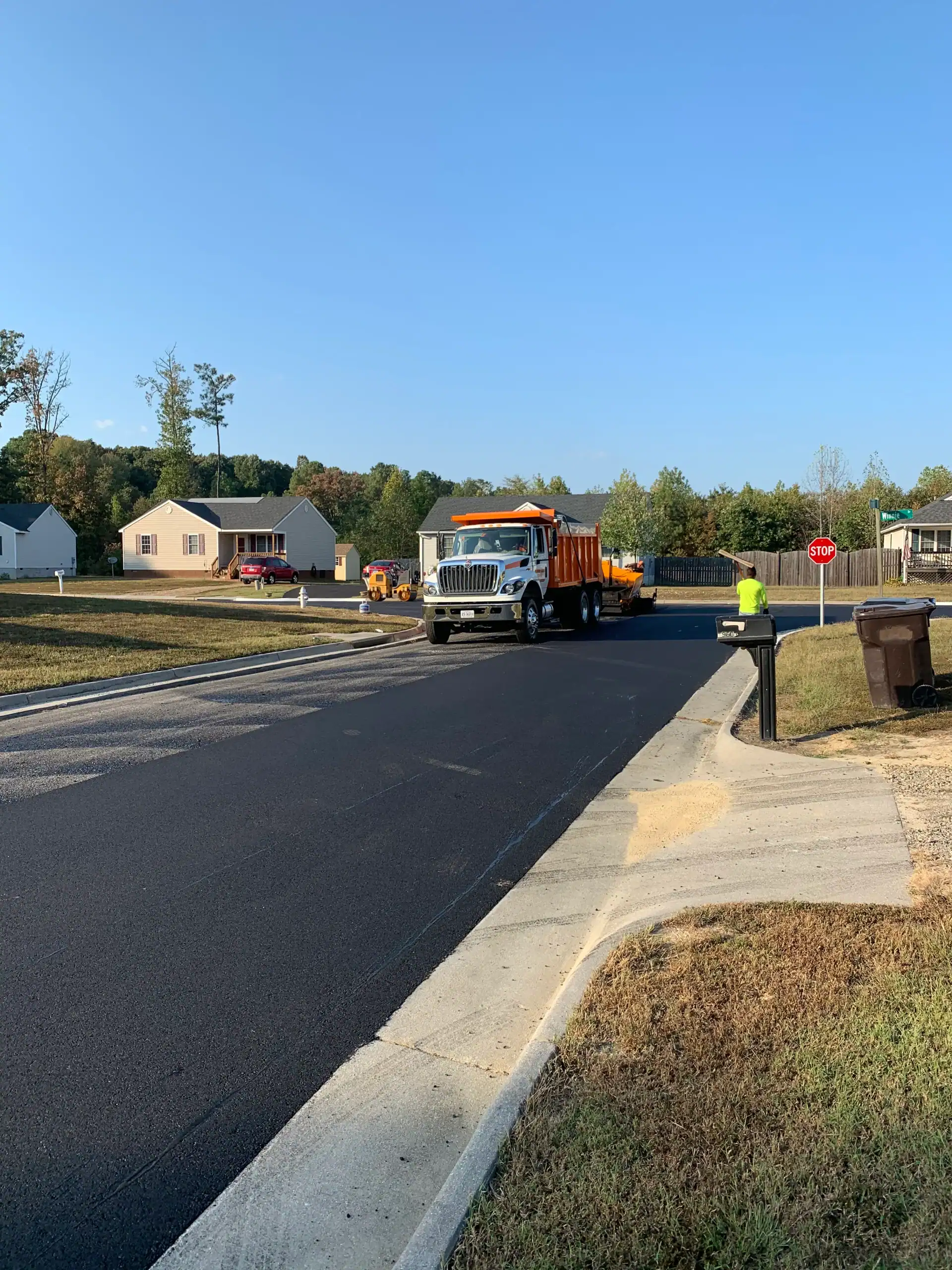
If you have been thinking about getting your driveway sealed, or you recently had someone knock on your door offering a fast discount, there is an important update you should know about first. Maryland changed the rules in October 2023, and plenty of homeowners missed the news.
The state completely outlawed coal tar sealcoating products. That means any contractor applying them today is breaking the law. Given how many door-to-door paving outfits roll through Anne Arundel, Calvert, and St. Mary’s County each spring and summer, there is a very real chance someone has already tried to sell you an illegal application.
Here is the rundown on the new regulations, why they matter for your asphalt, and what quality, compliant sealcoating looks like today.
Maryland’s ban on coal tar sealcoating went into effect in October 2023 across every county, contractor, and driveway in the state. Coal tar sealers carry high concentrations of polycyclic aromatic hydrocarbons (PAHs), which are recognized carcinogens and persistent environmental toxins. Every time a heavy rain hits, those particles wash off the pavement, run down storm drains, and flow into neighborhood streams.
For homeowners in Anne Arundel, Calvert, and St. Mary’s County, this is close to home. All three counties drain directly into the Chesapeake Bay watershed. Runoff leaving your driveway in Deale, Chesapeake Beach, or Ridge travels straight into local waterways. Water washing off properties in Glen Burnie or Annapolis follows the exact same path.
This ban is not a gentle suggestion. Contractors who ignore it face stiff legal penalties, while property owners who hire them lose the standard consumer protections that come with using a licensed, code-compliant business.
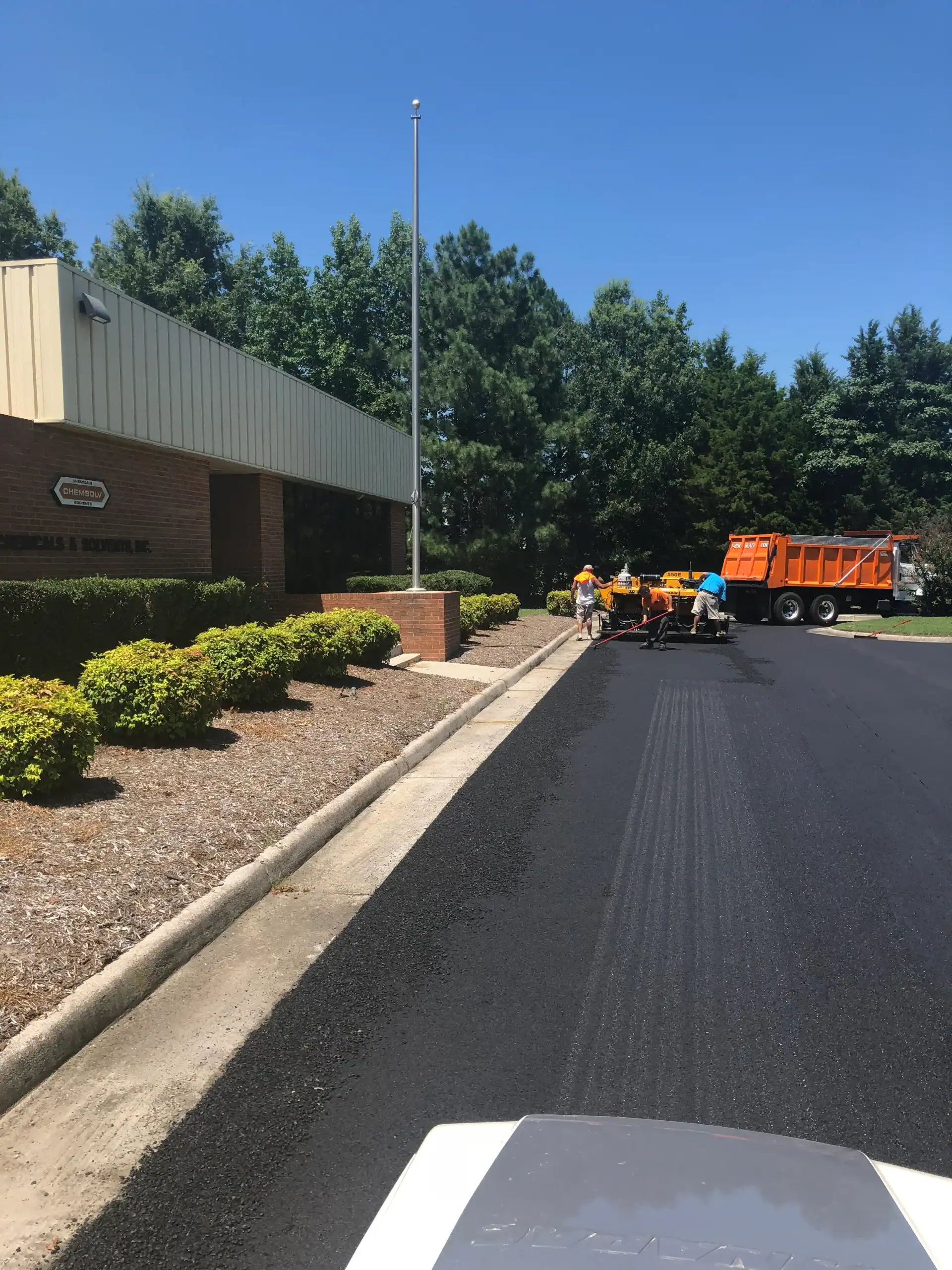
Homeowners ask us this all the time, and it makes sense. For decades, coal tar was the standard choice across the Eastern United States because it was cheap, easy to source, and held up reasonably well. It is easy to assume that greener alternatives might be delicate, but modern formulations have proven that idea wrong.
Asphalt emulsion sealers, which rely on a water base free from hazardous chemicals, have taken over as the primary industry standard. Crews out west have used asphalt-based sealers successfully since the 1970s, reporting equal or superior longevity. While the East Coast took longer to adopt them, modern formulations have closed any remaining performance gap.
Polymer-modified sealers go even further by blending in flexible polymers. These additives help the coating expand and contract alongside the asphalt during extreme seasonal swings instead of splitting under pressure. That elasticity is essential in Maryland, where summer heat regularly tops 90 degrees and winter brings repeated freeze-thaw cycles that tear apart brittle surfaces.
You can also choose bio-based sealants derived from renewable agricultural resources like soy. These formulas resist water penetration and UV degradation while remaining completely non-toxic for families, pets, and nearby garden beds. These are proven, mainstream products backed by years of development in response to evolving environmental standards.
The bottom line is simple: you no longer have to sacrifice durability to protect the environment. Modern sealers provide tough, long-lasting protection for your driveway without washing toxic residue into the watershed.
One warning sign to watch out for: be wary if a contractor pitches an “oil-based” sealer as a high-end luxury option. They are often selling Gilsonite, a natural asphalt byproduct that dries to a glossy shine but offers minimal structural protection. It is typically thinned out with harsh solvents that quickly evaporate, leaving the underlying pavement dry and brittle. It is an inferior shortcut, not a genuine replacement for quality sealant.
The mid-Atlantic weather pattern is notoriously tough on paved surfaces, and Anne Arundel, Calvert, and St. Mary’s County sit right in the line of fire. Anne Arundel falls into NOAA’s Upper Southern climate division, while Calvert and St. Mary’s belong to the Lower Southern zone. Both areas see consistent winter freeze-thaw shifts alongside humid, scorching summers that speed up oxidation faster than dry climates ever would.
Living along the water adds another layer of wear. Residents in Shady Side, Deale, Riviera Beach, and Lake Shore in Anne Arundel County face steady humidity and coastal dampness that steadily degrade bare asphalt. You see the exact same challenge in Calvert County towns like Chesapeake Beach and North Beach, as well as throughout St. Mary’s County, which is surrounded on three sides by the Patuxent River, the Chesapeake Bay, and the Potomac River. That continuous moisture does not just sit on top; it seeps into hairline cracks and accelerates base damage underneath.
On top of that, Maryland Route 4 cuts across all three counties and receives heavy applications of road salt during winter storms. If you pull out onto that corridor or any regularly treated secondary road, your tires bring those corrosive chemicals straight home, breaking down the asphalt binder ahead of schedule.
Calvert County presents an additional hurdle: the median home there was built around 1990. As a result, thousands of neighborhood driveways have crossed the 30-year mark, reaching an age where a basic surface coat might not solve the underlying issues. Getting an honest evaluation on if your driveway is a candidate for sealing, or if it requires patching or repaving instead, is far more valuable than paying someone to spray over damaged pavement.
Want live answers?
Connect with a Edward Smith Paving expert for fast, friendly support.
The sealer itself is only half the equation. The real difference between a job that endures for years and one that flakes off by the following spring comes down to preparation, which is the first step discount, unlicensed operators skip.
A dependable job begins with a deep surface cleaning using high-powered wire brooms and blowers, followed by crack sealing on all damaged areas. Sealcoating smooths out micro-pores and light surface wear, but it cannot cure deep structural flaws. Skipping crack prep means trapping moisture inside the pavement, speeding up interior decay instead of shielding it.
Once the prep work is complete, crews apply the sealant uniformly and let it cure under the right conditions. The material needs moderate temperatures and dry ground to bond securely with the aggregate. Handled properly, this treatment can extend the functional lifespan of your driveway by 25 to 30 percent, saving you thousands on premature replacement costs.
For most Maryland properties, every three to five years is the ideal window. The best schedule for your home depends on its age, local tree cover, and exposure to the elements. Waterfront driveways and lots that bake in direct sunlight usually require service closer to the three-year mark, while shaded properties with solid drainage can easily stretch toward five.
More is not always better. Some pushy companies recommend yearly applications, but excessive layers create heavy buildup that eventually cracks, flakes, and peels away like dried paint. If a contractor tells you to seal every single year, find another opinion.
Fresh installations also require patience. If you recently put in a brand-new asphalt driveway, it is tempting to seal it right away, but you need to wait. New asphalt requires six to twelve months to release internal oils and fully cure. Coating it too soon traps volatile compounds inside, weakening the pavement and ruining the bond. Any contractor willing to spray fresh asphalt within a few weeks of installation is looking for a quick check, not your long-term benefit.
The sweet spot on the calendar runs from mid-spring through early fall, when mild temperatures and stable, dry weather allow for optimal curing. Freezing mornings, high midday heat, or sudden rain showers will ruin the application. A contractor trying to seal your driveway in mid-January or during an overcast, wet week is setting you up for failure.
If your property sits along heavy-traffic commuter paths like Route 2 in Anne Arundel or Route 235 in St. Mary’s, sticking to a dependable three-to-four-year routine pays off. Winter de-icing salts speed up aggregate erosion, and a solid protective barrier is your best defense.
Unsolicited doorstep pitches are a springtime staple in Anne Arundel, Calvert, and St. Mary’s County. A few of those operators are legitimate local businesses drumming up work, but many are fly-by-night crews looking to make a quick exit. The issue is frequent enough in Anne Arundel County that local consumer protection agencies regularly issue warnings, and hiring the wrong crew can leave you with costly damage.
Maryland law requires any professional performing residential improvements, including driveway maintenance, to carry an active MHIC license. Issued by the Maryland Home Improvement Commission, this license requires applicants to pass state testing, verify two years of field experience, confirm financial stability, and maintain at least $500,000 in general liability insurance. It is a genuine safeguard for property owners.
Most importantly, the MHIC runs a dedicated Guaranty Fund capable of reimbursing homeowners up to $30,000 for financial harm caused by a licensed contractor. If you take a chance on an unlicensed handyman and they vanish with your deposit or ruin your property, you have zero claim to that safety net.
Checking a company’s standing takes about two minutes. You can verify any license number online at labor.maryland.gov. If a contractor hesitates to share their credentials, or if their profile shows lapsed coverage, take that as your cue to look elsewhere.
Our team operates under MHIC license #159766, active through August 2026. We share our license details openly so customers can confirm our standing before we set foot on their property, which is especially important in an industry full of itinerant outfits.
We bring over four decades of local experience and more than 5,000 completed driveway projects across Anne Arundel, Calvert, and St. Mary’s County. When we come evaluate your driveway, we will tell you plainly if sealcoating is the right option, or if you would be better off with structural repairs or an overlay first.
Between the state ban on coal tar, the emergence of dependable polymer and emulsion products, and the ongoing presence of rogue contractors, the takeaway is simple: keeping your driveway protected is straightforward, but the materials you use and the crew you trust make all the difference.
If your asphalt shows signs of gray oxidation, fine cracks, or surface dullness, or if your last sealcoat was four or five years ago, it is time for a professional review. Some driveways are ready for a protective coat today. Others require crack filling beforehand, while some need deeper structural work. The right solution comes down to the condition of the pavement in your driveway right now.
Edward Smith Paving helps property owners throughout Anne Arundel, Calvert, and St. Mary’s County make sound choices for their homes. If you want a clear, honest assessment of what your driveway needs, contact our team today to schedule an evaluation.
Summary:
Article details:
Share: