Your driveway can last 20-plus years or fail in under 10. Here is what makes the true difference in Southern Maryland.
If your driveway is starting to show its age (a dull gray surface, a few cracks branching out, maybe a soft spot near the edge), you are probably trying to figure out if it is time to repair, reseal, or replace the whole thing. That is a fair question, and the right answer depends on far more than curb appeal.
What many homeowners overlook is that the choices made on paving day, alongside regular upkeep in the years that follow, decide almost everything about the lifespan of an asphalt driveway. Here is what you need to know to make a smart call, regardless of if you are installing a fresh surface or trying to get extra life out of the one you have.
Maryland’s climate is harder on paved surfaces than most folks realize. We aren’t in the deep south and we aren’t up in New England; we are stuck in the middle. That means your driveway endures blazing, humid summers followed by winters cold enough to freeze standing water and force it into every little crack it finds.
That freeze-thaw cycle is the number one reason driveways in Anne Arundel, Calvert, and St. Mary’s Counties break down over time. Water slips into an open hairline crack, temperatures drop below freezing, the water expands into ice, and the pavement splits a little wider. When that repeats 30 or 40 times over a single season, minor cracks turn into serious structural problems by spring.
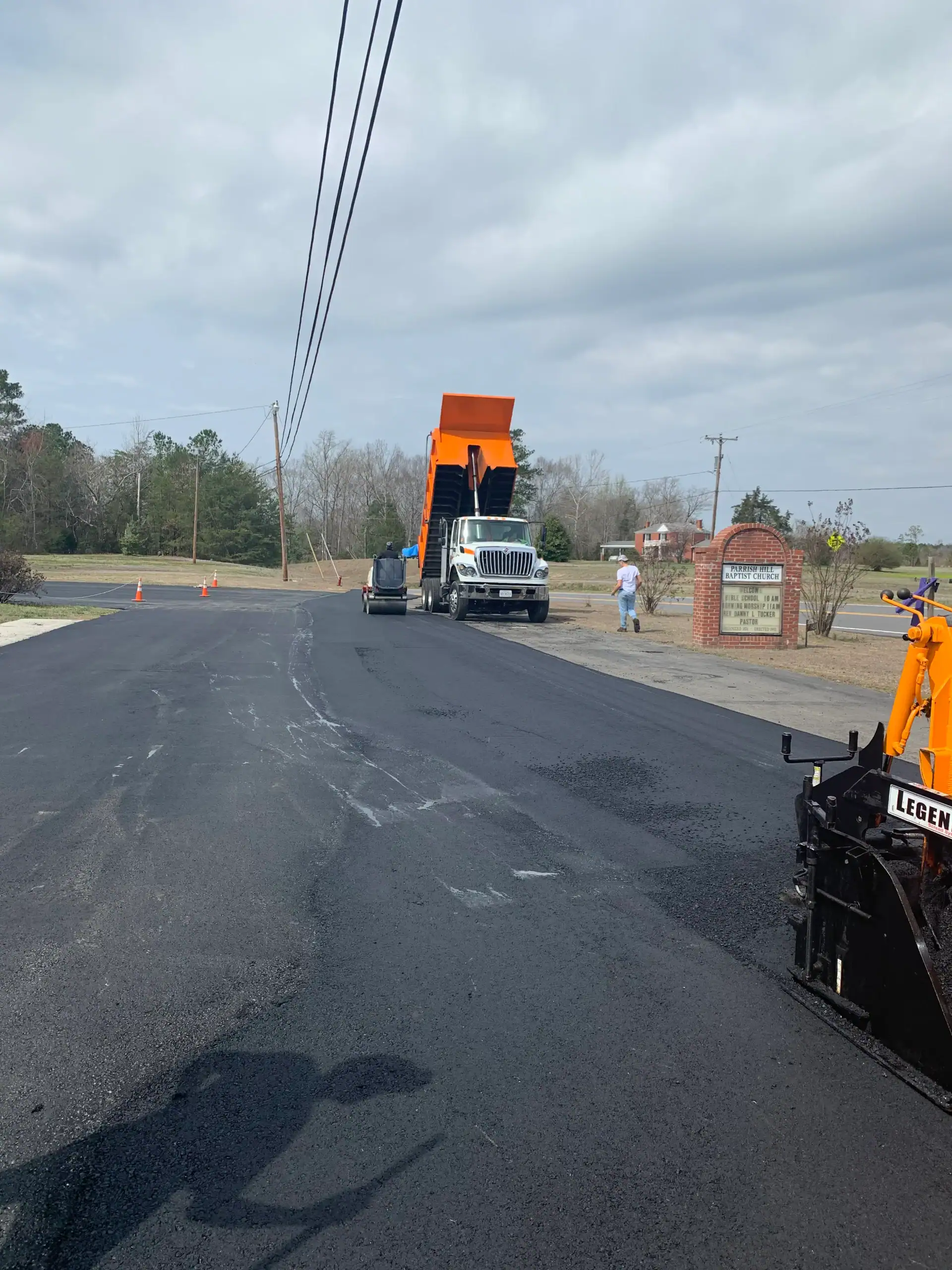
If you live near the water, as so many of us do around here, your driveway handles more than basic winter weather. Salt air drifting from the Chesapeake Bay, the Patuxent River, the Potomac, and the Magothy River speeds up the breakdown of asphalt binder. That binder is the essential glue holding the stone aggregate together to give your driveway its strength and flex. As the binder oxidizes and dries out, the asphalt turns brittle, loses its rich black color, and begins to crumble at the surface.
Waterfront communities in Anne Arundel County (like Pasadena, Riviera Beach, and Lake Shore) deal with this year-round. You see the exact same thing in Calvert County neighborhoods like Solomons and Lusby, as well as around Lexington Park and California down in St. Mary’s County. Salt air does not cause overnight devastation; it is a slow, quiet creep that causes an unsealed driveway to wear down years ahead of a protected one.
Winter de-icing chemicals only speed up the damage. Maryland road crews treat highways heavily through the winter, and that chemical slush rides home on your tires. Those treatments eat away at the very same binder targeted by coastal salt air. Between freeze-thaw cycles, coastal moisture, and chemical tracking, local driveways left unsealed often show deep damage within 8 to 10 years, even if the initial paving was top-tier.
There is another local factor worth noting: heavy recreation gear. Boat trailers are far heavier than everyday cars and frequently sit parked in one spot for weeks or months at a stretch. On aging asphalt, particularly during humid summer days when the surface softens under direct sun, that focused weight leaves depressions and wheel ruts that require serious work to fix.
None of this is meant to scare you. It is simply the reality of living in Southern Maryland, which is why generic paving advice does not cut it for the conditions our driveways face.
Here is where the numbers tell the story. A well-built asphalt driveway (meaning a sturdy base, the right surface thickness, and proper drainage) that gets sealcoated on schedule can easily last 22 to 28 years, sometimes even passing the three-decade mark. That exact same driveway, installed properly but neglected without sealcoating, will struggle to hit 13 to 16 years. Worse yet, a cheap job with a thin surface, weak base, and poor drainage will give out in 9 to 13 years, no matter how much TLC you give it later.
That last reality cannot be overstated. Consistent maintenance preserves good craftsmanship; it cannot rescue shoddy installation. If a paving crew cuts corners on the crushed stone foundation or skimps on asphalt depth, no amount of sealcoat can save it. That makes your initial contractor choice the single biggest decision you will make for your property.
So, what does a professional installation require? First, the native soil must be evaluated and mechanically compacted. Next, a solid 6-inch aggregate base goes down before any asphalt touches the ground. The paving material itself (hot-mix asphalt, laid down hot on a completely dry surface) should be compacted to a full 3-inch thickness for residential use. Proper slope and runoff pathways must be graded into the job from minute one, finished off with heavy roller compaction for even density. Miss any of those steps, and you won’t get a 25-year surface; you’ll get a 10-year headache.
Once the surface is down, regular sealcoating is the most cost-effective maintenance tool at your disposal. Costing roughly $0.15 to $0.25 per square foot, a quality sealcoat blocks UV oxidation, keeps out standing water, and repels automotive fluids. A driveway sealed every 3 to 5 years consistently outlasts an untreated one by a wide margin in both durability and appearance. If you wait until the pavement turns pale gray and rough, the binder is already breaking down. Sealcoating is designed to prevent that damage, not reverse it.
Want live answers?
Connect with a Edward Smith Paving expert for fast, friendly support.
Home paving sees far too many dishonest operators. The BBB Scam Tracker regularly highlights asphalt scams across Maryland, where homeowners have lost upward of $8,000 to fly-by-night crews. The script rarely changes: a roving crew knocks on your door claiming they have “leftover asphalt” from a job down the road, quotes a tempting price, and demands an immediate yes. By the time you notice the surface crumbling or can’t get them on the phone, your money is gone.
Fortunately, Maryland gives homeowners an easy, verifiable way to protect themselves: the MHIC license.
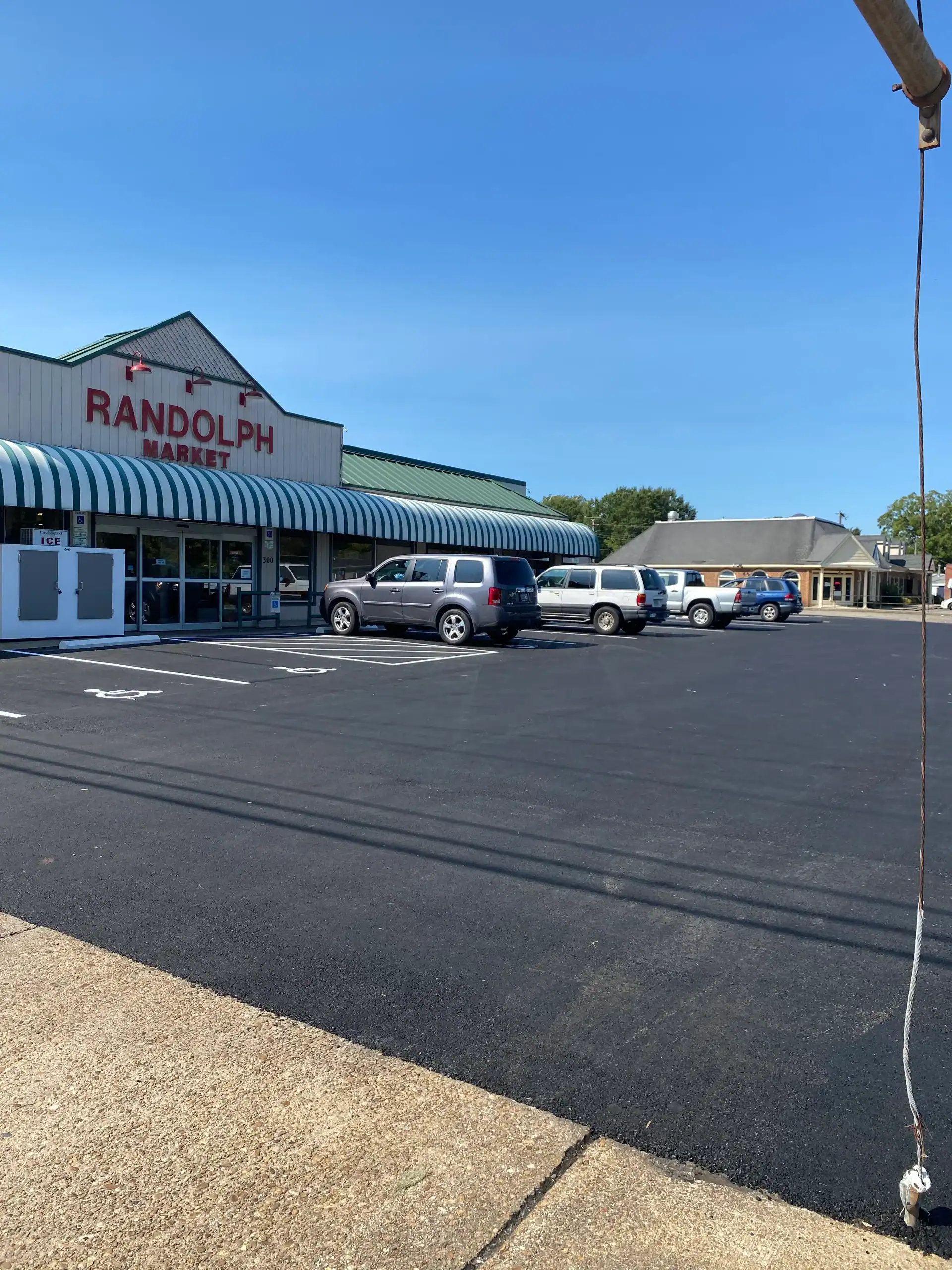
Maryland law mandates that any contractor handling home improvements, including paving driveways, must hold an active license from the Maryland Home Improvement Commission. This is not just red tape. To earn an MHIC license, a contractor must verify at least two years of hands-on experience, pass a rigorous state test, prove financial stability, and carry active general liability coverage. In June 2024, the state raised that liability insurance minimum from $50,000 to $500,000, reflecting the real costs involved if a job goes sideways.
Hiring an unlicensed contractor means giving up your safety net. Licensed contractors pay into the Maryland Home Improvement Guaranty Fund, which is designed to reimburse homeowners when a licensed pro fails to deliver or does substandard work. Choose an unlicensed crew, and that protection vanishes completely.
You can verify any contractor’s credentials in about two minutes on the Maryland Department of Labor website to ensure their status is active and in good standing. For reference, our MHIC license is #159766, active through August 2026. Feel free to look us up anytime.
These schemes are common in Southern Maryland. The open neighborhoods and rural stretches of Calvert and St. Mary’s Counties are prime targets for transient outfits looking for property owners who don’t already have a local contractor on speed dial. If a company hedges on their license number, refuses to provide a written quote, or rushes you to sign today, take it as a clear warning sign.
Gathering several quotes is always wise, but you have to know what you are looking at to make an honest comparison. A $3,500 estimate and a $7,000 estimate for the exact same driveway often describe two completely different jobs: varying base depths, skimpy asphalt layers, ignored drainage, and different roller weights. The budget bid isn’t automatically a bargain; more often, it is simply half the work.
Before you hire any paving crew in Anne Arundel, Calvert, or St. Mary’s County, insist on an itemized written estimate. It should explicitly state the compacted asphalt thickness (3 inches of compacted hot mix is standard for homes), the stone base depth (6 inches for stable ground), and the specific plan for water runoff. A reputable contractor will outline these specifications in writing without hesitation, whereas a corner-cutting outfit will only quote a vague lump-sum price.
Ask about their track record in our region. Request local references from towns you drive through every day, like Crofton, Severna Park, Odenton, Prince Frederick, or Lexington Park. Find out what their warranty covers and how long it stands. It is also wise to ask if they provide recurring sealcoating so you can build a long-term relationship with one accountable team instead of hiring a new stranger every few seasons.
With over 40 years of local paving work and more than 5,000 driveways completed throughout Anne Arundel County and Southern Maryland, we understand the difference between a quick cosmetic job and lasting quality. We are fully licensed under MHIC #159766, maintain an A+ rating with the Better Business Bureau, and understand the coastal soils, swampy runoff issues, and seasonal wear that impact driveways from Route 2 down to the communities around NAS Patuxent River. That kind of local background cannot be matched by an out-of-town crew passing through for the summer.
We provide free estimates with no sales pressure. Every project we quote comes with a clear, written breakdown of all materials and installation methods.
A well-constructed asphalt driveway that receives regular care should comfortably serve your home for nearly thirty years in this region. Winter freeze-thaw cycles, coastal humidity, and highway chemicals do not have to ruin your investment as long as the foundation is solid and the surface gets sealed as scheduled.
The two key factors are choosing a reputable installation crew and committing to routine sealcoating. Handle those two priorities, and your driveway will take care of itself for decades. Skip them, and you will find yourself paying for an early replacement.
If you have questions about the health of your existing driveway, need help deciding between a repair and an overlay, or want a quote on a new installation, Edward Smith Paving is ready to help. We are happy to stop by, take a look, and give you an honest recommendation based on four decades of paving right here in your neighborhood.
Summary:
Article details:
Share: