Hear from Our Customers
Out here in the northern Shenandoah Valley, driveways take a beating that flat suburban surfaces never see. You’ve got longer runs, sloped terrain, agricultural soils with unpredictable load-bearing, and a climate that delivers around 22 inches of snow and multiple hard freeze-thaw cycles every single winter.
Water gets into a crack in November, freezes, expands, and by March that hairline crack is a pothole. By the second winter, the base underneath is compromised. The driveway you’re looking at didn’t fail because asphalt is a bad material — it failed because something in the process was skipped.
When the job is done right, you stop watching it get worse every spring. A properly installed and maintained asphalt driveway in Virginia’s Shenandoah Valley can last 20 to 25 years. That’s not a marketing figure — that’s what happens when the subgrade is prepared correctly, the aggregate base is compacted to handle the load, and the surface is sealed before another winter hits.
For Clear Springs properties that have been running on gravel or aging chip-seal, a properly built asphalt driveway is a different experience entirely. You stop wondering whether the driveway is bad enough to replace or just needs sealing. You get an honest in-person assessment — not a number guessed from a satellite image — and a clear answer about whether repair, resurfacing, or full replacement makes the most sense for where your driveway actually stands right now.
We’ve been in the asphalt paving business since 1988 — a three-generation family operation that has paved more than 5,000 driveways and commercial surfaces across Maryland and Virginia. That kind of track record isn’t something you build by cutting corners on base preparation or skipping compaction steps. It’s built job by job, with a process that holds up and a reputation that travels by word of mouth.
We hold an A+ rating with the Better Business Bureau and are fully licensed for residential and commercial paving work in Virginia. For homeowners in the Clear Springs area — where Warren County properties range from rural acreage with long gravel approaches to older homes on the Shenandoah Valley’s sloped terrain — that licensing matters. It means we’ve met real standards, not just printed a business card.
When someone from our team comes out to quote your project in Clear Springs, we’re looking at the actual property. The drainage. The slope. The condition of what’s already there. That in-person assessment is how the job gets priced accurately and done correctly — and it’s something multiple customers have specifically called out as the reason they chose to move forward.
It starts with an in-person visit. We come out to Clear Springs, walk the property, look at the existing surface or the gravel base you’re working with, assess drainage and slope, and give you a written quote that reflects what the job actually requires.
For rural properties in Warren County and the surrounding Shenandoah Valley area, that site visit is non-negotiable — driveway lengths, soil conditions, and terrain vary too much to price from a desk.
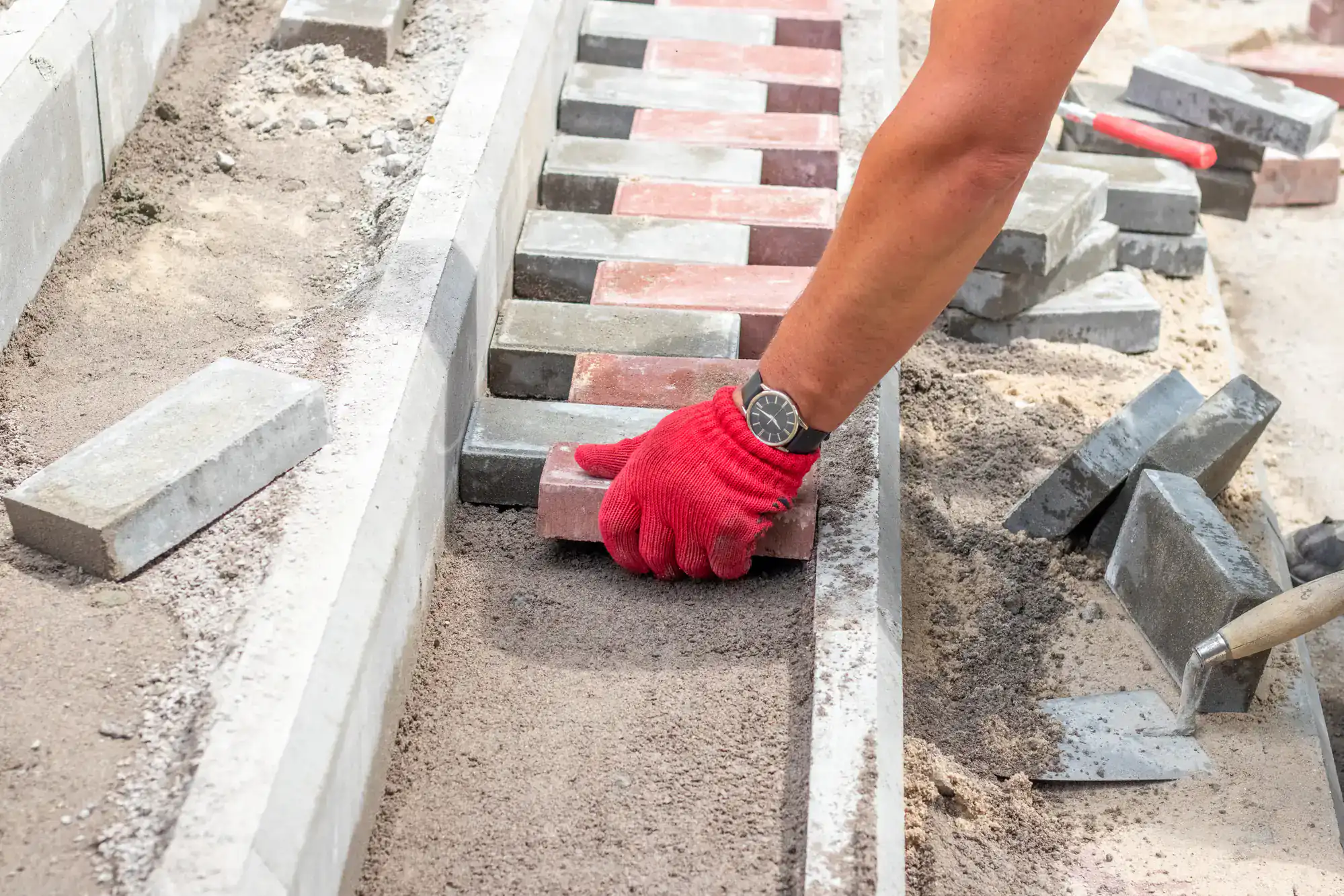
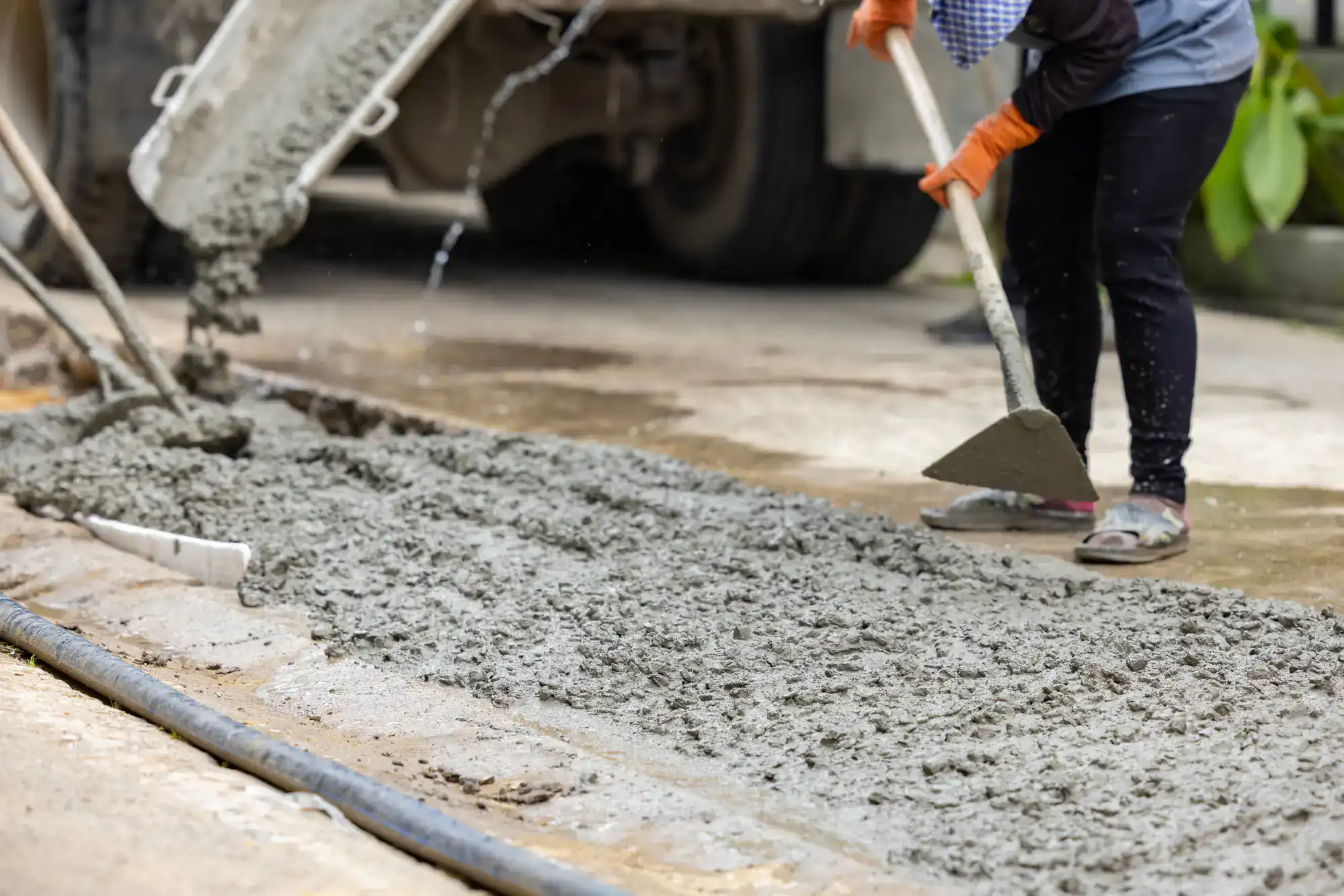
Once you’re ready to move forward, the work begins with site excavation and subgrade preparation. This is the step most homeowners never see and the one that determines whether the driveway lasts five years or twenty-five. The subgrade is graded for proper drainage, a compacted aggregate base is installed to the depth the soil and use conditions require, and then hot-mix asphalt is applied and compacted with professional roller equipment. Every step in that sequence exists for a reason, and none of them get skipped.
If your new or modified driveway connects to a state-maintained secondary road — which applies to many properties in unincorporated communities like Clear Springs — a VDOT Land Use Permit is required. We’re familiar with Virginia’s permitting requirements and can walk you through what applies to your specific project. The goal is that by the time the first piece of equipment arrives on your property, you already know what’s happening, when it starts, and when it’s done.
Ready to get started?
For residential properties in Clear Springs, our work covers the full scope — new driveway installation, asphalt resurfacing for surfaces that have worn but still have a viable base, sealcoating to protect against UV exposure and water infiltration, and crack filling before cracks reach the point where water is getting into the base layer.
If you’re converting from gravel to asphalt for the first time, that project includes real excavation and subgrade work, not just a layer of asphalt over compacted stone. Rural Shenandoah Valley properties with longer driveway runs and agricultural soils need that foundation work done properly — the terrain doesn’t leave much room for shortcuts.
For commercial properties and business owners in the Warren County area, we handle the complete paving lifecycle under one relationship. That means initial parking lot installation, sealcoating on the right schedule, annual crack filling, and ADA-compliant line striping — all coordinated so you’re not sourcing three different contractors every time the lot needs attention. Commercial installations are scheduled and communicated in advance so you know exactly how long your lot will be out of service and when light traffic can return.
Sealcoating is recommended every three to five years for Virginia conditions. For a driveway in Clear Springs that goes through the Shenandoah Valley’s full winter cycle every year, that maintenance interval isn’t optional — it’s what keeps a 25-year surface from becoming a 10-year replacement.
It depends on how your driveway connects to the road network. In unincorporated communities like Clear Springs, there’s no town-level permitting office — you’re dealing with county-level requirements and, in many cases, VDOT directly. If your driveway has a new or modified entrance onto a state-maintained secondary road, Virginia law requires a VDOT Land Use Permit before that work begins. This applies to a significant number of rural properties in Warren County and the surrounding Shenandoah Valley area, where secondary roads are maintained by VDOT rather than a municipality.
For projects involving significant grading or land disturbance — particularly on sloped terrain near waterways like the Shenandoah River and its tributaries — there may also be erosion and sediment control requirements at the county level. Virginia’s threshold for triggering those requirements is disturbance of more than 2,500 square feet, which a full driveway installation can easily exceed. We’re familiar with Virginia’s permitting landscape and can help you understand what applies to your specific project before work begins.
Paving costs vary based on square footage, site preparation complexity, the condition of what’s already there, and whether the project involves grading or drainage work. For a standard residential asphalt driveway, national data from tens of thousands of real customer projects puts the average around $5,336, with a typical range of roughly $3,149 to $7,538. Rural properties in the Clear Springs area often land toward the higher end of that range — not because asphalt itself costs more here, but because longer driveways, sloped terrain, and agricultural subsoils require more site preparation work than a flat suburban driveway.
If you’re converting from gravel to asphalt for the first time, that project involves excavation, subgrade preparation, and aggregate base installation before a single load of asphalt arrives — and that prep work is priced into the job. Skipping it produces a cheaper quote and a driveway that fails in a few winters. The only accurate way to price a rural driveway project is with an in-person assessment of the actual property, which is exactly how we approach every quote.
This is one of the most common questions homeowners ask, and the honest answer is that it depends on what’s happening below the surface — not just what you can see on top. Surface cracks that haven’t allowed significant water infiltration into the base layer are often candidates for crack filling and sealcoating. A surface that’s oxidized and brittle but still structurally sound underneath may be a good candidate for resurfacing, which costs roughly half of a full replacement.
But if water has been getting into the base — which happens fast in the Shenandoah Valley’s freeze-thaw climate — the underlying structure may be compromised in ways that resurfacing won’t fix. For Clear Springs properties that have gone several winters without sealcoating or crack maintenance, the freeze-thaw cycle accelerates that base damage significantly. What looks like surface deterioration may actually reflect a base that’s been heaving and settling repeatedly. The only way to know for certain is a real in-person assessment — not a guess from photos. We’ll give you a straight answer about where your driveway stands and what the most cost-effective path forward looks like, whether that’s repair, resurfacing, or full replacement.
The practical paving window in the Shenandoah Valley runs from approximately April through October. Asphalt needs to be laid and compacted when ambient temperatures are consistently above 50°F — below that threshold, the material cools too quickly during compaction and produces a weaker finished surface. The Shenandoah Valley’s elevation and mountain proximity can mean spring frosts arrive later and fall frosts arrive earlier than in lower-elevation parts of Virginia, which compresses the effective window at both ends compared to coastal areas.
Spring is typically the highest-demand period because homeowners are seeing the full extent of winter damage for the first time. Early fall is the other peak window — temperatures are ideal, and there’s still time to seal or repair before the next freeze cycle begins. A driveway going into a Shenandoah Valley winter with open cracks will sustain significantly more damage than one that was sealed in September. Contractor schedules fill up mid-season, so booking earlier in spring or planning a fall project in August gives you better scheduling flexibility and avoids the peak backlog.
Both are legitimate options for rural properties, and the right choice depends on your priorities, budget, and how the driveway is used. Chip seal — also called tar-and-chip — is a lower-cost surface that works reasonably well for light residential use on rural properties. It’s a common choice in the Shenandoah Valley precisely because it’s affordable and can be applied over a gravel base without the full excavation and subgrade work that hot-mix asphalt requires. The tradeoff is durability and maintenance: chip seal surfaces are rougher, less uniform, and more susceptible to deterioration under heavy or frequent use.
Hot-mix asphalt is the more durable long-term investment. A properly installed asphalt driveway — with full subgrade preparation, compacted aggregate base, and professional roller compaction — can last 20 to 25 years in Virginia’s climate with regular sealcoating. For Clear Springs properties that see truck traffic, heavy deliveries, or simply have a long driveway where surface quality matters, asphalt holds up better over time and is easier to maintain. If you’re on the fence, an in-person assessment of your property and how you use the driveway is the best way to figure out which option makes sense for your specific situation.
Rural communities in the Shenandoah Valley — including the Clear Springs area — are regularly targeted by itinerant paving crews in spring and summer. The pattern is consistent: a crew shows up door-to-door claiming they have leftover asphalt from a nearby job and can give you a deal if you pay cash today. There’s no written contract, no license number to verify, no address to track down if something goes wrong. Homeowners have lost thousands of dollars to these operations, and the BBB has documented individual losses exceeding $8,000 in asphalt scam incidents nationally.
The simplest protection is verification. In Virginia, residential paving contractors are required to hold active state licensing for home improvement work. Ask for the license number and look it up — it’s publicly searchable. Check the BBB profile for an accreditation status and complaint history. Ask for a written contract that spells out the scope of work, materials, timeline, and warranty terms before any money changes hands. A legitimate contractor will hand all of that over without hesitation. We hold active Virginia licensing, carry an A+ BBB rating with accreditation since August 2024, and provide written quotes after an in-person property assessment — the kind of paper trail that protects you if anything ever needs to be revisited.
Other Services we provide in Clear Springs