
Hear from Our Customers
When your parking lot is a few hundred feet from the Chesapeake Bay or the Severn River, salt air doesn’t just affect your boat it goes to work on your asphalt too. It accelerates binder oxidation, which is the process that makes pavement brittle, crack-prone, and visibly worn years ahead of schedule. The difference between pavement that lasts 25 years and pavement that starts falling apart in five usually comes down to whether the contractor understood your environment before they started.
Drainage is the other factor that separates good commercial paving from expensive mistakes on Annapolis Neck. Parts of this peninsula sit in FEMA-designated high-risk flood zones, and anyone who’s watched water pool against their building after a heavy storm knows what that does to a subbase over time. A properly graded lot with the right drainage channels doesn’t just look better it protects the structural foundation of the pavement itself, which is what actually determines how long your investment lasts.
For the HOA communities throughout the Neck Chesapeake Harbour, Hillsmere Shores, Bay Highlands, Arundel on the Bay this matters even more. Shared roads and parking areas serve dozens of households at once. When they fail, it’s not just a maintenance issue; it’s a liability issue. Getting the paving right the first time is the only move that makes financial sense.
We’ve been operating out of Annapolis since 2011 over 14 years of commercial and residential asphalt work across Maryland and Central and Northern Virginia, including the unique challenges that come with working in Annapolis Neck. Our office is at 1125 West St, right in Annapolis, which means reaching Annapolis Neck via MD Route 665 or Forest Drive isn’t a road trip. It’s a local job, handled by a local company that knows this market.
Our MHIC License #159766 isn’t just a number on a page. Maryland’s Home Improvement Commission requires a state exam and documented real-world experience before that license is issued. For HOA boards, marina property managers, and commercial operators who need to vet their contractors before awarding a contract, it’s verifiable through the Maryland Department of Labor and it’s the first thing that separates a professional operation from a seasonal crew.
Our BBB A+ rating and dual Maryland/Virginia licensure round out the picture. This is a structured, accountable business not a one-truck outfit that disappears after the check clears.
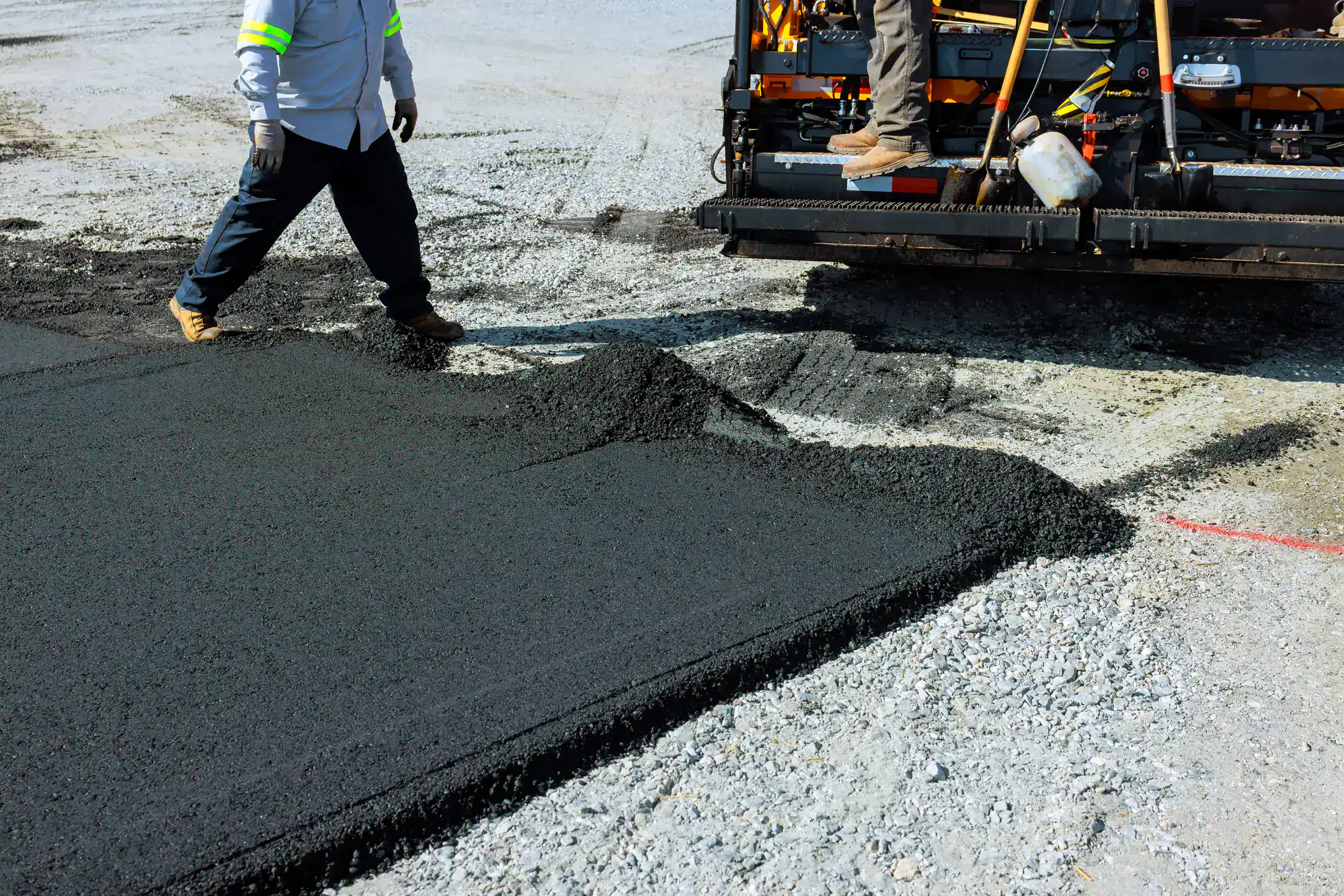
Every commercial paving project in Annapolis Neck starts with a site assessment not a quick glance, but a real evaluation of your current surface, subbase condition, drainage patterns, and traffic load. On the Neck, that drainage review isn’t optional. If your lot sits in or near a flood zone, or if you’ve had standing water issues after storms, that gets addressed in the design before anything else. Skipping that step is how you end up with a new surface on a failing foundation.
Once the assessment is complete, you get a clear scope of work: what’s being removed, what thickness the new asphalt will be, how the drainage is being handled, and what the project timeline looks like. For commercial properties in Maryland and Central and Northern Virginia, that also means right-of-way permits for any driveway connections to county-maintained roads like Forest Drive or Bay Ridge Avenue. We handle that process you don’t need to figure out the county’s Department of Inspections and Permits on your own.
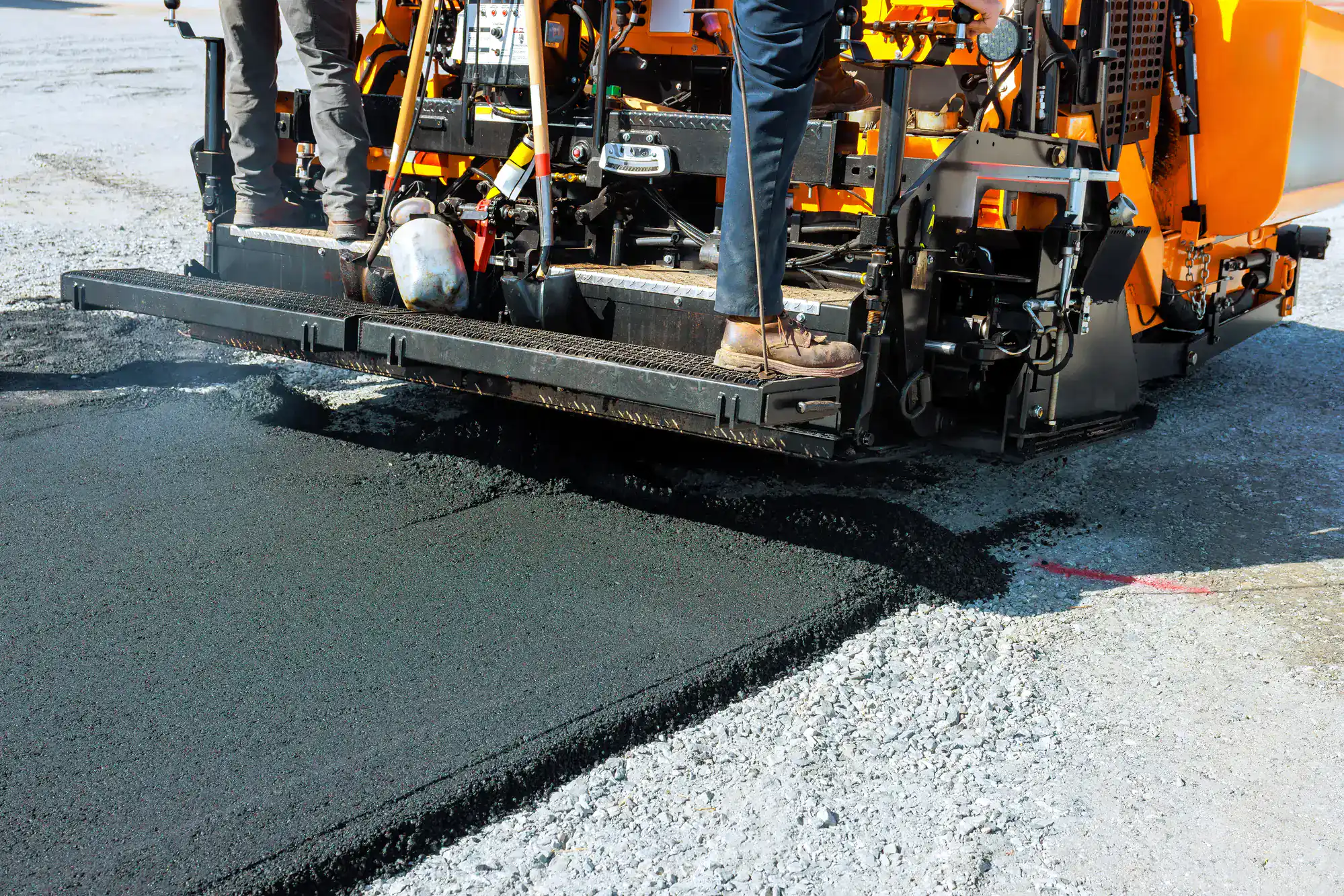
Installation follows the spec, not a shortcut. Commercial applications require a minimum of four inches of asphalt over a properly prepared subbase more than the residential standard, and for good reason. After the surface is down, sealcoating, line striping, and ADA-compliant space designation can all be handled under the same contract, so you’re not coordinating three different vendors to finish one parking lot.

Ready to get started?
Commercial asphalt paving in Annapolis Neck covers more ground than a standard parking lot job. The marina and maritime commercial properties along Bay Ridge Avenue including large-scale operations managing dozens of properties and thousands of boat slips deal with heavy trailer traffic, fuel exposure, and constant salt air. That’s a fundamentally different load profile than an office park in Parole or a retail strip in Edgewater, and the paving specification needs to reflect it. Four-plus inches of commercial-grade asphalt over a properly compacted base is the starting point, not a premium upgrade.
For HOA communities managing shared infrastructure across Chesapeake Harbour, Hillsmere Shores, Bay Highlands, or Arundel on the Bay, the full scope typically includes surface paving or mill-and-overlay, followed by sealcoating to protect against the coastal oxidation cycle, crack filling on any existing pavement that can be preserved, and parking lot line striping to current standards. ADA-compliant space designation is included where required not as an add-on, but as part of delivering a lot that’s actually finished and legally compliant.
The mid-century housing stock in communities like Arundel on the Bay and Hillsmere Shores means a lot of original pavement infrastructure is at or past its useful life. If your community’s roads or parking areas were last touched in the 1970s or 1980s, a proper assessment will tell you whether you’re looking at a maintenance cycle or a full replacement and that answer should come from a licensed commercial paving contractor, not a guess.
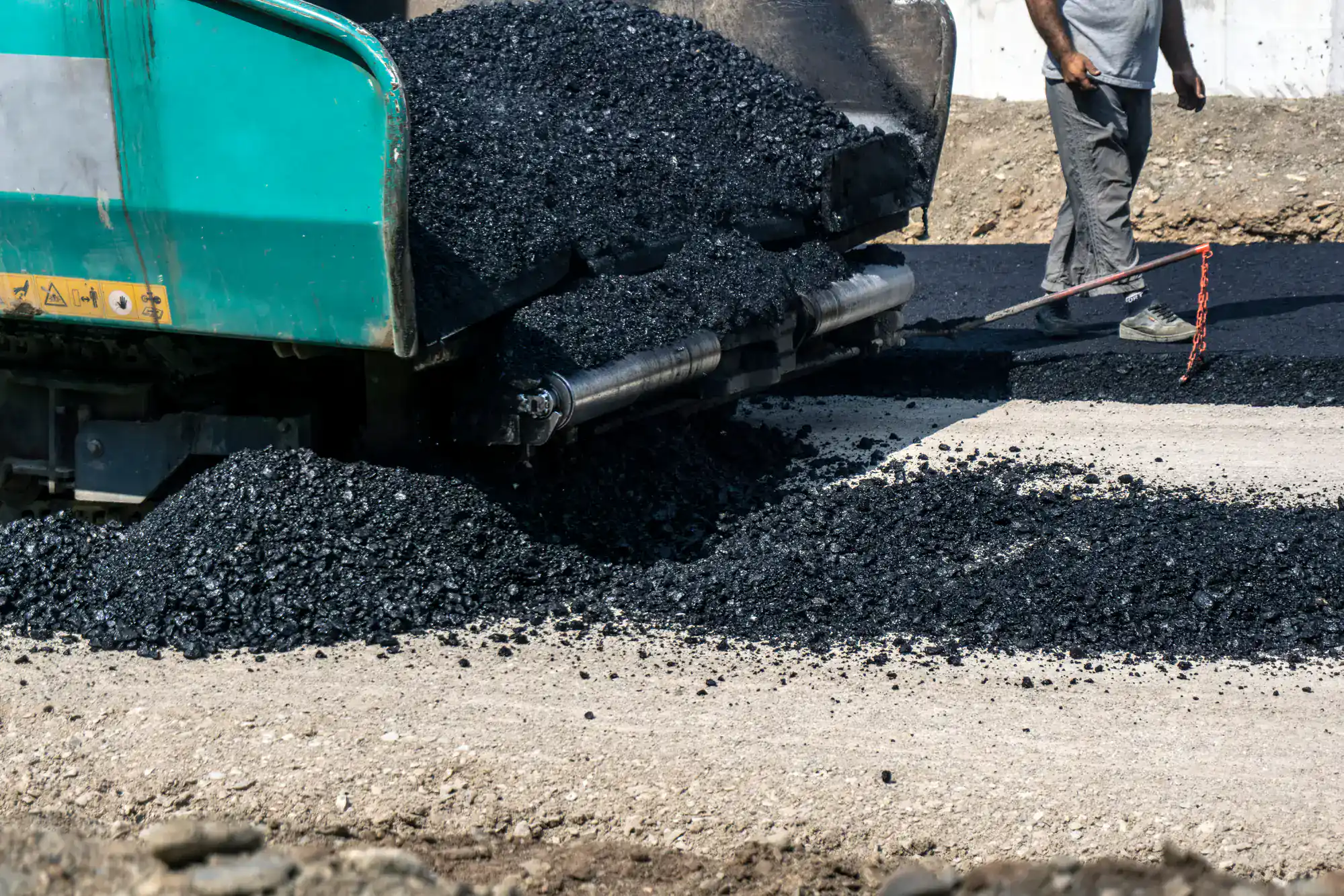
Salt air is the factor most property owners in Annapolis Neck don’t account for until they’re already dealing with premature pavement failure. Asphalt is roughly 95% aggregate and 5% binder and it’s the binder that salt air attacks. Oxidation from coastal exposure breaks down that binder faster than in inland communities, which is why pavement near the Chesapeake Bay or Severn River shoreline tends to become brittle and crack-prone sooner than equivalent pavement in a place like Crofton or Odenton.
The practical implication is that sealcoating cycles need to be more aggressive in this environment, not treated as a nice-to-have. A properly maintained sealcoat applied every two to three years creates a barrier that slows oxidation significantly. Combine that with proper drainage design from the start especially important in the flood-zone areas of the Neck and you can realistically expect 20 to 25 years of service life from a well-installed commercial pavement. Without those measures, that timeline can compress considerably.
Commercial asphalt paving in Maryland generally runs between $4 and $10 per square foot, depending on the scope of work, the current condition of the subbase, drainage requirements, and whether you’re doing a full replacement or a mill-and-overlay. Larger projects tend to land toward the lower end of that range on a per-square-foot basis; smaller or more complex jobs with significant drainage work or subbase repair will run higher.
For Annapolis Neck specifically, drainage design and subbase preparation often represent a larger share of the project cost than they would in an inland community and that’s not padding, it’s necessity. A parking lot that floods or has a compromised subbase will fail prematurely regardless of how good the surface asphalt is. The more useful number to focus on isn’t the cost per square foot today it’s the cost of deferring the project. A $10,000 repair that gets pushed back three years in a coastal environment commonly becomes a $30,000 to $50,000 reconstruction. That math tends to clarify the decision fairly quickly.
Annapolis Neck is unincorporated Maryland and Central and Northern Virginia which means permits go through the county’s Department of Inspections and Permits, not the City of Annapolis. That’s an important distinction if you’ve worked with contractors who assumed city jurisdiction applied. For commercial paving projects that involve a new driveway connection or modifications to an existing connection on a county-maintained road Forest Drive and Bay Ridge Avenue both qualify a right-of-way permit from the county is required before work begins.
Larger commercial projects that change the amount of impervious surface on a property may also trigger a stormwater management review under Maryland and Central and Northern Virginia’s environmental regulations. This is particularly relevant for properties in or near FEMA-designated flood zones, which includes parts of the Annapolis Neck peninsula. We handle the permitting coordination as part of the project scope so you’re not left navigating county offices on your own while trying to run a business or manage an HOA.
For commercial parking lots in Maryland, the standard is a minimum of four inches of asphalt typically two inches of base course and two inches of surface course over a properly prepared and compacted subbase. That’s meaningfully different from the residential standard, which is closer to two to three inches, and the distinction matters a great deal for load-bearing capacity and long-term durability.
For marina and marine commercial properties on Annapolis Neck, that minimum is really a starting point. Boat trailer traffic regularly exceeds 10,000 to 20,000 pounds per axle, and heavy equipment movement in boat storage yards puts even more demand on the surface. In those environments, a thicker base layer and heavier-duty compaction are worth the upfront investment because the cost of repairing pavement that was under-built for its actual load is significantly higher than getting the spec right from the beginning. The site assessment step is where this gets determined, not after the asphalt is already down.
The ideal window for commercial asphalt paving in the Annapolis Neck area is late spring through early fall roughly May through October when temperatures are consistently above 50°F and dry conditions are more reliable. Asphalt needs adequate temperature and low moisture to cure properly, and Maryland’s mid-Atlantic climate delivers that most predictably during those months.
Spring is typically the highest-demand period, and for good reason. Freeze-thaw cycling from November through February tends to produce visible cracking, pothole formation, and surface heaving that becomes apparent once temperatures stabilize. Property managers and HOA boards who want to get ahead of that damage rather than react to it usually schedule assessments in late winter and book spring projects early. Fall is the secondary window, and it’s also the best time for sealcoating before winter sets in, since a fresh sealcoat applied in September or October provides meaningful protection against moisture infiltration during the cold months. If you’re on the fence about timing, earlier in the season is almost always the better call.
Yes and HOA communities are a significant part of the commercial work we handle in the Annapolis Neck area. Communities like Chesapeake Harbour, Hillsmere Shores, Bay Highlands, and Arundel on the Bay all have shared road and parking infrastructure that requires periodic professional maintenance, and HOA boards have a fiduciary responsibility to manage those assets properly. That means working with a licensed, insured contractor who can provide a formal proposal, insurance documentation, and a clear scope of work not just a verbal quote from whoever knocked on the door.
The full scope for HOA community projects typically includes surface assessment, paving or mill-and-overlay, sealcoating, crack filling, line striping, and ADA-compliant space designation where applicable. Because we handle all of those phases under one contract, HOA boards aren’t left coordinating between multiple vendors or managing handoffs between a paving crew and a separate striping company. One contractor, one point of accountability, and a finished product that meets Maryland and Central and Northern Virginia standards that’s what makes the process manageable for a volunteer board trying to protect a community’s shared investment.
Local Resources
Other Services we provide in Annapolis Neck