Hear from Our Customers
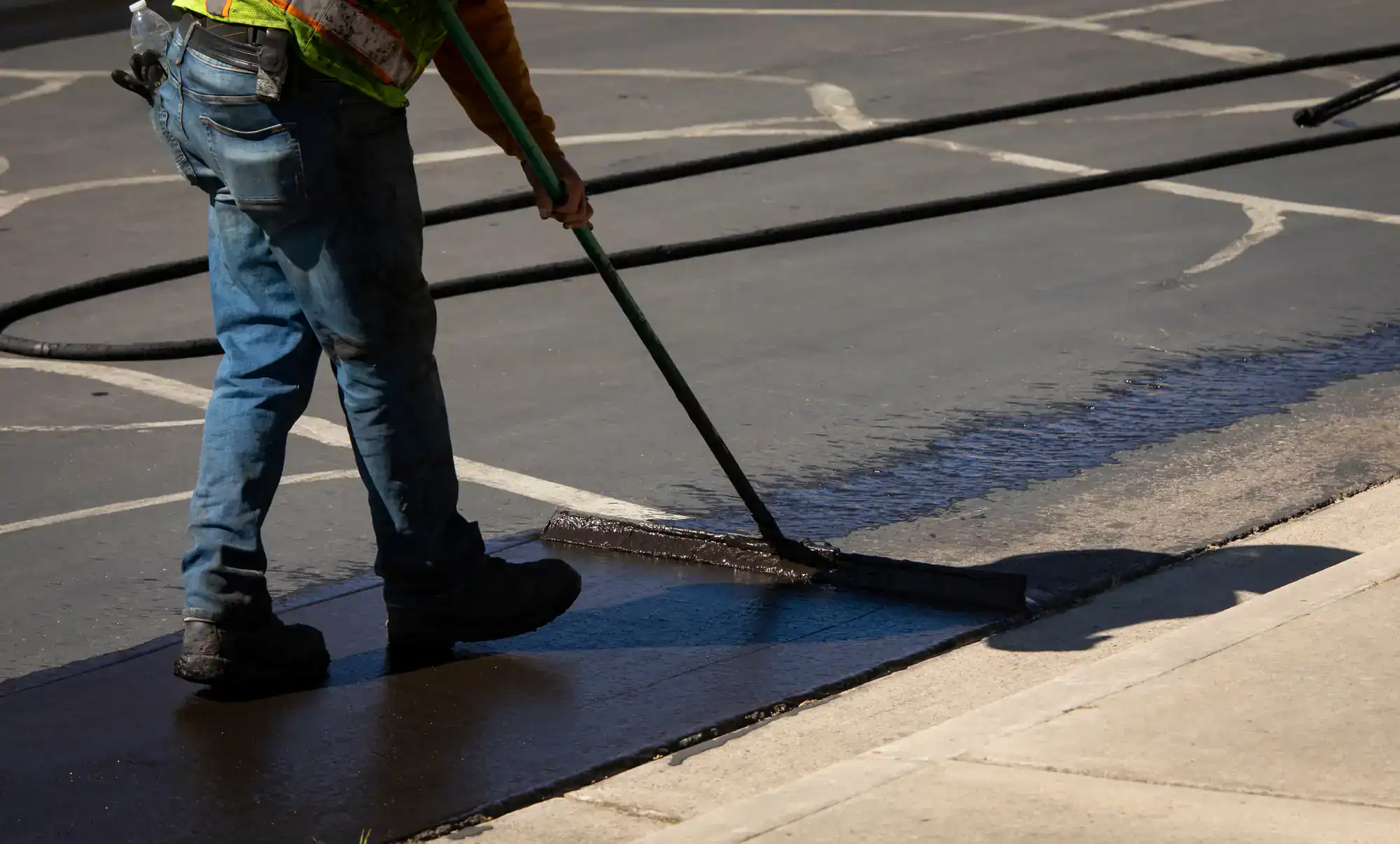
Living on the western shore of the Chesapeake Bay comes with a maintenance reality that inland homeowners simply don’t deal with. Salt-laden air off the water accelerates asphalt oxidation faster than a standard Maryland climate would on its own. That means the surface of your driveway the binder holding everything together breaks down sooner, turns gray quicker, and starts cracking before you’d expect it to.
Then add the freeze-thaw cycles. Calvert County sees temperatures that cross the freezing mark dozens of times each winter. Every time water gets into a surface crack, freezes, and expands, it widens that crack from the inside. By the time spring arrives, what started as a hairline is now something you can feel when you pull in. A properly applied sealcoat blocks water from getting in before that cycle ever starts.
The other thing worth saying: your driveway is the first thing anyone sees when they pull up to your property. Homes along Calvert Beach Road and the surrounding community carry real value and a cracked, faded driveway undercuts that. We seal driveways every two to three years to keep the surface dark, tight, and protected. In a coastal environment like this one, it’s not a luxury maintenance item. It’s what keeping up with your property actually looks like.
We’ve been operating out of Annapolis since 2011 that’s 14-plus years of asphalt work in the same Chesapeake Bay region as Calvert Beach. The drive down MD Route 2/4 to Calvert County is familiar territory. So is the climate, the coastal conditions, and what a driveway looks like after a Southern Maryland winter.
We hold MHIC License #159766 a state-required credential for any contractor doing residential driveway work in Maryland. It’s publicly verifiable on the state’s website. That matters in a small community like Calvert Beach, where door-to-door sealcoating crews often unlicensed, often out-of-state have been a documented problem. An A+ BBB rating and over four decades of hands-on paving experience back it up further.
You’re not dealing with a seasonal operation. We’re a permanent, accountable business with a real address, a verifiable license, and a track record that speaks for itself.
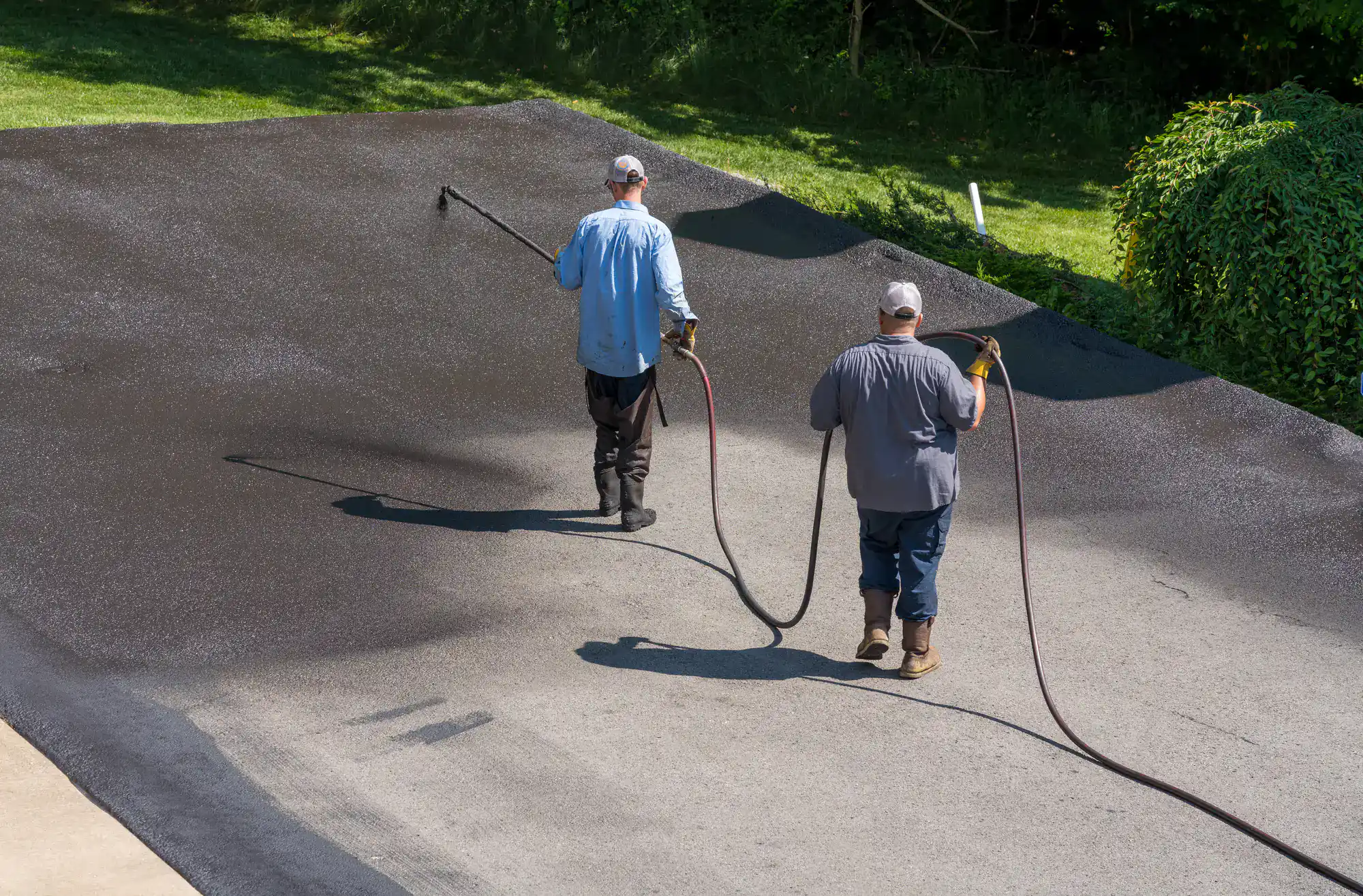
The first thing that happens before any sealant touches your driveway is a proper assessment. We check the surface for cracks, soft spots, oil contamination, and edge overgrowth because in a coastal community like Calvert Beach, where driveways are often bordered by bay grass, organic debris, and landscaping that creeps in from the edges, prep work isn’t optional. It’s where the job either holds or fails.
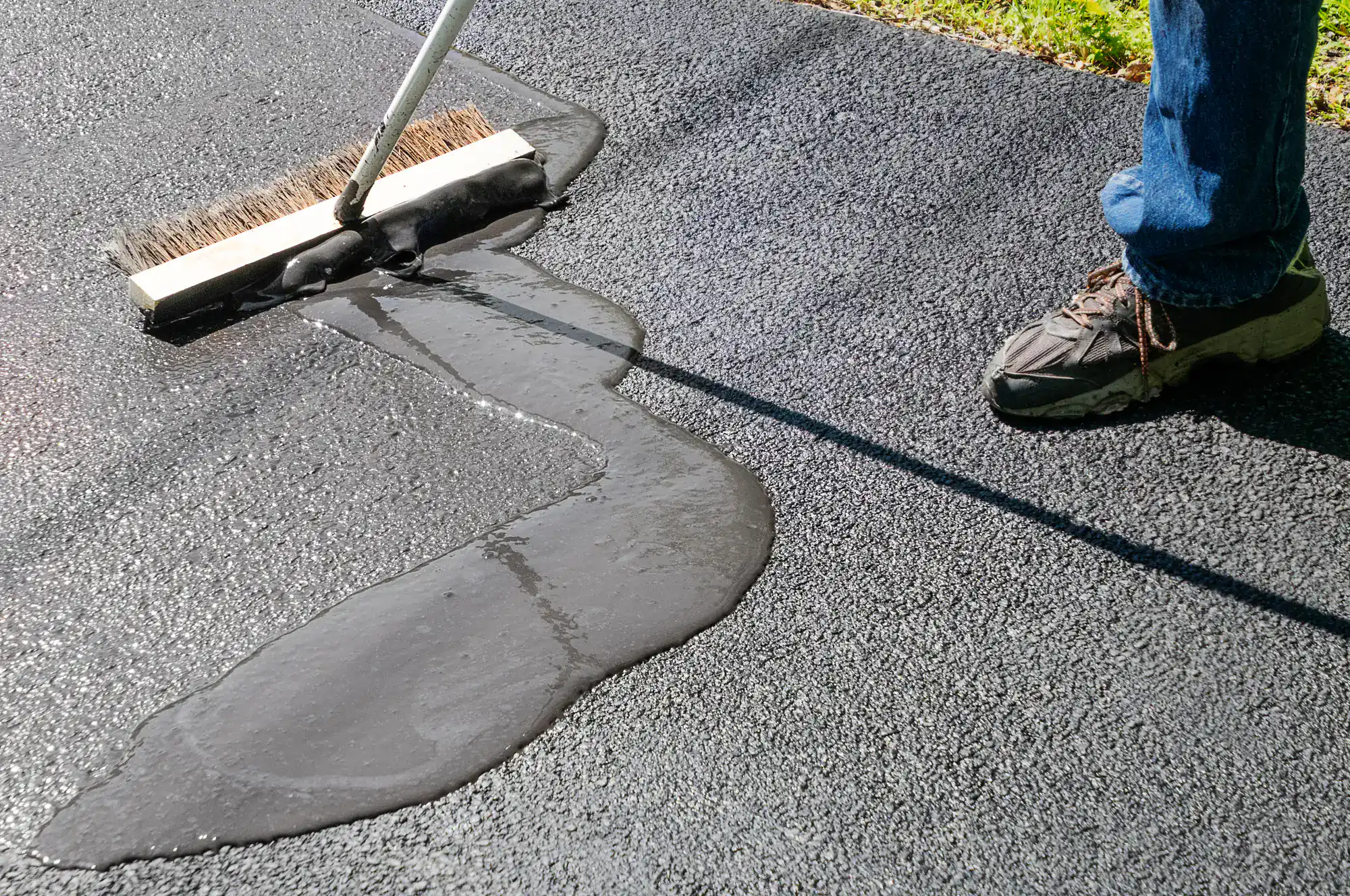
Cracks get filled and treated before sealing begins. Oil spots get primed. Edges get cleaned back. Only after the surface is properly prepared does the sealcoat go down applied in even coats that bond correctly and deliver consistent coverage across the full driveway. Rushing past prep is the most common reason a cheap sealcoating job peels or wears unevenly within a season.
Once the work is done, your driveway needs to stay off-limits for 24 to 48 hours to cure properly. Timing matters here the optimal window for sealcoating in Calvert County runs from late April through October, with temperatures above 50°F and no rain in the forecast. If you’re thinking about scheduling, spring is the smart move: it seals in protection right after winter’s freeze-thaw damage and sets your driveway up before the summer UV exposure hits.
Ready to get started?
Our asphalt driveway sealcoating covers the full scope of what the job actually requires not just the sealant itself. Surface preparation, crack treatment, edge cleanup, and proper application are all part of the service. Our goal is a result that lasts through Calvert County’s coastal winters and humid summers, not something that looks good for a few weeks and starts peeling by fall.
For homeowners in Calvert Beach and the surrounding St. Leonard area, we build our service around the specific conditions here: elevated moisture from bay proximity, UV exposure from unobstructed southern and eastern sun, and the seasonal flooding that comes with living in a low-lying waterfront community. A sealed driveway sheds water rather than absorbing it which matters every time tidal conditions push moisture across the property.
Beyond residential driveways, we extend the same service to commercial properties and parking lots throughout Calvert County including crack repair, resurfacing, and line striping for businesses in Prince Frederick and the broader area. Routine driveway sealcoating does not require a permit under Calvert County code, and it doesn’t trigger Critical Area review since it maintains an existing surface rather than adding new impervious coverage. We explain the full scope upfront before any work begins.
For most driveways in Calvert Beach and the surrounding Calvert County area, every two to three years is the right interval. The coastal environment here salt air off the bay, elevated humidity, and the freeze-thaw cycles that come with Southern Maryland winters accelerates asphalt oxidation faster than you’d see in a dry, inland location. Waiting four or five years between applications in this environment often means you’re sealing a surface that’s already started to deteriorate structurally, rather than protecting one that’s still in good shape.
The practical test is straightforward: pour a small amount of water on your driveway. If it absorbs into the surface rather than beading up, the existing sealcoat has broken down and the asphalt is exposed. That’s your cue to call us. Catching it at that point before visible cracking sets in keeps the job simple and the cost reasonable. Let it go longer and you’re looking at crack filling, patching, or eventually resurfacing, all of which cost significantly more than a timely sealcoat.
For a standard residential driveway in the Calvert Beach area, professional sealcoating typically runs in the range of $250 to $400, depending on the size of the surface, the condition it’s in, and how much prep work is required before the sealant goes down. If cracks need to be filled beforehand, that adds to the total but it’s still a fraction of what you’d pay for patching, resurfacing, or full driveway replacement, which can run $4,200 to $9,000 or more.
The way to think about the cost is simple: sealcoating every two to three years is one of the lowest-cost maintenance habits available to a homeowner. In a waterfront community where property values are real and the coastal climate is genuinely hard on asphalt, the cost of skipping it compounds quickly. A driveway that gets sealed consistently over ten years costs far less to maintain than one that gets ignored and eventually needs to be torn out and replaced.
Yes and it’s one of the more underappreciated factors for homeowners in Calvert Beach specifically. Salt air doesn’t attack asphalt the way it attacks metal or wood, but it does accelerate oxidation of the asphalt binder the material that holds the aggregate together and gives the surface its flexibility. Over time, that oxidation causes the surface to dry out, turn gray, and become brittle. Once the binder starts to break down, the surface becomes vulnerable to cracking from traffic load and temperature stress.
Sealcoating creates a barrier that slows that oxidation process significantly. It’s not a permanent fix nothing is but a fresh coat applied on schedule keeps the binder protected from both the salt air and the UV exposure that compounds the damage. For a driveway with unobstructed southern or eastern exposure, which is common in Calvert Beach’s bay-front properties, that UV factor is real. The combination of coastal air and direct sun is exactly the environment sealcoating is designed to address.
No permit is required for routine driveway sealcoating in Calvert Beach. Because the community is an unincorporated area, there’s no municipal permitting layer Calvert County code applies, and maintaining an existing driveway surface doesn’t require county review or approval.
One thing worth knowing: most properties in Calvert Beach fall within Maryland’s Critical Area the 1,000-foot buffer from the Chesapeake Bay’s mean high water line governed by state law. Critical Area regulations do restrict certain activities, including adding new impervious surface or disturbing vegetation buffers. Sealcoating an existing driveway doesn’t trigger any of those restrictions. You’re maintaining a surface that already exists, not expanding it. If you were planning to extend the driveway or add new paved area, that’s a different conversation but for a standard sealcoating job, there’s nothing to file and nothing to wait on from a permitting standpoint.
In most conditions, a professionally applied sealcoat lasts two to four years. In a coastal environment like Calvert Beach with the combination of bay moisture, salt air, freeze-thaw cycling, and direct sun exposure the lower end of that range is more realistic for driveways that see regular vehicle traffic and don’t have significant tree coverage to reduce UV exposure.
That’s not a knock on the product it’s just the honest reality of what this environment does to exterior surfaces. The good news is that staying on a two-to-three-year schedule keeps the underlying asphalt in strong condition, which means each sealcoating job is straightforward and cost-effective. The driveways that get expensive to maintain are the ones that go five or more years without attention, because by then the surface has degraded past the point where sealcoating alone is enough. Consistent maintenance in this climate is genuinely worth more than sporadic maintenance anywhere else.
The fastest way to verify a contractor in Maryland is to look up their MHIC number the Home Improvement Commission license required by the state for any contractor performing residential work, including driveway sealcoating. You can search the MHIC database directly on the Maryland Department of Labor’s website. It takes about 30 seconds. If a contractor can’t give you a license number, or if the number doesn’t come back active under their name, that’s a clear signal to walk away.
This matters in Calvert Beach specifically because small, residential waterfront communities accessible by a limited road network and largely off the commercial radar are a known target for door-to-door sealcoating crews that operate without licenses, use watered-down materials, and are unreachable once they’ve been paid. Maryland’s own consumer agencies flag driveway sealcoating as one of the most complaint-heavy home improvement categories in the state. Our MHIC license number is #159766 look it up before you call if you want to, and you’ll find it exactly where it should be.
Other Services we provide in Calvert Beach