
Hear from Our Customers
Every winter, the same thing happens to pavement near the Bay. Moisture works into small cracks, freezes, expands, and widens those cracks a little more. By spring, what started as a surface issue has become a base problem and base problems don’t get patched, they get replaced. Calvert County averages nearly 20 inches of snowfall and over 43 inches of rain annually. At Calvert Beach, that moisture never really goes away, because the Bay humidity keeps the ground saturated in ways that inland properties never deal with.
The salt air adds another layer. It accelerates the oxidation of asphalt binder the material that holds the aggregate together which is why pavement near tidal water tends to gray out, ravel, and crack faster than the same pavement installed five miles inland. A properly installed commercial asphalt surface, with the right base depth, correct thickness, and a drainage design that accounts for your lot’s elevation and proximity to the water, can last 20 to 30 years even in this environment. Without those fundamentals, you’re looking at a much shorter runway.
For Calvert Beach’s private community roads, HOA parking areas, and waterfront property driveways, that difference in lifespan isn’t just a maintenance number it’s a budget conversation your association or business doesn’t want to have every decade. A $10,000 repair deferred for a few seasons in this climate doesn’t stay a $10,000 repair. It becomes a full reconstruction, and those run $30,000 to $50,000 or more depending on scope. Getting it done right the first time is the most cost-effective decision you can make.
We’ve been operating in Maryland since 2011, and our team brings over four decades of combined industry experience to every project. That’s not a marketing number it reflects the real-world depth behind every site assessment, drainage decision, and installation call we make. We hold MHIC License #159766, are BBB Accredited with an A+ rating, and operate as a dual-state licensed contractor across Maryland and Virginia.
Calvert Beach sits at the end of the peninsula, accessible via MD Route 2/4 and the local connector roads that run through Saint Leonard and Long Beach. Some contractors treat that drive as too far. We serve Calvert County directly, including the waterfront communities along the Bay’s western shore, without premium travel charges or scheduling delays. If you’re managing a private community road, an HOA parking area, or a commercial property in Calvert Beach and the surrounding area, you’re in our service area no asterisks.
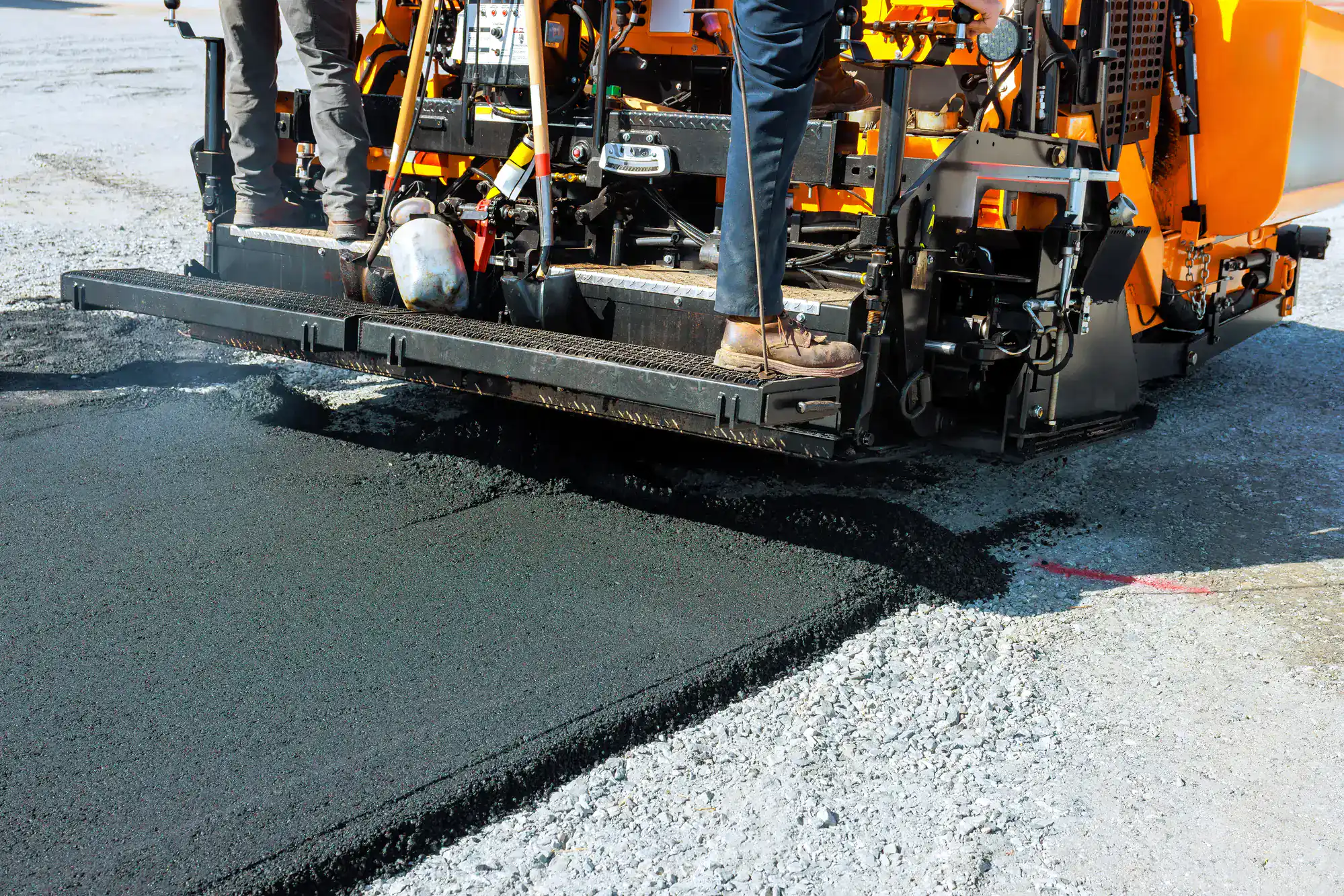
It starts with a free site assessment not a quick walk-around with a clipboard, but an actual evaluation of your pavement’s current condition. That means looking at drainage patterns, checking the subgrade for soft spots or base failure, mapping the surface damage, and understanding what load your pavement actually handles day to day. For properties in Calvert Beach, that last part matters more than most people realize. Boat trailers, marine service vehicles, and contractor equipment put a level of stress on driveways and access roads that requires commercial-grade thickness typically four inches or more of properly compacted asphalt over an engineered base even on surfaces that look residential on paper.
Once the assessment is complete, you get a clear scope of work with no guesswork. If your project involves expanding impervious surface near the Bay, we account for Calvert County’s Critical Area regulations and any stormwater management requirements that apply to your property. Projects within 1,000 feet of tidal water which covers most of Calvert Beach can carry additional permit considerations, and knowing that before work starts is the difference between a clean project and a costly correction.
Installation is scheduled around Maryland’s paving season, which runs roughly April through October. Spring is typically when the freeze-thaw damage from winter becomes fully visible, and that’s when most property owners in this area start the conversation. The sooner that assessment happens, the more options you have before minor damage becomes structural.

Ready to get started?
We handle the full range of commercial asphalt work that comes up in a community like Calvert Beach new asphalt installation, parking lot paving, private road rehabilitation, asphalt repair, sealcoating, crack filling, and ADA-compliant parking lot upgrades with proper line striping. That matters here because the paving needs in this community don’t fit neatly into a residential or commercial box. A waterfront homeowner with a long driveway and a boat trailer access pad needs commercial-grade installation. An HOA board managing a private road through Calvert Beach Estates needs a contractor with the project management experience to handle a job that goes beyond a single driveway.
Sealcoating is particularly important for Bay-adjacent properties. The salt air and ambient humidity that make Calvert Beach a desirable place to live are the same forces accelerating asphalt oxidation on your surface. A regular sealcoating schedule typically every two to three years depending on traffic and exposure slows that oxidation, extends pavement life, and significantly reduces the frequency of crack repairs. It’s one of the highest-return maintenance investments available for properties in this environment.
Every project includes a drainage assessment as a standard part of the scope. Low-elevation coastal properties near the Chesapeake Bay don’t have the luxury of ignoring water management standing water on pavement near tidal soils is a base failure waiting to happen. That’s built into how we approach every job in this area, not an add-on.
It depends on the scope of the project and where your property sits relative to the water. Calvert Beach is an unincorporated community, so there’s no local town government layer permitting goes through Calvert County’s Department of Planning and Zoning. For straightforward repaving of an existing surface, you typically don’t need a permit. But if your project increases the total impervious surface area on your property, that changes things.
Most properties in Calvert Beach fall within Maryland’s Chesapeake Bay Critical Area the zone within 1,000 feet of tidal waters. Any project that adds new impervious surface in that zone may require Critical Area approval and a stormwater management plan before work can begin. This isn’t a bureaucratic technicality it’s a real regulatory requirement that carries real consequences if ignored. A contractor who doesn’t ask about your property’s location relative to the Critical Area before starting work is a contractor who could leave you with unpermitted improvements and a remediation bill. We account for these requirements as part of the initial site assessment.
For commercial applications parking lots, HOA access roads, business driveways the standard minimum is four inches of compacted asphalt over a properly prepared aggregate base. That base typically runs six to eight inches deep depending on soil conditions. In Calvert Beach, the coastal soil profile and proximity to tidal water can affect subgrade stability, which is why a base inspection matters before any thickness decision is made.
If your surface handles boat trailers, delivery trucks, or service vehicles regularly, you may need additional thickness or a reinforced base layer. A boat trailer loaded with a 25-foot vessel can put several thousand pounds of point load on a surface that’s not a residential driveway load, and installing residential-grade asphalt under that kind of stress is one of the most common reasons waterfront property pavement fails prematurely. The assessment process identifies what your surface actually needs based on real traffic, not a generic spec.
It shortens the lifespan if the installation doesn’t account for it and extends it significantly if it does. The two main factors are moisture and salt air. Calvert County receives over 43 inches of precipitation annually, and Bay-adjacent properties like those in Calvert Beach deal with elevated ambient humidity on top of that. Moisture that penetrates asphalt cracks freezes in winter, expands, and widens those cracks a cycle that repeats every year and accelerates base deterioration.
Salt air oxidizes the asphalt binder faster than inland conditions. The binder is what holds the aggregate together, and as it breaks down, the surface becomes brittle, starts to ravel, and loses its ability to flex under load without cracking. Pavement near the Bay can show these signs several years earlier than identical pavement installed further inland. The countermeasures are proper drainage design, adequate thickness, and a consistent sealcoating schedule typically every two to three years for Bay-adjacent surfaces. With those in place, commercial asphalt in Calvert Beach can realistically last 20 to 30 years.
The honest answer is that it depends on what’s happening below the surface, not just what you can see on top. If the damage is limited to surface cracking or isolated potholes and the base underneath is still solid, patching or a mill-and-overlay can be a legitimate long-term repair. But if water has been infiltrating those cracks for one or two winters which is very likely in Calvert Beach’s climate the base may have already started to soften and shift. Patching over a compromised base is the definition of a short-term fix with a long-term price tag.
The way to know for certain is a proper subgrade assessment before any repair decision is made. That means probing soft spots, evaluating drainage patterns, and looking at how the pavement is behaving under load not just mapping the visible surface damage. If a contractor quotes you a patch job without checking the base, ask why. In a coastal environment where freeze-thaw cycling and moisture infiltration are annual events, base integrity is the whole conversation.
For most commercial properties in this area, every two to three years is the right interval but Bay-adjacent surfaces often benefit from being on the shorter end of that range. Sealcoating works by replenishing the surface layer of the asphalt and slowing the oxidation of the binder underneath. In Calvert Beach, where salt air and high humidity accelerate that oxidation year-round, waiting the full three years between applications can leave the surface more exposed than it needs to be.
The best time to sealcoat in Maryland is late spring through early fall, when temperatures are consistently above 50 degrees and rain isn’t in the immediate forecast. Sealcoating applied too early in the season before overnight temperatures stabilize won’t cure properly and won’t bond the way it should. Timing the application correctly matters as much as the frequency. A regular sealcoating schedule is one of the most cost-effective things you can do to protect a commercial asphalt investment in a waterfront environment like this one.
Calvert Beach is in our service area not as a stretch, but as a regular part of the territory we cover in Calvert County. The community sits along the Bay’s western shore, accessible via MD Route 2/4 through Saint Leonard, and we operate throughout southern Maryland without treating the drive as a reason to add surcharges or push your project to the back of the schedule.
This matters because the Calvert Beach area including Long Beach, Saint Leonard, and the surrounding waterfront communities doesn’t have an abundance of licensed, accredited commercial paving contractors actively serving it. Some contractors based in Annapolis or northern Maryland and Central and Northern Virginia treat the peninsula as outside their practical range. We hold MHIC License #159766, carry an A+ BBB rating, and have the operational capacity to handle projects in this part of the county the same way we handle projects anywhere else in our service area. If you’re managing a private community road, an HOA lot, or a commercial property near Calvert Beach, the process starts the same way it does everywhere with a free site assessment and a straight conversation about what the work actually involves.
Other Services we provide in Calvert Beach