Hear from Our Customers
Living on the western shore of the Chesapeake Bay means your driveway is dealing with more than most. Elevated humidity year-round, salt-laden air off the Bay, and Maryland’s freeze-thaw cycle work together to break down asphalt faster than most homeowners expect. A driveway that wasn’t built with those conditions in mind will show it usually within a few years.
When asphalt driveway paving is done right, the difference isn’t just visual. You get a surface that drains properly, holds its edge, and doesn’t develop soft spots after the first hard winter. For Long Beach homeowners dealing with Calvert County’s clay-heavy soils, that starts with what’s underneath a compacted aggregate base that doesn’t shift when the ground gets wet or freezes.
The other thing most people don’t talk about is curb appeal in a community like Long Beach. This is a private waterfront neighborhood where homes are genuinely invested in. A clean, smooth driveway is the first thing anyone sees when they pull up. Whether you’re maintaining your home for the long haul or keeping an eye on what it’s worth, a professionally installed asphalt driveway is one of the highest-visibility improvements you can make.
We’re a family-owned asphalt paving company that has been passed down through three generations. That’s not a marketing angle it’s just the reality of how this business was built, and it shows in how the work gets done. You’re not dealing with a seasonal crew or a subcontracted team. You’re working with a company that has its own equipment, its own crews, and our name on every job.
We hold Maryland Home Improvement Commission License #159766 active, verifiable, and required by law for any contractor doing residential work in Maryland. We’re also BBB Accredited with a 5.0 rating on HomeAdvisor. For Long Beach homeowners in the 20685 ZIP code, those credentials matter, especially in a market where unlicensed contractors knock on doors every spring with low-ball quotes and disappear before the warranty means anything.
From Long Beach down through St. Leonard, Drum Point, and across Calvert County, the work speaks for itself. If you want someone who shows up, does the job right, and stands behind it that’s the standard we deliver.
It starts with a free in-person estimate. Not a phone quote, not an online calculator someone actually comes to your property, looks at the existing surface, checks the drainage situation, and gives you a written number based on the real scope of work. For Long Beach properties near the Bay, that site visit matters more than most people realize. Drainage grading on a waterfront lot is not a detail you want assessed over the phone.
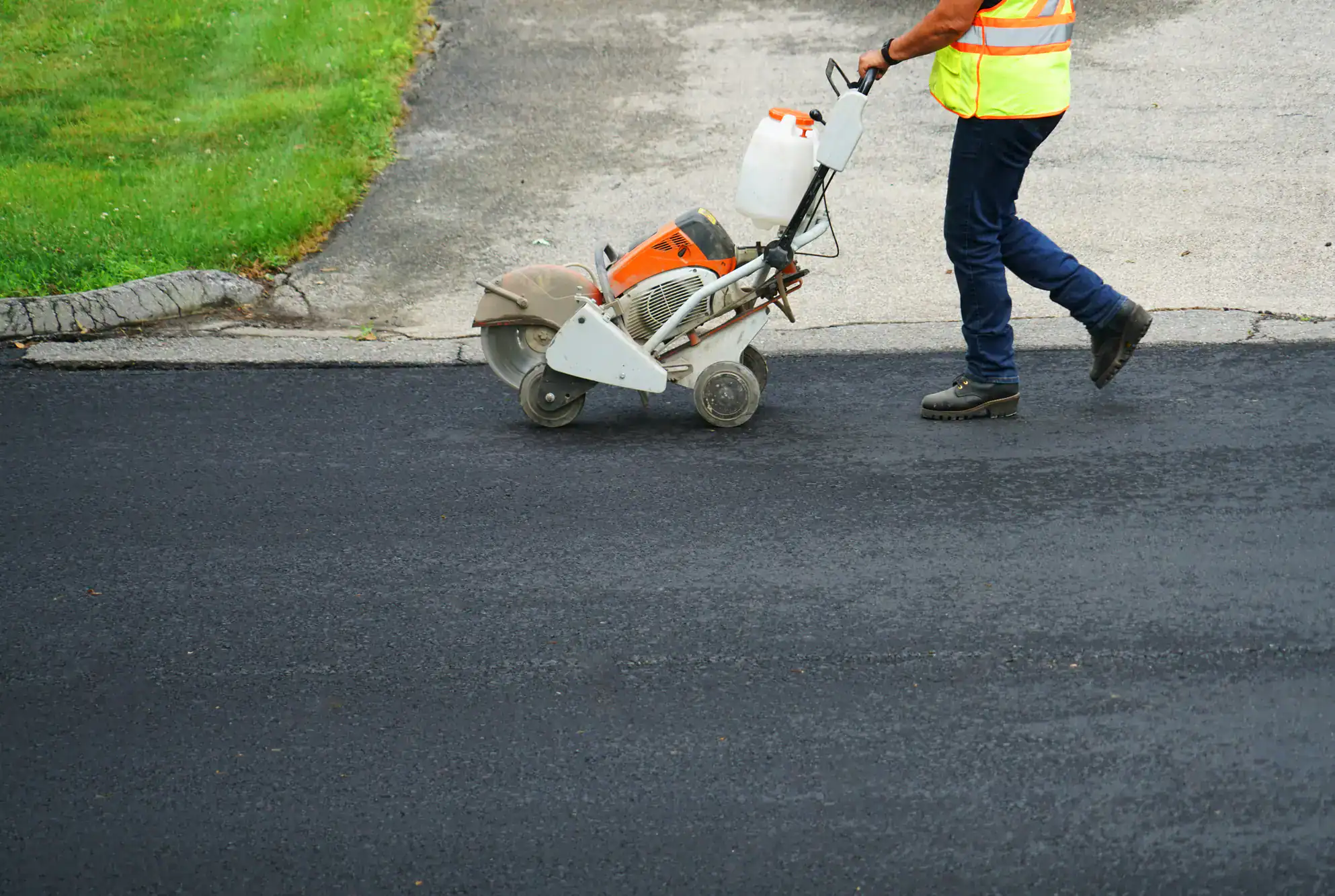
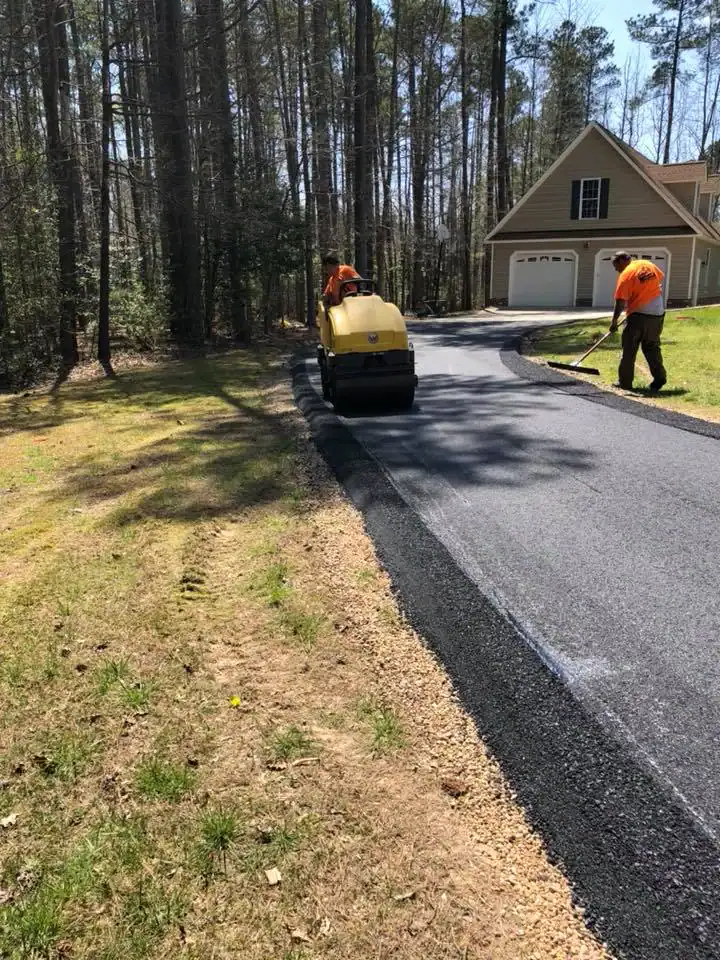
Once the project is scheduled, our crew arrives with our own equipment Bobcats, dump trucks, everything needed to handle demolition, excavation, and haul-away without subcontracting any part of it. The existing surface comes out, the subgrade is assessed and corrected where needed, and a compacted aggregate base is laid before a single ton of asphalt goes down. In Calvert County’s clay-heavy soil environment, that base preparation step is where driveways are won or lost.
The asphalt is laid, graded for proper drainage, and compacted. You’ll typically be back on your driveway within 24 to 48 hours. The best time to schedule in this area is April through October, with spring and early fall being the ideal windows before winter freeze-thaw cycles begin again. If sealcoating is part of the plan, we schedule that roughly 90 days after installation long enough for the asphalt to fully cure.
Ready to get started?
We handle full residential asphalt driveway installations, resurfacing, repair, and sealcoating for homeowners throughout Long Beach and the surrounding Calvert County area. Whether you’re replacing a driveway that’s been through too many Maryland winters or starting fresh on a new build, we adjust the process based on what your specific property needs not a templated approach that ignores local conditions.
For Long Beach properties, that means accounting for the Bay-area moisture environment in every phase of the job. Proper slope and crown are built into the grading so water moves off the surface and away from your home’s foundation. Edge work is finished cleanly to prevent the accelerated cracking that starts at the perimeter when water gets underneath. And because Long Beach sits within Calvert County’s jurisdiction not a municipal government any questions about grading permits, impervious surface limits, or Critical Area regulations that apply to properties within 1,000 feet of the Bay’s shoreline are part of the conversation before work begins, not after.
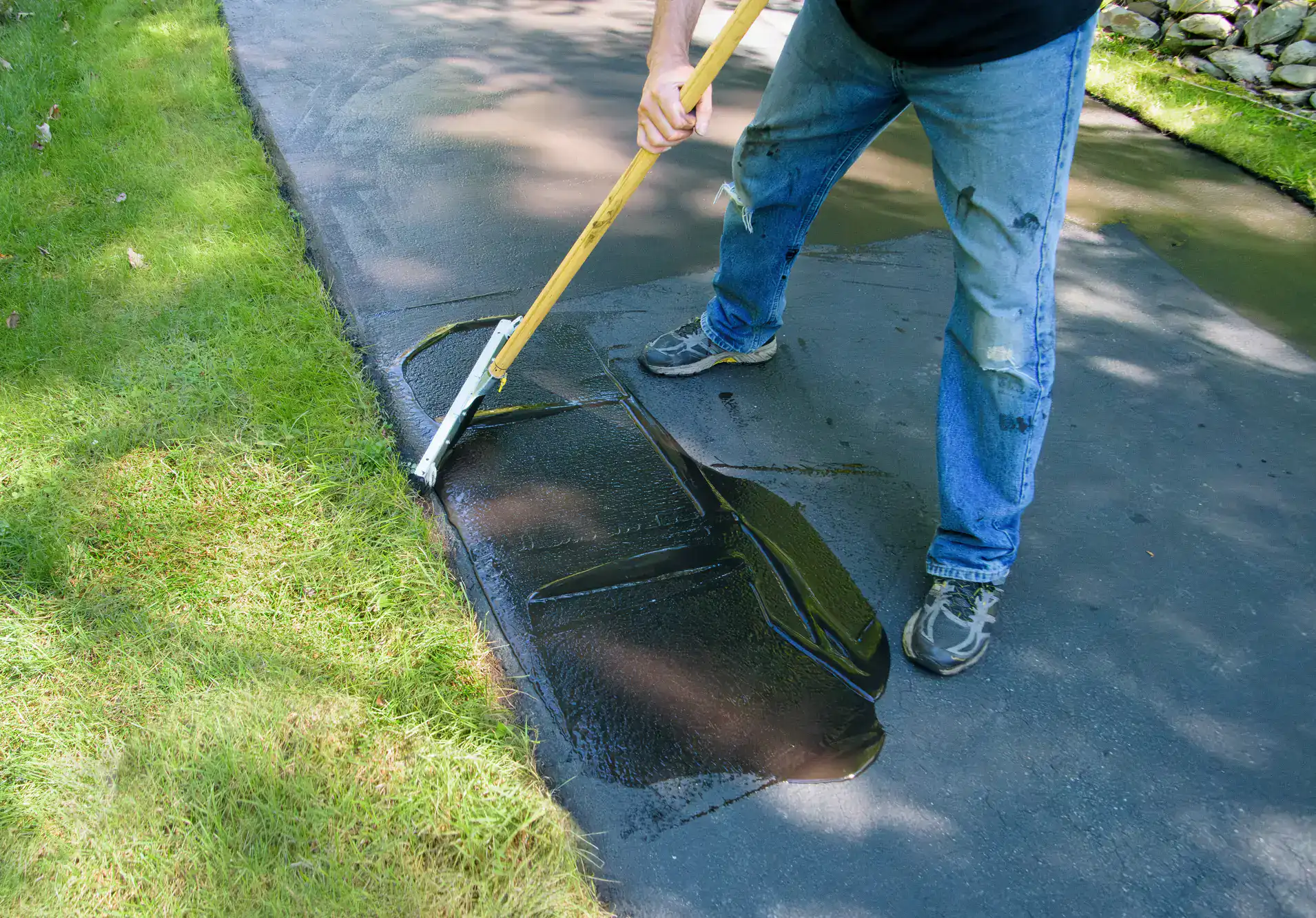
Sealcoating is available as a standalone service for existing driveways and as a follow-up to new installations. Given the salt air and humidity that come with living on the western shore, sealcoating every two to three years is one of the most cost-effective ways to extend the life of your asphalt and protect the investment you’ve already made.
Most residential asphalt driveway projects in the Long Beach area fall somewhere between $3,500 and $7,500, depending on size, the condition of the existing surface, and what the subgrade needs. The national average sits around $5,275, and Calvert County projects tend to land in that range. Per square foot, you’re typically looking at $6 to $9 installed for a standard residential driveway.
What moves the number up is usually subgrade work. Long Beach’s clay-heavy soils can hold moisture and shift seasonally, which sometimes means replacing soft or unstable material with a solid compacted aggregate base before any asphalt goes down. Skipping that step saves money upfront and costs significantly more within a few years. A written in-person estimate is the only reliable way to get an accurate number for your specific property phone quotes on driveway jobs are almost always wrong in one direction or another.
A properly installed asphalt driveway in Long Beach should last 15 to 25 years, sometimes longer with consistent maintenance. The variables that affect lifespan most are base preparation, drainage, and whether the surface gets sealcoated on a regular schedule. In the Long Beach environment specifically elevated humidity, salt air off the Chesapeake Bay, and Maryland’s freeze-thaw winters those factors are more consequential than they would be in a drier inland climate.
Sealcoating every two to three years is the single most cost-effective thing you can do to protect your driveway long-term. It seals out moisture, slows UV oxidation, and creates a barrier against the salt-air exposure that accelerates surface degradation on Bay-area properties. The cost is a fraction of what a premature replacement would run. Driveways that are sealcoated consistently and have good drainage routinely hit the 20-year mark without major structural issues.
For most standard residential driveway replacements in Calvert County, a permit is not required. You’re replacing an existing surface on private property, and that typically falls outside the permit threshold. However, there are situations where additional review may apply, and Long Beach homeowners should be aware of them before starting any project.
If your property is within 1,000 feet of the Chesapeake Bay’s mean high water line which applies to a significant portion of Long Beach given its waterfront location Maryland’s Critical Area regulations come into play. These rules govern impervious surface coverage, stormwater runoff, and land disturbance near the Bay. If you’re expanding your driveway’s footprint rather than simply replacing what’s there, or if the project involves significant grading changes, Calvert County’s Department of Planning and Zoning may require a review. We can help you understand what applies to your specific lot before work begins.
The optimal window for asphalt driveway paving in Long Beach runs from April through October. Asphalt needs ambient temperatures above 50°F to compact and cure properly, which rules out most of the Maryland winter. Within that window, spring particularly April through June and early fall, September through October, tend to be the best conditions for installation.
Summer works fine for paving, but freshly laid asphalt stays softer longer in peak heat. If you’re paving in July or August, plan to keep vehicles off the surface for at least 48 hours and avoid heavy vehicles for a few weeks. Fall is a popular window for a reason temperatures are cooperative, conditions are dry, and homeowners want projects finished before another freeze-thaw season starts. Spring is the busiest season for scheduling because that’s when winter damage becomes fully visible. If you’re planning a spring project in Long Beach, getting on the schedule early matters quality contractors in the Calvert County area fill up faster than most people expect once the weather breaks.
The honest answer depends on how far the damage has gone. Cracks and surface wear are repairable crack filling, patching, and resealcoating can add years to a driveway that’s structurally sound underneath. But if the base has failed, if you’re seeing large areas of heaving or sinking, or if the surface is more patched than original at this point, repair is usually throwing money at a problem that replacement would solve more permanently.
In Long Beach specifically, the freeze-thaw cycle is the most common culprit behind driveways that look repairable on the surface but have compromised bases underneath. Water gets into a crack, freezes, expands, and works its way deeper with every cycle. By the time you see significant cracking or soft spots, the subgrade may already be compromised. An in-person assessment is the only way to know for certain we can look at the surface and the drainage situation and tell you quickly whether you’re dealing with cosmetic wear or structural failure. That assessment is free.
The most important thing to check is the Maryland Home Improvement Commission license. Any contractor doing residential paving work in Maryland for compensation is legally required to hold a valid MHIC license. You can verify any license number at labor.maryland.gov in under a minute. We hold MHIC License #159766, active through August 2026 look it up before you call anyone, including us.
Beyond licensing, look for BBB accreditation, verified reviews on HomeAdvisor or Google, and a contractor who insists on giving you a written in-person estimate rather than a phone quote. The BBB Scam Tracker documents Maryland homeowners losing $5,000 to $8,000 or more to fraudulent paving operators most of whom show up door-to-door in spring claiming leftover asphalt from a nearby job. None of them hold MHIC licenses. In a private community like Long Beach, where your home is a real investment, working with a licensed, insured, verifiable contractor isn’t overcautious it’s just the right call.
Other Services we provide in Long Beach