Thinking about a new asphalt driveway? Here's what the process actually looks like, what it costs, and how to avoid the mistakes that end up costing double.
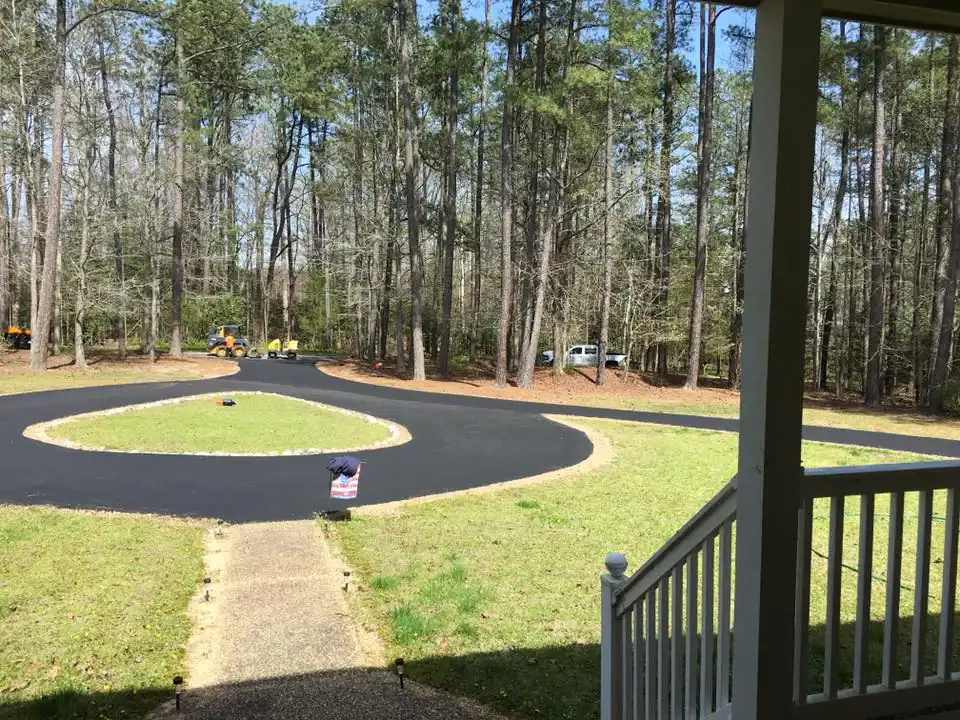
Your driveway is one of the first things people see when they pull up to your home. When it’s cracked, faded, or full of potholes, it doesn’t matter how well-kept the rest of the property looks; the driveway sets the tone. For homeowners across Maryland and Central and Northern Virginia, Calvert County, and St. Mary’s County, a deteriorating driveway is also more than a cosmetic problem. Maryland winters are hard on asphalt, and what starts as a small crack in October can turn into a structural failure by March. This guide covers the process, the costs, and the questions worth asking before you hire a paving contractor.
Most homeowners know they want a smooth, solid driveway, but very few know what actually goes into making one last. That gap is exactly where bad contractors thrive. Understanding the process gives you the ability to evaluate any quote you receive and spot the ones cutting corners before the first shovel hits the ground. A proper asphalt driveway paving installation isn’t just laying blacktop over whatever’s already there. It starts underground and works its way up, and every layer matters.
It starts with the subgrade, which is the soil beneath everything else. Any organic material like topsoil, grass, or roots has to come out. These materials decompose over time, creating voids and soft spots that cause asphalt to sink and crack from below. Once the organics are removed, the soil gets compacted to create a stable foundation.
From there, a crushed stone base goes in, typically four to eight inches deep depending on your soil conditions. In parts of Calvert County and St. Mary’s County, clay-heavy soils are common, and clay shifts with moisture changes. A thicker, well-compacted stone base is what keeps that movement from translating into cracks in your driveway surface. This base layer is where a lot of low-bid contractors cut corners, because it’s the most labor-intensive part of the job and the part you’ll never see once it’s done.
Once the base is solid, hot mix asphalt goes down, installed at around 300 degrees Fahrenheit and compacted with a vibratory drum roller while it’s still workable. Residential driveways need a minimum of two to three inches of compacted asphalt. Thinner than that and you’re going to have problems, especially with the freeze-thaw cycles Maryland delivers every winter. The edges get hand-tamped at a 45-degree angle to prevent crumbling over time.
Drainage is engineered into the design from the start, not as an afterthought. A proper driveway has at least a two-percent slope, which means about a one-inch drop for every four feet of surface. That slope is what keeps water from pooling and infiltrating cracks. In a watershed region like Southern Maryland, where rainfall is consistent and heavy, getting the drainage right isn’t optional.
The whole installation typically takes one to two days for a standard residential driveway. You can usually drive on it within 24 to 72 hours, though full curing takes longer. Sealcoating should wait six to twelve months after new installation, since the asphalt needs time to cure before you seal it.
Maryland’s climate is genuinely tough on asphalt. Summers regularly hit 90 to 95 degrees, and winters bring multiple freeze-thaw cycles, meaning water infiltrates surface cracks, freezes, expands, and widens the damage every time temperatures drop below freezing and climb back up. By the time spring arrives, what started as a hairline crack can be a two-inch gap with crumbling edges.
That cycle is why the quality of the base preparation and the asphalt mix matters so much here specifically. Not all asphalt mixes perform the same in this climate. A contractor who sources and uses the right hot mix asphalt for Maryland’s temperature range, and who installs it correctly, is giving you a driveway designed for the conditions it’s actually going to face.
Maryland and Central and Northern Virginia homeowners near the waterfront, in communities like Shady Side, Deale, Riviera Beach, or Lake Shore, deal with additional moisture exposure from the Bay and tidal creeks. That humidity accelerates surface oxidation and makes sealcoating even more important as a maintenance step. In Calvert County, where the median home was built around 1990, a significant number of original driveways are now 30 to 35 years old, well past the 15-to-20-year replacement threshold. They’re not failing because asphalt is a bad material. They’re failing because they’ve run their course and Maryland weather has been doing its job on them for three decades.
In St. Mary’s County, the combination of rural lot sizes, clay soil in many areas, and the high daily use that comes with averaging two cars per household means driveways take a beating. Getting the base right the first time isn’t about perfectionism; it’s about not paying for the same driveway twice.
Want live answers?
Connect with a Edward Smith Paving expert for fast, friendly support.
Cost is usually the first question, and it’s a fair one. Professional asphalt driveway installation runs roughly seven to thirteen dollars per square foot, which puts a standard residential driveway somewhere between three thousand and ten thousand dollars depending on size, site conditions, and what the job requires.
Most homeowners in this area end up spending somewhere in the middle of that range. A driveway that needs significant grading work or a full base rebuild will cost more than one with a solid existing foundation. This is because site preparation genuinely accounts for 20 to 40 percent of total project cost, and it’s the part that determines how long everything above it lasts.
Yes, meaningfully so. Concrete typically runs ten to fifteen dollars per square foot installed, and pavers can reach eighteen to twenty-five dollars per square foot. Asphalt at seven to thirteen dollars per square foot is the most affordable hard-surface driveway option available, and in Maryland’s climate, it’s also arguably the most practical.
Concrete is more durable over a longer timeframe; it can last 30 to 40 years with proper care. However, it’s nearly double the upfront cost, it doesn’t handle freeze-thaw cycles as gracefully as asphalt in some soil conditions, and repairs are harder to blend invisibly. Asphalt, by contrast, is relatively easy to repair, responds well to sealcoating maintenance, and can last 15 to 30 years when it’s installed correctly and maintained on a reasonable schedule.
For the majority of homeowners in Anne Arundel, Calvert, and St. Mary’s Counties, asphalt is the practical choice. This holds true because it delivers solid longevity at a price point that makes the investment straightforward. In Maryland and Central and Northern Virginia where median home values exceed $486,000, a properly installed driveway isn’t just a maintenance item; it’s a visible part of what your property is worth and how it presents to anyone who pulls up to it.
Asphalt is a petroleum-based product, which means material costs fluctuate with crude oil prices. Timing your project during a period of lower material costs can make a real difference. Getting a quote sooner rather than later gives you a baseline and lets you make that decision with actual numbers in front of you.
Sealcoating is the maintenance step most homeowners either skip entirely or do too infrequently, and it is one of the simplest ways to extend the life of an asphalt surface by years. A sealcoat application creates a protective barrier against UV rays, water penetration, road salts, and chemical spills. It also restores that clean, dark appearance that makes a driveway look well-maintained rather than weathered.
For driveways in Anne Arundel, Calvert, and St. Mary’s Counties, we recommend sealcoating every three to five years. Maryland’s combination of hot summers, heavy rainfall, and winter road salt application accelerates surface oxidation faster than in drier climates, so leaning toward the three-year end of that range makes sense here. This is especially true for driveways with significant sun exposure or those near roads that get heavy salt treatment in winter. The cost is reasonable, typically three to seven dollars per square foot, and the return on that investment is measured in years of additional driveway life. A driveway that gets sealcoated on schedule will look better and last significantly longer than one that doesn’t, all else being equal. One important timing note: new asphalt needs to cure before it gets sealed. If you’ve just had a driveway installed, wait six to twelve months before applying sealcoat. Sealing too early traps oils in the asphalt that need to off-gas during the curing process, which can actually soften the surface. After that initial curing period, you’re on a regular maintenance schedule.
Sealcoating also requires the right weather conditions, meaning temperatures above 50 degrees Fahrenheit and dry conditions. In Maryland, that makes spring and early fall the ideal windows. Trying to sealcoat in late fall when temperatures are dropping is a common mistake that leads to poor adhesion and a finish that doesn’t last.
The most important thing you can do before hiring anyone is verify their Maryland Home Improvement Commission license. In Maryland, any contractor performing home improvement work, including driveway paving, is legally required to hold an MHIC license. It’s publicly verifiable through the Maryland Department of Labor, and any contractor who can’t provide their license number shouldn’t be on your property.
Beyond licensing, look for specifics over generalities. Years in business, volume of completed projects, BBB accreditation, and real local reviews are the things that separate contractors with a track record from those without one. Get a written estimate that specifies materials, asphalt thickness, drainage plan, and warranty terms. If a quote doesn’t include those details, you don’t have enough information to make a real decision.
We’ve been paving driveways across Maryland and Central and Northern Virginia, Calvert County, and St. Mary’s County for over 40 years, with more than 5,000 driveways completed across communities from Crofton and Severna Park to Prince Frederick, Chesapeake Beach, Lexington Park, and beyond. If you’re ready to get a straight answer on what your project would involve and what it would cost, reach out to us for a free estimate.
Summary:
Article details:
Share: