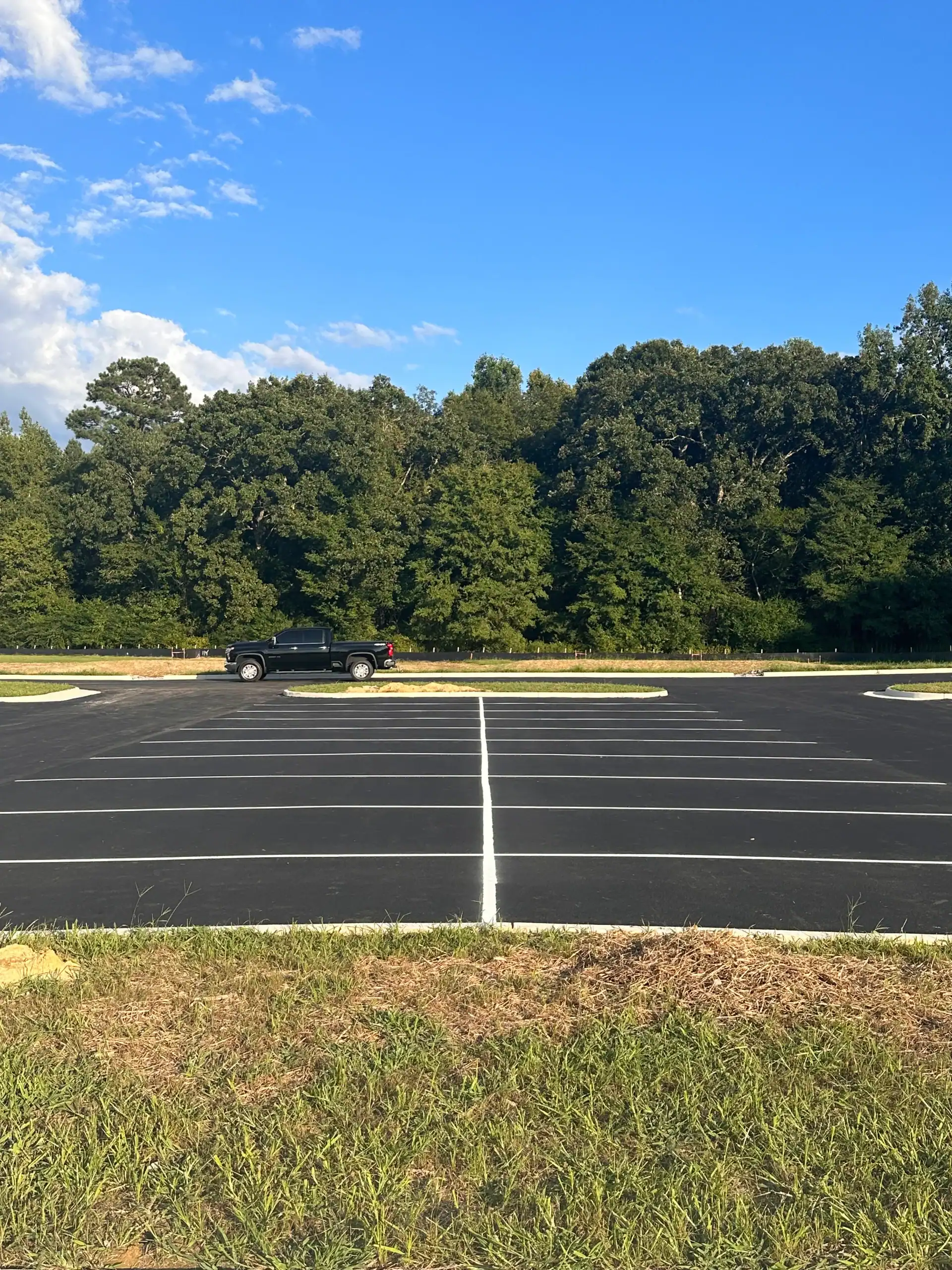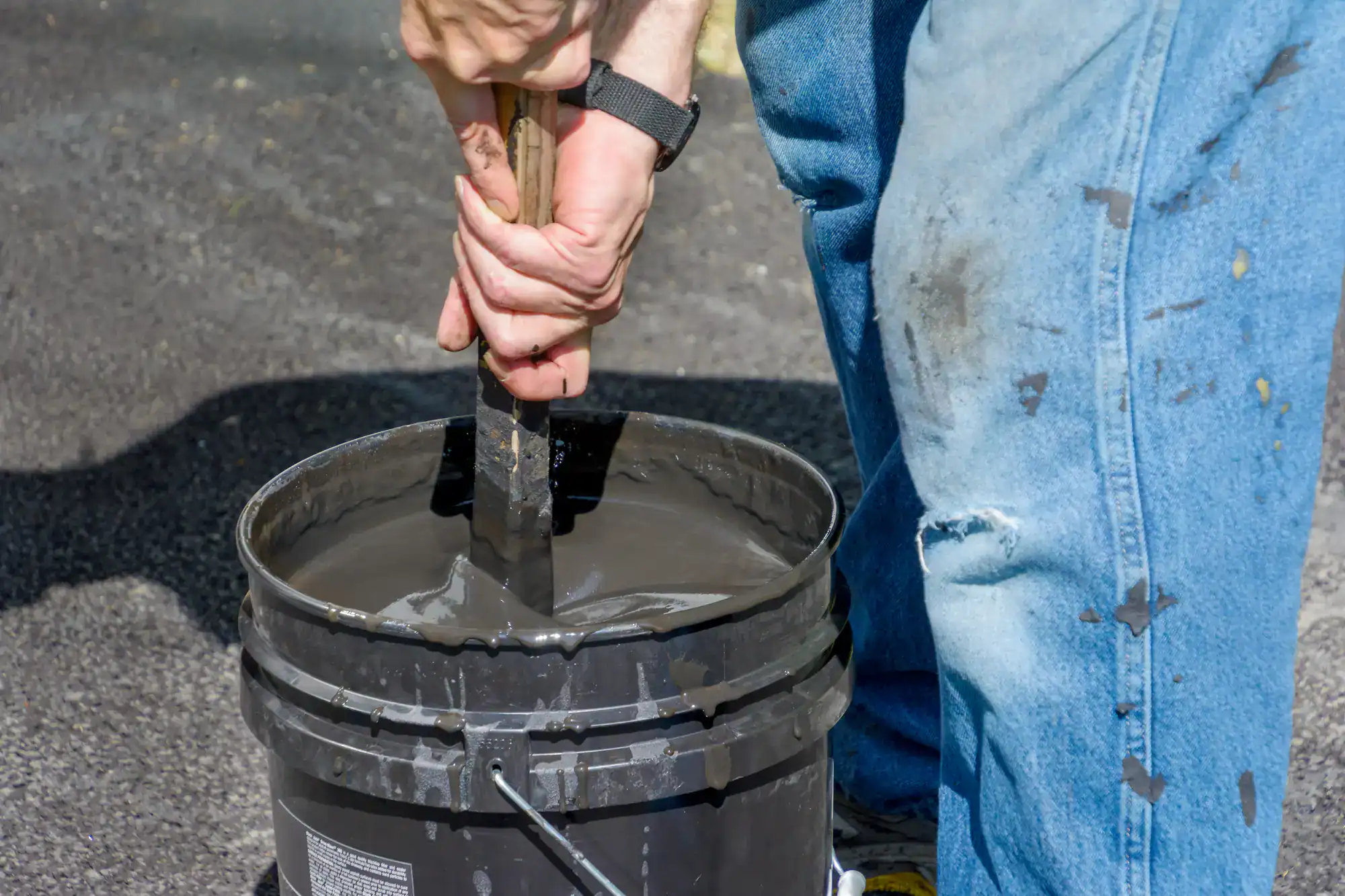
Your driveway takes a beating every winter in Southern Maryland. Here's how to protect it and get the most out of every sealcoating job.
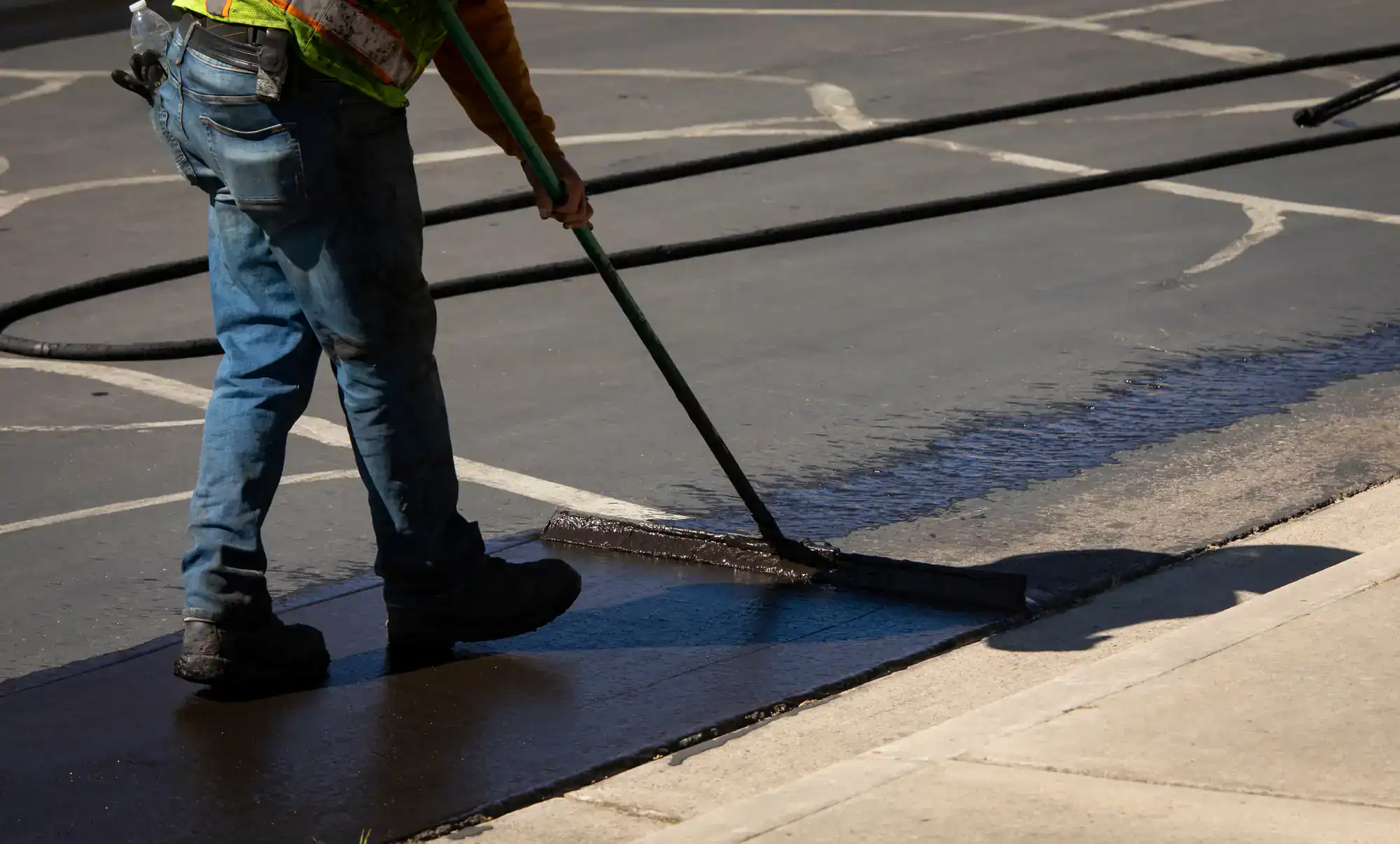
Most homeowners don’t think about their driveway until something goes wrong — a crack that keeps spreading, a surface that’s gone from black to gray, or a pothole that appeared out of nowhere after a hard winter. By that point, sealcoating alone might not be enough.
The good news is that a well-maintained asphalt driveway can last 25 years or more. The not-so-good news is that most driveways in Anne Arundel, Calvert, and St. Mary’s County don’t get that kind of life because the maintenance gets skipped or done wrong. These five tips will help you change that.
Sealcoating isn’t paint, and it isn’t a cosmetic fix. It’s a protective barrier that slows down the processes that destroy asphalt over time — UV oxidation, water infiltration, road salt, and automotive fluid penetration. Without it, your asphalt starts losing flexibility and developing surface cracks within a couple of years of installation.
Maryland’s climate makes this especially relevant. Hot, humid summers accelerate UV oxidation. Winters bring freeze-thaw cycles that force water into every small crack, where it freezes, expands by roughly nine percent, and widens the crack from the inside out. A properly sealcoated driveway significantly reduces how much water gets in — which means less damage when temperatures drop.
The fresh black finish is a nice bonus, but the real value is what’s happening beneath the surface.
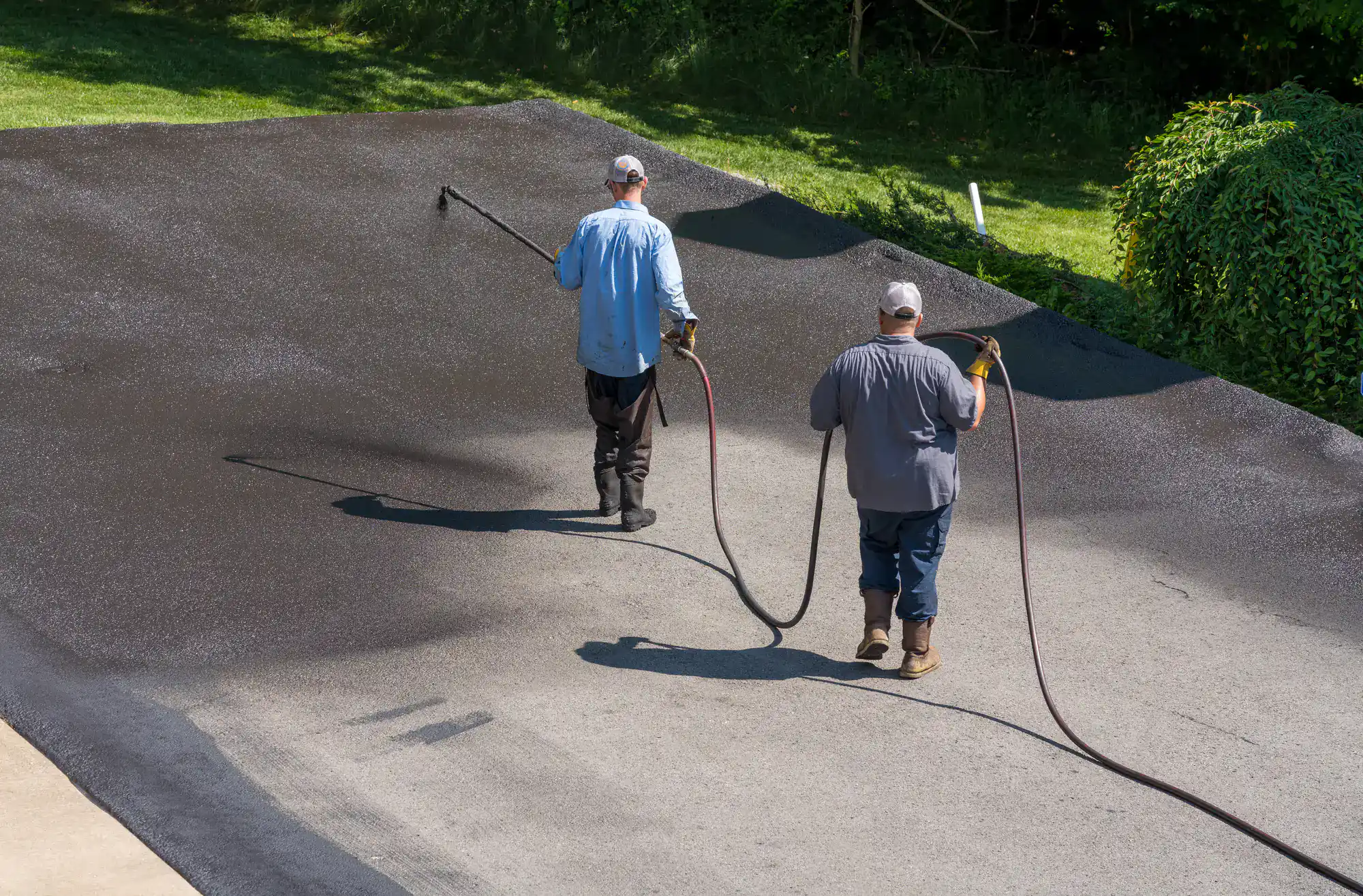
The short answer is every two to three years — and that timeline holds whether you’re in a waterfront neighborhood off the South River in Edgewater or on a longer rural driveway out in Calvert County. The climate stress is consistent across the region, and so is the maintenance schedule that protects against it.
Where homeowners go wrong is at both ends of that range. Some sealcoat every single year, thinking more is better. It isn’t. Applying sealer too frequently causes product buildup that eventually cracks and peels — which looks worse than an unsealcoated surface and costs more to fix. On the other end, waiting until the driveway looks visibly bad means the damage is already done. Driveway Sealcoating is a preventive treatment, not a repair.
Think of it the way you’d think about any other scheduled home maintenance. You don’t wait until your gutters are overflowing to clean them. You don’t skip oil changes until the engine light comes on. Your driveway works the same way. The two-to-three-year window keeps the protective layer active without letting it build up.
One more thing worth knowing: if your driveway was recently paved, don’t rush to sealcoat it. New asphalt needs six to twelve months to fully cure and harden before the first coat goes on. Sealing too soon can trap oils in the asphalt and interfere with that curing process. If you’re not sure where your driveway falls in that timeline, a quick in-person assessment will tell you everything you need to know.
This is the step that separates a sealcoating job that lasts from one that fails within a season. Sealcoating over unfilled cracks doesn’t fix them — it bridges them temporarily, and the underlying damage continues. By the time the sealer wears through, the crack is wider than it was when you started.
Proper crack filling before sealcoating is non-negotiable for quality results. Any contractor who skips this step is doing you a disservice, regardless of how good their sealer is. The crack needs to be cleaned out, filled with an appropriate crack filler, and allowed to cure before the sealcoating goes on top.
This matters especially in Southern Maryland, where the freeze-thaw cycle is relentless from December through February. A crack that’s left open going into winter is an invitation for water to get in, freeze, expand, and cause real structural damage. A crack that’s been properly filled and sealed going into winter has a much better chance of staying that way. The cost of crack repair before sealcoating is a fraction of what you’d spend on resurfacing or full driveway repaving after a few bad winters have done their work.
If your driveway has significant cracking — not just hairline surface cracks but wide or alligator-pattern cracking — it’s worth getting an honest assessment before scheduling a sealcoating job. In some cases, sealcoating is still the right call. In others, resurfacing or a targeted repair makes more sense first. The right answer depends on what’s actually going on with your specific driveway, which is why an in-person look matters more than a phone estimate.
Want live answers?
Connect with a Edward Smith Paving expert for fast, friendly support.
Beyond scheduling and crack repair, there are a few practical habits that make a real difference in how long your sealcoating holds up. None of them are complicated, but they’re easy to overlook if nobody’s ever walked you through them.
The biggest one is timing the job right. Sealcoating requires temperatures above 50°F — ideally closer to 70°F — and dry conditions for at least 24 to 48 hours after application. In Anne Arundel, Calvert, and St. Mary’s County, that means late spring through early fall is your window. Trying to squeeze in a sealcoating job in October when temperatures are dropping and rain is frequent is a gamble that usually doesn’t pay off.
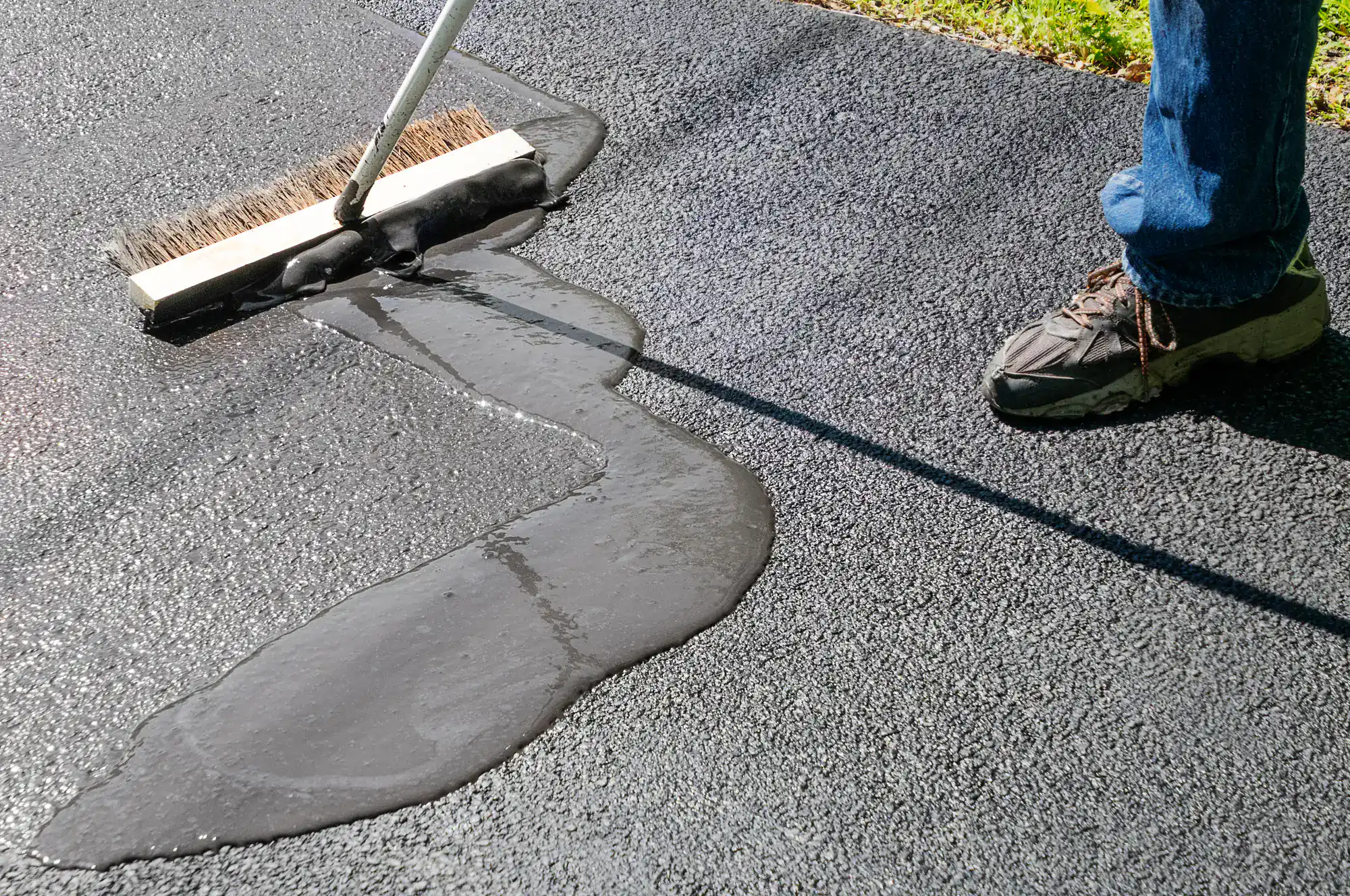
The quality of a sealcoating job has less to do with the sealer itself and more to do with what happens before it goes on. Surface preparation — cleaning, degreasing, crack filling, and edging — is where the work actually gets done. The sealer is just the final step.
Asphalt has to be clean and dry before any sealer is applied. Dirt, debris, and organic material prevent the sealer from bonding properly to the surface. Oil stains are a particular problem — if a driveway has oil or fuel contamination and it isn’t treated with a degreaser first, the sealer won’t adhere in those spots, and you’ll see peeling or bare patches within months. This is one of the most common reasons a sealcoating job fails prematurely, and it’s entirely avoidable with proper prep.
Two coats of sealer, applied correctly, provide meaningfully better protection than a single coat. A single coat is thinner, wears faster, and leaves the surface more vulnerable between applications. Two coats take more time and material, but the protection they provide is worth it. When you’re evaluating contractors, it’s a reasonable question to ask: how many coats do you apply, and what’s your surface prep process? A contractor who can answer that clearly and specifically is one who actually knows what they’re doing.
One thing that’s worth understanding about the Southern Maryland and Maryland and Central and Northern Virginia market specifically: there are itinerant operators who show up unsolicited, often claiming to have leftover sealer from a nearby job, offering a quick deal. These crews typically use heavily diluted product, apply a single thin coat with minimal prep, and are gone before you can assess the results. The job looks fine for a few weeks and then fades fast. A licensed contractor with a verifiable track record is a different proposition entirely — and in Maryland, any home improvement contractor working on a job over $500 is legally required to hold an MHIC license. It’s worth asking for that number before anyone touches your driveway.
Done properly, a professional sealcoating job should hold up for two to three years under normal conditions. In Anne Arundel, Calvert, and St. Mary’s County — with their combination of summer heat, road salt in winter, and the general humidity that comes with living near the Chesapeake Bay — you’re not going to push that much further without reapplication. But you can absolutely get the full two to three years out of it if the job was done right and you’re not stressing the surface unnecessarily.
A few things shorten that lifespan faster than anything else. Heavy vehicle traffic — particularly trucks or equipment — accelerates wear, especially in the first 48 hours after application when the sealer is still curing. Parking in the same spot repeatedly can cause surface impressions, particularly during hot summer months when the asphalt softens slightly. And anything that introduces petroleum products to the surface — fuel spills, oil leaks from a vehicle — will degrade the sealer and the asphalt beneath it over time.
For homeowners near NAS Pax River in St. Mary’s County who may be preparing a property for sale or rental before a PCS move, timing matters a lot. A fresh sealcoating job done in spring or early summer gives you the full cure window before the property needs to show well. For Calvert County homeowners with longer driveways on larger lots, the surface area is greater, which makes proper coverage and consistent application even more important — cutting corners on a 1,200-square-foot driveway is more visible and more costly to redo than on a shorter suburban one.
The bottom line is that sealcoating is a manageable, predictable maintenance cost. A new asphalt driveway in Anne Arundel, Calvert, or St. Mary’s County can run several thousand dollars to replace. Keeping up with sealcoating on schedule costs a fraction of that — and every cycle you complete is another two to three years you’re buying before that replacement conversation becomes necessary.
The five things that matter most are simple: sealcoat on a two-to-three-year schedule, fill cracks before the sealer goes on, make sure the surface is properly prepared, hire a licensed contractor, and don’t wait until the damage is visible to act. None of that is complicated — it just takes following through.
A driveway that’s maintained properly from the start can last well over two decades. One that gets ignored through a few hard Maryland winters can deteriorate fast enough to need full replacement in half that time. The difference in cost between those two outcomes is significant.
If you’re not sure where your driveway stands — whether it needs sealcoating, crack repair, resurfacing, or a full assessment — we at Edward Smith Paving offer free in-person estimates across Maryland and Central and Northern Virginia, Calvert County, and St. Mary’s County. We’ve been doing this for over 40 years and have paved more than 5,000 driveways across Maryland. We’ll tell you what your driveway actually needs, not just what costs the most.
Summary:
Article details:
Share: