Hear from Our Customers
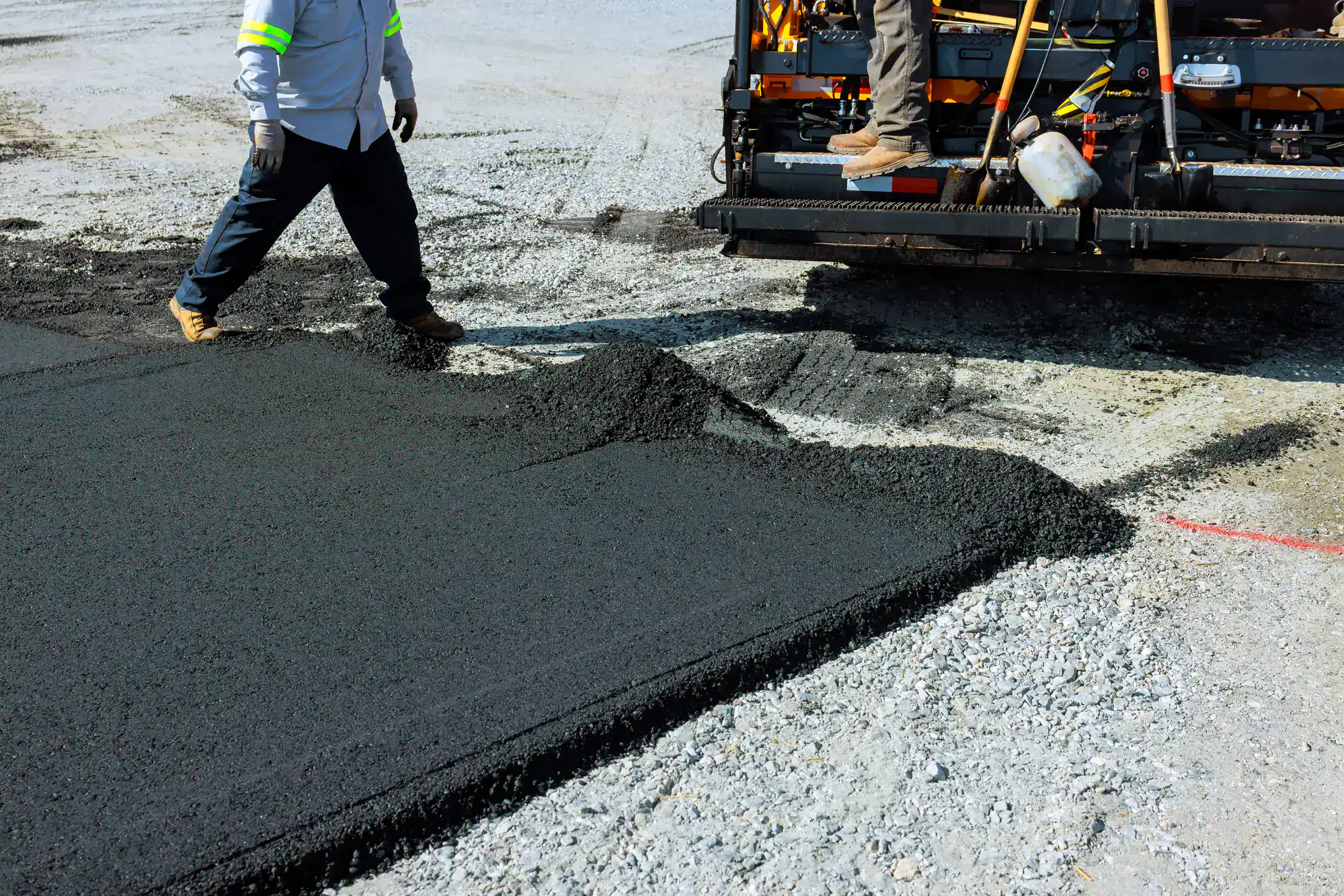
When commercial asphalt is installed properly, you stop reacting to problems and start ignoring your parking lot entirely — which is exactly where you want to be. No more patching the same spot every spring. No more fielding tenant complaints about potholes or drainage. No more wondering whether your lot is a slip-and-fall lawsuit waiting to happen. That’s the actual outcome of getting the job done right the first time.
In Virginia Beach, that outcome is harder to achieve than it sounds. The Kempsville district’s commercial building stock is largely from the 1960s and 1970s, which means many of the parking lots serving those properties are well past their functional lifespan — even if they’ve been sealcoated along the way. A surface that looks acceptable in August can be crumbling by March after Virginia Beach’s freeze-thaw cycling has worked through every unsealed crack all winter long.
Then there’s the drainage reality. Virginia Beach receives roughly 46 inches of rain annually, and the city has one of the most documented flooding and subsidence problems on the East Coast. A commercial lot that isn’t properly graded to shed water doesn’t just look bad after a storm — it deteriorates from the inside out, as standing water infiltrates the base and accelerates structural failure. Proper drainage grading isn’t a nice-to-have in this market. It’s what separates a 25-year lot from a 10-year one.
Edward Smith Paving is a family-owned asphalt paving company with over 40 years of experience and more than 5,000 completed projects across the Mid-Atlantic. This isn’t a seasonal crew or a company that started last year. It’s a business built on referrals, repeat clients, and work that still looks solid years after the job is done.
We handle the full scope of commercial paving — from initial site assessment and base preparation through final ADA-compliant line striping. One contractor, one point of contact, one contract. If something isn’t right, there’s a real person accountable for it, not a chain of subcontractors pointing at each other.
For commercial property owners and managers near Clear Springs — whether you’re managing a medical office along Kempsville Road, a retail space near Kemps River Crossing, or an office park off Indian River Road — our standard is the same: the base gets done right, the drainage gets graded properly, and the finished surface is built to last in Virginia Beach’s specific conditions. We hold an A+ BBB rating and MHIC License #159766, with no complaints on file.
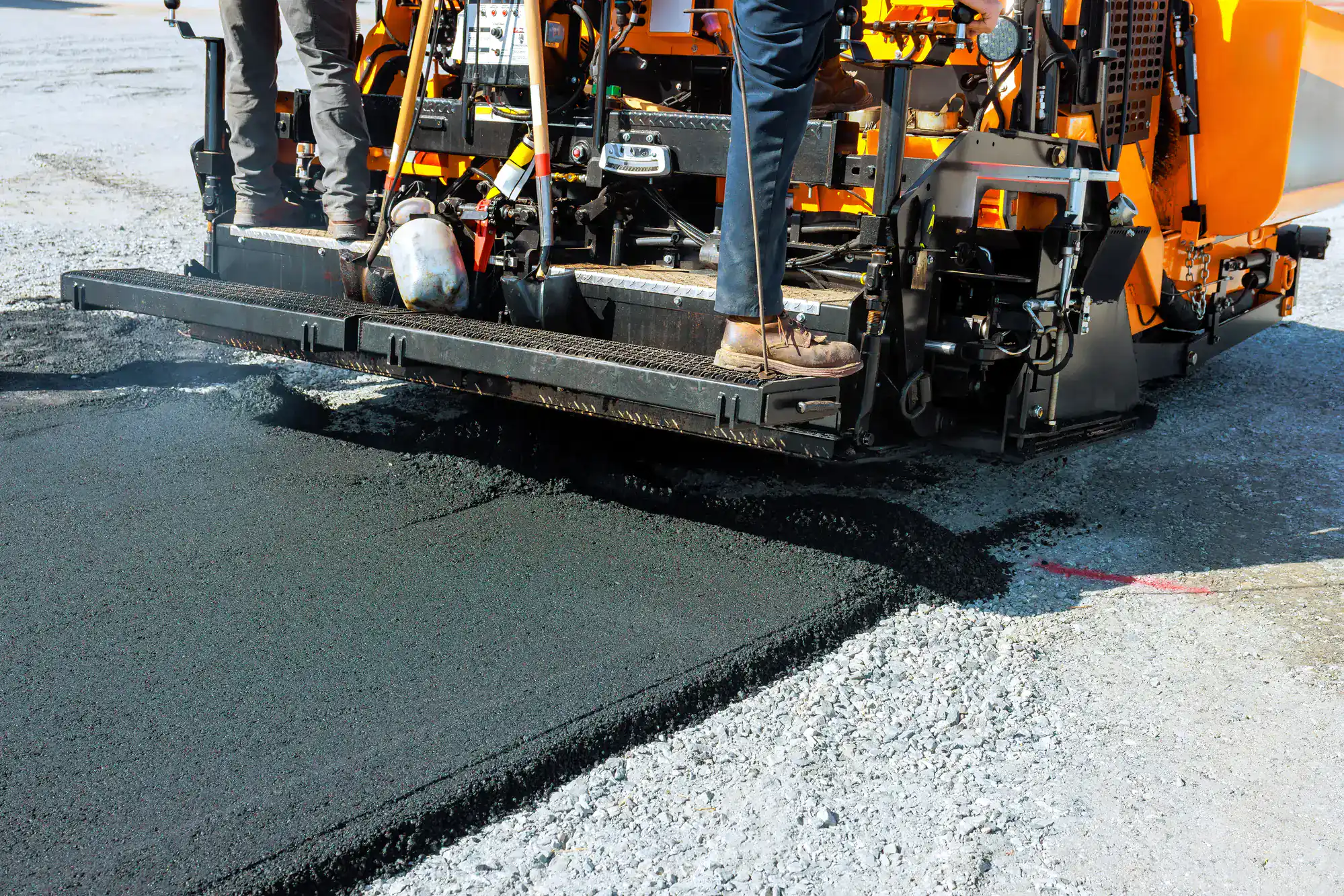
It starts with a free, in-person site assessment — not a phone quote, not an emailed estimate based on square footage alone. A legitimate commercial paving bid requires someone to actually walk the property, assess the existing pavement condition, evaluate drainage patterns, check subgrade stability, and identify any ADA compliance gaps in the current layout. That visit is free, and it’s where the real work begins.
From there, you get a written quote that reflects what the job actually requires. For commercial properties in the Clear Springs area, that typically means accounting for Virginia Beach’s drainage challenges upfront — grading specifications that move water away from the surface and away from the building, not just off the lot in the nearest direction. The base preparation phase is where most contractors cut corners and where most premature failures originate. We don’t skip it.
Once work begins, the project is phased around your operation. Commercial properties along the Kempsville Road and Indian River Road corridors can’t simply close their lots for a week — tenants, customers, and staff need access. We schedule work around your business hours and access requirements, not just the crew’s convenience. Virginia Beach commercial paving projects also need to account for the city’s permitting process through the Department of Planning and Community Development, particularly for projects involving drainage alterations or ADA modifications. That’s handled as part of our process, not left to you to figure out. The job finishes with ADA-compliant striping and a surface that’s ready for the kind of traffic your property actually sees.
Ready to get started?
Commercial asphalt paving near Clear Springs covers the full range of what a commercial property actually needs — new parking lot construction, full-depth replacement of failed surfaces, resurfacing over a structurally sound base, crack filling, sealcoating, and ADA-compliant line striping. The scope depends on what the site assessment reveals, not on a predetermined package.
For properties in the Kempsville district and the broader 23464 area, the specification that matters most is what goes under the surface. Virginia Beach’s combination of high annual rainfall, coastal humidity, salt air, and freeze-thaw cycling in winter months means that asphalt installed without proper base depth and drainage grading will fail faster than industry-standard projections — which are typically calibrated for drier, inland markets. The base prep specification for commercial work here accounts for those conditions specifically.
Sealcoating is included as a service for existing commercial surfaces and is particularly relevant in Virginia Beach’s coastal environment. UV oxidation from intense summer sun, moisture infiltration from heavy rainfall, and salt-laden air all work together to degrade the asphalt binder faster than in inland markets. Sealcoating on a regular cycle — typically every two to three years for high-traffic commercial lots in this climate — protects that binder and significantly extends the surface’s functional life. ADA-compliant striping is handled as part of every commercial paving project, addressing accessible space dimensions, slopes, and accessible route requirements that Virginia Beach enforces for commercial properties undergoing alterations.
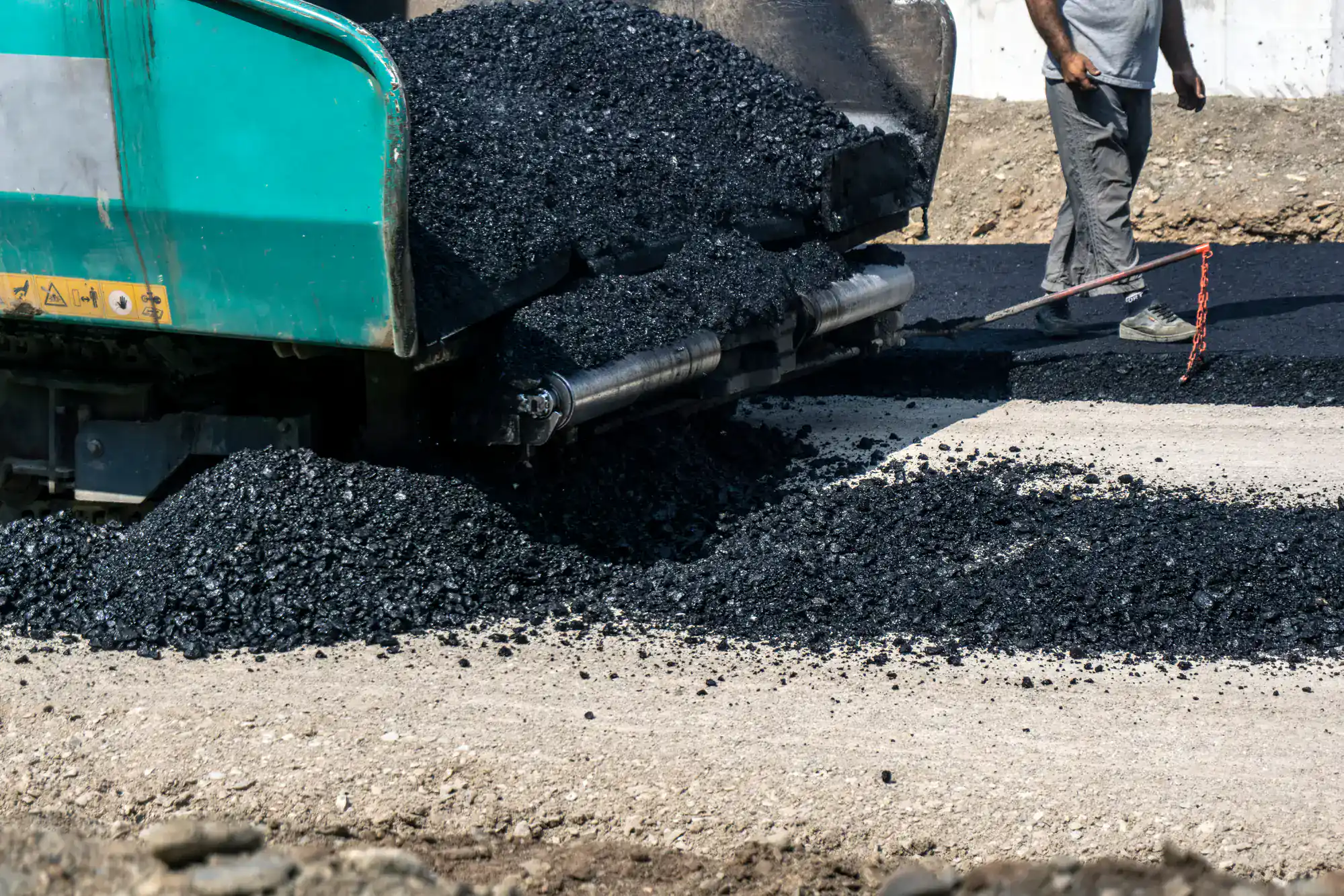
Commercial asphalt paving typically runs between $2 and $6 per square foot for standard work, with heavy-duty commercial applications — loading docks, high-traffic lots, properties requiring significant base repair — reaching $4 to $7 per square foot. A 10,000 square foot parking lot generally runs $20,000 to $45,000 in materials before labor and site-specific costs are factored in.
In the Clear Springs area, drainage grading and base preparation requirements can affect the total cost meaningfully. Properties in the Kempsville district that have aging asphalt from the 1970s often have base issues underneath the surface that only become visible during excavation. A bid that comes in significantly below $3 per square foot for commercial work almost always excludes the base preparation that Virginia Beach’s soil conditions and rainfall levels require. Getting a written, itemized quote after an in-person site visit — not a phone estimate — is the only reliable way to compare bids accurately.
The short answer is that you need someone to assess the base, not just the surface. Resurfacing works when the existing base is structurally sound — the top layer is worn or cracked, but the foundation underneath is still stable. Full replacement is necessary when the base has failed, which typically shows up as alligator cracking (a network of interconnected cracks that looks like reptile skin), significant rutting, or areas where the pavement flexes under vehicle weight.
For commercial properties in the Clear Springs area and throughout the Kempsville district, base failure is more common than many property owners expect — particularly in lots that were installed in the 1960s and 1970s and have been dealing with Virginia Beach’s drainage challenges ever since. Standing water accelerates base deterioration significantly, and a lot that looks like a resurfacing candidate on the surface may have compromised base material underneath. The in-person site assessment is specifically designed to identify this before a scope of work is agreed upon, so you’re not paying for a resurfacing that fails in three years because the base wasn’t addressed.
It depends on the scope of work. In Virginia Beach, straightforward resurfacing of an existing lot — same footprint, no drainage alterations, no change to impervious surface area — often doesn’t require a permit. However, any project that involves expanding the lot, altering drainage patterns, modifying the site layout, or changing the impervious surface area typically does require review through the City of Virginia Beach Department of Planning and Community Development.
ADA compliance is a separate but related consideration. Under federal ADA standards, repaving a commercial parking lot qualifies as an alteration, which triggers the obligation to bring the lot into compliance with current accessible parking requirements — correct number of accessible spaces, proper dimensions, accessible routes, and compliant signage. This isn’t optional, and it applies regardless of whether the city requires a separate permit for the paving work itself. We account for both the city’s permitting requirements and ADA compliance as part of the project scope, not as afterthoughts.
Virginia Beach is harder on asphalt than most property owners realize. The combination of intense summer UV radiation, high year-round humidity, approximately 46 inches of annual rainfall, salt air from the coast, and winter freeze-thaw cycling creates a set of stressors that work on asphalt from multiple directions simultaneously. UV oxidation brittles the asphalt binder, moisture infiltrates any unsealed crack and weakens the base, salt air accelerates chemical breakdown of the binder, and freeze-thaw cycling turns small cracks into large ones over the course of a single winter.
A properly installed and maintained commercial lot in Virginia Beach can last 20 to 30 years. A poorly installed one — or a well-installed one that isn’t maintained — typically fails in 10 to 12 years under these conditions. The difference usually comes down to base preparation depth, drainage grading, and whether sealcoating is applied on a consistent cycle. For properties in the Kempsville district where the original asphalt is 40 to 50 years old, the question isn’t whether it needs attention — it’s whether the base is still viable or whether full replacement is the more cost-effective path.
For most commercial paving projects, fresh asphalt can handle light vehicle traffic within 24 to 48 hours of completion, though full curing takes longer — typically 30 days before the surface reaches its full hardness. In Virginia Beach’s summer heat, the surface can feel soft underfoot for longer than in cooler climates, which is worth knowing if your lot sees heavy truck traffic or deliveries.
The more practical concern for commercial properties along the Kempsville Road and Indian River Road corridors is access during the work itself, not just after. We phase commercial paving projects specifically to keep portions of the lot accessible throughout the job — so tenants, customers, and staff aren’t left without parking for the duration. The phasing plan is worked out before the job starts, based on your property’s layout and your business’s operating hours. If your operation runs Monday through Friday during standard business hours, there are often options to schedule the most disruptive phases for evenings or weekends. That conversation happens during the site assessment, before any contract is signed.
The most important thing to understand is that two bids for the same square footage can represent completely different products. One contractor might be pricing a 2-inch overlay over the existing base; another might be pricing full-depth removal and replacement with a proper aggregate base. The surface looks identical on day one. The difference shows up in year five or ten.
When you’re comparing bids for commercial paving near Clear Springs, ask each contractor to specify the base depth they’re proposing, the asphalt thickness for both the binder and surface courses, how drainage grading will be handled, and whether ADA-compliant striping is included in the scope. Ask for proof of Virginia contractor licensing and current general liability insurance — a legitimate commercial contractor will provide a certificate of insurance without hesitation. Also ask whether they’ll be on-site personally or whether the work is being subcontracted. In Virginia Beach’s competitive paving market, the bid that accounts for drainage, proper base depth, and ADA compliance may cost more upfront — but it’s the one that doesn’t require a redo in eight years.
Other Services we provide in Clear Springs