What does parking lot maintenance actually include — and when do you really need it? Here's what property owners across Anne Arundel, Calvert, and St. Mary's Counties should know.
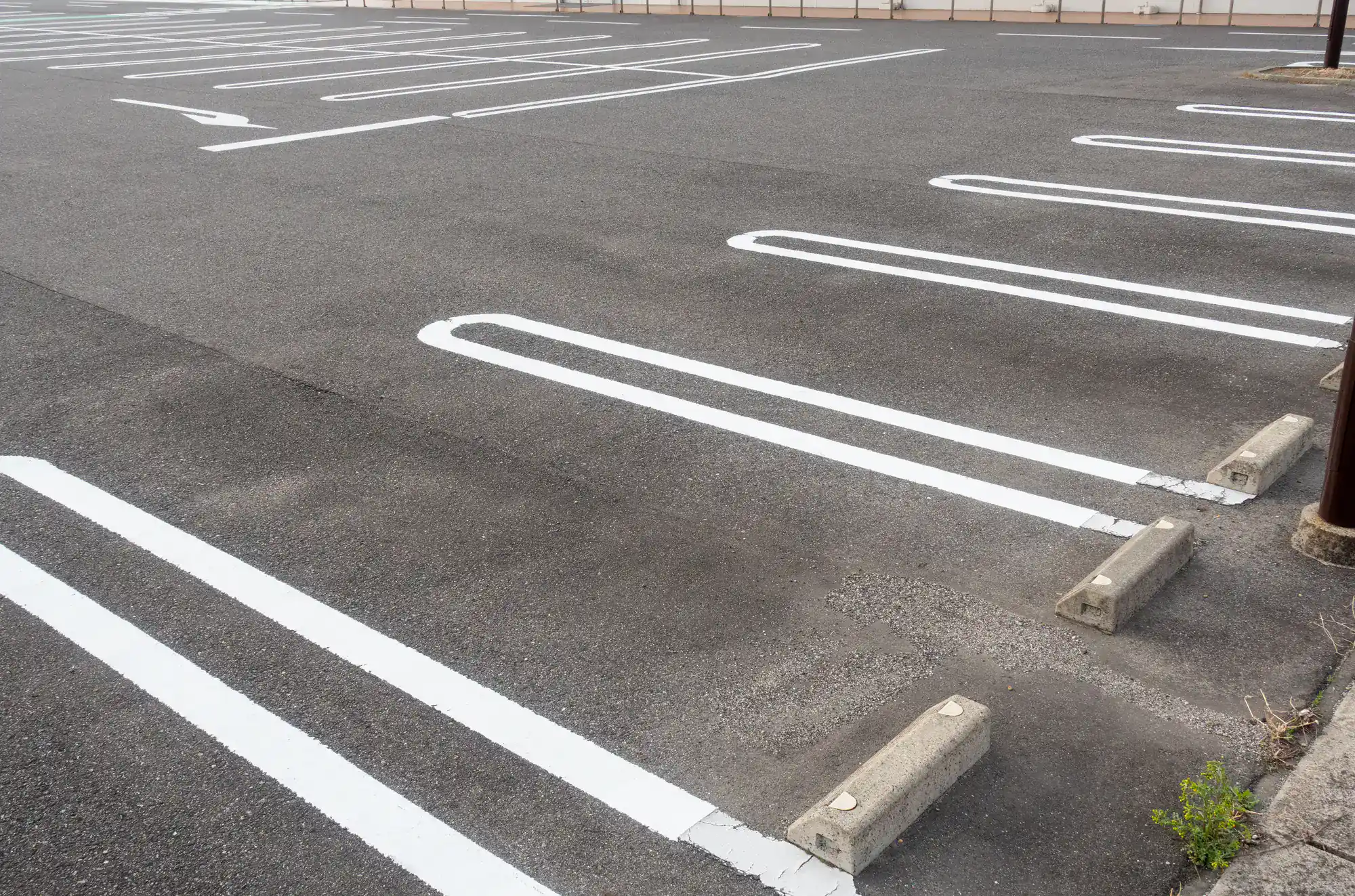
Your parking lot is the first thing customers, tenants, and visitors see before they ever walk through your door. A cracked, faded, or pothole-riddled surface doesn’t just look bad — it signals neglect, creates liability, and quietly chips away at the value of your property. Most business owners and property managers don’t ignore it on purpose. They just don’t know where to start, what’s actually urgent, or whether they’re looking at a $2,000 maintenance job or a $50,000 replacement. This guide is here to answer those questions plainly, so you can make a smart decision — not just a fast one.
Parking lot maintenance isn’t a single service — it’s a program. Think of it the way you’d think about maintaining a building’s roof or HVAC system: you don’t wait for it to fail completely before you act. The goal is to extend the life of what you already have, catch small problems before they compound, and keep the surface safe and functional for the people using it every day.
A complete maintenance program typically involves crack sealing, pothole repair, sealcoating, and parking lot striping — each serving a specific purpose at a specific stage of the asphalt’s life. Some properties need all of it at once. Others just need one or two treatments applied at the right time. The difference between those outcomes usually comes down to how long the surface has gone without attention.
Sealcoating is the most cost-effective thing you can do for an asphalt parking lot, and it’s also the most misunderstood. A lot of people assume it’s cosmetic — that the fresh black finish is the point. It’s not. The finish is a side effect. The real purpose is to create a protective barrier between your asphalt and everything that destroys it: water, UV rays, fuel spills, road salt, and the repeated freeze-thaw cycles that Maryland winters deliver every single year.
Here’s why that matters in practical terms. Unsealed asphalt absorbs water. When temperatures drop below freezing — which happens dozens of times between November and March across Anne Arundel, Calvert, and St. Mary’s Counties — that water expands inside the pavement by roughly 9% in volume. It widens cracks, pushes up edges, and destabilizes the base layer underneath. Do that 30 or 40 times in a single winter and you’re not dealing with surface cracks anymore. You’re dealing with structural failure.
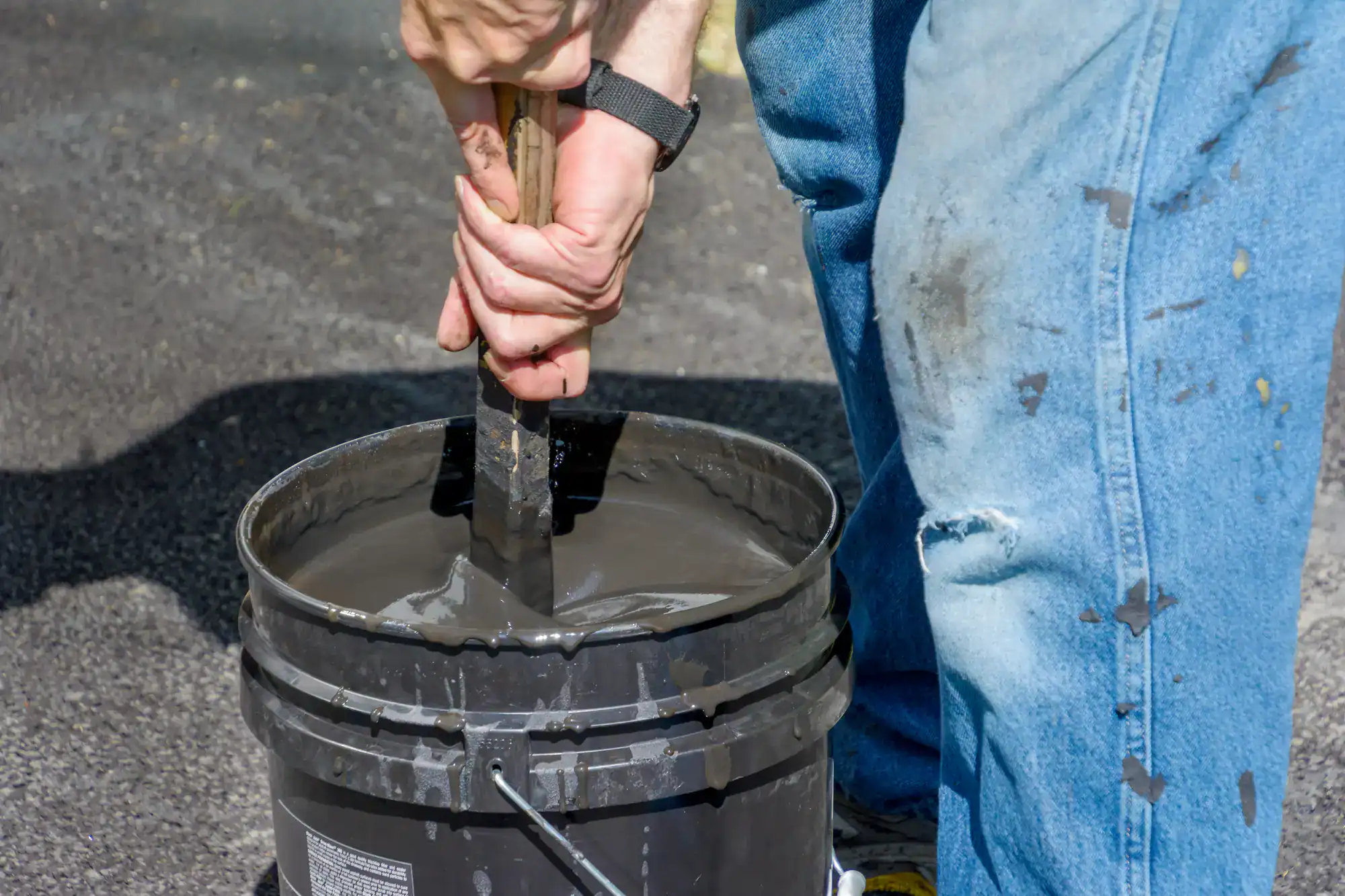
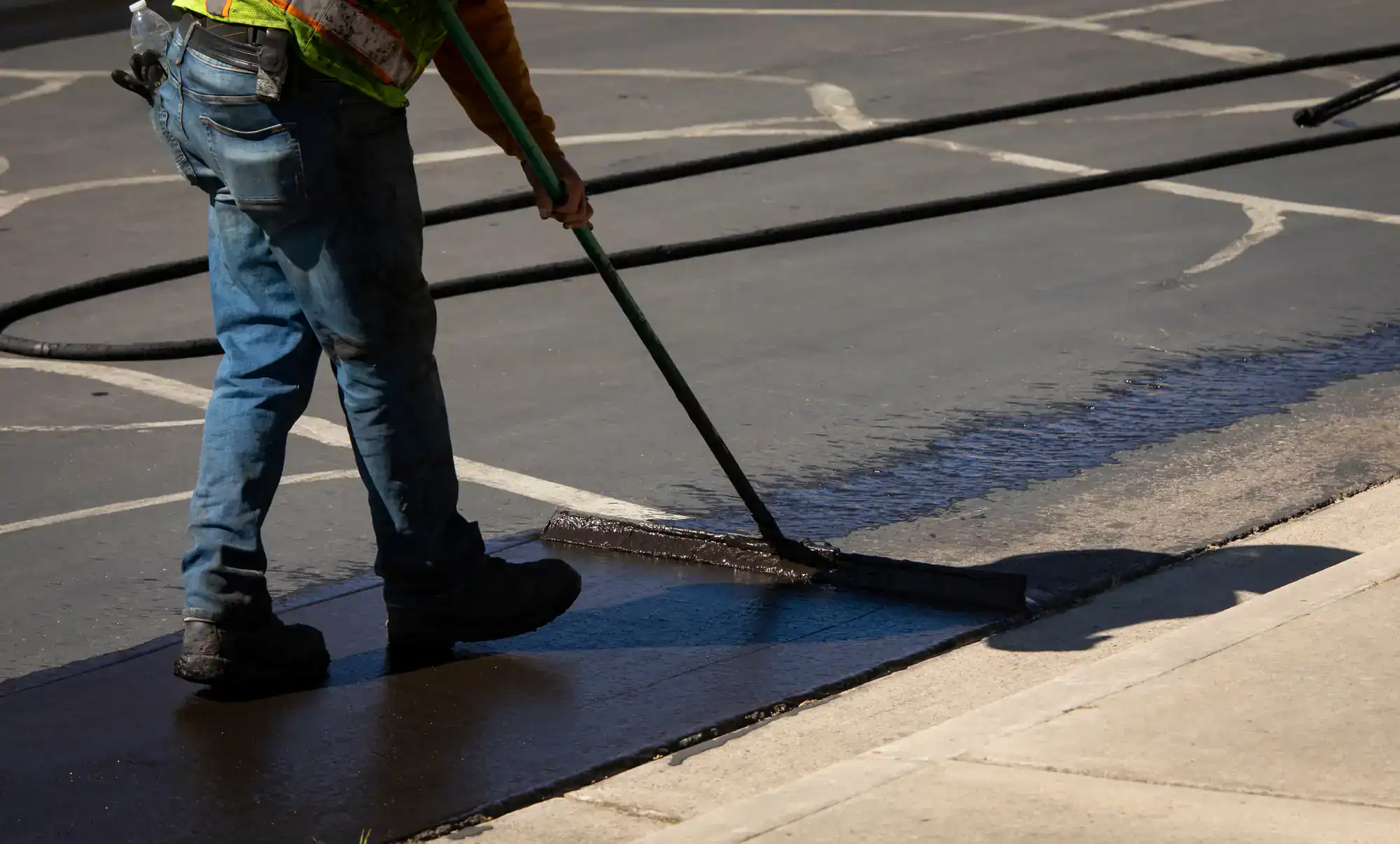
Sealcoating breaks that cycle. Applied every two to three years, it keeps water out, slows oxidation from UV exposure, and resists the chemical damage that comes from oil drips and de-icing treatments. The cost is typically in the range of $0.15 to $0.30 per square foot. Compare that to asphalt resurfacing at $1.50 to $3.50 per square foot, or full replacement at $3 to $7 or more — and the math becomes very clear, very fast. Industry data consistently shows that proactive pavement preservation saves $6 to $10 for every dollar spent. That’s not a marketing line. That’s what happens when you treat a parking lot like an asset instead of an afterthought.
One more thing worth knowing: new asphalt should be sealcoated around 12 months after installation. A lot of property owners assume new pavement doesn’t need attention for years. In reality, that first year of UV exposure and weather cycling does real damage to an unprotected surface. Getting ahead of it early is always cheaper than catching up later.
This is the question most property managers get wrong — usually because they’re either acting too late or assuming the worst before they need to. Not every cracked parking lot needs to be torn up and replaced. But not every crack can be sealed and forgotten, either. Knowing the difference saves you from both overspending and under-addressing the problem.
Surface cracks that are roughly a quarter-inch wide or narrower are typically good candidates for crack sealing. This involves cleaning the crack and filling it with a rubberized hot-pour sealant that bonds to the edges and prevents water from getting in. Done consistently — ideally once a year as part of a broader maintenance program — crack sealing can add years to the life of a lot that would otherwise deteriorate rapidly.
When you start seeing what’s called alligator cracking — that interconnected, scaly pattern that looks like, well, alligator skin — the situation is more serious. That pattern usually indicates the base layer underneath has started to fail, not just the surface. At that point, crack sealing alone won’t hold. You’re looking at partial-depth or full-depth patching, and depending on how widespread the damage is, potentially a resurfacing overlay across the affected areas.
Full replacement is the last resort, and it’s often avoidable if maintenance has been reasonably consistent. A well-maintained asphalt lot can last 20 to 30 years. Without maintenance, that lifespan can be cut in half. There’s also a compounding factor worth understanding: asphalt quality drops noticeably around the 15-year mark, and then the remaining life tends to disappear quickly — meaning the window to intervene with cost-effective repairs is narrower than most people expect. If your lot is approaching that range and hasn’t been maintained, getting an honest assessment now is far better than waiting until the decision is made for you.
Want live answers?
Connect with a Edward Smith Paving expert for fast, friendly support.
Southern Maryland isn’t a generic market, and parking lot maintenance here isn’t a generic service. The climate, the geography, and the type of commercial activity across these three counties all shape what your pavement is up against — and what it actually needs to hold up over time.
We work across Anne Arundel, Calvert, and St. Mary’s Counties, and the conditions we see in this region are specific enough that a one-size-fits-all approach simply doesn’t work. The asphalt mix matters. The drainage design matters. The timing of maintenance within the season matters. What works for a parking lot in a landlocked suburb doesn’t necessarily translate to a waterfront property in Solomons or a high-traffic commercial strip in Lexington Park.
Start with the winters. St. Mary’s County sees an average of nearly 18 inches of snow annually, and the average winter temperature sits right around 37°F — which means the region doesn’t stay frozen. It thaws, refreezes, thaws again. That cycle is the single most destructive force acting on asphalt in this area, and it happens repeatedly from November through March. Properties near the water — and there are a lot of them, given St. Mary’s County’s roughly 500 miles of shoreline and Calvert County’s Chesapeake Bay waterfront — face the added stress of salt air and brackish water exposure, which accelerates oxidation and surface breakdown on any unsealed pavement.
In Maryland and Central and Northern Virginia, the picture is a little different but no less demanding. Low-lying areas around Annapolis — particularly near the City Dock and waterfront neighborhoods — deal with king-tide flooding that leaves standing brackish water on paved surfaces. That’s corrosive in a way that inland parking lots simply aren’t exposed to. Meanwhile, high-traffic commercial corridors like Route 2 through Glen Burnie and Route 50 heading into Annapolis put constant load stress on parking lots that feed off those roads, accelerating wear patterns that a lighter-use property might not see for years.
Calvert County’s Route 4 corridor through Prince Frederick and Dunkirk has seen steady commercial growth as more residents commute to DC and Annapolis, which means newer commercial developments are coming online regularly — and those properties need maintenance programs established early, before deterioration gets a foothold. The good news is that newer asphalt responds very well to timely sealcoating and crack management. The bad news is that a lot of property owners assume new pavement buys them a decade of hands-off operation. It doesn’t.
We use climate-specific asphalt mixes and design every job with local drainage and subgrade conditions in mind. That’s not a talking point — it’s what separates a surface that holds up through five Maryland winters from one that’s already showing stress fractures by spring.
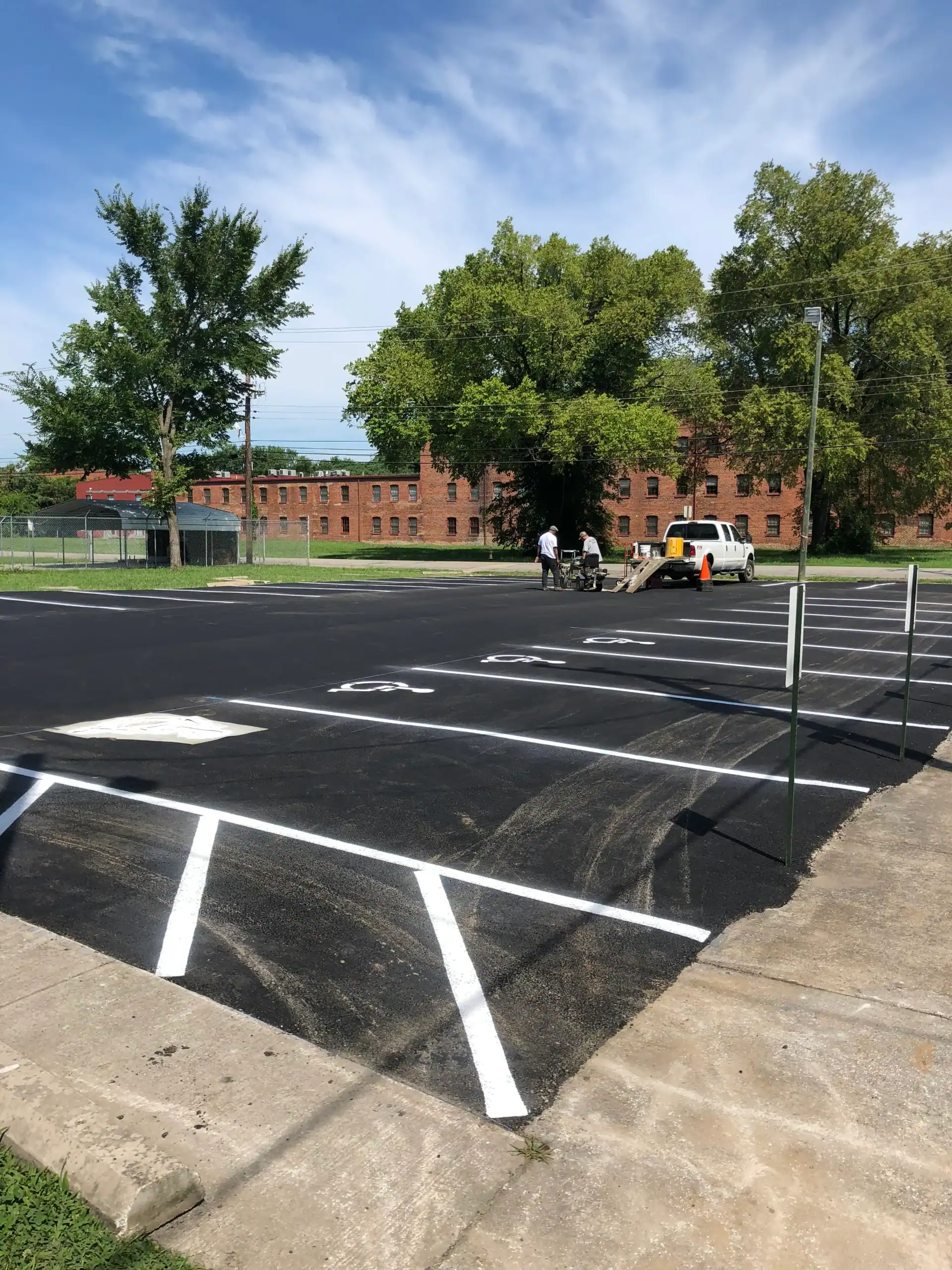
Yes — and this is one of the areas where a lot of commercial property owners have more exposure than they realize. The Americans with Disabilities Act requires that commercial parking lots meet specific accessibility standards: a defined ratio of accessible spaces to total spaces, at least one van-accessible space, properly sloped curb cuts and ramps, accessible route markings, and compliant signage. These aren’t suggestions. Failure to comply creates genuine legal liability — the kind that results in complaints, fines, or civil lawsuits.
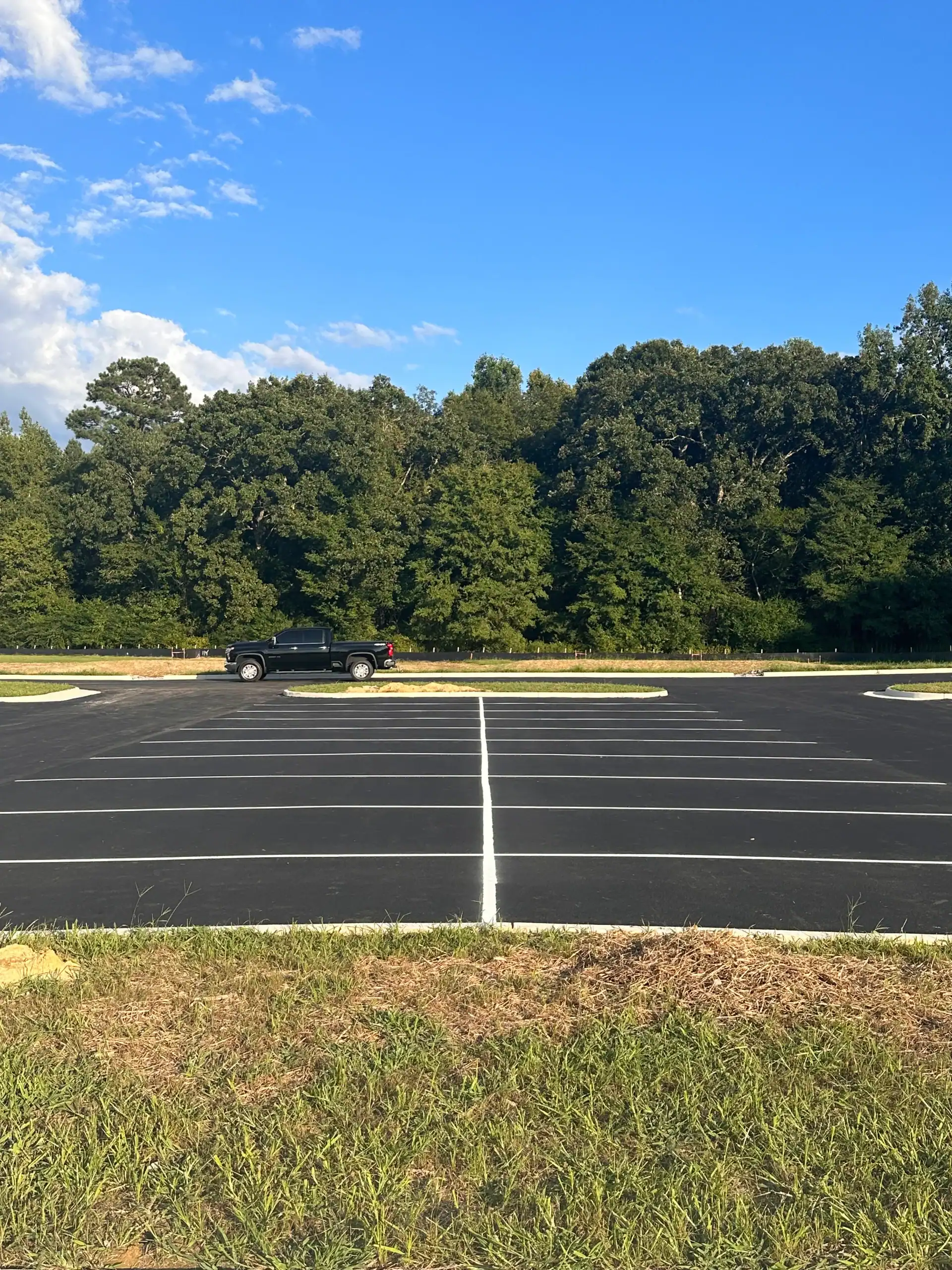
Faded line striping is one of the most common ADA compliance failures we see, and it’s also one of the easiest to fix. When parking lot striping wears down — which happens faster on high-traffic surfaces, in direct sun, and on lots that haven’t been maintained — accessible space markings, access aisles, and route indicators become unclear or invisible. That’s a problem for the people trying to use your lot, and it’s a documented liability for you as the property owner or manager.
In a market like Lexington Park and the Route 235 corridor in St. Mary’s County — where the NAS Patuxent River workforce of more than 22,000 people generates consistent commercial traffic across retail centers, medical offices, and contractor facilities — keeping parking lots properly marked and ADA-compliant isn’t optional. The same applies to the growing commercial districts in Prince Frederick and Leonardtown in Calvert County, and the dense commercial corridors throughout Maryland and Central and Northern Virginia, where property investment is increasing and standards are rising alongside it.
Our parking lot striping work is done with ADA compliance built in from the start — not added as an afterthought. We assess your current layout, identify any compliance gaps, and stripe the lot correctly the first time. Combined with sealcoating and surface repairs, a properly striped lot protects your customers, limits your liability, and looks like a property that’s actively cared for. That matters more than most people give it credit for, especially in a competitive commercial market where the condition of your property sends a message before anyone walks through your door.
The paving industry has a well-earned reputation for contractors who overpromise, underdeliver, and aren’t around when something goes wrong. In Maryland, the baseline protection against that is simple: verify that your contractor holds an active MHIC license. It’s a state-issued credential that requires real experience, a passed exam, and renewal every two years. It also means you’re covered by Maryland’s Guaranty Fund if something goes sideways. Any contractor who can’t give you a license number isn’t worth calling back.
Beyond licensing, the things that actually matter are straightforward. Does the contractor show up with their own equipment or are they subcontracting the work out? Do they give you a written, itemized estimate or a vague number over the phone? Is the owner involved, or are you just getting a crew with no accountability behind it?
We’ve been doing this work for over 40 years, across more than 5,000 projects, and we’re based right here in Annapolis serving Anne Arundel, Calvert, and St. Mary’s Counties. We know what Southern Maryland asphalt is up against, and we know what it takes to make a parking lot last. If your lot is showing signs of wear — or if you just haven’t had it assessed in a few years — reach out to us for a free quote. No pressure, no guesswork. Just an honest look at what your pavement needs.
Summary:

Article details:
Share: