A new driveway is a bigger decision than most homeowners expect. Here's what to know before you commit to anything.
Most homeowners don’t think much about their driveway until it starts failing. A crack here, a sunken section there — and suddenly what used to be invisible is all you see when you pull in. If you’re at the point where you’re wondering whether to repair, repave, or start fresh, you’re in the right place. This guide covers everything you actually need to know about new driveway installation in Maryland and Central and Northern Virginia, Calvert County, and St. Mary’s County — the process, the costs, what separates a driveway that lasts 30 years from one that fails in five, and how to find a contractor you can trust.
A lot of homeowners assume a new driveway is mostly about the asphalt on top. It’s not. The asphalt is almost the last thing that happens. What determines whether your driveway holds up through Maryland winters and summer heat is everything underneath it — the grading, the sub-base, the drainage engineering.
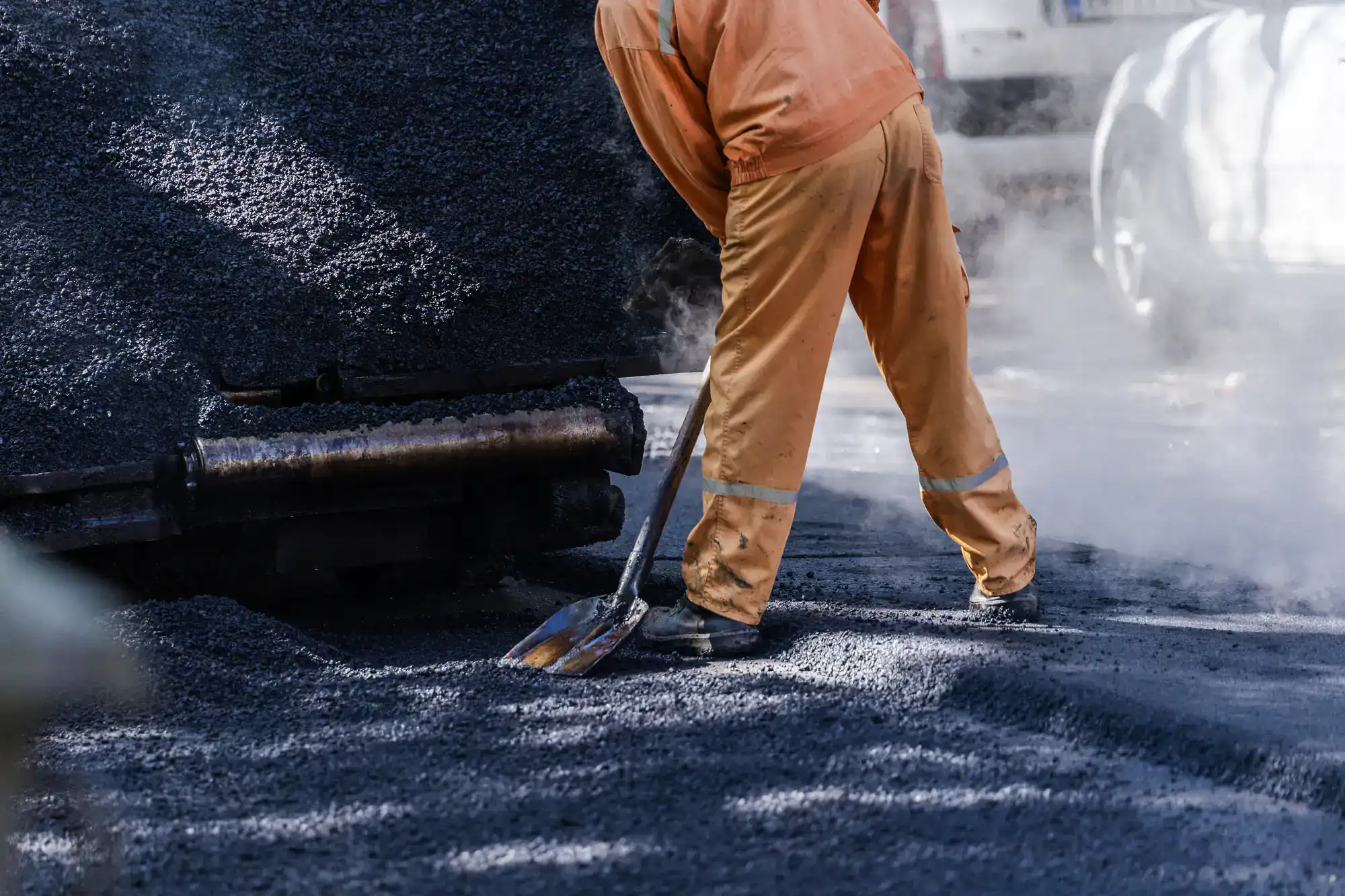
When we install a new driveway, the process starts with removing whatever is there now, whether that’s old asphalt, gravel, or bare dirt. From there, the ground gets graded to ensure water drains away from your home rather than pooling on the surface or working its way under the base. A compacted gravel sub-base goes down next, and only after that is the hot mix asphalt laid and machine-compacted into a solid, even surface.
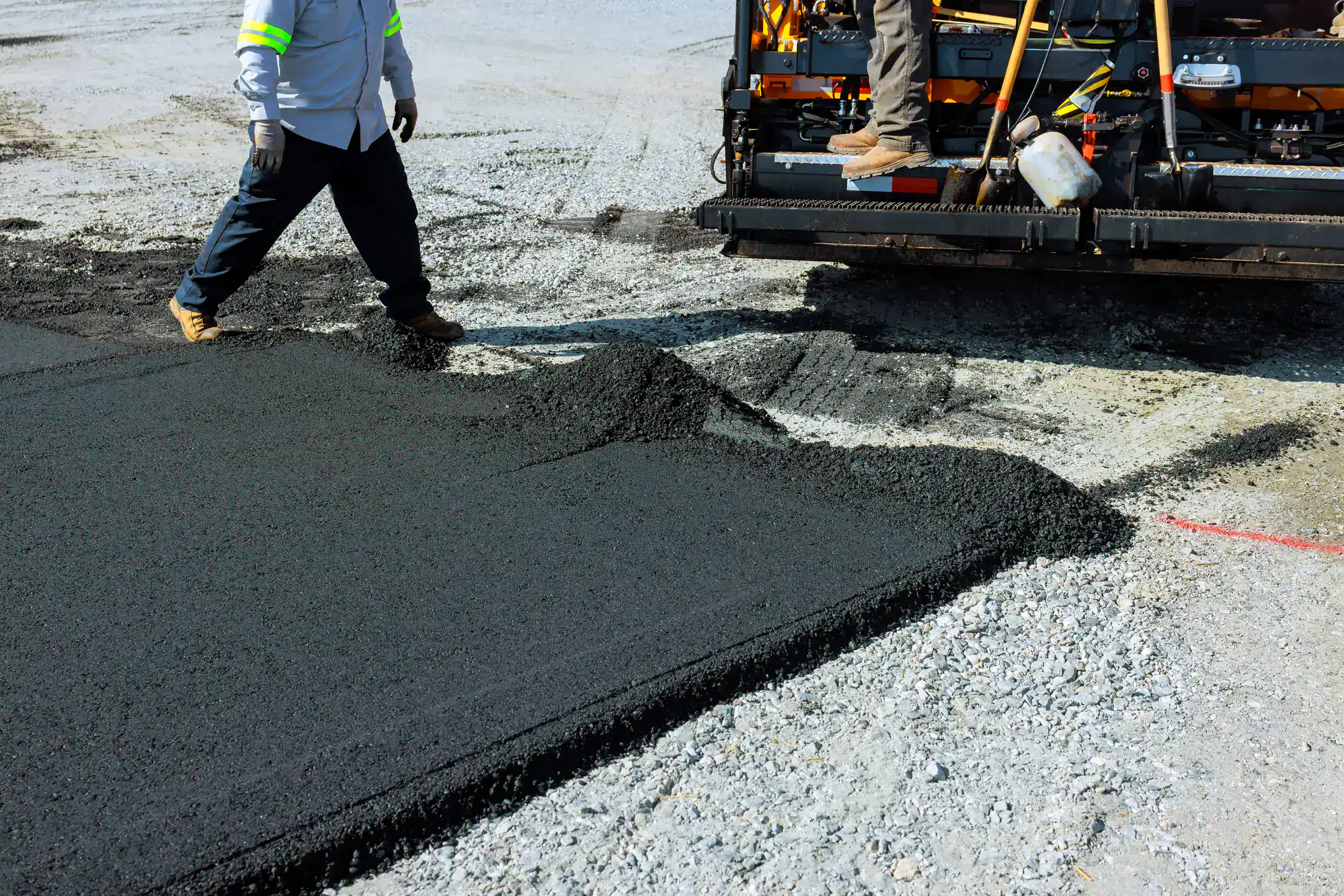
Here’s something most contractors won’t tell you upfront: the quality of your driveway has less to do with the asphalt and more to do with what’s underneath it. A thin layer of hot mix over poorly compacted or improperly graded soil will crack, sink, and heave — sometimes within a couple of years. A properly prepared base can make that same asphalt last two to three decades.
In Southern Maryland, this is especially important. Calvert County has clay-heavy soil in many areas, which shifts and compresses under load and moisture. St. Mary’s County’s peninsula geography means the water table sits higher in certain spots, making drainage engineering a real consideration — not just a box to check. And in Maryland and Central and Northern Virginia, particularly in waterfront communities around the Chesapeake Bay, freeze-thaw cycles hit hard every winter. Water gets into any weakness in the base, freezes, expands, and widens cracks from the inside out. If the base isn’t solid before the asphalt goes down, that process starts immediately.
Proper base work means excavating to the right depth, compacting the soil underneath, laying a gravel aggregate layer thick enough to distribute vehicle weight evenly, and grading everything so water has somewhere to go. It also means applying a tack coat — a bonding layer between the base and the asphalt — before the hot mix is placed. Skip any of these steps and you’re essentially building on a weak foundation.
This is why the lowest quote isn’t always the best value. A contractor who bids significantly under everyone else is almost always cutting somewhere, and base preparation is the most common place that happens. You won’t see it when the job is done. You’ll see it two winters later when sections start to sink.
We’ve been doing this for over 40 years and have completed more than 5,000 driveway installations across Anne Arundel, Calvert, and St. Mary’s Counties. The jobs we’re proudest of aren’t the ones that looked great on day one — they’re the ones that still look great 20 years later because the foundation was done right.
Most homeowners are surprised by how quickly a new driveway comes together once our crew is on-site. For a standard residential driveway, the active work — demolition, grading, base prep, and asphalt installation — typically spans one to two days. The full timeline from first contact to finished surface, including scheduling and any site prep, usually runs five to ten working days for most jobs.
What you do need to plan for is the curing period after installation. New asphalt needs at least a week before you’re driving on it regularly. It’s firm to the touch much sooner than that, but the surface is still curing and hardening underneath. Putting heavy vehicle traffic on it too early can leave marks or cause surface deformation that’s difficult to fix. We’ll always give you a clear timeline so you know exactly when the driveway is ready for normal use.
A few things can affect the schedule. Weather is the biggest one. Asphalt installation requires dry conditions and ambient temperatures above 50°F, which in Maryland means the practical installation window runs from roughly April through October. If you’re planning a new driveway, spring and early fall tend to offer the best combination of weather conditions and contractor availability. Summer is peak season, and experienced crews book up fast — sometimes four to six weeks out — so planning ahead pays off.
For larger properties in Calvert or St. Mary’s County with long, winding driveways, the timeline may extend a day or two simply due to the volume of material involved. Rural lots in those counties often have driveways that are significantly longer than a typical suburban Anne Arundel property, which affects both scheduling and cost. We factor all of that in when we come out to assess your site — there’s no guessing from a phone call.
Want live answers?
Connect with a Edward Smith Paving expert for fast, friendly support.
Cost is usually the first question, and it’s a fair one. Nationally, most homeowners pay somewhere between $3,000 and $7,500 for a new asphalt driveway, with the average landing around $5,000 to $5,500. In Anne Arundel, Calvert, and St. Mary’s Counties, that range holds reasonably well for a standard two-car residential driveway , though site conditions, lot access, and driveway length all move the number.
What you’re paying for isn’t just asphalt by the square foot. It’s excavation, grading, base material, equipment, labor, and the expertise to do it correctly the first time. A written, itemized quote helps you understand exactly what’s included — and makes it much easier to compare contractors honestly.
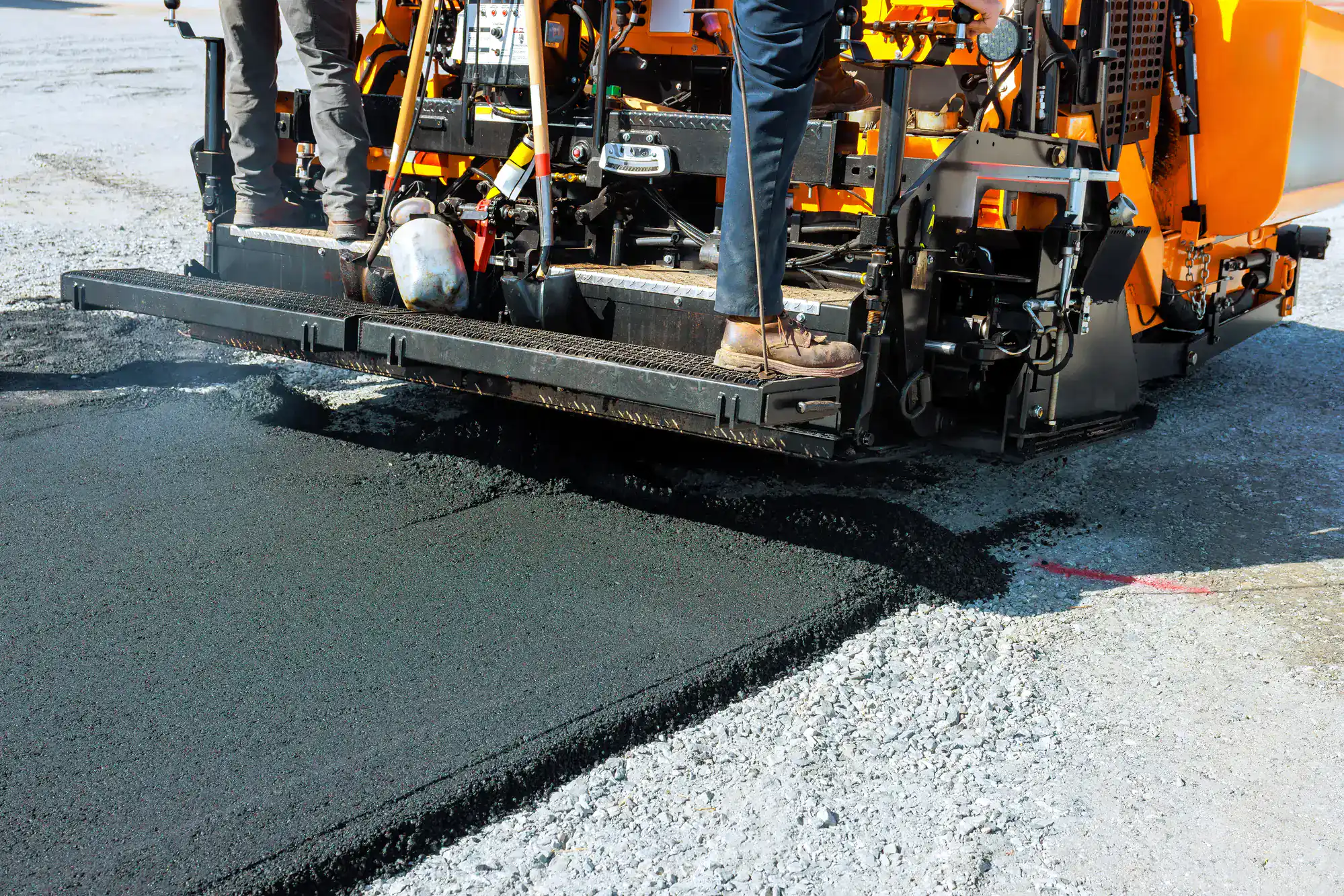
Short answer: yes, especially if you’re in a market where curb appeal affects property values. In Annapolis and the surrounding Maryland and Central and Northern Virginia communities, buyers notice the driveway before they notice most other things about a home. A cracked, faded, or uneven surface signals neglect — even if the rest of the home is immaculate. A fresh, smooth, properly installed asphalt driveway signals the opposite.
Industry data consistently shows that a new asphalt driveway returns close to 100% of its cost at resale — adding roughly $5,000 to $7,000 in perceived home value. That’s not a guarantee, but it reflects the reality that buyers price curb appeal into their offers, consciously or not. If you’re preparing to sell in the Annapolis real estate market or in growing communities like Crofton, Severna Park, or Arnold, a new driveway is one of the few exterior improvements that pays for itself.
Even if you’re not selling, there’s a straightforward cost-per-year argument. A $5,000 driveway that lasts 25 years costs you $200 a year. Compare that to a $3,500 job done poorly that needs full replacement in eight years — that’s $437 a year, plus the disruption of going through the whole process again. Durability isn’t just a quality metric. It’s a financial one.
One thing worth knowing: a new driveway also protects your property in ways that aren’t always obvious. Properly graded asphalt channels water away from your foundation and landscaping. Without it, runoff can work its way toward your home’s base over time, which creates a much more expensive problem down the road.
There are a handful of questions we hear consistently, and they’re worth answering directly.
One of the most common is whether to repair or fully replace. If your driveway has surface cracks that haven’t compromised the base, crack sealing or patching may extend its life for a few more years. But if you’re seeing sunken sections, widespread alligator cracking — that web-like pattern that looks like broken pavement — or soft, spongy spots where the base has failed, repairs are a temporary fix at best. A new driveway is the right call when the underlying structure is gone.
People also ask about asphalt versus concrete. In Maryland specifically, asphalt tends to be the better fit. Concrete is rigid, and Maryland’s freeze-thaw cycles cause it to crack and heave over time in ways that are expensive to repair. Asphalt is flexible — it can expand and contract with temperature changes without fracturing. It’s also significantly less expensive to install and easier to repair when something does go wrong. And practically speaking, asphalt’s dark surface absorbs heat, which helps melt snow and ice faster in winter — a real advantage if your driveway is long or shaded.
A question that comes up often in Maryland and Central and Northern Virginia, particularly near the Bay, is whether waterfront properties face any special considerations. The answer is yes. Properties within the Chesapeake Bay Critical Area — generally within 1,000 feet of tidal waters — may be subject to impervious surface regulations that affect how much of your lot can be paved. If your property is in that zone, it’s worth checking with the county before moving forward. We’re familiar with these regulations and can help you understand what applies to your specific situation.
In Calvert and St. Mary’s Counties, a question we hear from rural property owners is whether gravel driveways can be converted to asphalt. Absolutely — and it’s one of the more common projects we do in those areas. The process involves grading the existing surface, addressing any drainage issues, and installing a proper base before the asphalt goes down. The result is a surface that’s more durable, easier to maintain, and significantly cleaner in wet weather than gravel.
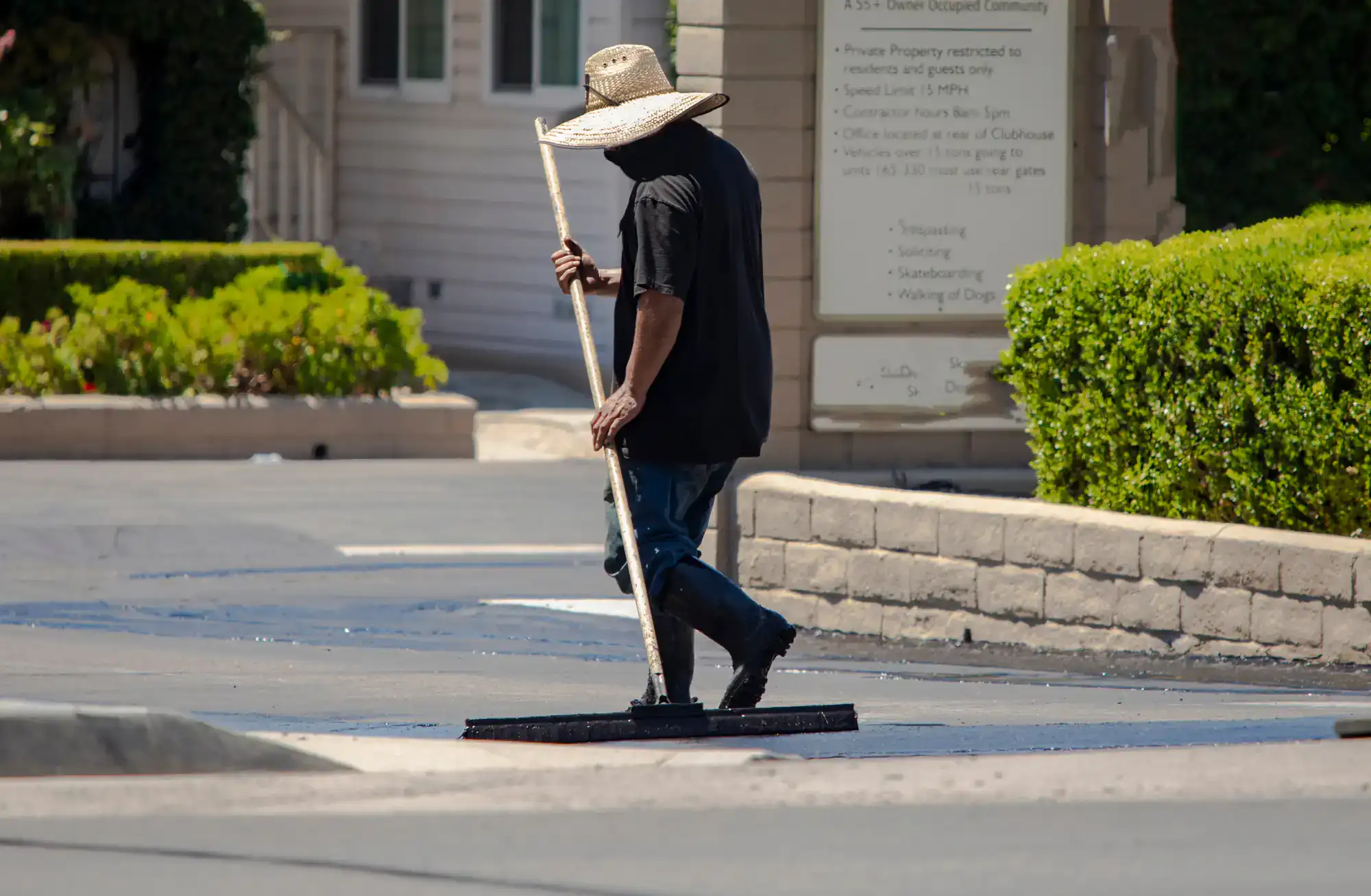
Finally, homeowners ask about sealcoating after a new installation. We recommend waiting six to twelve months before applying the first sealcoat — the asphalt needs time to fully cure and off-gas before sealing. After that, driveway sealcoating every two to four years protects the surface from oxidation, water infiltration, and chemical damage, and can nearly double the driveway’s lifespan. It’s a small recurring cost that makes a significant difference over time.
The paving industry has a real problem with unlicensed operators and door-knockers claiming to have leftover asphalt from a nearby job. In Maryland, any contractor charging more than $500 for home improvement work is required to hold an active MHIC license — and you can verify that yourself at labor.maryland.gov before signing anything. It’s a simple step that protects you legally if something goes wrong.
Beyond licensing, look for someone with a real track record in this specific region. Maryland’s climate, soil conditions, and local regulations aren’t generic — they require experience that only comes from doing this work here, repeatedly, over time.
Edward Smith Paving is based in Annapolis, holds MHIC License #159766, carries an A+ BBB rating, and has completed more than 5,000 driveway installations across Anne Arundel, Calvert, and St. Mary’s Counties over the past 40+ years. If you’re ready to get a straight answer on what your project involves and what it should cost, reach out for a free quote.
Summary:
Article details:
Share: