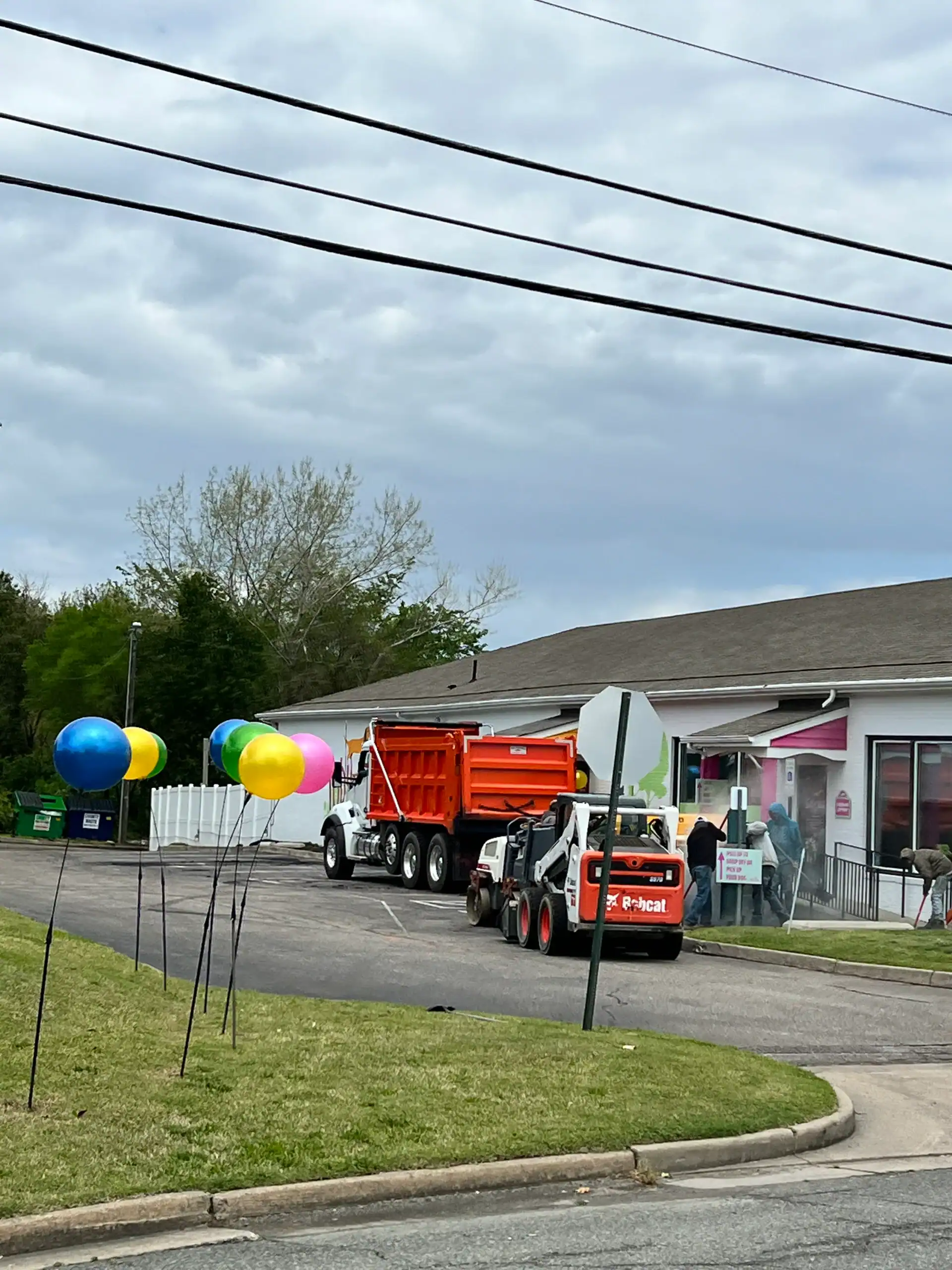
Hear from Our Customers
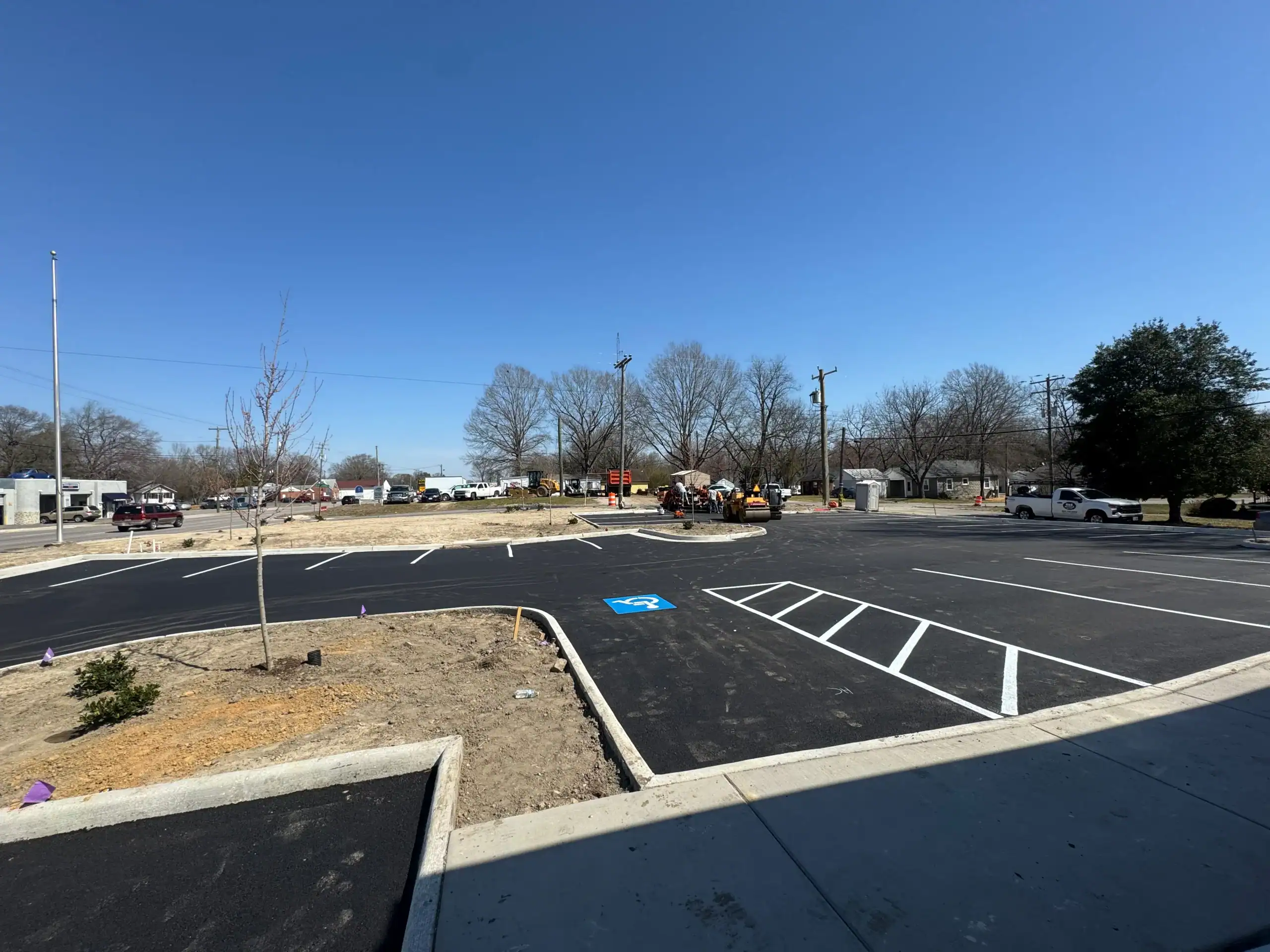
When a commercial lot is done right right thickness, right base, right drainage it stops being something you think about. No complaints from tenants. No liability from a pothole that caught someone off guard. No scrambling for emergency repairs in February when the ground is frozen and your options are limited. That’s what a properly installed commercial lot gives you: time and attention back.
Clear Spring sits at 545 feet in the Appalachian foothills of western Maryland, and that elevation matters more than most people account for. The freeze-thaw cycle here is more frequent and more severe than what property owners deal with in Annapolis or Baltimore. Temperatures cycle through the freezing point more often, and every time water gets into a crack and freezes, that crack gets wider. A lot that might hold up for 18 years closer to the coast may need serious intervention in 12 to 14 years in this climate if it isn’t maintained properly.
Commercial properties along the National Pike the old US Route 40 that runs directly through Clear Spring also deal with something suburban office parks don’t: turning movements from delivery trucks and commercial vehicles. That load stress compounds the freeze-thaw damage. A lot that was installed light or left to fend for itself through a few western Maryland winters is already on borrowed time. Getting a proper site assessment now tells you exactly where things stand before the next season makes the decision for you.
We’ve been operating continuously since 2011 out of a physical Maryland address not a regional franchise, not a traveling crew that lists Washington County as a line item on a service map. Our MHIC License #159766 is publicly searchable on the Maryland Department of Labor website. BBB A+ Accreditation, independently verified with zero complaints on record. These aren’t things you have to take our word for you can check both before you pick up the phone.
For commercial property owners in Clear Spring and the surrounding 21722 ZIP code, that matters. The local paving market here is thin. What’s available tends to be residential maintenance work sealcoating, crack fill, patching. That’s useful for driveways. It’s not the same as a full commercial paving operation that understands drainage engineering, ADA compliance, phased scheduling, and Washington County’s permitting process. We handle all of it, including the permit coordination that most small business owners have never had to navigate before.
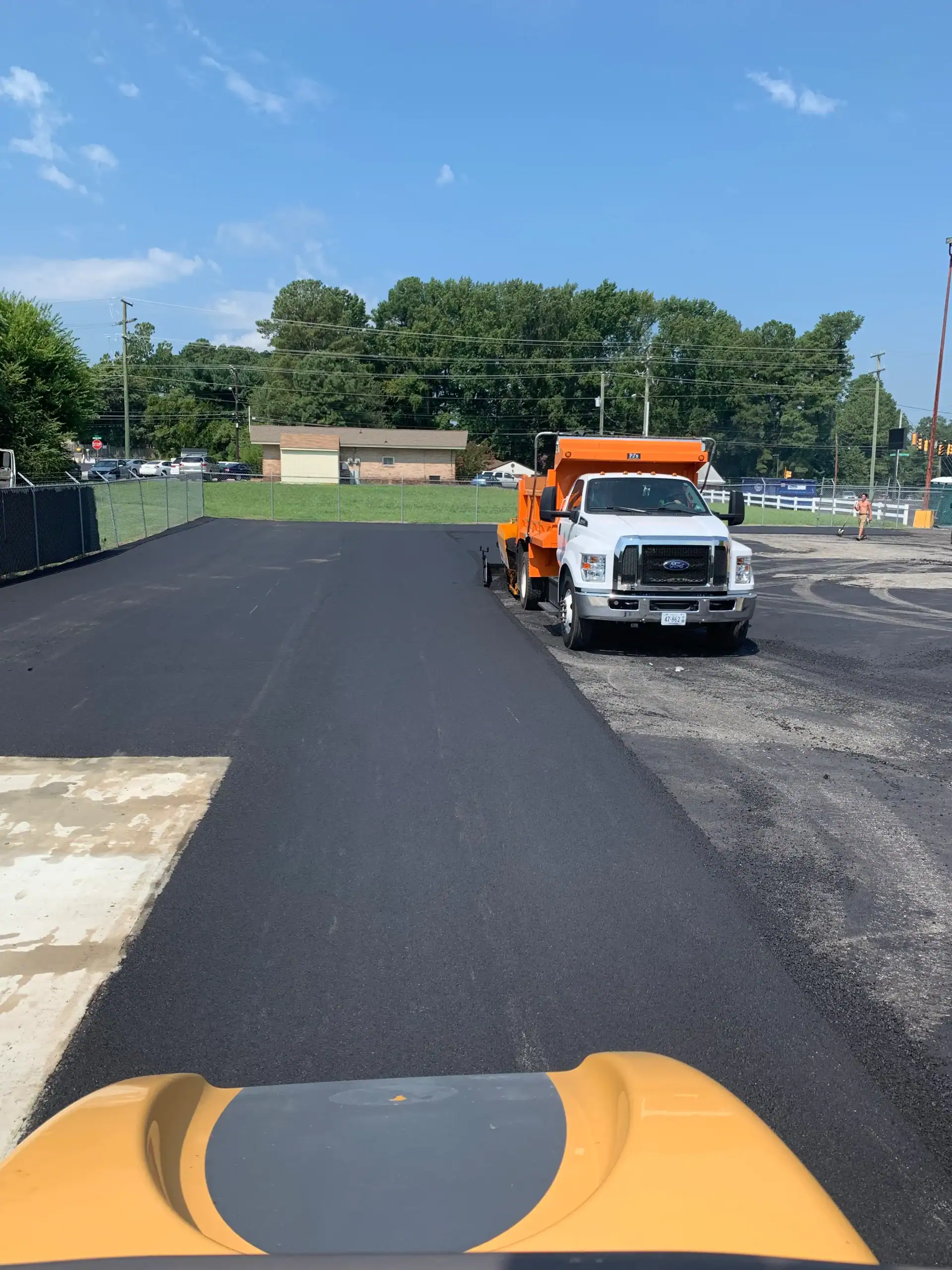
It starts with a free site assessment and this is not a sales visit dressed up with a clipboard. We evaluate your drainage, subgrade condition, surface integrity, ADA compliance, and traffic patterns before any recommendation is made. In Clear Spring’s climate, that subgrade evaluation is especially important. Western Maryland’s freeze-thaw cycles can compromise base layers that look fine from the surface. You need to know whether you’re dealing with a resurfacing situation or something that’s gone deeper before you commit to anything.
Once the assessment is complete, you get a written, line-itemized proposal. Exact square footage. Specific materials. Compacted asphalt depth which for commercial work means a minimum of four inches over a properly engineered base, not the two-to-three inch standard used for residential jobs. That difference is what determines whether your lot holds up under delivery truck traffic on the National Pike or starts showing stress fractures within a few years.
If your project requires a Washington County commercial building permit or a grading permit under the county’s stormwater management ordinance both of which can apply to commercial paving work in Clear Spring we handle that process as part of the job. You don’t have to figure out which county office to call or what forms to file. Scheduling is coordinated to keep your property operational while work progresses, and final ADA-compliant striping is included in the project scope. One contractor, start to finish.
Ready to get started?
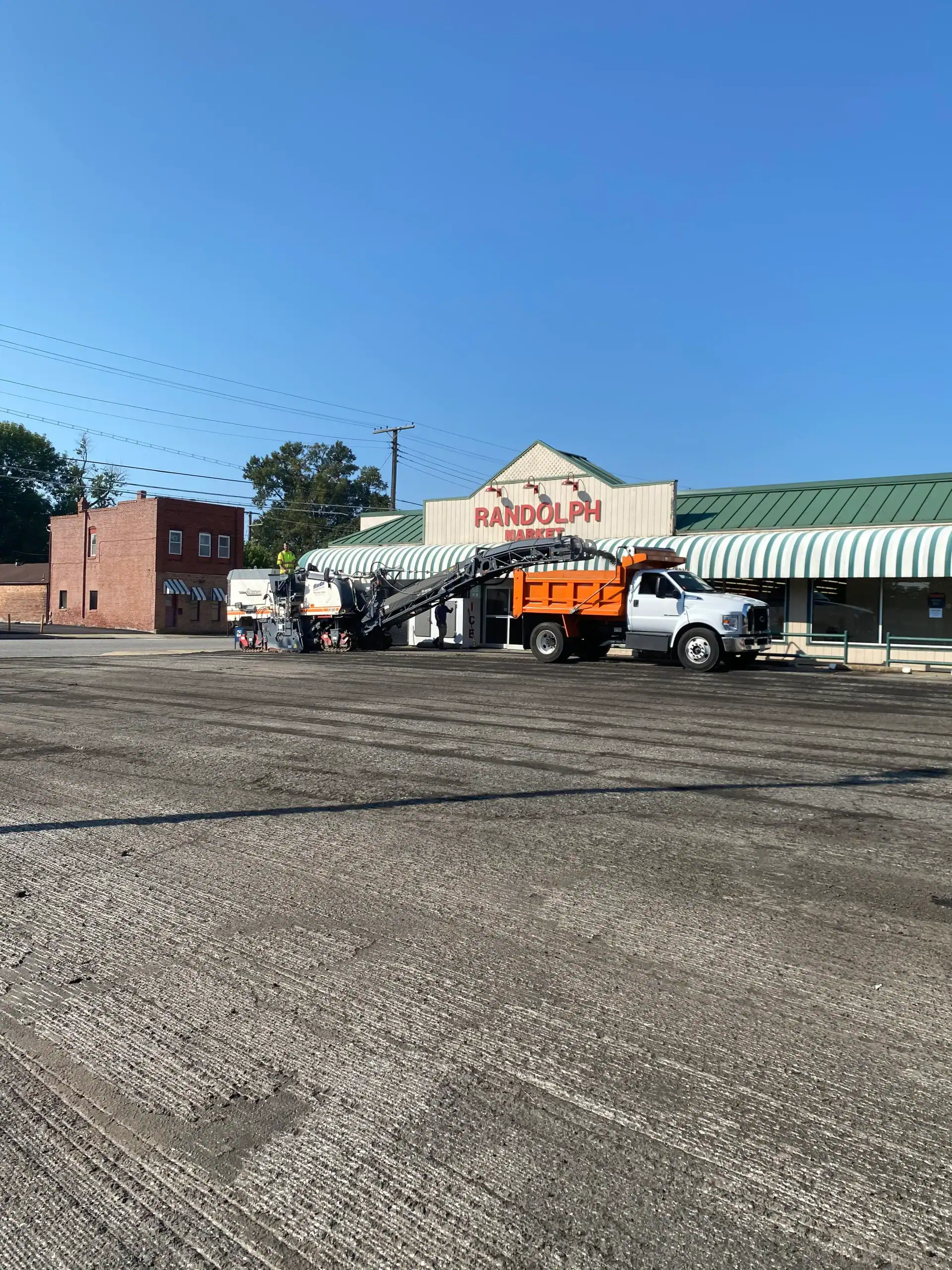
Our commercial asphalt paving covers the full range of what a commercial property in Washington County actually needs. New lot installation and full-depth replacement for properties where the base has been compromised. Structural overlay and mill-and-overlay resurfacing for lots where the base is still sound which adds 10 to 15 years of functional life at a fraction of replacement cost. Crack sealing, pothole repair, and patching for properties that need targeted maintenance before winter. Sealcoating on a two-to-three year commercial schedule to slow oxidation and protect against the salt runoff that collects at commercial property entrances along US Route 40 and MD Route 68. And ADA-compliant line striping as a standard part of every project not an add-on.
For institutional properties in the Clear Spring area school parking lots, bus staging areas, civic facilities ADA compliance isn’t optional, and repaving doesn’t automatically maintain it. Slope grades can shift, accessible stall dimensions can change, and striping gets displaced. We specifically evaluate ADA status before work begins so that the finished lot meets compliance requirements, not just looks freshly paved.
The fall window for sealcoating and crack sealing in western Maryland closes earlier than most property managers expect. At Clear Spring’s elevation, temperatures can drop below the threshold for effective sealcoating application in September or early October weeks ahead of the timeline that applies in central Maryland. If your lot has cracks heading into winter, that window is worth taking seriously now.
More often than you’d need to in most other parts of Maryland. Clear Spring sits at 545 feet in the Appalachian foothills of western Washington County, which means more frequent freeze-thaw cycles per winter than properties in central or coastal Maryland experience. Every time water infiltrates a crack, freezes, and expands, that crack widens. Over the course of a typical western Maryland winter, a property can go through dozens of these cycles each one doing incremental structural damage.
For commercial properties in the Clear Spring area, the practical recommendation is crack sealing every two to three years and sealcoating on a similar schedule, with an annual inspection to catch anything that developed over the winter. Properties along US Route 40 that also absorb commercial vehicle traffic should be assessed more frequently, since load stress compounds freeze-thaw damage faster than light vehicle traffic alone. Staying ahead of maintenance in this climate is genuinely cheaper than catching up after the base is compromised.
Resurfacing also called an overlay or mill-and-overlay works when the base layer underneath the asphalt is still structurally sound. If the foundation hasn’t been compromised by water infiltration or freeze-thaw damage, resurfacing adds 10 to 15 years of functional life at significantly less cost than tearing everything out and starting over. Full replacement is necessary when the base has failed when you’re seeing large-scale cracking, significant surface depression, or areas where the pavement is moving under load.
The only way to know which situation you’re in is a proper site assessment. A visual inspection from the surface isn’t enough, especially in western Maryland’s climate where freeze-thaw cycles can compromise subgrades that look intact from above. Our free site assessment evaluates subgrade condition, drainage, and surface integrity before making any recommendation so you’re not being pushed toward a $200,000 full replacement when resurfacing would have handled the problem. The assessment is diagnostic, not a sales exercise.
Potentially yes, and the process involves more than one layer. Commercial paving projects in Clear Spring can require a Washington County commercial building permit, a grading permit under Washington County’s stormwater management ordinance if the project involves significant ground disturbance, and compliance with the Town of Clear Spring’s own zoning ordinance. That’s a three-layer permitting structure that most small business owners haven’t navigated before, and it’s not always obvious which permits apply to a given project.
We handle permitting as part of the project scope for commercial work in Washington County. You don’t have to research which county office manages commercial building permits, figure out whether your project triggers a grading permit requirement, or coordinate between town and county requirements. That process gets managed on your behalf so the project can move forward without you spending time on paperwork that isn’t your area of expertise.
Most commercial resurfacing projects complete in one to three days, with the lot accessible to traffic within 24 to 48 hours of completion. New installation or full-depth replacement projects take longer depending on the size of the lot and site conditions. Final line striping requires the asphalt to cure typically 14 to 30 days before permanent striping though temporary markings can be applied sooner so the lot stays operational.
For commercial properties in Clear Spring that can’t afford to shut down entirely a retail operation on US Route 40, an automotive shop, a business with regular delivery traffic phased scheduling is a standard part of how we approach commercial projects. The lot is sectioned so one portion remains open while work progresses on another. The timeline and phasing plan are laid out in the written proposal before any work begins, so you know exactly what to expect and can communicate it to tenants or customers in advance.
It can, and this is something most property owners don’t think about until after the work is done. Repaving changes surface grades, and even a small shift in slope can push an accessible stall out of ADA compliance the maximum allowable slope in any direction is two percent. Striping gets displaced in the process as well, and if the new layout doesn’t account for required access aisle dimensions and signage, you can end up with a freshly paved lot that has created new legal exposure for you as the property owner.
Our site assessment specifically evaluates ADA compliance before work begins. The project is designed to maintain or improve compliance, and ADA-compliant line striping is included in the scope not treated as a separate add-on. For institutional properties in the Clear Spring area, like school facilities managed by Washington County Public Schools, this isn’t just a best practice it’s a legal requirement that gets built into the project from the start.
Maryland requires all paving contractors performing commercial or residential work to hold a valid MHIC license that’s the Maryland Home Improvement Commission license, issued by the Maryland Department of Labor. The license requires passing a state-administered exam, proving a minimum of two years of real field experience, and maintaining at least $50,000 in liability insurance at all times. It has to be renewed every two years, so an active license means the contractor is current on all of those requirements.
You can verify any Maryland contractor’s MHIC license directly on the Maryland Department of Labor’s website it’s a public database, and the search takes about 30 seconds. Our license number is #159766. Look it up before you call. In a market like Clear Spring where local paving options are limited and not all of them have documented commercial credentials, being able to verify a license yourself rather than taking a contractor’s word for it is the most straightforward way to separate qualified commercial operators from residential maintenance crews or contractors who aren’t equipped for the scope of work you’re dealing with.
Other Services we provide in Clear Spring