Hear from Our Customers
Most driveways in the Clear Spring area weren’t built to last they were built to look finished on day one. The median home here dates to 1938, and the driveways that came after weren’t always installed with proper base depth, drainage grading, or compaction. When the freeze-thaw cycle hits and road salt from US Route 40 or I-70 finds its way to the edges, those shortcuts show up fast.
A properly installed asphalt driveway one with 4 to 8 inches of compacted crushed stone underneath before a single inch of asphalt goes down can realistically last 20 to 30 years. That’s what happens when the underground work is done right. The surface you see is only as good as what’s beneath it, and in Clear Spring’s climate, that truth gets proven every spring thaw.
What you get on the other side of this job is a driveway that drains correctly, holds up under a loaded pickup or farm trailer, and doesn’t need patching every two years. For a lot of Clear Spring homeowners, that means finally breaking the cycle of band-aid fixes on an old surface that was never built to last in the first place.
We’ve been doing this for four decades not managing crews from an office, but hands-on work across Maryland, handling every site condition the state produces. That includes the sloped, drainage-challenged terrain throughout Washington County and the ridge-and-valley landscape around Clear Spring, where water doesn’t just sit on a driveway it finds every weakness in it.
Our MHIC License #159766 is publicly searchable at labor.maryland.gov. That license is a legal requirement for residential paving in Maryland, and it backs every homeowner with access to the MHIC Guaranty Fund up to $30,000 in protection if something goes wrong. We also carry a BBB A+ rating with zero complaints on record. Those aren’t self-reported claims. They’re verifiable.
With more than 5,000 driveways paved across Maryland, our experience isn’t theoretical. It comes from showing up in Clear Spring and surrounding communities, doing the underground work correctly, and standing behind the result in a place where word travels fast and a bad job is remembered.
The first step is an in-person assessment no commitments, no pressure, just a look at your site. For properties in and around Clear Spring, that means evaluating the slope, existing surface condition, drainage direction, and how the driveway connects to the road. If your driveway accesses US Route 40 directly, there’s an MDOT SHA entrance permit involved, since Cumberland Street through town is a state-maintained highway. For driveways connecting to county roads, Washington County requires paving a minimum of 25 feet from the centerline of the roadway. We walk through all of that with you before work begins.
Once the site is assessed and the scope is agreed on in writing, our crew excavates to stable subsoil typically around 10 inches deep on a new installation. The site is graded to direct water away from the structure and toward the road. Then comes the base: 4 to 8 inches of compacted crushed stone, properly layered and rolled. This is the step that most cut-rate contractors skip or minimize, and it’s the single biggest factor in how long your driveway lasts.
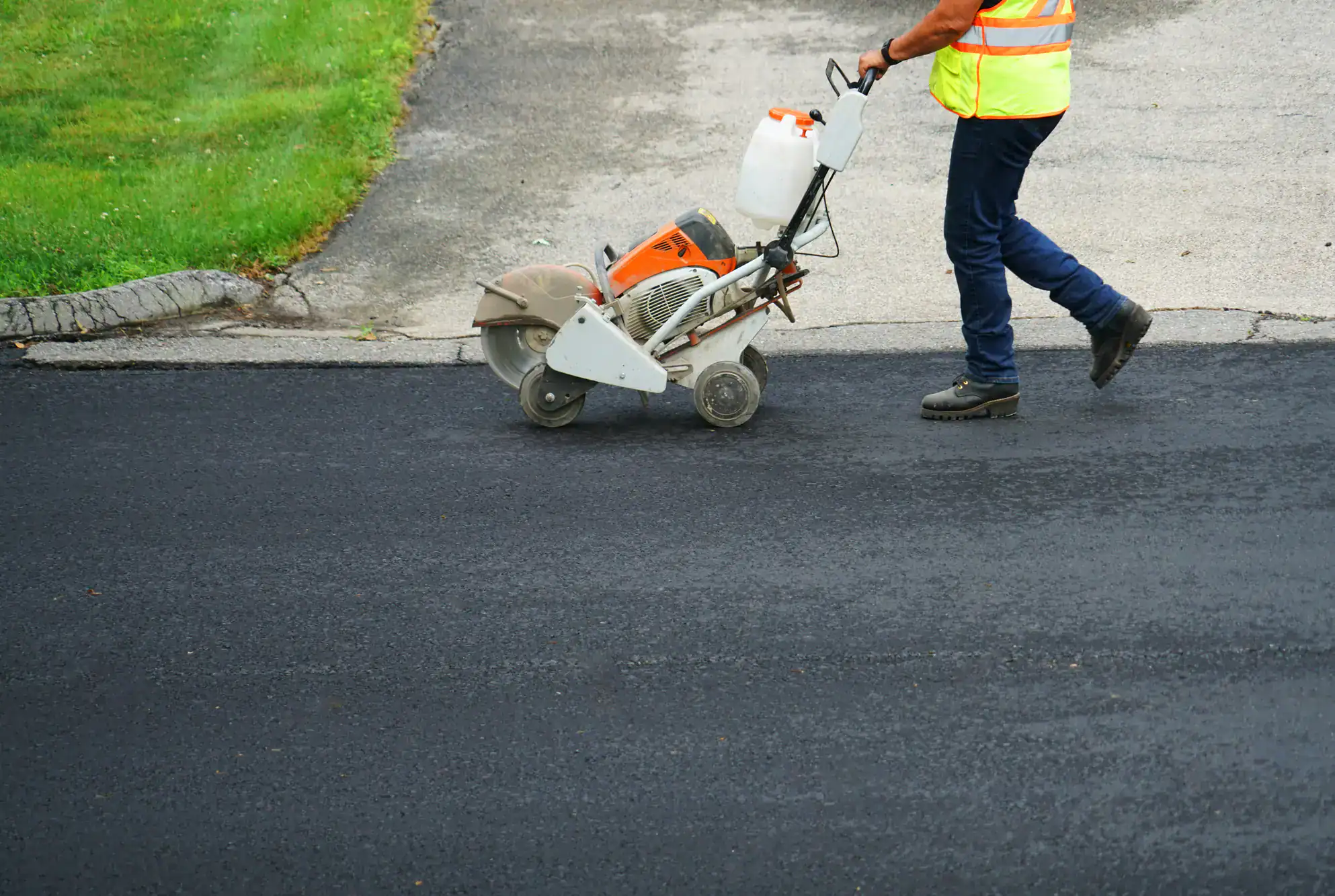
After the base is set, asphalt is laid and compacted at the correct temperature and rolled smooth. Edges are finished cleanly, and transitions with any existing concrete are handled carefully. You can typically walk on the surface within 24 to 72 hours. Full cure takes longer, but we’ll tell you exactly what to expect before we leave the job.
Ready to get started?
We handle the full range of residential asphalt work new driveway installation, full replacement of failing surfaces, resurfacing where the base is still structurally sound, and repair work on isolated damage. For Clear Spring homeowners, the most common situation is a driveway that’s been patched repeatedly over the years on a base that was never right to begin with. Resurfacing makes sense when the existing base is intact and the driveway is less than 15 years old with no structural cracking. When the base is compromised which is common on pre-war properties throughout the 21722 ZIP code full replacement is the honest answer, even if it costs more upfront.
Rural properties in the area often have longer driveways than the typical suburban job, and many see heavier vehicle use: work trucks, trailers, farm equipment. That affects how thick the asphalt needs to be and how deep the base has to go. We don’t apply a one-size-fits-all spec here.
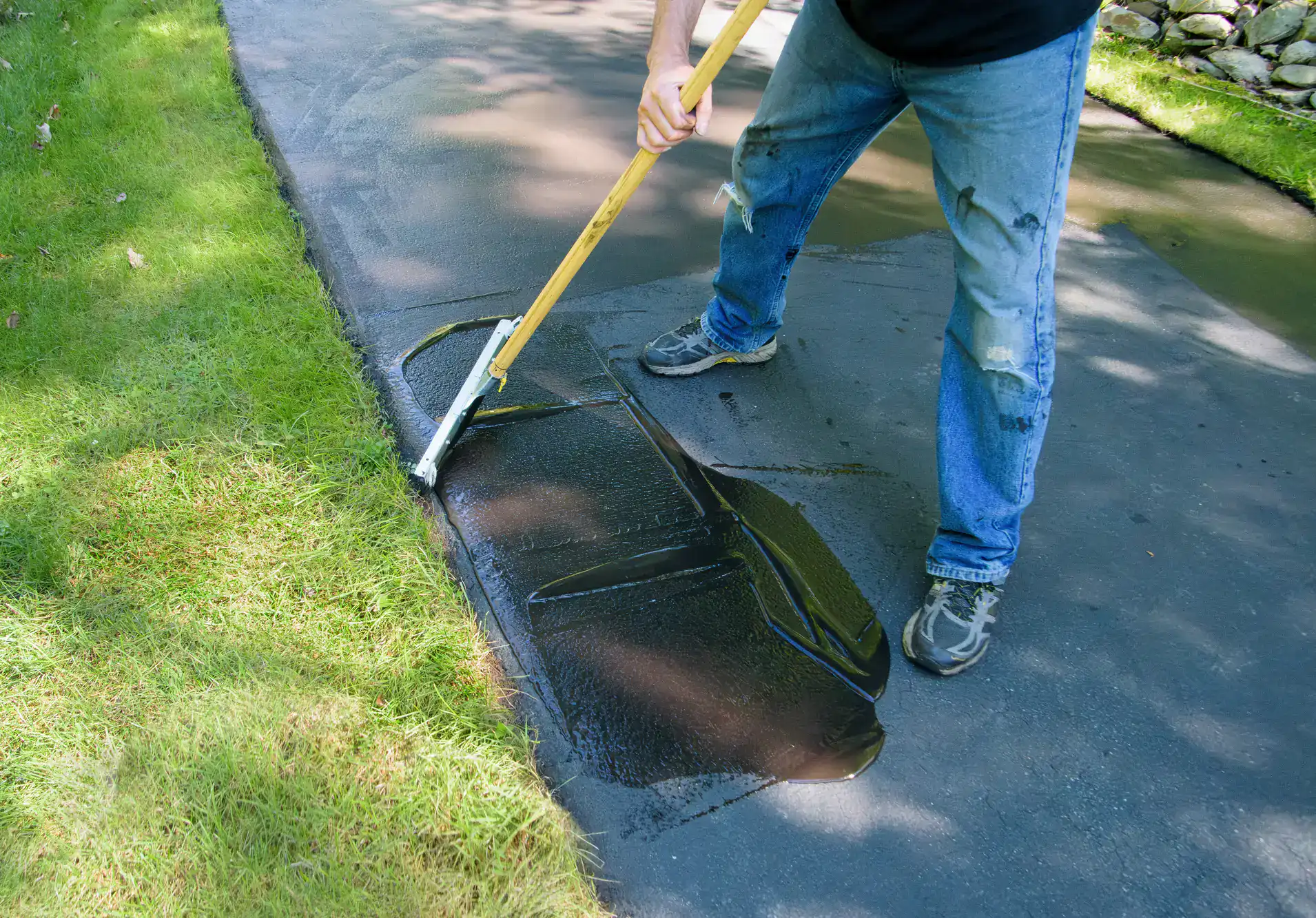
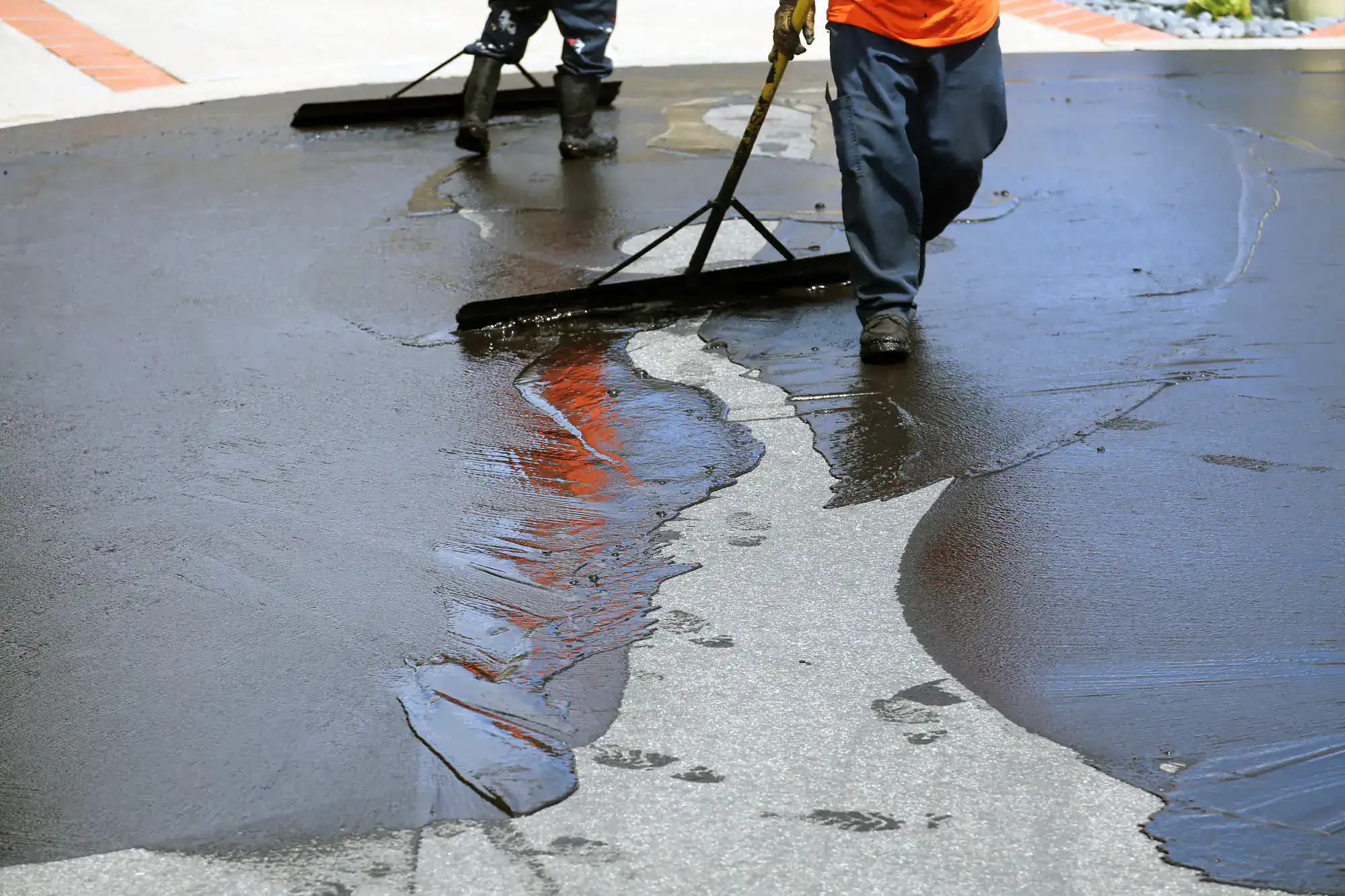
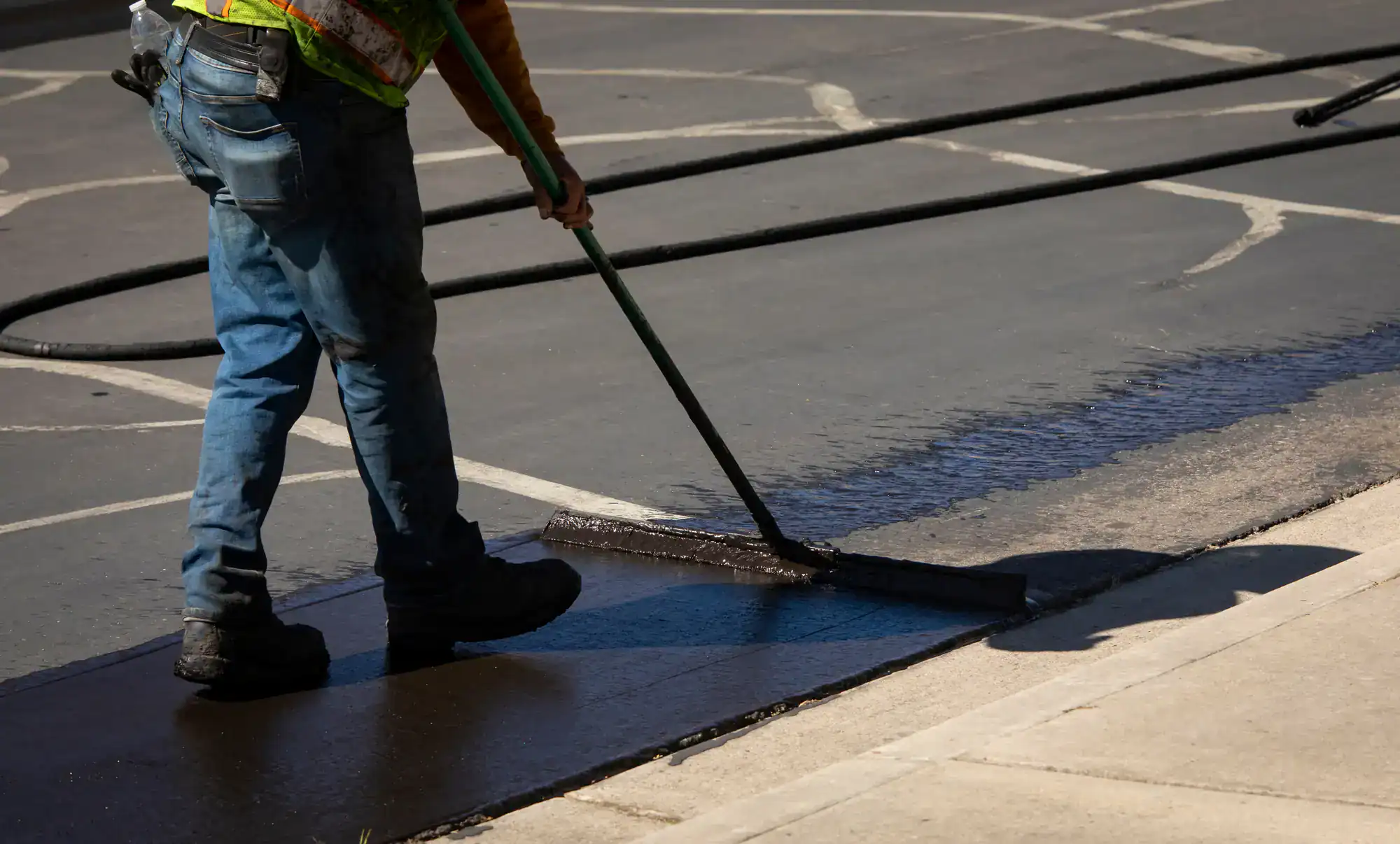
Sealcoating is also available and recommended every two to five years to protect the surface from the road salt runoff that reaches driveways near US Route 40 and I-70. It’s the lowest-cost maintenance step you can take to extend a properly installed driveway’s lifespan well into the 20-to-30-year range.
A properly installed asphalt driveway in Clear Spring can last 20 to 30 years sometimes longer with regular sealcoating. The key word is “properly installed.” Clear Spring sits in the Appalachian foothills at 545 feet elevation, where freeze-thaw cycles are more frequent and more severe than in lower-elevation parts of Maryland. Water that gets beneath a poorly graded or thinly based driveway will freeze, expand, and crack the surface from underneath. That’s not a surface problem it’s a structural one, and it happens faster in western Washington County than it does closer to the coast.
The driveways that fail early in this area almost always share the same cause: inadequate base depth and poor drainage grading. When the base is built correctly 4 to 8 inches of compacted crushed stone, graded to direct water away from the house the surface above it can handle what Clear Spring winters produce. Sealcoating every two to five years adds another layer of protection against road salt and UV degradation, and it’s the most cost-effective maintenance step available.
The honest answer depends on what’s happening underneath, not just on the surface. Resurfacing adding a new layer of asphalt over the existing one makes sense when the base is structurally intact, the driveway is less than about 15 years old, and the damage is limited to surface-level cracking or weathering. In that situation, resurfacing is a legitimate and cost-effective option. But if the base underneath is compromised if you’re seeing cracks that keep coming back, sections that sink or shift, or potholes that reappear after patching resurfacing is just a more expensive band-aid.
For a lot of properties in the Clear Spring area, where the median home was built around 1938 and driveways have often been patched and re-patched over decades, the base is the problem. Putting new asphalt over a failed base doesn’t fix the base it just delays the next failure. An in-person assessment is the only way to know for certain which situation you’re dealing with. We offer free quotes with no obligation, so you can get a straight answer before committing to anything.
It depends on which road your driveway connects to. If your driveway accesses a Washington County road, you’ll need to comply with the county’s Entrance Permit Conditions, which require the driveway to be paved a minimum of 25 feet from the centerline of the roadway. Property and driveway lines also need to be staked before the permit is approved.
If your property fronts Cumberland Street which is US Route 40 as it runs through the center of Clear Spring that’s a state-maintained highway, and access requires a permit from the Maryland State Highway Administration rather than the county. MDOT SHA has its own entrance standards, including minimum width requirements and sight distance rules. We’re familiar with both processes and can walk you through what applies to your specific property before any work begins. Getting this right upfront avoids delays and ensures the installation meets the requirements tied to your road frontage.
Any contractor performing residential paving work in Maryland is legally required to hold an MHIC license that’s the Maryland Home Improvement Commission license. It’s not optional, and it’s not just a formality. Hiring an unlicensed contractor means you lose access to the MHIC Guaranty Fund, which can reimburse homeowners up to $30,000 in losses from contractor fraud or substandard work. That protection disappears the moment you hire someone without a valid license.
The good news is that MHIC licenses are publicly searchable. You can verify any contractor’s license at labor.maryland.gov before you sign anything or hand over a deposit. Our MHIC license number is #159766 look it up. In a market where Clear Spring homeowners have limited local contractor options to compare, being able to verify credentials independently before making a decision is one of the most valuable tools available to you. Don’t skip this step regardless of who you’re considering.
For most residential driveways, the physical paving work takes one to two days once our crew is on-site. That includes excavation, grading, base installation, and asphalt placement. Larger driveways which are common on rural properties throughout the Clear Spring and Big Pool area, where lots tend to be bigger than suburban parcels may take a bit longer depending on length, slope, and site complexity.
After the asphalt is laid, you can typically walk on it within 24 to 72 hours. Driving on it is generally fine within a few days under normal conditions, though full cure takes considerably longer up to 30 days or more depending on temperature and sun exposure. During that curing period, avoid parking in the same spot repeatedly, turning your wheels while the vehicle is stationary, and placing heavy objects on the surface. We’ll give you specific guidance for your driveway before we leave. Scheduling earlier in the paving season spring through early fall gives you more flexibility on timing and avoids the summer backlog that tends to build up as the season progresses.
Gravel is lower upfront cost, but it comes with ongoing maintenance that adds up: regrading after heavy rain, replenishing material that migrates or washes away, and dealing with ruts from vehicle traffic. On sloped rural properties around Clear Spring particularly those on the hillsides near Fairview Mountain or along MD 57 heading north gravel can be especially problematic because runoff carries it downhill over time. You end up regrading the same driveway repeatedly.
Asphalt, when installed correctly on a proper compacted stone base, eliminates most of that ongoing work. It handles heavy vehicle traffic better than gravel, it doesn’t migrate in rain, and it provides a stable surface year-round including during the freeze-thaw season when a gravel driveway can become rutted and soft. For properties that see farm equipment, work trucks, or trailers regularly, the structural stability of asphalt is a practical advantage, not just an aesthetic one. The upfront cost is higher, but a properly built asphalt driveway typically doesn’t need significant attention for years, which changes the long-term math considerably compared to maintaining a gravel surface.
Other Services we provide in Clear Spring