

Hear from Our Customers

Most asphalt fails early for one reason: whoever installed it didn’t account for where it actually sits. On St. George Island, that matters more than almost anywhere else in Southern Maryland. You’ve got tidal moisture on both sides, a water table that sits close to the surface, and salt air rolling off the Potomac year-round. Those conditions don’t just wear asphalt down they accelerate it. A driveway that might last 20 years inland can start crumbling in 10 if the base wasn’t prepared correctly and the surface isn’t sealed on schedule.
When the work is done right, you stop thinking about your driveway. It sheds water instead of pooling it. It holds up through Maryland’s freeze-thaw winters without cracking open by spring. And when you pull in after a long drive down MD-249 for the weekend, the first thing you see says something good about the property you’ve invested in. For vacation homeowners who aren’t on the island full-time, that durability isn’t a luxury it’s the whole point.
Sealcoating is the other half of that equation. On a coastal property like those around St. George Island, it’s not optional maintenance. The salt air oxidizes unprotected asphalt faster than UV alone would. A sealcoat applied six months after installation and refreshed every three to five years is what keeps a 25-year driveway from becoming a 12-year replacement job.
We’ve been operating in Maryland for over 40 years. That’s not a marketing number it means the crew showing up to your St. George Island property has worked through Maryland’s regulatory environment, its coastal conditions, and its seasonal extremes long enough to know what actually holds and what doesn’t.
We hold MHIC License #159766 the Maryland Home Improvement Commission credential required by state law for any contractor performing home improvement work in Maryland. That number is publicly verifiable. It also means you have legal recourse if something goes wrong, which is not something you get with an unlicensed crew. On an island this remote, with limited local contractor options, that distinction matters more than people realize until they need it.
St. George Island’s isolation one road in, one bridge out makes it a place where only contractors who are serious about the work bother to show up. We serve the full St. Mary’s County area, including waterfront and island communities, with the same standard we bring to every job.
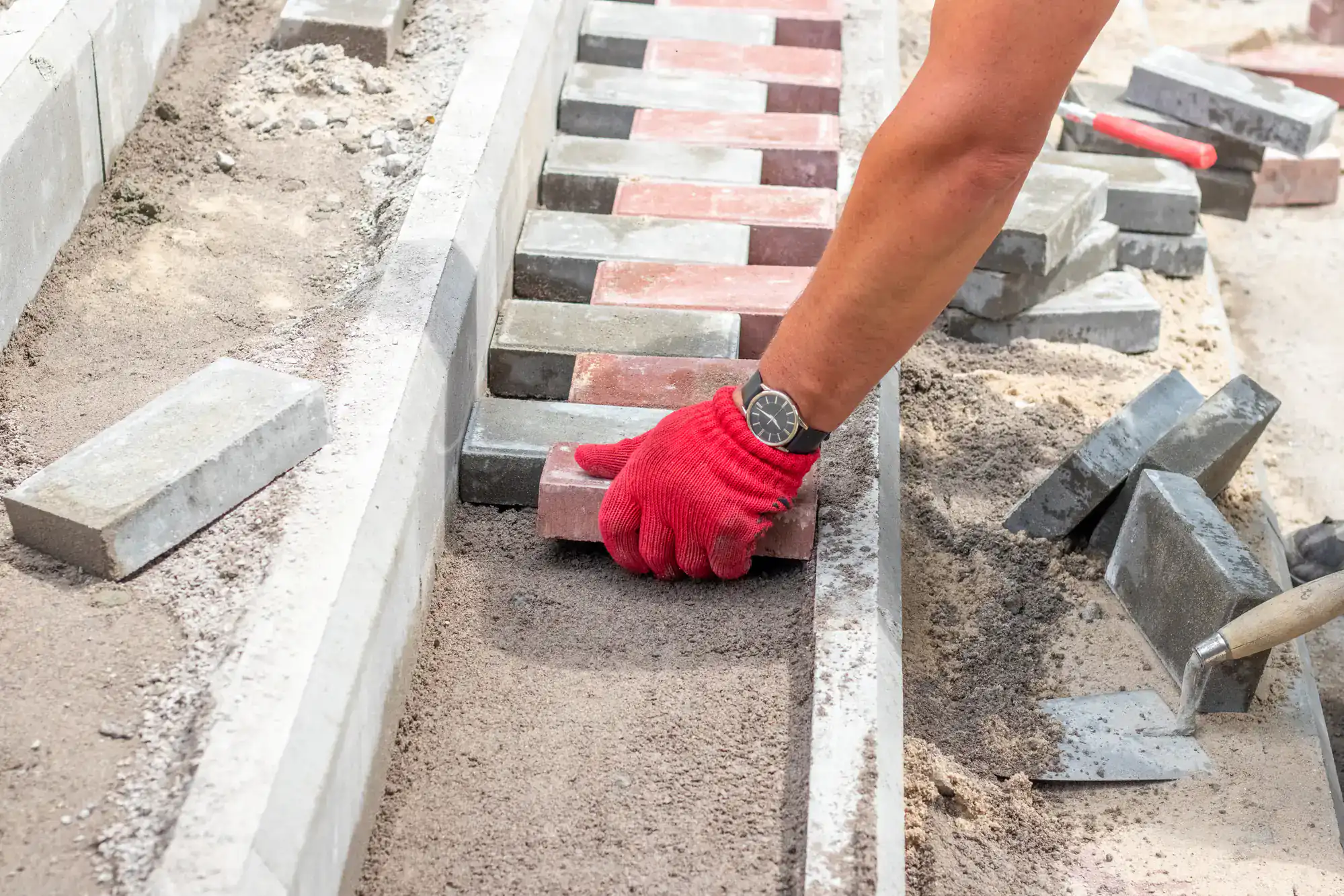
The first step is an on-site assessment. Before anything is quoted or scheduled, we evaluate the conditions of your property existing surface condition, drainage patterns, grade, and base integrity. On St. George Island, that drainage assessment carries extra weight. The island’s flat, low-lying terrain and proximity to tidal water mean that how your property sheds water directly determines how long your asphalt lasts. If that’s not mapped out before the job starts, you’re setting up the surface to fail.
From there, you get a written estimate with a clear scope of work. No vague line items, no surprise add-ons when the crew arrives. If your project involves a new driveway connecting to MD-249 the only state highway on the island the process includes coordinating the residential entrance permit through MDOT SHA. Properties within Maryland’s Critical Area, which covers virtually every parcel on St. George Island, may also require environmental review before work begins. A contractor who’s been navigating Maryland’s permitting landscape for 40 years handles that without putting it back on you.
Once the site is prepped base graded, drainage accounted for, old material removed where needed the asphalt goes down in properly compacted lifts. The job isn’t done until the surface is finished to spec and you know exactly what maintenance schedule keeps it performing the way it should.
Ready to get started?
We cover the full lifecycle of asphalt from new installation to long-term maintenance so you’re not tracking down a different contractor every time your property needs attention. For residential properties on St. George Island, that means new driveway installation, resurfacing, crack filling, and sealcoating. For the island’s commercial properties whether that’s a parking area at a campground, a hospitality lot near the inn, or a surface serving seasonal visitor traffic we handle asphalt parking lot paving, line striping, and ongoing maintenance programs.
Crack filling is worth calling out specifically for island properties. The combination of coastal moisture and Maryland’s freeze-thaw cycles means that small cracks don’t stay small for long. Water gets in during fall, freezes and expands in winter, and what was a hairline crack in October becomes a structural problem by April. Catching it early with proper crack filling is the difference between a $300 maintenance visit and a $10,000 replacement conversation.
Parking lot striping and ADA-compliant marking are also available for St. George Island’s commercial operators. A properly marked, well-maintained lot isn’t just about appearance it’s a liability issue. Summer tourism drives the island’s business economy, and the first impression guests form starts in the parking area before they ever reach the front door.

Yes, and depending on your specific property, you may need more than one. Because St. George Island is only accessible via MD-249 (Piney Point Road), any new driveway that connects to that road requires a residential entrance permit from the Maryland Department of Transportation State Highway Administration. MDOT SHA reviews the location, drainage design, and paving cross-section before approving access to a state highway.
Beyond that, virtually every property on St. George Island falls within Maryland’s Critical Area the zone within 1,000 feet of tidal waters and wetlands. Paving projects that add impervious surface or alter drainage near the water may require environmental review through St. Mary’s County’s Permit Services Division under the Critical Area and Floodplain program. Work within a county right-of-way also requires a separate construction permit. This layered permitting process is standard for waterfront communities in Southern Maryland. Working with us means that complexity gets handled before it becomes a delay.
A properly installed and maintained asphalt driveway can last 15 to 30 years. On a coastal property like those on St. George Island, where you’re dealing with salt air off the Potomac, a high water table, and Maryland’s freeze-thaw cycling, hitting the upper end of that range requires two things: a correctly prepared base and a consistent maintenance schedule.
The base is the part most people don’t see and most contractors cut corners on. If the sub-grade isn’t properly compacted and graded for drainage, moisture infiltrates from below and the surface fails from underneath often within the first few years. On the island’s low-lying, flat terrain, this is not a hypothetical risk; it’s the most common reason driveways fail early in coastal Southern Maryland communities.
The maintenance side comes down to sealcoating and crack filling. Salt air accelerates the oxidation of asphalt binders, making the surface brittle faster than it would inland. Sealcoating every three to five years creates a barrier against that process. Crack filling annually prevents the freeze-thaw cycle from turning small surface cracks into base-level damage. Keep up with both, and a well-installed driveway on St. George Island will comfortably reach 20-plus years.
The standard recommendation is to wait at least six months before applying the first sealcoat. Fresh asphalt needs time to fully cure and off-gas before a sealant is applied sealing too early can trap oils in the surface and actually weaken it over time.
For St. George Island properties specifically, timing matters for another reason: the island’s seasonal use pattern. If you’re having a new driveway installed in spring or early summer, the six-month window puts your first sealcoat right around late fall which is workable, but you want to make sure the sealcoat has time to fully cure before temperatures drop consistently below 50 degrees, since sealcoating doesn’t bond properly in cold weather. Ideally, plan for that first sealcoat in late summer or early fall of the same year if installation happens in late winter or early spring. After that initial application, a three-to-five-year refresh cycle is appropriate for most properties though coastal exposure from the Potomac and St. George’s Creek may push that closer to every three years for properties with direct water exposure.
Resurfacing means laying a new layer of asphalt over the existing surface after milling or cleaning the top layer. It’s a cost-effective option when the base beneath the current asphalt is still structurally sound no major cracking, no base failure, no significant drainage problems. Full replacement means removing the existing asphalt down to the sub-grade, reassessing and regrading the base, and starting fresh.
On St. George Island, the decision between the two often comes down to drainage. If a driveway has been pooling water for years, or if the base has been compromised by moisture infiltration from the island’s high water table, resurfacing over a compromised base just delays the inevitable. You’d be putting new asphalt on a foundation that’s already failing. In that case, full replacement with proper base regrading and drainage correction is the more cost-effective decision over a 10-to-15-year horizon, even if the upfront cost is higher. The on-site assessment before any project starts is specifically designed to answer that question before you commit to either approach.
It’s a fair question. St. George Island is at the end of MD-249, accessible only by crossing the bridge over St. George’s Creek, and it’s a real drive from most contractor hubs in Southern Maryland. A lot of companies will quote the job and then find a reason to decline or delay once they realize what the logistics actually look like.
We serve the full St. Mary’s County area, including waterfront and island communities. Our crew arrives with the equipment needed for the job, not a stripped-down version of it. For vacation homeowners who aren’t on the island during the week, the process is designed to work without requiring your physical presence. You get a written estimate, a clear project timeline, and direct communication throughout so you know what’s happening and when, whether you’re on the island or back in the D.C. area. The job gets done to spec, and you see the finished surface when you arrive for the weekend. That’s the practical reality of serving a community like St. George Island, and it’s something we’ve built our process around.
Ask for their MHIC number and look it up. Maryland requires every contractor performing home improvement work including asphalt paving to hold a Maryland Home Improvement Commission license. That license is publicly searchable through the Maryland Department of Labor’s online database. If a contractor can’t give you an MHIC number on the spot, they’re not licensed, and you have no legal protection if the work fails.
This matters especially on St. George Island. The island’s geographic isolation and limited local contractor options make it a known target for traveling paving crews who approach homeowners with a pitch about leftover material from a nearby job, collect payment, lay substandard asphalt, and move on. With no MHIC license, there’s no guaranty fund to draw from, no state board to file a complaint with, and no real recourse. We hold MHIC License #159766 a number you can verify right now before you ever pick up the phone. That’s not a small thing when you’re making a decision about a property worth $650,000 or more on a waterfront island with one road in and one road out.
Other Services we provide in St. George Island